


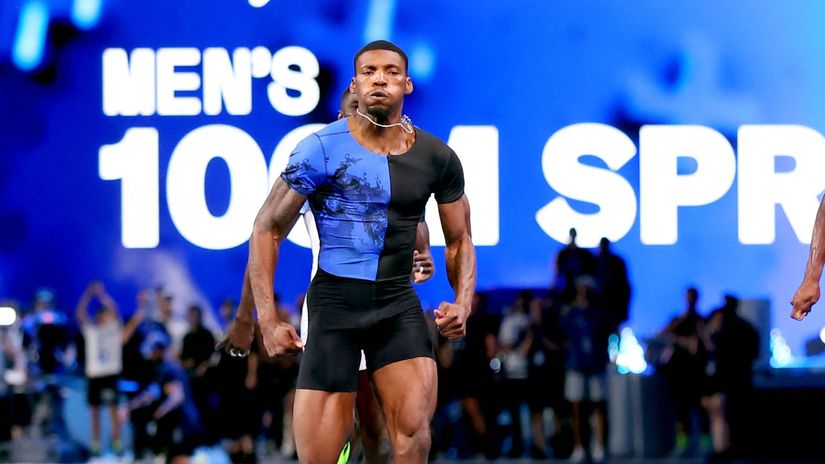
Millions Fred Kerley earned from winning 100m at Enhanced Games






Reading Time: 4min | Mon. 25.05.26. | 15:22
Despite the lucrative payday, Kerley’s winning time remained well outside the historic 9.58-second world record held by Usain Bolt
Former Olympic silver medalist and 2022 world champion Fred Kerley pocketed approximately Ksh32.4 million after winning the men’s 100m at the inaugural Enhanced Games held on Sunday, 24 May.
Download our Mozzart Sport app for more news
Kerley crossed the line in 9.97 seconds in the final to claim the top prize of $250,000 (approximately Ksh32.4 million), edging Liberia’s Emmanuel Matadi, who clocked 10.05 seconds to earn about Ksh16.125 million for second place.
Earlier in the preliminaries, Kerley had actually posted a faster time of 9.93 seconds, narrowly ahead of Matadi’s 9.95. Marvin Bracy-Williams finished third in 10.33, while Michael Bryan and Clarence Munyai posted 10.69 and 10.85, respectively.
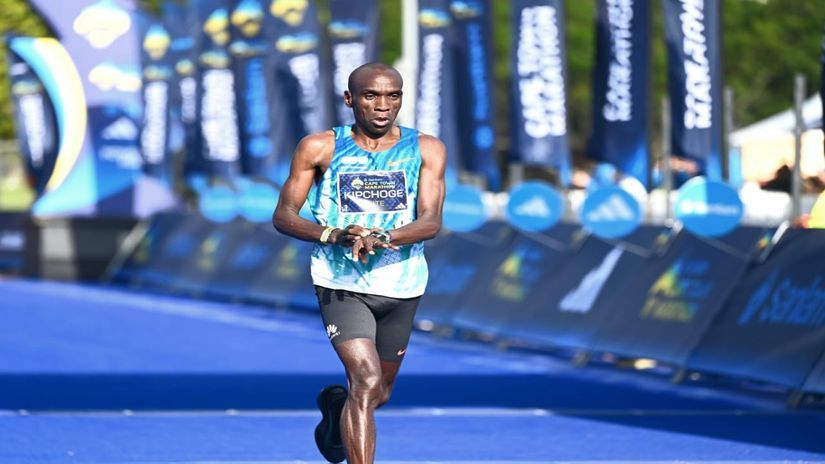
Despite the lucrative payday, Kerley’s winning time remained well outside the historic 9.58-second world record held by Usain Bolt. The American also fell short of his own personal best of 9.76 seconds, set in Oregon in 2022, which ranks among the fastest times ever recorded.
Interestingly, Kerley maintained that he competed “clean” despite the Enhanced Games allowing athletes to use performance-enhancing substances if they wished.
The concept behind the competition has generated global debate, particularly because athletes could choose whether or not to compete enhanced.
The performances on the track did little to silence critics. Kerley’s recent progression has raised questions, with his times moving from 9.76 in 2022 to 9.88 in 2023, 9.81 in 2024, and 9.98 in 2025.
His latest run also failed to surpass the current world-leading mark of 9.89 held by Botswana’s Busang Collen Kebinatshipi.
Kerley has never hidden his ambition to attack Bolt’s world record. In previous years, he repeatedly claimed the mark was “realistic” and even launched what he termed “Project 9.42.”
Fred Kerley 🇺🇸 runs 9.97s (-0.3) to win the men's 100m final at the Enhanced Games.
— Track & Field Gazette (@TrackGazette) May 25, 2026
This was supposed to be a 100m World Record attempt.pic.twitter.com/JiJ2d4BnF3
After signing with the Enhanced Games, Kerley doubled down on those ambitions.
“The world record has always been the ultimate goal of my career. This now allows me to dedicate all my energy to pushing my limits and becoming the fastest human to ever live,” he previously stated.
However, many observers online remained unconvinced after the event, noting that the performances did not reflect the bold promises surrounding the competition.
.jpg)
Bracy-Williams, currently serving a doping suspension, still earned approximately Ksh9.675 million after finishing third with a modest 10.39-second run. Spain’s Mouhamadou Fall ran 10.47 for fourth, while Britain’s Reece Prescod managed 10.48.
Critics were particularly surprised by the lack of depth in the fields despite the huge prize money and intense publicity. Comparisons were quickly drawn online to high school championship races, with many arguing the quality did not match the hype.
The women’s 100m race also struggled to impress. Barbados sprinter Tristan Evelyn won in 11.25 seconds while claiming to have competed without enhancement.
Shania Collins, the only athlete in the field with a sub-11 personal best, finished second in 11.43 despite reportedly competing enhanced.
The event format itself also sparked confusion. Athletes’ preliminary times did not necessarily determine qualification for the final, with some competitors allowed into the medal race without appearing in earlier rounds.
Away from athletics, American swimmer Hunter Armstrong reportedly earned approximately Ksh48.5 million after winning two events and collecting $375,000 in prize money.
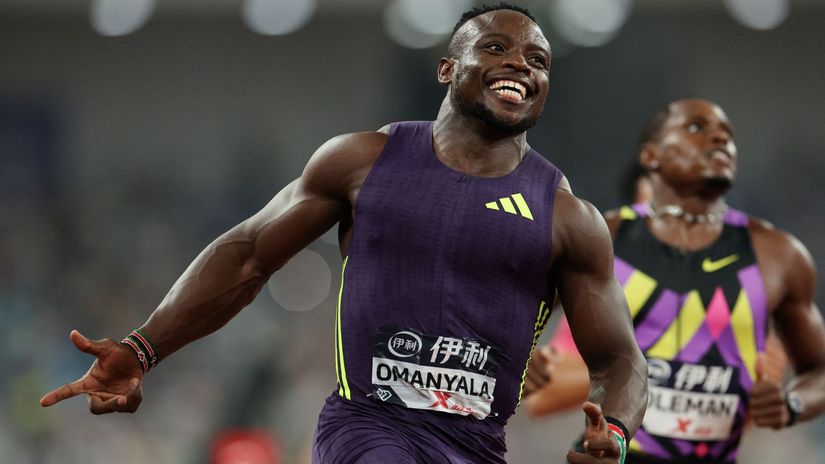
Armstrong openly admitted that financial incentives played a major role in his participation, as he aims to continue his career toward the Los Angeles 2028 Olympics.
The Enhanced Games continue to divide opinion globally because they operate outside the anti-doping framework enforced by organisations such as the World Anti-Doping Agency.
Traditional competitions like the Olympics and World Championships prohibit the use of performance-enhancing substances such as anabolic steroids and EPO.
Sebastian Coe, president of World Athletics, has previously warned athletes that competing in such events could carry long-term consequences for their official athletics careers. Any records set outside recognised anti-doping systems would also not count in official record books.
Kerley’s move to the Enhanced Games has further intensified scrutiny because he is currently serving a two-year suspension after missing multiple drug tests between May and December 2024. The ban runs from August 2025 until August 2027.