


 J. Angatia
Tactical analysis of Harambee Stars' effective structure in win against Qatar
.jpg)

Reading Time: 4min | Fri. 08.09.23. | 18:50
Kenya’s awareness of the in-game moments, exploiting the spaces in behind, and a mean mid block that was executed to near perfection, led them to the win
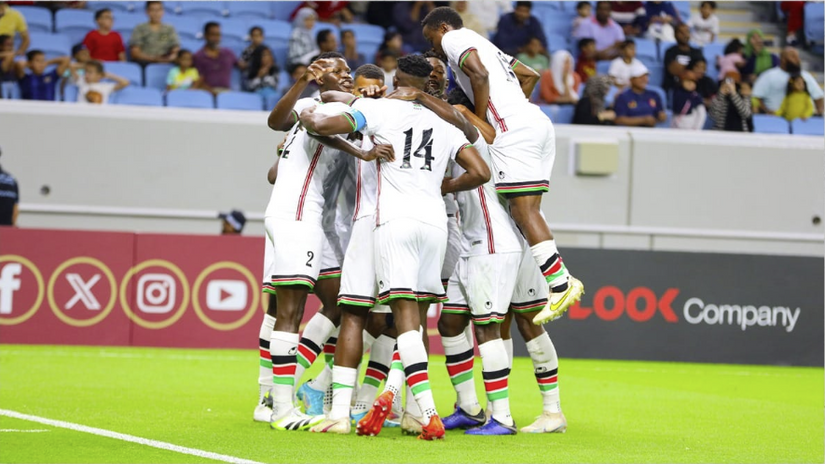
The Harambee Stars produced a mini-upset and came out 2-1 winners against 59th ranked Qatar in a friendly match played in Doha, Qatar on Thursday night.
In this post match tactical analysis piece, I set out to explain how the Harambee Stars mixed their capacity to play with pace, power and lightning fast breaks with intricate and well coached build up patterns to progress the ball well through the phases of possession - something the national team had starved its fans off for a while.
In this match coach Engin Firat and his technical team had a point to prove and set out with emphasis on exploiting the space in behind the Qatari defense lines, and having very able central midfielders who identified and occupied the space between the opposition lines well.
The selected line up by Firat had Byrne Odhiambo in goal, a center back pairing of Johnstone Omurwa and Joseph Okumu, Eric ‘Marcelo”Ouma and Daniel Anyembe occupied the fullback roles, while Richard Odada and Anthony Akumu formed the midfield double pivot.
The most advanced midfielder in terms of attack was Kenneth Muguna, who was to act as the link between the midfield and the three attackers - Elvis Rupia, Masoud Juma and Michael Olunga.
In the build up phase of Kenya’s 1-4-3-3 in possession structure, Firat wanted his three attackers to occupy Qatar’s back four.
Kenya wanted the wingers, in this instance; Juma on the right and Rupia on the left, to stretch the Qatari backline by pushing high and wide when in the first phase so as to occupy the spaces left vacant by the opposition who were more keen on defending their central areas.

Granted, Qatar would not be easily drawn out of their structure but in instances where Kenya managed to access the wide channels through fast combination plays and long balls in behind, the main outlet for Harambee Stars was Juma, who was running riot on the right hand side whenever Kenya managed to get the ball to him.
Kenya looked to knock the ball about patiently, through the backline and the very able Odhiambo in goal could act as the extra man in the build up phase; the fullbacks pushed up into the second line joining the defensive midfielders .
Through the three players at the back, the two center backs and the goalkeeper, Kenya looked to circulate the ball into the central midfielders in given instances but majorly into the full-backs, patiently knocking the ball around until they found an opening.
In instances where Qatar did not apply the necessary pressure, Kenya would then exploit the game by targeting the space in behind the defense line with balls into Michael Olunga who missed a glorious chance thanks to a good save by the goalkeeper, and Juma, who in a similar instance squared the ball a little late into Olunga who was again through on goal.
In the build up phase, Stars knew exactly what they wanted to do and were able to stick to the plan identifying well where the space was.
In Anyembe and Ouma, Kenya might just have a good base for fullbacks.
The two are solid in their 1v1 defending scenarios, stifling attacks and creating good balance between themselves and the center backs.
If possession was on their side of the pitch, the ball side fullback would push up and position himself high, combine and rotate with the inside forward well, to overload the opposition fullback, opening up the spaces between the the opposition fullback and center back; an area Kenya managed to generate some good chances from.
The ball-far full back would however be a little reserved when the team was attacking due to the threat Qatar posed with runners in behind like Yousef Abdulrazaq and Ali Moez.

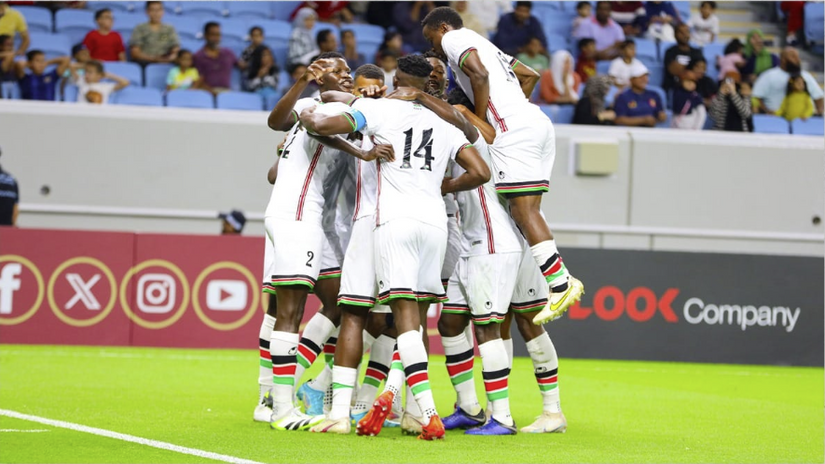
Kenya scored from a corner, a towering header from Okumu, and the second goal was well taken, the hold up play by Olunga was splendid and the weight of the pass into the runner from deep Amos Nondi was impeccable.
Without the ball, Kenya’s preferred shape was a mid-block.
The defensive structure was very compact, the narrowness between the players made it a very cohesive performance and very difficult for Qatar to play through.
The compactness in the mid-block frustrated the home team as the passing lanes into their central midfielders were closed and there were minimal chances to break the lines - a commendable performance by the two midfielders in Richard Odada and Teddy Akumu.
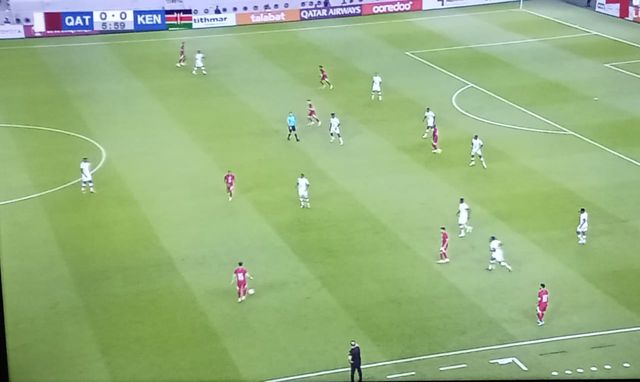
In instances where Kenya would jump to press, for example on a bad pass or a heavy touch, they would be very aggressive, backed up by the 43 tackles they made.
On winning the ball back, the transitions would unfold as stated above, as they looked to target the spaces in behind the Qatar defense and generate chances.
Kenya’s awareness of the in-game moments, their effectiveness in exploiting the spaces in behind, and a mean mid block that was executed to near perfection, led them to the win.
It is something that could be built on for even greater tidings for the Harambee Stars.