


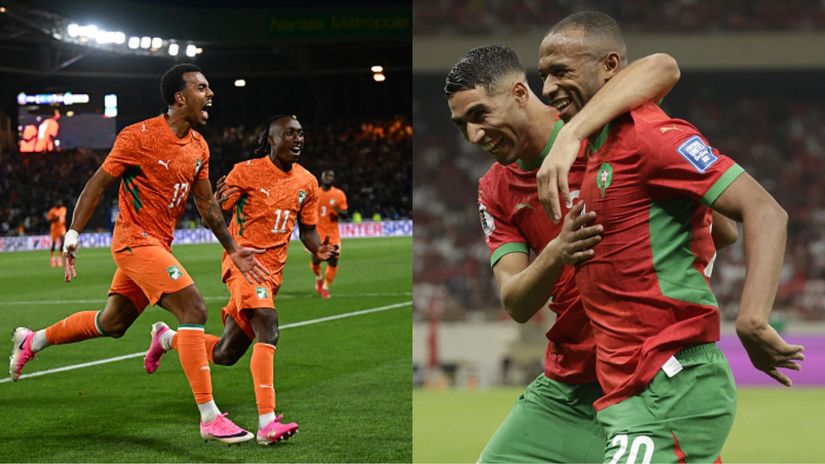
TACTICAL ANALYSIS: Unpacking Morocco, Ivory Coast's strengths ahead of 2026 FIFA World Cup

Reading Time: 7min | Tue. 09.06.26. | 16:49
While Morocco relies on complex, fluid positional rotations to open up opponents, the Ivory Coast stands ready to break them through absolute vertical efficiency and a historically disciplined defensive wall
African football is spearheaded by two giants carrying contrasting philosophies at the 2026 FIFA World Cup.
Download our Mozzart Sport app for news
Morocco enters Group C as Africa's top-ranked nation, 7th globally, eager to build on their historic fourth-place finish at Qatar 2022.
Meanwhile, the Ivory Coast arrive in Group E as the continent's second-highest-ranked powerhouse, 17th globally, armed with an iron-clad defensive record and a ruthless transitional blueprint.
An analytical deep dive reveals how these two tactical powerhouses will structure their play, manipulate spaces, and attempt to dismantle the global hierarchy.
Morocco carries the loftiest expectations on the continent, making their seventh World Cup appearance.
The Atlas Lions hold legendary tournament landmarks - becoming the first African nation to top a group in 1986, and rewriting football history in 2022 as the first African and Arab side to reach the semi-finals.
While a coaching change brought Mohamed Ouahbi to the helm - transplanting a highly offensive style honed with the youth sides - the collective belief remains sky-high
While global icon Achraf Hakimi remains the undisputed structural catalyst, the true breakout protagonist of Ouahbi's fluid system could be Bilal El Khannouss.
Operating as a creative central attacking midfielder, El Khannouss has racked up nine goal involvements alongside 45 chances created. His pace and direct dribbling unlock deep blocks, though his genius relies on a rock-solid foundation.
Sofyan Amrabat provides elite rest-defense security as an anchorman, balancing an aggressive squad that recorded the most shots and crosses per 90 minutes during recent continental play.
Ouahbi’s structure modifies a classic 4-3-3 into an offensive engine designed to swarm the opposition box in numbers through an inverted full-back engine.
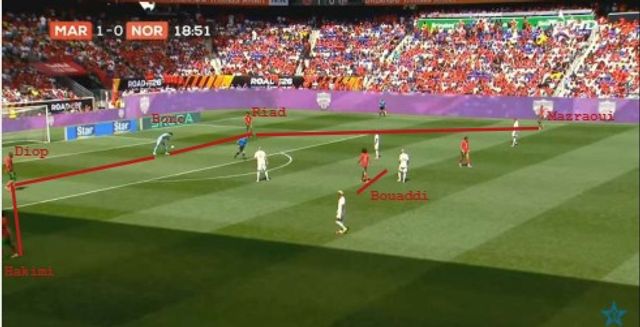
In the build-up phase, Amrabat regularly drops between or alongside the split centre-backs to bypass initial lines of pressure. Full-backs Achraf Hakimi and Noussair Mazraoui frequently invert into the interior half-spaces, operating as extra midfielders.
This creates an interior overload that frees up deep passers to thread lines.
Conversely, during the opening stages of the deep build-up, the goalkeeper anchors the possession by positioning the split centre-backs inside their own penalty area.
This deep deployment functions as structural bait, intentionally pulling the opponent's pressing lines higher up the pitch.
To exploit this, one or two central midfielders drop lower to establish a numerical overload against the first wave of pressure, successfully unlocking clean vertical passing lanes through the center.
Before the sequence is initiated, the full-backs maintain tight, close proximity to the centre-backs, executing deliberate forward runs only after the initial play is triggered.
By building short, intricate pass networks in one sector of the pitch via third-man combination runs, Morocco draws the opponent's defensive block toward the ball side.
Once compressed, they hit rapid, direct switches of play to the opposite flank, isolating explosive 1v1 wingers like Abde Ezzalzouli and Brahim Diaz against stranded full-backs.
When attacking out wide, the inverted full-backs execute overlapping or underlapping decoy runs to drag markers away.
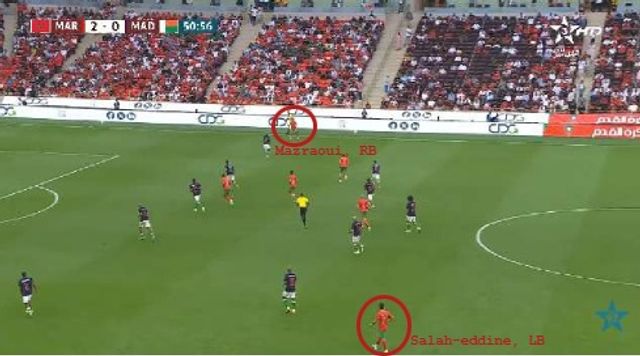
This creates space for El Khannouss or wide-men to cross into the box, frequently targeting mid-space late arrivals like Ismael Saibari, an elite goal poacher utilising his physical frame at the back post.
Without the ball, Morocco balances a high zonal/man-oriented press to a highly synchronised mid-block.
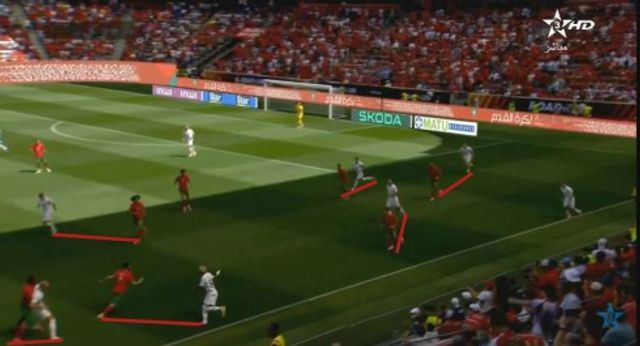
High up the pitch, the striker and El Khannouss lead an aggressive zonal press. Simultaneously, the two central midfielders - such as Ayyoub Bouaddi and Amrabat or El Aynaoui - jump aggressively onto the opposition's deep playmakers to disrupt possession at the source.
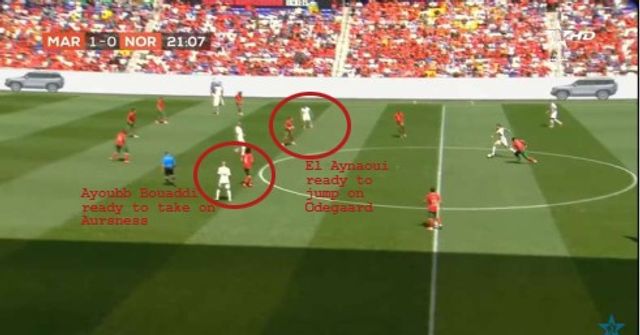
If the high press is bypassed, Morocco falls back into an incredibly rigid, compact 4-4-2 mid-block.
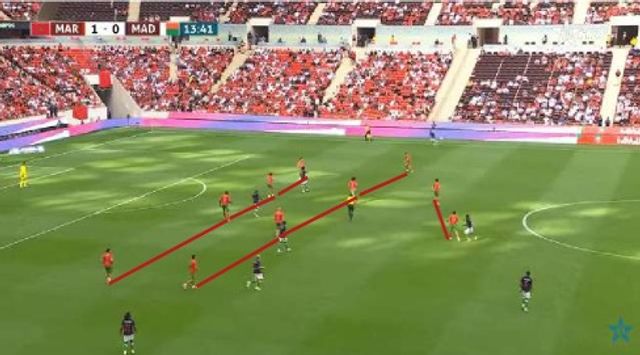
The wide wingers diligently track back to help the full-backs, and the entire block shifts together in unison based on the ball side, completely denying central interior corridors.
Against top-tier ball-dominant sides, Morocco will intentionally settle into a deep defensive base structure. This structural retreat baits the opponent deep into Morocco's half, creating a vacuum behind their defensive line for speedy wingers to exploit on the counter-attack.
Despite boasting one of the best defensive records in Africa, Morocco has struggled to cope under intense tournament pressure, occasionally suffering structural breakdowns when their aggressive counter-press fails to stop an immediate vertical break.
Furthermore, pre-tournament injuries to key starters Ez Abde and Noussair Mazraoui threaten the team cohesion required to execute these complex wide rotations.
Ivory Coast
The Ivory Coast enters its fourth World Cup looking to finally break their curse and advance past the group stage for the first time. Currently ranked 17th globally and second in CAF, the Elephants are built on absolute defensive ruthlessness and terrifying athletic verticality.
The undisputed breakout star of this disciplined side is 19-year-old left-winger Yan Diomande. Enjoying a sensational club season with 20 goal involvements, 56 chances created, and a 61% successful dribble rate, Diomande offers supreme 1v1 execution.
.jpg)
He is flanked by Simon Adingra/Amad Diallo and central striker Elye Wahi, forming a dynamic frontline.
This attacking verve is entirely sustained by Seko Fofana and Frank Kessie, who act as a destructible defensive screen in front of a back four that recently logged an astonishing 10 clean sheets in 10 consecutive matches.
The Ivory Coast’s possession model focuses heavily on speed and direct verticality, shifting seamlessly from a base 4-3-3 into a devastating 4-2-4 shape inside the attacking third. In the initial low phase, the goalkeeper splits the centre-backs deep inside their own box.
This deep posture deliberately draws the opponent's press forward. The two central midfielders drop to form a numerical overload against the opposition's first line of engagement, opening up clean vertical passing channels.
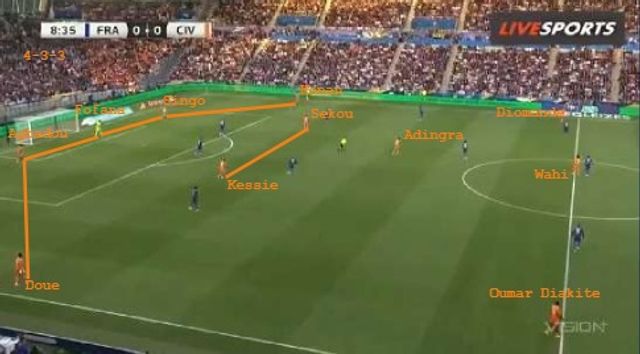
Full-backs push high to force opposition wingers into deep defensive tracking.
On the right, Guéla Doué, Désiré Doué's older brother, drives high and wide, occasionally inverting into the half-space to provide depth.
On the left, Ghislain Konan offers a more conservative, wide overlapping option.
.jpg)
As possession enters the opponent's half, Simon Adingra tucks inside alongside Elye Wahi to form a twin central strike partnership.
This structural shift allows Yan Diomande to hold a wide-left isolation posture, letting the Elephants attack through quick, direct pass combinations that release their explosive wide-men to deliver driven crosses into the penalty area.
Defensively, the Ivory Coast relies on a rigid, highly physical structure that prioritises space denial over ball-chasing. When an opponent attempts to construct play slowly from the back, the Ivory Coast can trigger an aggressive, man-oriented high press.
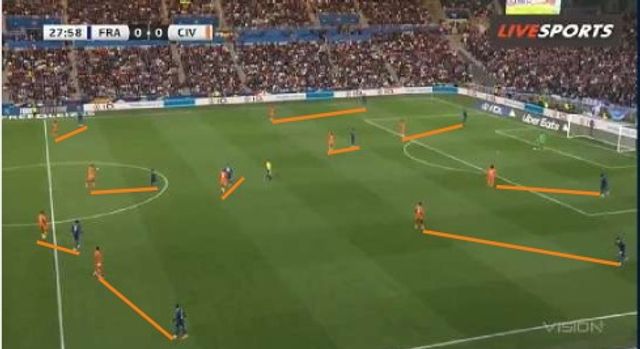
Their wingers jump directly onto the receiving full-backs, forcing rushed clearance decisions or turning the ball over in high-value areas. Against superior possession sides, the Elephants drop into a strict zonal 4-4-2 mid-to-deep block.
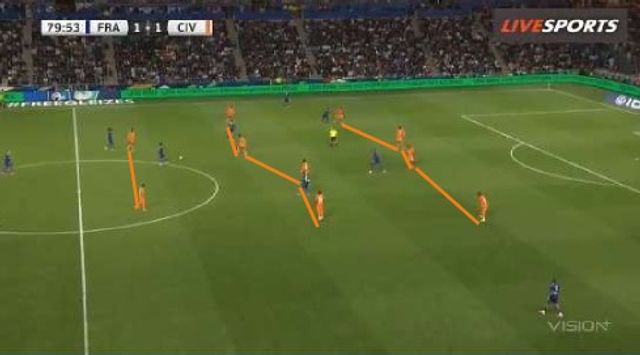
Spearheaded by Seko Fofana’s tireless coverage, this block forms an impenetrable wall, squeezing horizontal gaps and forcing opponents to play around them, where their physically imposing defenders dominate aerial duels.
While their defensive record is spectacular, the Ivory Coast’s extreme directness can lead to possession retention issues against elite, press-resistant midfields.
If their initial high vertical passes are cut off, the distance between their high four-man frontline and deep double pivot can leave them structurally detached, exposing them to dangerous secondary counter-attacks in transition.
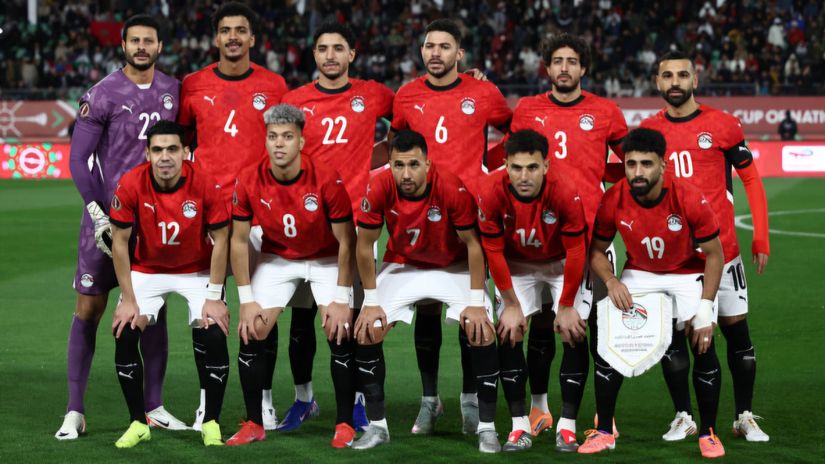
Ivory Coast and Morocco face challenging group fixtures that will test their contrasting tactical identities to the absolute limit.
Morocco is set to contest Group C alongside Brazil, Scotland, and Haiti, where their primary hurdle will be managing rest-defense integrity during full-back inversions and integrating wide personnel.
Ivory Coast will fight through Group E against Ecuador, Germany, and Curaçao, forced to focus on maintaining midfield connectivity in vertical phases and avoiding structural detachment.
Morocco's tournament trajectory in New York and Boston rests heavily on Mohamed Ouahbi’s ability to maintain defensive balance amidst overwhelming attacking numbers.
If Bilal El Khannouss can consistently pull the strings in the half-spaces and release their isolated wingers, the Atlas Lions possess the tactical sophistication to replicate their historic Qatar run.
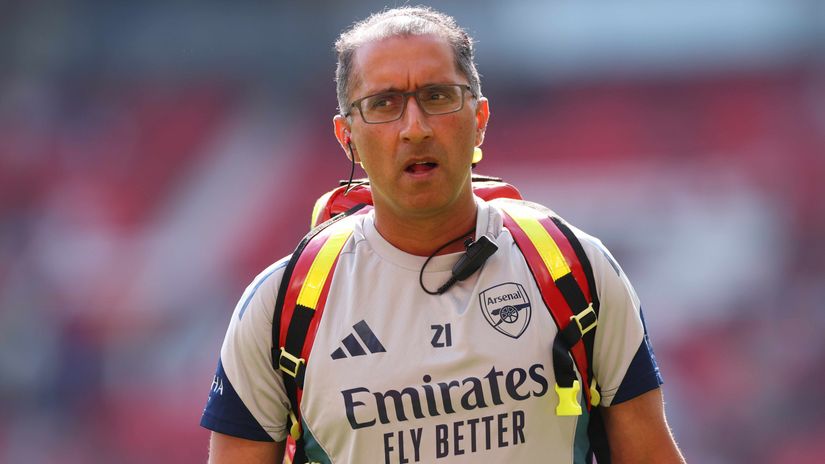
Conversely, the Ivory Coast enters Group E ready to weaponize their physical dominance. In tight tactical matchups against footballing heavyweights like Germany, the Elephants will comfortably yield possession, relying on Seko Fofana's defensive shielding and the elite 1v1 dribbling of Yan Diomande and Amad Diallo to settle contests through lethal, lightning-fast transition sequences.
.