


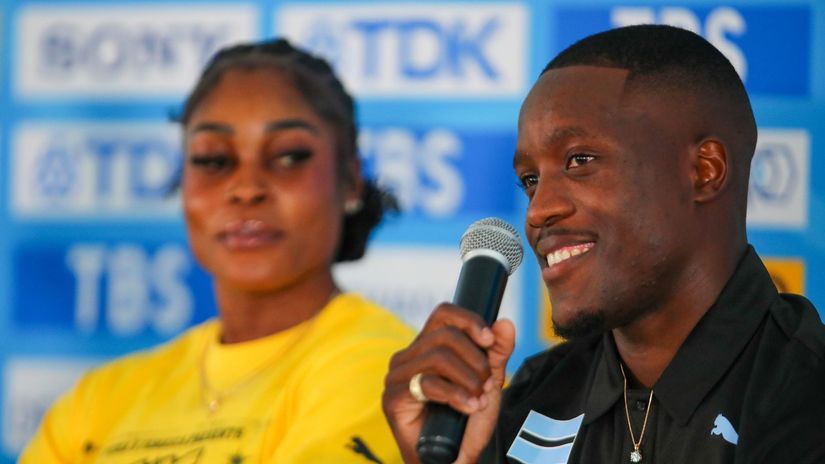
Letsile Tebogo offers advice to Africans seeking lucrative running deals abroad





Reading Time: 3min | Sat. 06.06.26. | 15:32
His remarks come at a time when thousands of African athletes, particularly from Kenya, continue to pursue opportunities overseas
For many African athletes, securing a scholarship, professional contract, or training opportunity abroad represents the ultimate breakthrough.
Download our Mozzart Sport app for more news
However, Olympic champion Letsile Tebogo believes those opportunities should be used as stepping stones rather than permanent exits from the continent.
The Botswana sprint star has encouraged African athletes to take advantage of opportunities overseas while ensuring they eventually return home to help develop athletics in Africa.

Speaking to The Athletic Heat, the Paris Olympic 200m gold medalist acknowledged the harsh realities that push many athletes to seek greener pastures abroad, including limited resources, inadequate training facilities, and economic challenges.
"We have so many Africans competing in the United States. I understand the realities back home. I know we face hunger and challenges such as limited resources and inadequate facilities," Tebogo said.
"What I always tell young athletes is this: if you get an opportunity to go there, take it, run your times, secure a contract, and then come back home to continue doing what you do best,” he continued.
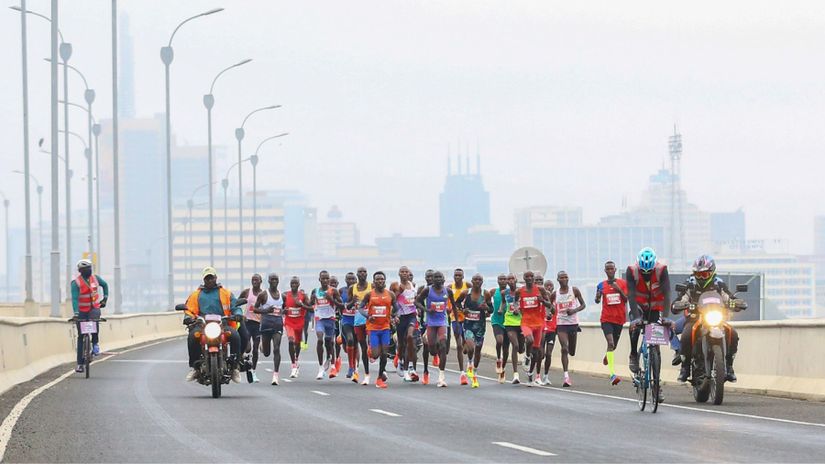
His remarks come at a time when thousands of African athletes, particularly from Kenya, continue to pursue opportunities overseas. Research indicates that between 1,000 and 2,000 Kenyan athletes travel abroad annually to train, compete, and access better professional opportunities.
While many leave on short-term visas to compete in lucrative road races and marathons, others take a different route by switching allegiance and representing foreign nations on the international stage.
Countries such as the United States, Bahrain, Qatar, Belgium, the Netherlands, France, Turkey, Israel, and Kazakhstan have become popular destinations for African athletes.
Some offer superior training environments and living standards, while others provide financial incentives and international competition opportunities.
Despite encouraging athletes to seize such opportunities, Tebogo warned that life abroad is not always as glamorous as it appears, particularly in the highly competitive American collegiate system.
"I know it is not going to work for everybody because I'm saying this, because in the United States, I have a big pool of people, and then Africans, we are just limited.
So you will run week in and week out, and by the time you leave school or college, you do not have much time left because you are racing week in week out," he explained.
He further called on African athletes to look beyond individual success and consider their role in advancing the continent's athletics ambitions.
"My brothers, please take care of yourselves. We still need you to help push African athletics forward. We cannot do it alone, and I hope to see more Africans competing in every Diamond League meeting, every championship, and every major competition around the world,” he averred.
.jpg)
Tebogo believes Africa has the talent to challenge the traditional powerhouses that have dominated track and field for decades.
"We need to change the narrative of Americans, Jamaicans, and Asians dominating the sport. Africa is still here, and we have immense potential. I believe in you just as much as you believe in me,” he said.
The sprint sensation was speaking just hours before producing another strong showing on the Diamond League circuit. At the Golden Gala in Rome on Thursday, 4 June, Tebogo clocked a season-best 9.95 seconds to finish third in a stacked men's 100m race.
American world champion Noah Lyles claimed victory in 9.88 seconds, while Cameroon's Emmanuel Eseme crossed the line second in 9.94 seconds, with Tebogo completing the podium places.