


TACTICAL ANALYSIS: How structure and organisation dominated Wydad vs Raja derby

.jpg)


Reading Time: 5min | Thu. 30.10.25. | 22:07
In essence, this Derby epitomised Botola Pro elite: structured build-ups clashing with aggressive presses, fluid roles meeting rigid marking, and patience trumping risk
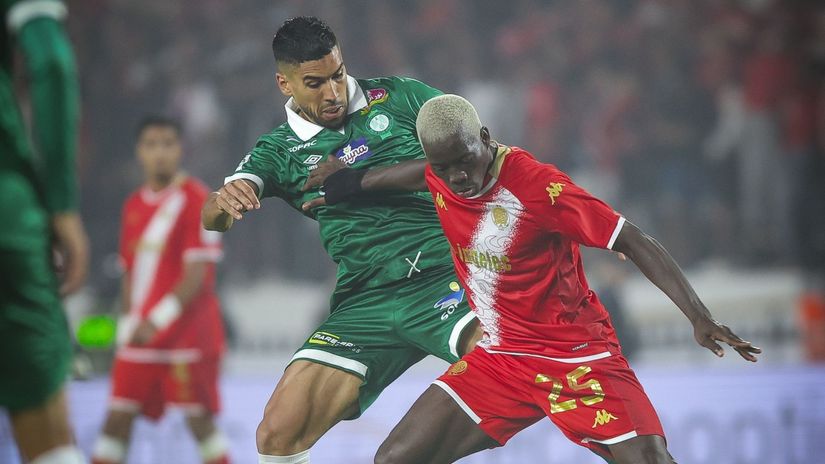
The Casablanca Derby, pitting Wydad Athletic Club against Raja Club Athletic, two of Moroccan football's most storied rivals, ended in a tense barren draw that underscored the fine margins separating dominance from deadlock.
Played in an electric atmosphere, the match showcased intricate build-up patterns, pressing traps, and fluid positional rotations, with both sides prioritising structure over spectacle.
Follow our WhatsApp channel for more news
Wydad, under pressure to assert home dominance, lined up in a nominal 4-2-4 formation that morphed situationally into a 4-4-2 out of possession, while Raja countered with a flexible 4-2-3-1 that allowed for patient progression and overload creation, especially at the back.
The first half was a battle of attrition in midfield, where Raja's superior circulation met Wydad's aggressive man-oriented press, leading to fragmented chances.
The second half saw intensified transitions and substitutions that nearly tipped the scales, but defensive resilience prevailed.
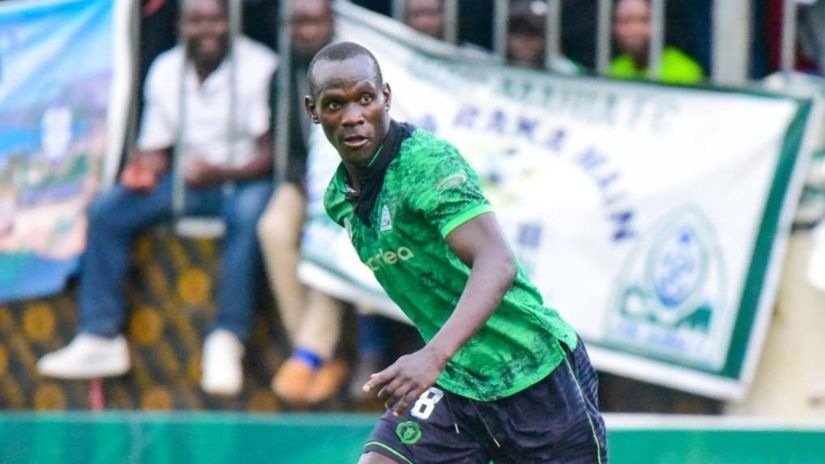
Wydad's 4-2-4 setup featured goalkeeper Benabid El Mehdi as a pivotal "plus one" in the initial build-up phase.
Positioned centrally between the wide centre-backs Guilherme Ferreira and Abdoulfath Amine, Benabid facilitated short distribution before resorting to long diagonals when pressure mounted.
Right-back Moufid Mohamed provided situational width on the flank, overlapping during attacking phases, while left-back Ayoub Boucheta maintained balance on the opposite side.
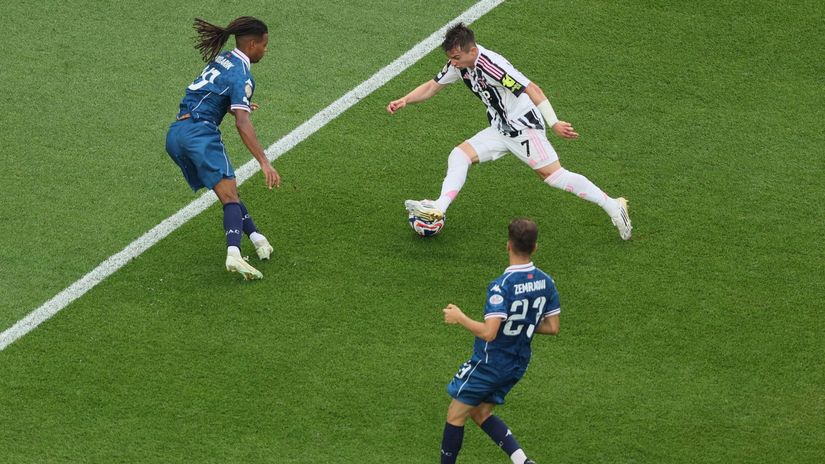
The midfield double pivot of Lamirat Abdelghafour and Bakasu Joseph Banka anchored the structure: Banka focused on defensive screening, while Lamirat ventured forward adventurously as play progressed into the attacking third.
Nordin Amrabat operated in the right channel, balancing wide runs with infield tucks to exploit half-spaces.
Stephanie Aziz Ki, the advanced midfielder, roamed between the lines, dropping deep to link midfield to attack.
On the left, Lorch Thembinkosi tucked infield from the wing, operating in left wide channels to create numerical superiority.
Up top, Hamza Hannouri served as the focal striker, tasked primarily with goal-scoring but often isolated due to Raja's compact lines.
Raja's 4-2-3-1 was equally adaptable, with goalkeeper Elmehdi Al Harrar acting as an extra outfielder in a 4-2 build-up structure, splitting the centre-backs Abdellah Khafifi and Ismail Mokadem to enable patient progression.
Right-back Mohamed Boulacsout marauded forward aggressively, providing width and overlapping runs, while left-back Youssef Belammari pushed high in attacks, inverting situationally to overload midfield.
The central midfield duo of Mohamed El Makahasi and Othmane Chraibi formed a stable double pivot, with Makahasi as the primary deep-lying playmaker and tempo controller.
He dropped deep between the centre-backs to form a temporary back three, tasked with bypassing Wydad's first line of pressure.
Adam Ennaffati on the right wing made vertical runs in behind, drawing defenders out of position with fluid movements, while also dropping to midfield for linkages.
Sabir Bougrine, the advanced midfielder, facilitated third-man combinations, and Bilal Ould-Chikh on the left wing mirrored Ennaffati's dynamism.
Ismail Khafi led the line as the lone striker, targeting aerial duels and hold-up play.
Defensively, Wydad employed zonal marking on corners, with Lorch and Aziz Ki positioned as rest-attack outlets to launch counters.
Raja used a hybrid system: four zonal markers guarding the six-yard box and an equal number of man-markers tracking specific targets on deliveries.
Wydad's press was high-intensity and man-to-man oriented, shifting cohesively as a block with tight inter-player distances, excellent body orientation, and off-ball movements to force Raja into wide areas.
This created pressing traps, rushing Raja's decisions and prompting long balls.
Raja countered with a 3-2 build-up structure - goalkeeper between centre-backs as the plus one, pivots in front - using Makahasi's orchestration to circulate patiently.
He linked defense to attack seamlessly, dropping to the right defensive side to free Boulacsout for high-wide exploits.
Belammari and Boulacsout inverted into midfield to generate overloads, intelligently occupying spaces between Wydad's lines for penetration.
In attack, Raja relied on third-man combinations to bypass Wydad's pressure lines, with Ennaffati's vertical runs opening spaces.
Wydad prioritised counterattacks at high intensity, channelling through Lorch's runs and Aziz Ki's midfield surges into Raja's final third.
They formed infield passing triangles in central progressions to penetrate Raja's lines, shifting from a 4-4-2 for compactness. Raja's double pivot provided stability, allowing calm play under early pressure from Wydad's first line of pressure.
Makahasi's frequent drops formed a temporary back three, overloading Wydad's press. Both sides generated decent chances - Ennaffati threatened with runs, Hannouri tested from close range - but lacked cutting edge in the final third, with shots hurried or blocked amid the intensity.
The second half amplified the tactical arms race.
Raja increasingly targeted long balls to Khafi as a focal point, aiming to bypass Wydad's high defensive line and exploit second balls.
Wydad adjusted to a 4-4-1-1/4-4-2 out-of-possession structure, with Aziz Ki now tracking Makahasi man-to-man to prevent his deep drops and build-up aid.
This upped Wydad's pressing intensity, forcing turnovers in Raja's final third. Raja responded with positional play, structuring control to carve midfield pockets via rotations and overloads.
A pivotal transitional moment came in the 66th minute: Amrabat, now influencing from the left after positional swaps, delivered a cross into the box.
Aziz Ki provided a slight flick-on, teeing up Hannouri, whose shot was saved by Al Harrar - a rare instance of Wydad's right-side emphasis paying off.
Moufid's overlapping runs down the right stretched Raja, before attacks shifted centrally with Aziz Ki as the penetration target.
Raja maintained compactness, closing spaces effectively against Wydad's desperate long passes in the closing stages.
Substitutions injected fresh impetus for Wydad.
In the fourth minute of 13 added minutes, substitutes Nassi and Zemraoui combined exquisitely: Zemraoui's incisive pass set Nassi through, only for Al Harrar to deny him at close range.
This highlighted Wydad's late chase for a winner, but Raja's defensive block - bolstered by the double pivot's screening - remained impenetrable.
The 0-0 result stemmed from mutual tactical neutralisation. Wydad's man-oriented press disrupted Raja's rhythm, forcing their build-ups long, but Raja's third-man combos and inversions created overloads.
Wydad generated more counters (via Lorch/Amrabat channels) but converted none due to Raja's zonal-man hybrid on set-pieces and compact lines.
Raja dominated possession especially in the first half through Makahasi's passes in deep areas, yet Ennaffati's and Khafi’s runs yielded no end product against Wydad's high line.
In essence, this Derby epitomised Botola Pro elite: structured build-ups clashing with aggressive presses, fluid roles meeting rigid marking, and patience trumping risk.
Neither side unlocked the other's code, resulting in a fair stalemate that preserved rivalries while highlighting Moroccan tactical sophistication. Future encounters may hinge on finishing polish or midfield breakthroughs, but here, equilibrium reigned supreme.