


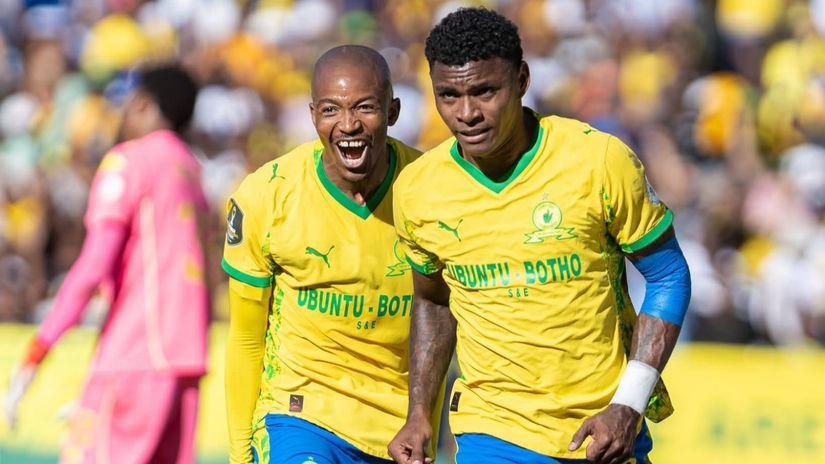
TACTICAL ANALYSIS: Mamelodi Sundowns' game plan that neutralised Esperance's high press






Reading Time: 6min | Mon. 20.04.26. | 22:12
Sundowns advance with tactical confidence, their ability to control transitions and manage leads now proven at the highest level.
Mamelodi Sundowns hosted Esperance Tunis in the second leg of the CAF Champions League semi-final at Loftus Versfeld, with the tie already delicately poised and qualification to the final against either FAR Rabat on the line.
Download our MozzartSport App For More News
Sundowns entered the encounter with an aggregate advantage and the home crowd behind them, determined to seal progression through disciplined structure and clinical transitions.
Esperance, needing at least a goal to force extra time or more, arrived with an aggressive pressing plan but ultimately fell short.
The match proved closely contested in spells yet tilted decisively towards Sundowns thanks to superior build-up rotations, exploitation of structural weaknesses on Esperance’s right flank, and a clinical first-half penalty that shifted momentum permanently.
What followed was a textbook display of how a compact defensive shape combined with intelligent third-man combinations can neutralise high pressing while creating decisive overloads.
From kickoff, Sundowns lined up in a 1-3-2-4-1 shape, with Ronwen Williams in goal behind a back three of Khuliso Mudau, Khulumani Ndamane and Keano Cupido.
Jayden Adams and Teboho Mokoena sat as holding midfielders, Thapelo Morena operated as right winger, Divine Lunga pushed as left wing-back, Tashreeq Mathews and Arthur Sales acted as narrow inside forwards between the lines, and Bryan Leon led as nominal striker.
Esperance countered in a 4-2-1-3: Ben Said in goal, Keita Ibrahima at right-back, Ben Hamida at left-back, central defenders Tougai Mohamed and Jelassi, double pivot Onuche Ogbelu and Teka Houssem, Yan Sasse on the left ad Boualia on the right, on the wings, Konate Abdelrahman behind Florian Danho who was the lone striker.
The early narrative arc was defined by Esperance’s front four pressing high to deny Sundowns any comfortable build-up from the back.
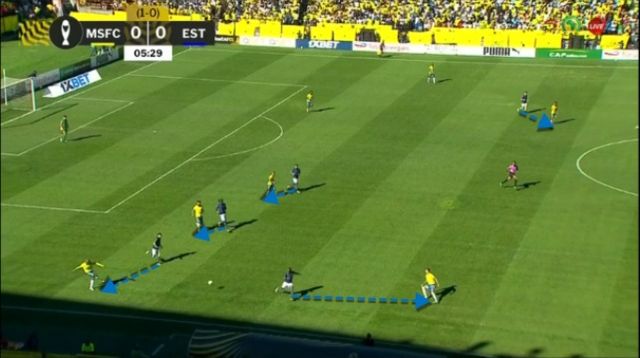
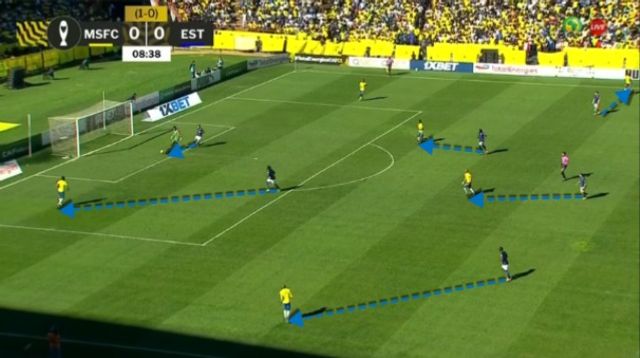
Teka dropped as a pivot to find Keita between the lines and allow full-backs to surge high, creating overloads on both flanks. Sundowns responded with a compact 4-4-2 mid-block out of possession, absorbing pressure while looking to spring forward through third-man combinations.
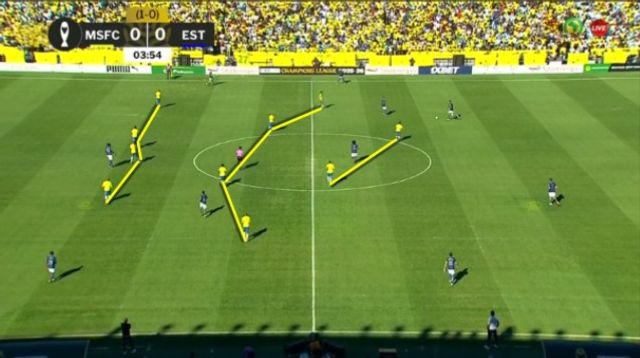
Rising tension built quickly on the left side. Sundowns used dropping movements from Bryan Leon and Tashreeq Mathews to facilitate Lunga’s overlapping runs, creating classic third-man patterns that stretched Esperance’s aggressive high press.
The Esperance striker Danho drifted and dropped to destabilise Sundowns’ back three, yet the home side’s midfield duo of Adams and Mokoena stayed disciplined, shielding the centre.
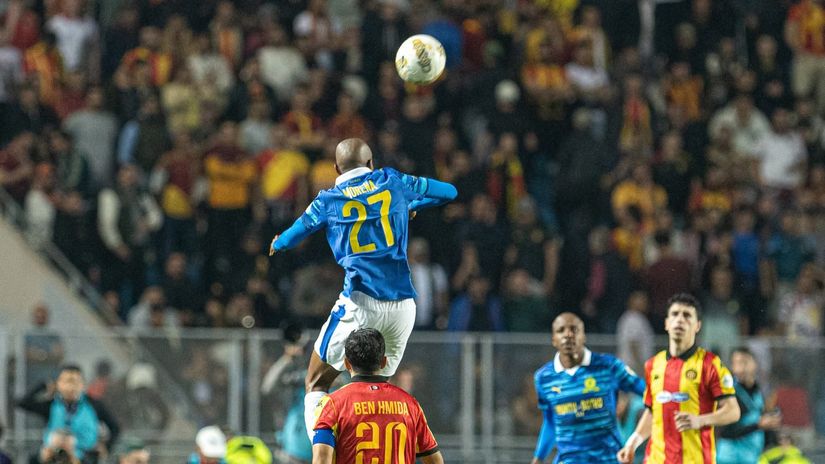
Esperance’s wingers pinned Sundowns’ full-backs while Ogbelu and Teka pushed high to harass the holding midfielders, aiming to trigger turnovers.
Sundowns, however, found consistent joy on Esperance’s right. Lunga and Ndamane deliberately invited pressure, forcing Keita Ibrahima to step up and vacate space behind him.
Mathews timed his drops perfectly: when Keita committed to the press and missed, the gap opened for through balls that Sundowns exploited repeatedly.
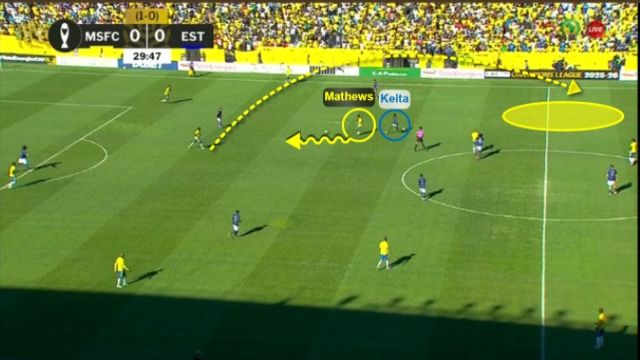
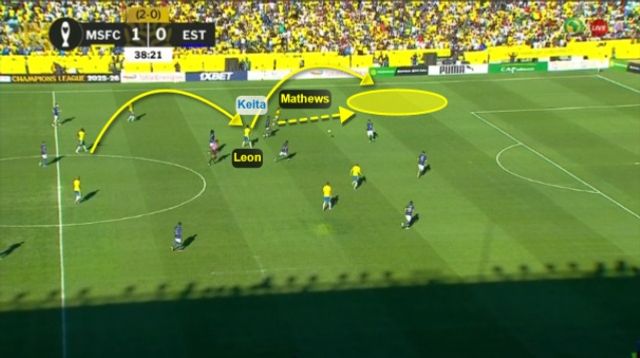
This pressing-versus-build-up battle exposed Esperance’s man-oriented triggers as a double-edged sword - effective when successful, but structurally fatal when bypassed.
The first major turning point arrived in the 32nd minute. Sundowns forced an error through sustained pressure on Esperance’s build-up.
Leon locked the goalkeeper on one side, pounced on a loose throw from Keita, and triggered a press that left Ben Said under immediate duress. The keeper fouled Leon inside the box; the referee pointed to the spot.
Bryan Leon stepped up in the 35th minute, saw his initial penalty saved, but followed up on the rebound to make it 1-0 and secure the aggregate progression.
In-possession, Sundowns’ narrow inside forwards created interior overloads; out of possession, their compact shape limited Esperance’s central penetration while funnelling play wide, where Sundowns dominated.
Esperance’s defensive scheme relied on compactness in the 4-2 shape, but the high full-backs left gaps that Sundowns’ dropping movements and inversions exploited with surgical precision.
As the first half progressed, Esperance tried to regain control through structured build-up: the back four and double pivot overloaded the right with Boualia before recycling to Ben Hamida on the left for cutbacks and crosses.
Yet Sundowns’ mid-block remained organised, stepping up only on clear triggers and recovering quickly with Adams and Mokoena sweeping second balls.
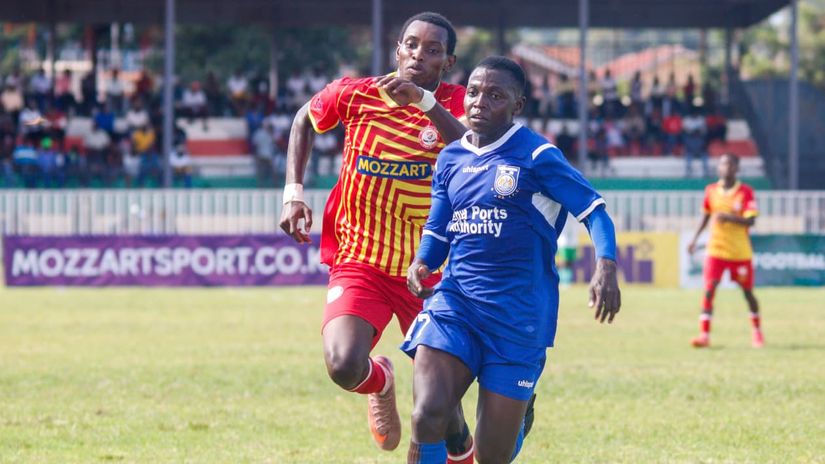
A late chance for Esperance came from third-man runs on the left - Sasse reaching the byline after interplay with Ben Hamida and Teka - but the shot struck the upright in the 40th minute.
Sundowns’ goalkeeper Williams was rarely tested, while the home side’s midfield rotations, led by Mathews picking up through balls on the right, kept Esperance on the back foot.
By half-time the pattern was clear: Esperance’s high press created moments but lacked sustainability, while Sundowns’ patient build-up and counter-pressing resistance turned defensive solidity into attacking threat.
The second half opened with continued tactical contrast. Sundowns pushed through balls from deep midfield to target runs in the wide channels between Esperance’s full-backs and centre-backs, forcing the visitors into a more direct style.
Sundowns’ high press now dictated terms, compelling Esperance to go long and bypass their own midfield. The first tactical tweak came in the 56th minute when Sundowns withdrew Arthur Sales for Marcelo Allende.
The substitution was purposeful: Allende brought extra ball control, foul-winning ability under pressure, and progressive passing that further deprived Esperance of possession while strengthening Sundowns’ build-up phase.
Esperance responded two minutes later, replacing Boualia with Diakite and shifting to a two-striker system with Danho and Diakite up front, Konate moving to the left and Sasse to the right.
They adopted a 4-4-2 out-of-possession mid-block and a man-oriented high press when Sundowns built from deep, attempting to lock play on one side.
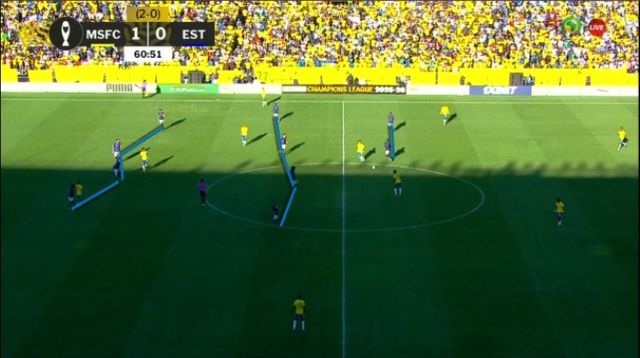
Momentum swung again around the 68th minute with Esperance’s double change: Diarra and Rafia entered for Teka and Sasse.
The visitors sought to refresh their press and create new wide isolations, switching play from midfield to isolated attackers. Yet Sundowns’ rest-defence and counter-pressure remained superior, with the back three and holding midfielders dominating aerial second balls and recovery runs.
Allende and Adams both tested Ben Said from outside the box in quick succession; the keeper produced a strong double save after clever positional rotations in Sundowns’ attack.
The final plot twist arrived in the 77th minute when Sundowns introduced Monapule Saleng and Iqram Rayners for Mathews and Leon. The change injected fresh speed and directness into the forward line, allowing Sundowns to transition from control to vertical threat while protecting their lead through game management.

Esperance’s late attempts at switches of play to wide areas created isolated opportunities, but Sundowns’ compactness, stepping triggers, and organised recovery runs neutralised the danger.
The visitors’ high press, once a weapon, became a liability as Sundowns invited pressure and exploited the spaces left behind.
In-possession, Sundowns’ inversions and dropping movements consistently created interior overloads that Esperance could not contain once the full-backs were pulled out of position.
Out of possession, Esperance’s high man-oriented approach lacked the flexibility to handle Sundowns’ third-man combinations on the flanks.
Transitions favoured the home side throughout: their counter-pressing resistance turned Esperance’s failed progression into immediate attacking chances, most notably in the build-up to the penalty.
The final whistle confirmed Sundowns’ 2-0 aggregate victory and progression to the CAF Champions League final.
Tactically, the result delivered a clear verdict. Sundowns’ 1-3-2-4-1 hybrid succeeded by blending a compact 4-4-2 mid-block with intelligent rotational build-up that neutralised Esperance’s high press and exploited structural weaknesses on the right flank.
Sundowns advance with tactical confidence, their ability to control transitions and manage leads now proven at the highest level. Esperance must reflect on how an ambitious pressing system, while creating chances, exposed vulnerabilities once the first goal shifted the aggregate dynamic.