


TACTICAL ANALYSIS: How Shabana edged Homeboyz in a battle of two halves

.jpg)
.jpg)
.jpg)

Reading Time: 6min | Mon. 20.04.26. | 21:49
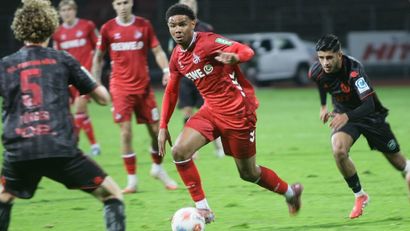
Kakamega Homeboyz demonstrated tactical flexibility through their substitutions and positional rotations, but their reliance on wide play and crossing limited their effectiveness against a compact defensive block
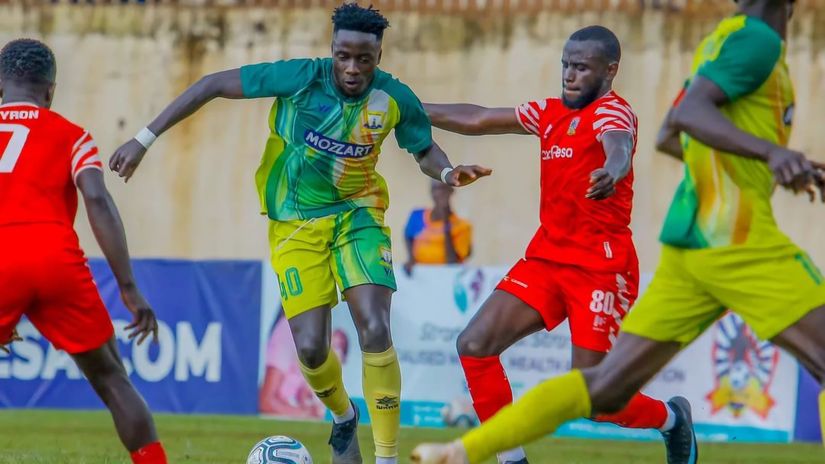
The encounter between Shabana FC and Kakamega Homeboyz unfolded as a tightly contested FKF Premier League fixture defined by contrasting tactical intentions and in-game adaptations.
The stakes were significant in terms of momentum and table positioning, and the narrative quickly leaned toward a controlled yet hard-fought victory for Shabana, who edged the contest 1-0.
Download our MozzartSport App for more News
While the scoreline suggests a narrow affair, the underlying tactical dynamics reveal phases of dominance, particularly from Shabana in the first half and Kakamega Homeboyz in the second.
The match was ultimately decided by efficiency in key moments, structural discipline, and the ability to manage transitions and pressure.
From the outset, Shabana adopted a 4-2-1-3 base structure, with Stephen Ochieng in goal and a back four of Mark Oduor, Justus Munika, George Onyango, and James Mazembe.
The double pivot of Byron Otieno and Kevin Omundi provided a stable platform in the first phase, while Derick Otieno operated as the advanced playmaker in the pocket between midfield and attack.
The front three featured Danson Kiprono and Bryan Michira flanking Batshi Assis centrally.
In contrast, Kakamega Homeboyz lined up in a 4-2-4 that morphed situationally into a 4-2-3-1 out of possession.

Ibrahim Wanzala guarded the goal, with John Omondi and Boniface Onyango as aggressive fullbacks, while Rodgers Musonye and Potiphar Odhiambo anchored central defense.
Estone Esiye and Glen Masava held the midfield, with Oliver Machaka supporting Erick Okutu up front, flanked by Peter Thiongo and Moses Mudavadi.
Shabana’s early approach revolved around structured build-up and positional rotations. The double pivot consistently dropped to offer passing lanes, forming a 2-4 shape in the first phase, allowing fullbacks to push high and stretch the pitch horizontally.
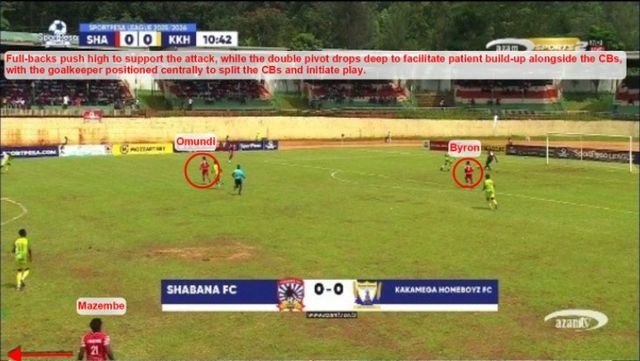 Structured Build-Up with Advanced Full-Backs and a Dropping Double Pivot.
Kiprono’s role as an inverted winger was crucial; by drifting inside into the right half-space, he created room for Mark Oduor to overlap on the flank.
A similar dynamic unfolded on the left, with Mazembe holding width while Michira occasionally inverted, creating layered occupation of vertical corridors.
This ensured Shabana could access both half-spaces and wide channels, a key feature of their attacking play.
Homeboyz responded with an aggressive high press, aiming to disrupt Shabana’s build-up. Their pressing scheme, organised in a 4-2-3-1 shape out of possession, focused on wide pressing traps.
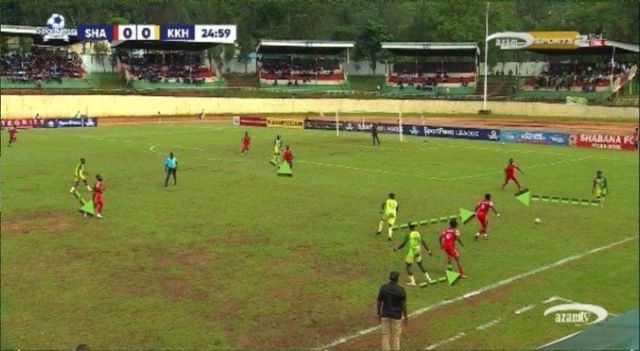
The trigger often came when the ball was played toward Shabana’s right side, where they attempted to isolate Oduor and Kiprono.
Okutu and Machaka alternated roles intelligently - one pressing the centre-backs while the other screened passing lanes into midfield. This duality created moments of pressure, but it also left gaps centrally when rotations were not synchronised.

Despite Kakamega’s pressing intent, Shabana’s midfield interplay proved resilient.
Byron and Omundi displayed composure under pressure, facilitating circulation and enabling switches of play.
These switches, particularly from the left side toward the right wing, were instrumental in destabilising Kakamega’s defensive block.
By quickly transferring the ball across the pitch, Shabana exploited weak-side spaces, especially in the right channel where Derrick, Kiprono and Oduor combined effectively.
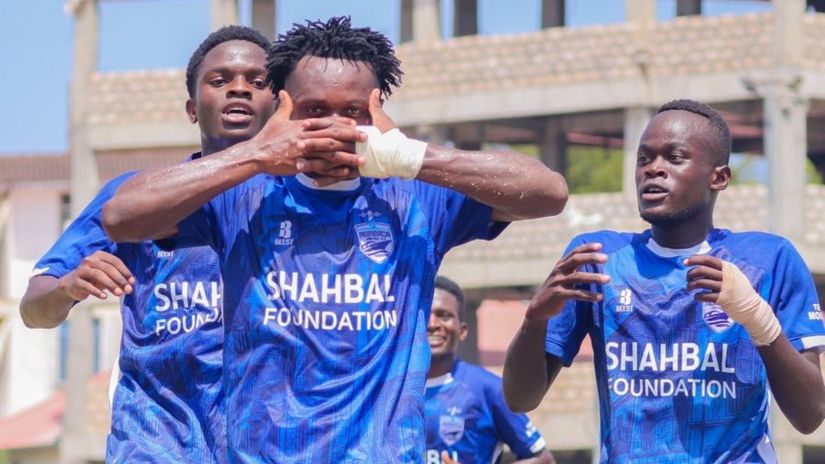
The decisive moment came in the 30th minute, highlighting Shabana’s tactical flexibility. Rather than relying solely on structured build-up, they introduced directness.
A long ball initiated from deep found Batsi Assis, whose dropping movement disrupted the centre-back pairing.
His ability to win the aerial duel and subsequently attack the second phase showcased a classic vertical exploitation of space between lines.
Michira’s looping involvement from the left complemented this move, and Assis’ composed finish underscored Shabana’s clinical edge. This goal encapsulated a recurring theme: the interplay between direct play and positional rotations.
In terms of zone occupation, Shabana frequently accessed Zone 14 through Derrick, whose positioning between Kakamega’s midfield and defensive lines created overloads. Meanwhile, the half-spaces were consistently targeted by the inverted wingers and overlapping fullbacks.
Kakamega, on the other hand, relied heavily on wide areas, delivering crosses into the box via Boniface and Thiongo.
However, their inability to dominate central zones limited the quality of their chances, as Shabana’s centre-backs maintained control over aerial duels and second balls.
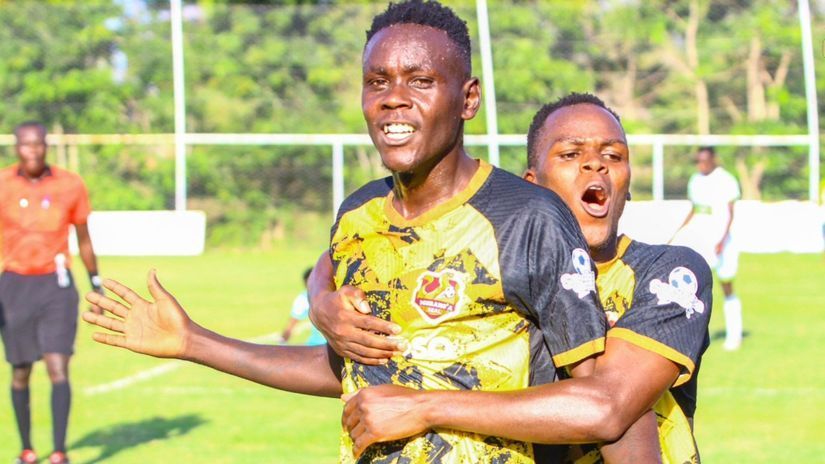
The second half introduced a dramatic shift in tactical momentum. Homeboyz made immediate structural changes, with substitutions triggering positional reshuffles across the team.
The reorganisation saw Thiongo drop to left-back, Machaka move to striker, and Mudavadi switch flanks.
These adjustments created a more fluid attacking structure, enabling better ball progression and width. Subsequent substitutions, including Henry Omollo’s introduction, further altered the dynamic, with Mudavadi moving into midfield to enhance ball retention and distribution.
Kakamega’s renewed approach emphasised sustained pressure and territorial dominance. Their build-up incorporated quicker switches of play, stretching Shabana’s defensive block and forcing them into a deeper 4-4-2 defensive shape.
The increased tempo and width created overloads in wide areas, leading to a series of crosses and cutbacks. Shabana, however, demonstrated strong rest-defense principles.
Their compactness between lines, coupled with disciplined recovery runs, limited clear-cut opportunities despite the sustained pressure.
Transitions became a key battleground in the latter stages. Shabana shifted toward a reactive approach, focusing on counterattacks and game management.
The introduction of Bronson Nsubuga added composure in midfield, improving ball retention and enabling controlled transitions.
Long throws from Mark Oduor and set-piece deliveries from Nsubuga provided additional attacking outlets, allowing Shabana to relieve pressure and create sporadic chances.
Defensively, Shabana’s organisation was commendable. Their compact block reduced central penetration, forcing Kakamega into predictable wide attacks.
Stepping triggers were well-coordinated, with midfielders engaging opponents when they entered critical zones, while the backline maintained cohesion.
The goalkeeper, Stephen Ochieng, played a pivotal role, particularly with his save in the 79th minute to deny Derrick Otanga in a one-on-one situation. This moment epitomised Shabana’s defensive resilience and ability to withstand late pressure.
Kakamega’s pressing in the second half was less structured but more aggressive, focusing on pinning Shabana in their defensive third. While this approach generated territorial dominance, it also exposed them to counterattacks due to reduced rest-defense stability.
The lack of compactness between their defensive and midfield lines occasionally allowed Shabana to bypass pressure and exploit transitional spaces.
Ultimately, the match can be characterised as a tale of two halves. Shabana’s first-half control, driven by structured build-up, effective use of half-spaces, and clinical finishing, laid the foundation for their victory.
Homeboyz’s second-half resurgence showcased adaptability and attacking intent but lacked the final precision required to break down a well-organised defense.
From a tactical standpoint, Shabana’s strategy proved more balanced and pragmatic. Their ability to alternate between controlled possession and direct play added unpredictability, while their defensive discipline ensured they could protect their lead.
Homeboyz demonstrated tactical flexibility through their substitutions and positional rotations, but their reliance on wide play and crossing limited their effectiveness against a compact defensive block.
In conclusion, the match highlighted the importance of efficiency, structural coherence, and transition management. Shabana’s mastery of key zones, particularly the half-spaces and central areas, combined with their effective rest-defense, secured a deserved victory. Kakamega Homeboyz, despite their second-half dominance, were ultimately undone by a lack of penetration and defensive vulnerabilities in critical moments.