


TACTICAL ANALYSIS: Tusker's three key pillars that downed Kakamega Homeboyz




Reading Time: 6min | Thu. 19.03.26. | 17:03
The contest showcased Tusker’s tactical discipline both with and without the ball, while Homeboyz struggled to convert moments of territorial pressure into clear chances
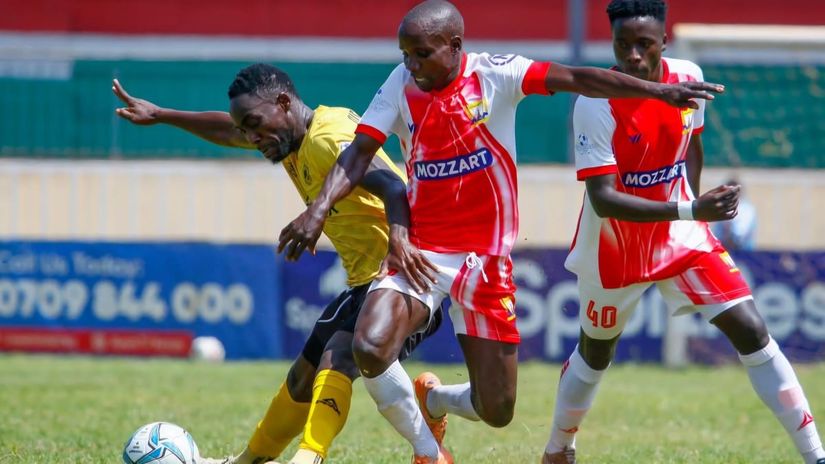
Tusker FC secured a convincing 2-0 victory over Kakamega Homeboyz in an FKF Premier League match largely defined by defensive organisation, pressing intelligence, and efficient exploitation of opposition mistakes.
The contest showcased Tusker’s tactical discipline both with and without the ball, while Homeboyz struggled to convert moments of territorial pressure into clear chances.
Follow Our WhatsApp Channel For More News
The match was particularly notable for the Brewers’ structured defensive block and the decisive finishing of striker Ibrahim Joshua, whose opportunistic pressing and attacking awareness shaped the game’s key moments.
While Kakamega Homeboyz attempted to impose themselves through aggressive pressing and direct play, Tusker’s compact shape and transitional efficiency ultimately proved decisive.
Tusker began the match in a nominal 4-4-2 structure. Pavelh Ndzila made his debut in goal behind a defensive line consisting of Collins Odhiambo at right-back, Servyl Akouala at left-back, and a central defensive partnership of Francis Oduor and Charles Momanyi.
In midfield, Denis Iguma and Chrispine Erambo operated as the central double pivot, providing defensive stability and initiating build-up phases.
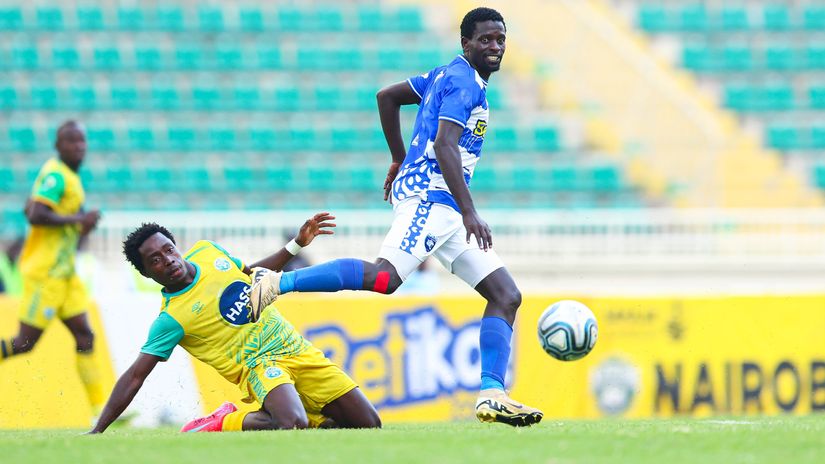
Out wide, Thomas Omole started on the right flank while Stephen Etyang operated from the left.
Up front, Ibrahim Joshua led the line as the main striker, supported by Eric Kapaito, who functioned as a hybrid second striker.
Kapaito frequently drifted between the lines, offering support in wide areas and occasionally dropping into midfield zones to link play.
Kakamega Homeboyz lined up in a 4-2-3-1 formation. Ibrahim Wanzala started in goal behind a defensive unit of John Omondi at right-back, Shafik Batambuze at left-back, and centre-backs Boniface Onyango and Potiphar Odhiambo.
In midfield, Eston Esiye operated as the holding midfielder, sitting just in front of the defence, while Glen Masava played as a deeper central midfielder tasked with balancing progression and defensive coverage.
Rodgers Ouma occupied the attacking midfield role, drifting between lines to support wide players Peter Nganga on the right and Moses Mudavadi on the left.

Oliver Majaka spearheaded the attack as the central striker, tasked with stretching Tusker’s backline and attacking spaces behind the defence.
In the opening stages, Tusker adopted a controlled build-up approach.
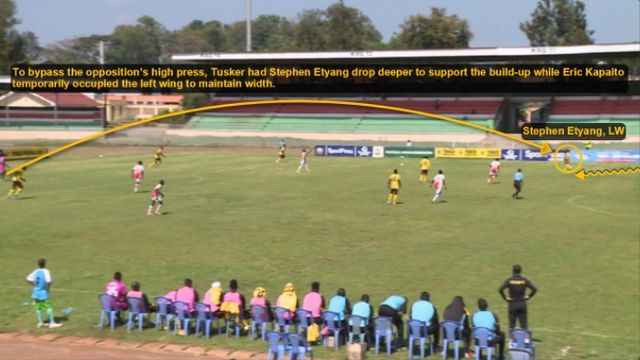
Their defensive line, combined with the midfield double pivot of Iguma and Erambo, to form a stable 5-2/4-2 base during early possession phases.
This structure allowed them to circulate the ball while attempting to bypass Kakamega Homeboyz’ serious, aggressive pressing attempts.
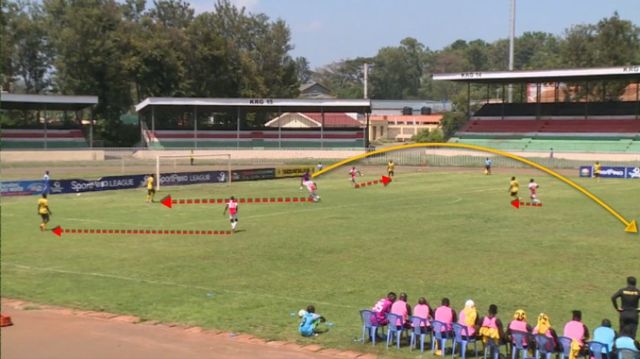
Kakamega Homeboyz, in contrast, relied heavily on direct play.
Their build-up frequently bypassed midfield through long goal kicks or forward passes aimed toward wide areas.
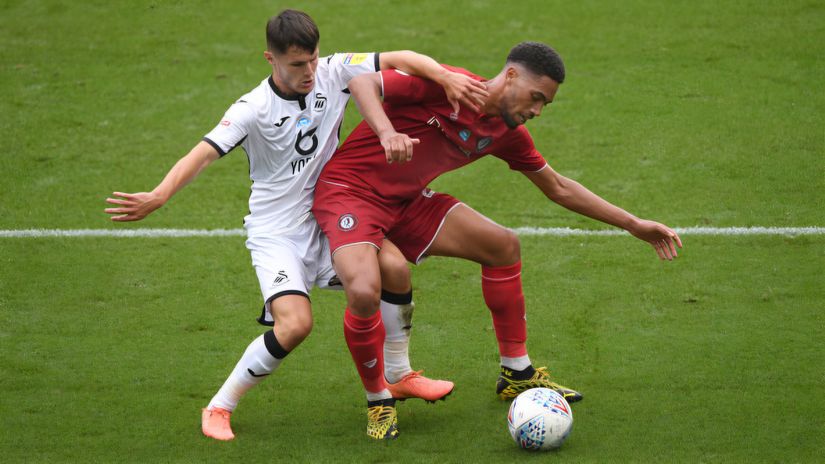
By targeting the flanks and seeking quick transitions from these zones, they attempted to exploit space behind Tusker’s defensive line.
However, Tusker’s defensive organisation limited these attempts.
When out of possession, they maintained a compact 4-4-2 mid-block that denied central progression and forced Homeboyz toward wide areas where attacks could be contained.
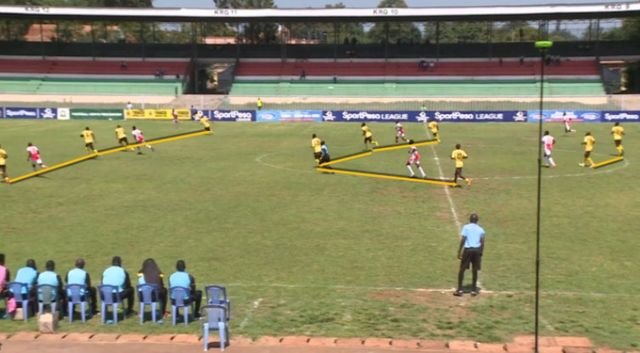
One of the most defining tactical moments of the match came in the 18th minute.
Tusker striker Ibrahim Joshua recognised a pressing trigger when the ball was played back toward the Kakamega Homeboyz goalkeeper.
Instead of retreating into shape, Joshua aggressively closed down the goalkeeper, blocking the passing lane and forcing an error.
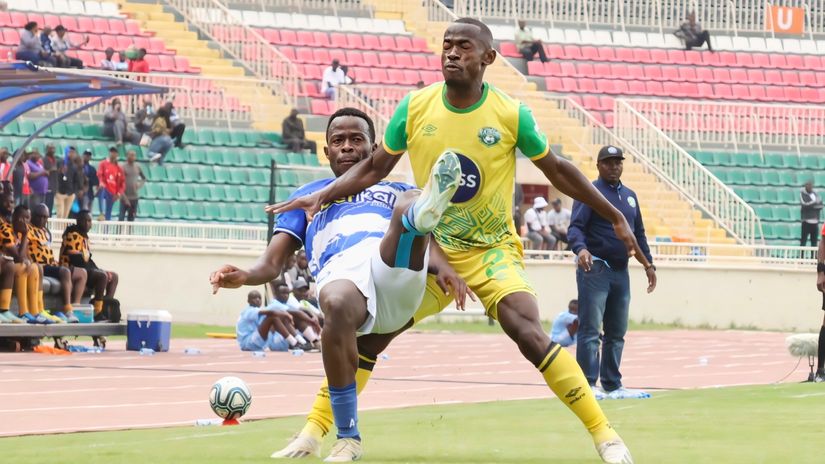
The resulting deflection sent the ball directly into the net, giving Tusker a 1-0 lead.
The goal highlighted the effectiveness of coordinated pressing cues and the value of striker awareness in defensive phases.
Despite conceding, Kakamega Homeboyz responded with increased intensity.
Shortly after the goal, they forced a turnover inside Tusker territory when Charles Momanyi attempted to carry the ball out from the back.
However, Oliver Majaka failed to convert the resulting opportunity, missing a key chance to equalise.
As the first half progressed, Tusker began to show more attacking fluidity. Kapaito’s positional freedom allowed him to drift toward whichever side held possession, creating numerical support in wide areas.
A key structural detail in Tusker’s attack was the asymmetric full-back behaviour.
When Servyl Akouala advanced high on the left to support Stephen Etyang, Collins Odhiambo remained deeper on the right to maintain defensive balance and vice versa.
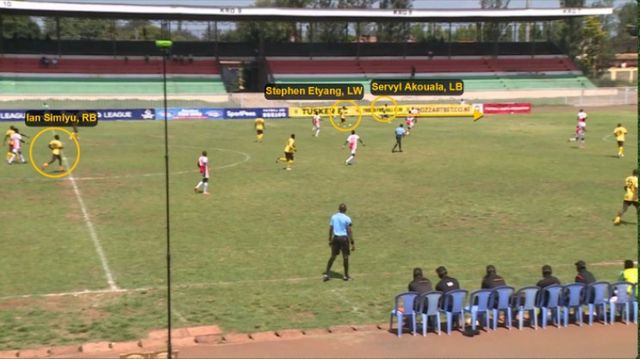
This ensured Tusker always had sufficient cover against potential counterattacks.
Meanwhile, Kakamega Homeboyz attempted to exploit space behind Tusker’s defence through forward runs from Oliver Majaka.
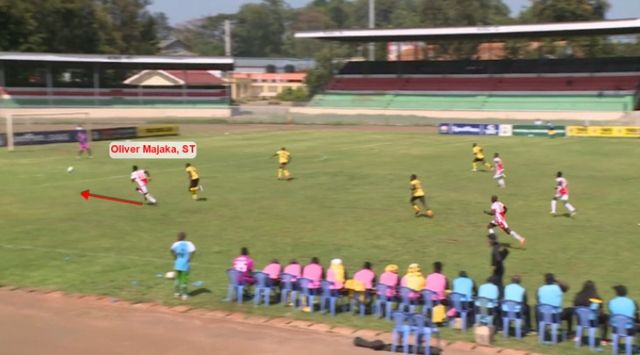
Much of their attacking focus came through the left flank, though Tusker’s defensive awareness consistently disrupted these efforts.
Tusker also showed intelligent territorial management. By pushing Homeboyz players outward and forcing them away from central zones, they ensured that dangerous attacking opportunities were minimised.
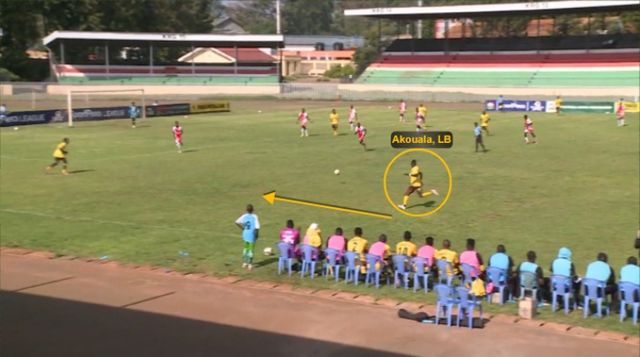
Tusker’s second goal around the 37th minute perfectly illustrated their direct attacking efficiency. Left-back Servyl Akouala launched a long pass from deep inside his own half into the opposition territory.
The ball reached Ibrahim Joshua after Kakamega Homeboyz defenders failed to clear effectively. Joshua quickly capitalised, unleashing a powerful shot that doubled Tusker’s lead.
This sequence highlighted Tusker’s ability to combine structured build-up with opportunistic direct play, punishing defensive hesitation with clinical finishing.
At the start of the second half, Kakamega Homeboyz made an immediate substitution, withdrawing Glen Masava for Pistone Mutamba in an attempt to inject more attacking impetus.
The visitors gradually shifted toward a more patient build-up strategy, asking their centre-backs to progress the ball while coordinating with advancing full-backs.
This represented a clear tactical adjustment from their earlier reliance on long balls.
Despite this improvement, Tusker continued to control key moments.
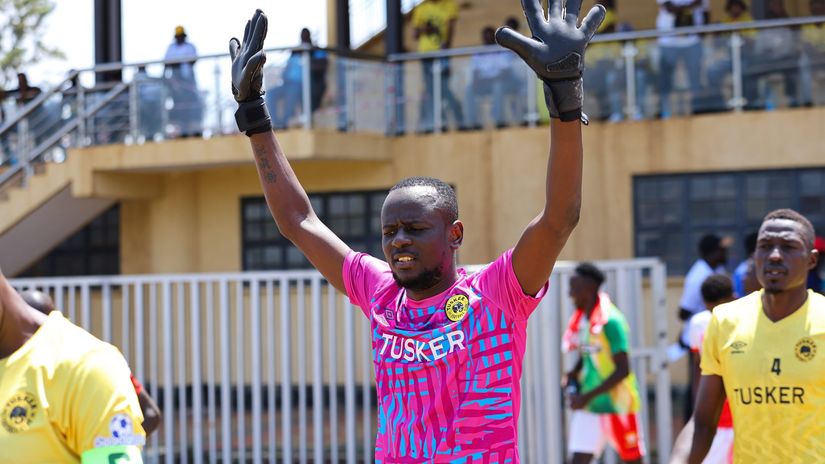
Six minutes into the second half, goalkeeper Pavelh Ndzila produced an important save to deny Oliver Majaka, preserving Tusker’s two-goal advantage.
Tusker themselves began to emphasise their left flank more aggressively. Akouala pushed higher in overlapping runs while Etyang orchestrated attacking moves from the wing.
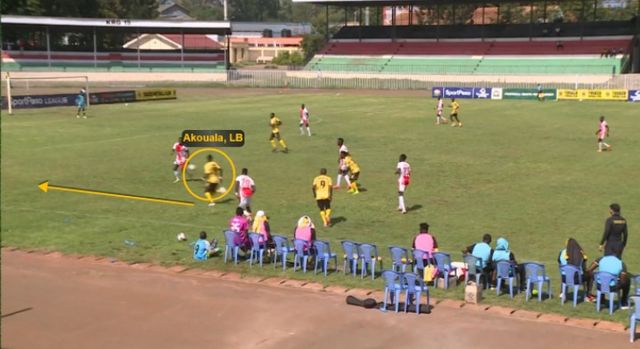
As the match entered its final phase, both teams introduced attacking substitutions. Tusker brought on Denis Oalo and Ian Simiyu, while Kakamega Homeboyz introduced Henry Omollo, among other changes.
Omollo’s presence on the left wing briefly troubled Tusker’s defence, creating moments of uncertainty around the 70th minute. However, Tusker responded with strategic substitutions of their own, introducing Vincent Owino and Fabian Adikiny to stabilise the midfield.

These changes strengthened Tusker’s control of central areas and helped them manage the game’s tempo.
Their defensive organisation remained strong, particularly in box defending, where both the backline and goalkeeper showed excellent awareness.
Late in the match, Tusker even created several chances to extend their lead through substitute attackers - Denis Oalo, Ian Simiyu and Bless, though they were unable to convert a third goal.
Ultimately, Tusker’s victory was built on three key tactical pillars: disciplined defensive structure, intelligent pressing triggers, and efficient exploitation of opposition mistakes.
Their compact 4-4-2 block limited Kakamega Homeboyz’s ability to play through central zones, forcing the visitors into predictable wide attacks.
At the same time, Tusker’s pressing awareness - exemplified by Ibrahim Joshua’s opening goal - demonstrated how small moments of tactical recognition can decide matches.
Kakamega Homeboyz showed flashes of attacking potential, particularly through wing play and late-game substitutions, but their inability to convert early chances and their defensive lapses proved costly.
In the end, Tusker’s structural clarity, disciplined game management, and clinical finishing ensured they controlled both the rhythm and the outcome of the match.