


Kenyan-based refugees draw strength from rebuilding as they chase African Championships glory






Reading Time: 4min | Tue. 12.05.26. | 09:57
Despite missing out on the championships, Nakiro continues supporting her siblings through athletics allowances earned while training in Kenya.
Kenyan-based refugees will be among the athletes competing at the African Championships in Accra, Ghana, after years of rebuilding their lives in camps across the country.
When war broke out in South Sudan in 2011, seven-year-old Kun Waar Liem fled to Dadaab Refugee Camp in North Eastern Kenya while his parents escaped to Ethiopia. He has not seen them since.
“We were in different places then, and survival came first. So we split. My parents and siblings went to Ethiopia. My elder sister and I came to Kenya,” said Kun in an interview with World Athletics.
Years later, the refugee camp that once offered him safety also became the foundation of his athletics career.
Kun, now a 200m sprinter, is among five athletes set to represent the Athlete Refugee Team (ART), a World Athletics initiative, at the championships scheduled for 12-17 May.

Another Kenyan-based refugee athlete, Solomon Okeny, arrived in Kakuma Refugee Camp in 2010 alongside his mother and five siblings.
Although he first played football for Kakuma United, he discovered his sprinting talent almost by accident.
“I saw a race where winners got water and glucose,” Okeny recalled. “In Kakuma’s heat, that was enough. I joined and that’s how I discovered I could run.”
The two sprinters now train in Nairobi under coach Duncan Ayiemba, who also works with Africa’s fastest man, Ferdinand Omanyala.
“He mentors us a lot on how to progress in sprinting,” said Kun. “When we are in training, we just try to catch up with him, and that’s how we gain.”
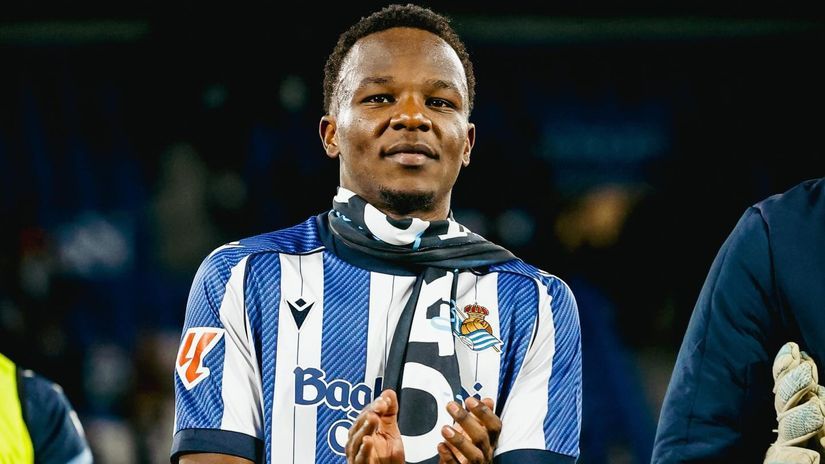
Okeny has also used athletics to support his sisters who still live in Kakuma Refugee Camp.
“I left school to take care of my sisters,” said Okeny. “When free education ended in Kakuma and fees were introduced, I worried they might be pushed into early marriage. So I chose to lift them up through education. I'll go back to school this year.”
Away from Nairobi, the middle and long-distance runners are training in Kaptagat under 2007 world 800m champion Janeth Jepkosgei.
Among them is 1500m runner Abdifatah Aden Hassan, who fled Ethiopia in 2009 and grew up in Dadaab Refugee Camp after being separated from his parents during conflict.

“When the war started, people scattered. I went with the nearest relatives I could find, and we ended up in Dadaab Refugee Camp,” Hassan said. “I’ve been searching for my parents ever since, but I haven’t been successful yet.”
Hassan’s talent was later identified through the IOC Refugee Athlete Scholarship programme and the Tegla Loroupe Peace Foundation.
“We are refugees by name, not by choice,” said Hassan. “Let's live like others and work towards our goals; my dream for Accra is to be the best version of myself.”
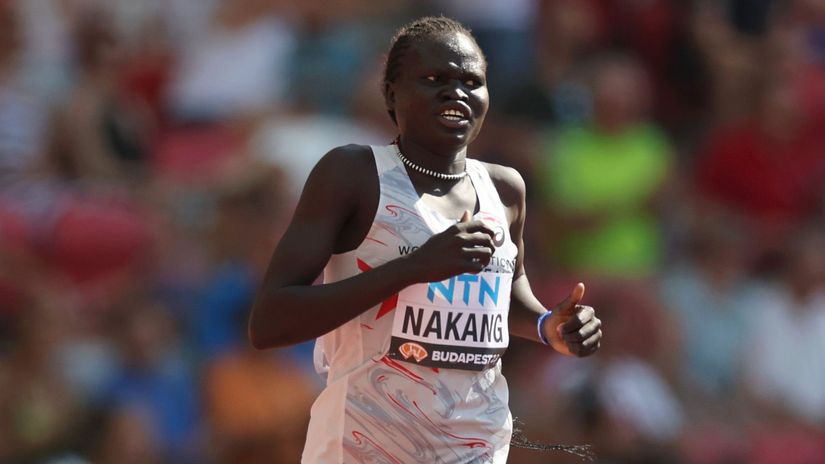
The team also includes South Sudanese athletes Lokoro Dario and Perina Nakang, both of whom are based and training in Kenya.
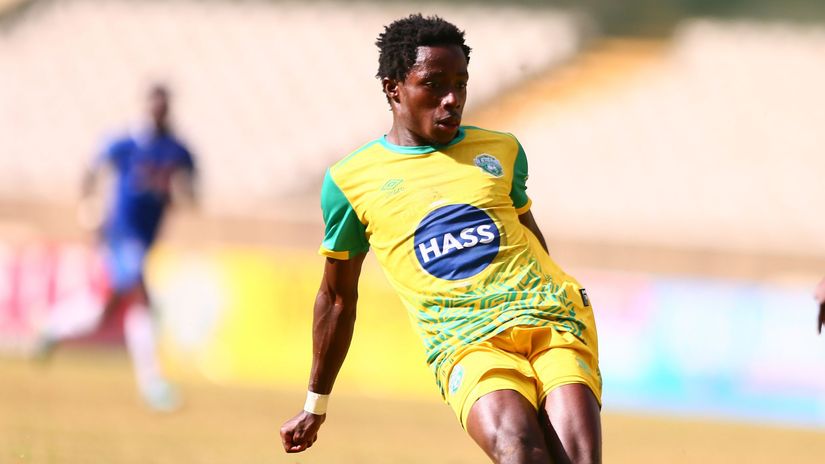
Dario, who competed at the World Athletics U20 Championships Lima 24, will race in the men’s 5000m after clocking 16:13 during Athletics Kenya trials.
“I ran the 3000m in Peru, but I will be competing in the 5000m in Ghana,” said Dario. “I ran 16:13 in the Athletics Kenya trials, and my target now is to lower it.”
Nakang, an experienced 800m runner who has represented the Athlete Refugee Team at two World Championships and the Paris 2024 Olympic Games, fled to Kakuma in 2010 and was reunited with her mother six years later.
“The training has been going well,” Nakang said. “I am just fine-tuning a few things. It helps to have a world champion as a coach, and I am hoping to lower my personal best in Accra.”
Another Kenyan-based refugee athlete, Susan Nakiro, was ruled out of the championships through injury.
Nakiro fled South Sudan with her five siblings during conflict in 2017 before eventually settling in Kakuma Refugee Camp.
“When the gunshots went off, it was scary, and I didn't know what was going on,” Nakiro recalled. “I gathered my siblings, and I followed the fleeing villagers. The first few nights, we slept in the forest until we reached what I came to know as Kakuma Refugee Camp.”
She later found her aunt in Kakuma, but difficult living conditions forced her to become the breadwinner for her siblings at just 14 years old.
Despite missing out on the championships, Nakiro continues supporting her siblings through athletics allowances earned while training in Kenya.