

-min.jpg)
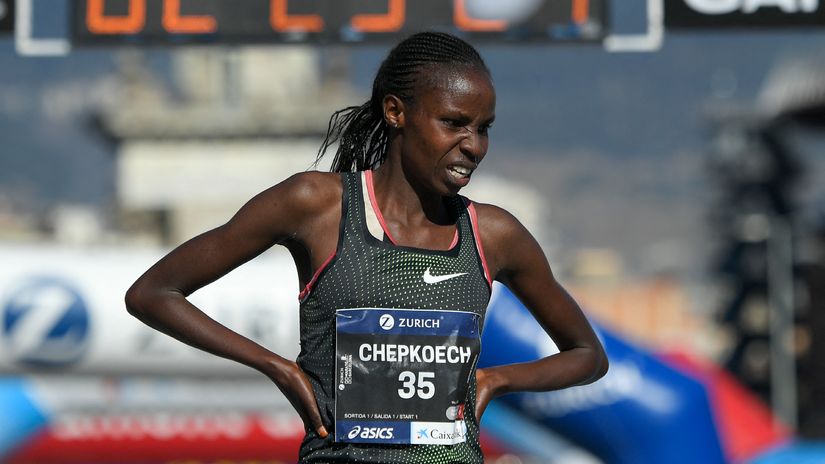
Rhonex Kipruto banned for six years in doping case




.jpg)

Reading Time: 3min | Wed. 05.06.24. | 18:17
Tribunal concluded that the abnormalities in his ABP were more likely due to blood manipulation
World Championship 10,000 meters bronze medallist Rhonex Kipruto has been banned for six years by the Athletics Integrity Unit (AIU) after a Disciplinary Tribunal ruled irregularities in his Athlete Biological Passport (ABP) resulted from doping.
Kipruto, 24, had been provisionally suspended on 11 May last year under the World Athletics Anti-Doping Rules (ADR) – ADR 2.2 relating to the “Use or Attempted Use by an Athlete of a Prohibited Substance or a Prohibited Method” – after irregularities were detected in his ABP dating back to July 2018.
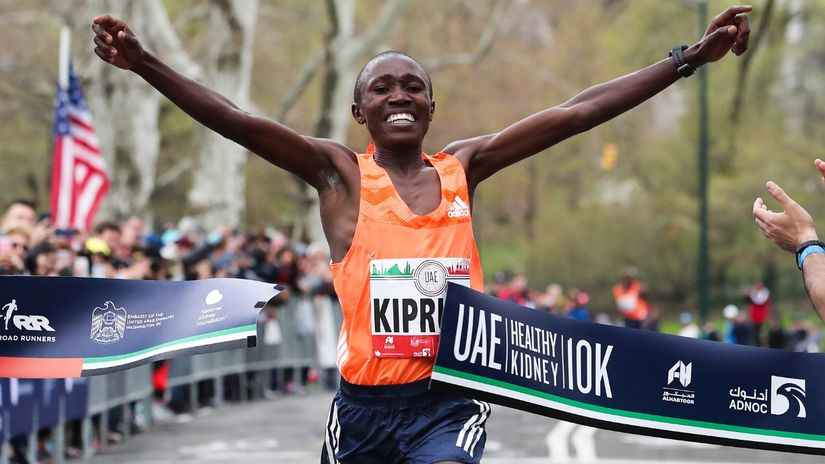
And after considering submissions from experts, the Tribunal rejected Kipruto’s defence, concluding the “cause for the abnormalities in the ABP was more likely to be due to blood manipulation” such as through the use of recombinant human erythropoietin (rEPO), while pointing out there was “no other plausible explanation” for the abnormal values.
Kipruto is now banned until 10 May 2029, and will have some top honours - including the 10-kilometre road-running world record in Valencia in 2020 - disqualified.
The AIU has banned Rhonex Kipruto (Kenya) for 6 years, from 11 May 2023 for the Use of a Prohibited Substance/Method (ABP case). DQ results from 2 September 2018 to 11 May 2023
— Athletics Integrity Unit (@aiu_athletics) June 5, 2024
Details here: https://t.co/BKq8zojQHB
Details here: https://t.co/aNSj06HMbM pic.twitter.com/iJVYlvXCcx
Timeline
Between 9 July 2018 and 15 March 2022, 32 blood samples from the athlete were collected and analysed to create his biological passport.
Three experts subsequently analysed the passport, while also reviewing the athlete’s Whereabouts along with his competition schedule, and deemed in a unanimous opinion that doping was “highly likely” based on a number of “abnormal haematological patterns”.
Kipruto denied the Anti-Doping Rule Violation (ADRV) charge, contending that his ABP abnormalities were due to multiple factors such as natural and specific characteristics of his body, various medical conditions, and health conditions.
Panel Decision
However, having reviewed and considered carefully the totality of the Athlete’s evidence, the Panel of the Disciplinary Tribunal was comfortably satisfied that (the AIU) had discharged its burden of proof, and established that the Athlete had committed an ADRV.
In reaching its decision, the Disciplinary Tribunal said: “The Expert Panel thoroughly analysed all arguments put forward by the Athlete and clearly demonstrated each time, by presenting supporting scientific evidence, why the Athlete’s arguments could not explain the abnormalities in the Passport”.
A line in the decision also indicates that Kipruto was involved in a "deliberate and sophisticated doping regime over a long period of time in order to artificially enhance his performance through doping."
_(1).jpg)
Several abnormalities found in the Athlete’s ABP were linked to important competitions including the Valencia Half Marathon in 2020 and Kenyan Olympic Trials in 2021, all of whose results, plus notably the 2019 Stockholm Diamond League, have now been annulled.
The decision is subject to appeal to the Court of Arbitration for Sport (CAS).
What ABP is
The ABP, introduced in 2009 to fight blood doping, is an electronic record that collects an athlete’s biological data over time to indirectly detect the effects of doping.
The ABP collates data including an athlete’s haemoglobin concentration and percentage of immature red blood cells (reticulocytes), and identifies unusual variations using a statistical model.
The anonymised data is analysed by independent experts and, for a case to proceed, three of them must unanimously conclude that doping is likely.