


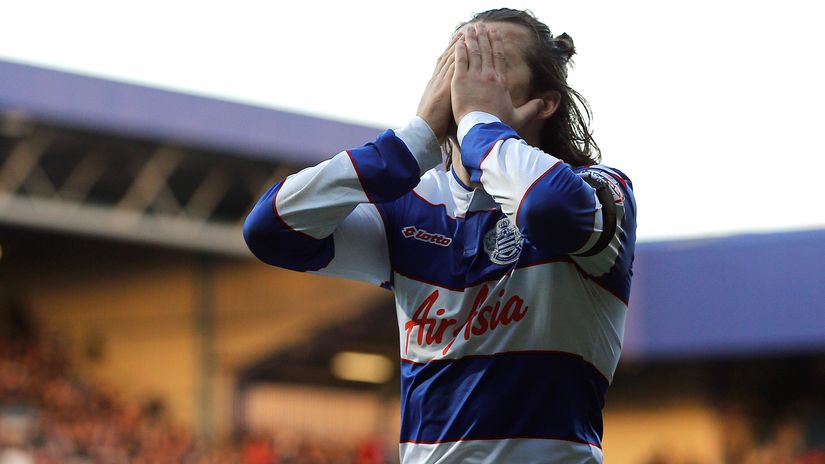
How Queen’s Park Rangers failed at ‘doing a Chelsea’
.jpg)
Reading Time: 4min | Thu. 21.01.21. | 11:52
They are located in a posh neighbourhood in London, they’ve got a famous name, an iconic kit, dedicated fans, proud tradition and a rich owner, but QPR are wasting their time far away from the biggest stage in the lower echelons of the Championship
Lost to Bristol City, Reading and Huddersfield. Drew against Millwall and Wycombe. Hovering just above the drop zone. Things are not looking very glamorous for Queen's Park Rangers.
They were playing against the likes of Arsenal, Liverpool and Tottenham not so long ago, but today they seem a world away from top flight football.
What went wrong?
After their relegation from what was then called The F.A. Carling Premiership in 1996, they faced years of uncertainty, further relegations, ownership changes and dilapidation, in came Tony Fernandes, one of Malaysia's richest men, to turn the Loftus Road club into an ambitious project. It was a project that looked a lot like the one Roman Abramovich successfully developed just three miles down the road at Chelsea.
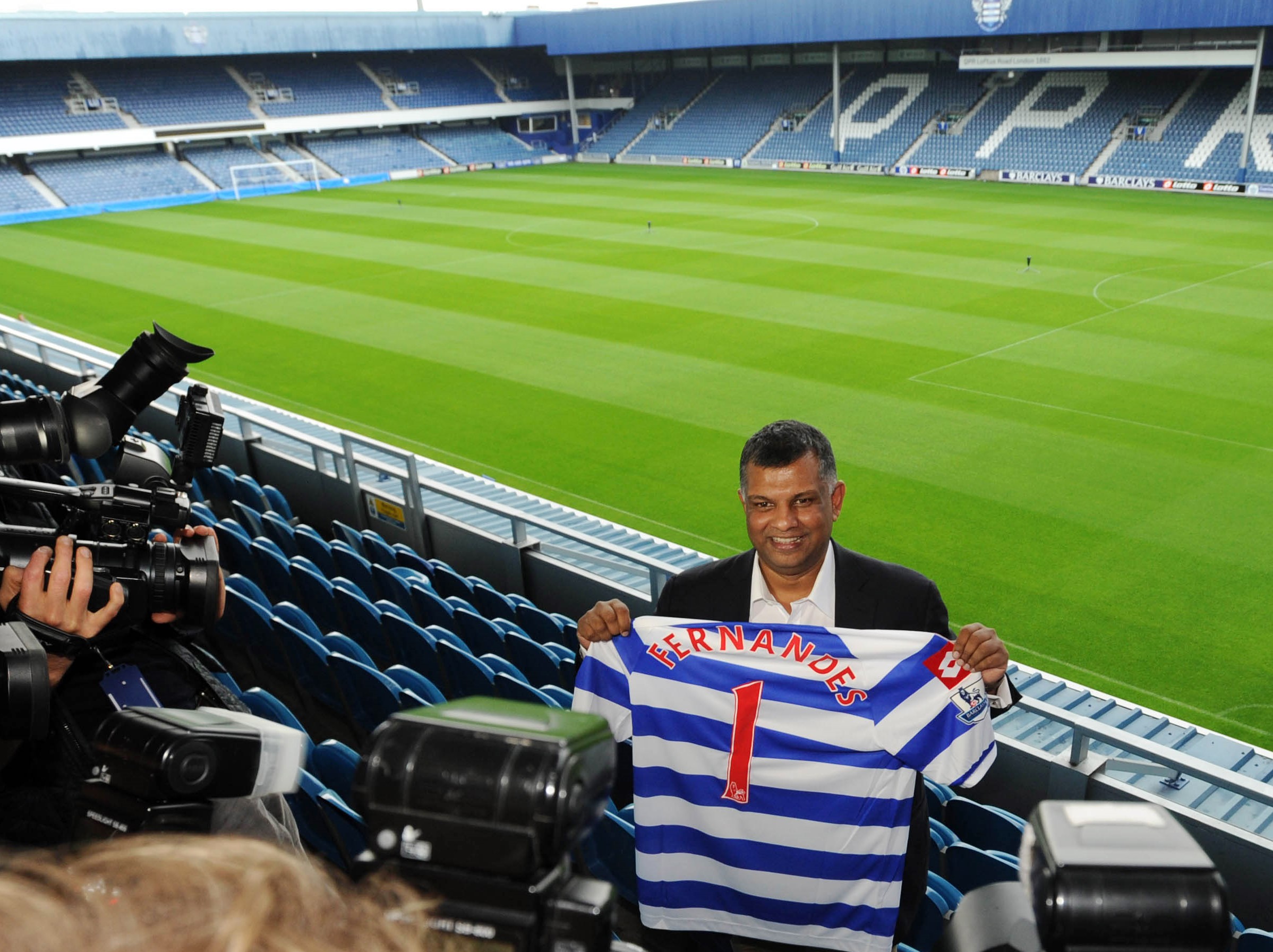 Tony Fernandes upon his arrival at Loftus Road (©Reuters)
"QPR is a raw diamond and hopefully I can contribute into turning it into a diamond. I want the fans to be proud of what we're doing". These words by the new owner excited the fans who were already brimming with optimism and energy following their long-awaited promotion back to the Premier League in 2011, but it hasn't really worked.
Almost a decade since Fernandes’ boisterous announcement, the club is midway through its sixth season of Championship obscurity that isn’t looking like ending any time soon. League finishes of 12th, 18th, 16th, 19th and 13th in their last five seasons suggest that their owner hasn’t cracked the football game or he simply has other things on his mind.
It didn’t look like the project would end in failure. They managed to stay up in their first season, although it was far from straightforward. Manager Neil Warnock was replaced by Mark Hughes midway through the 2011/12 season and steered the club to safety despite the awful winter period in which they could manage just one win in three months. The signings of the likes of Djibril Cissé, Shaun Wright-Phillips, Bobby Zamora and Joey Barton proved enough to earn them that precious 17th spot.
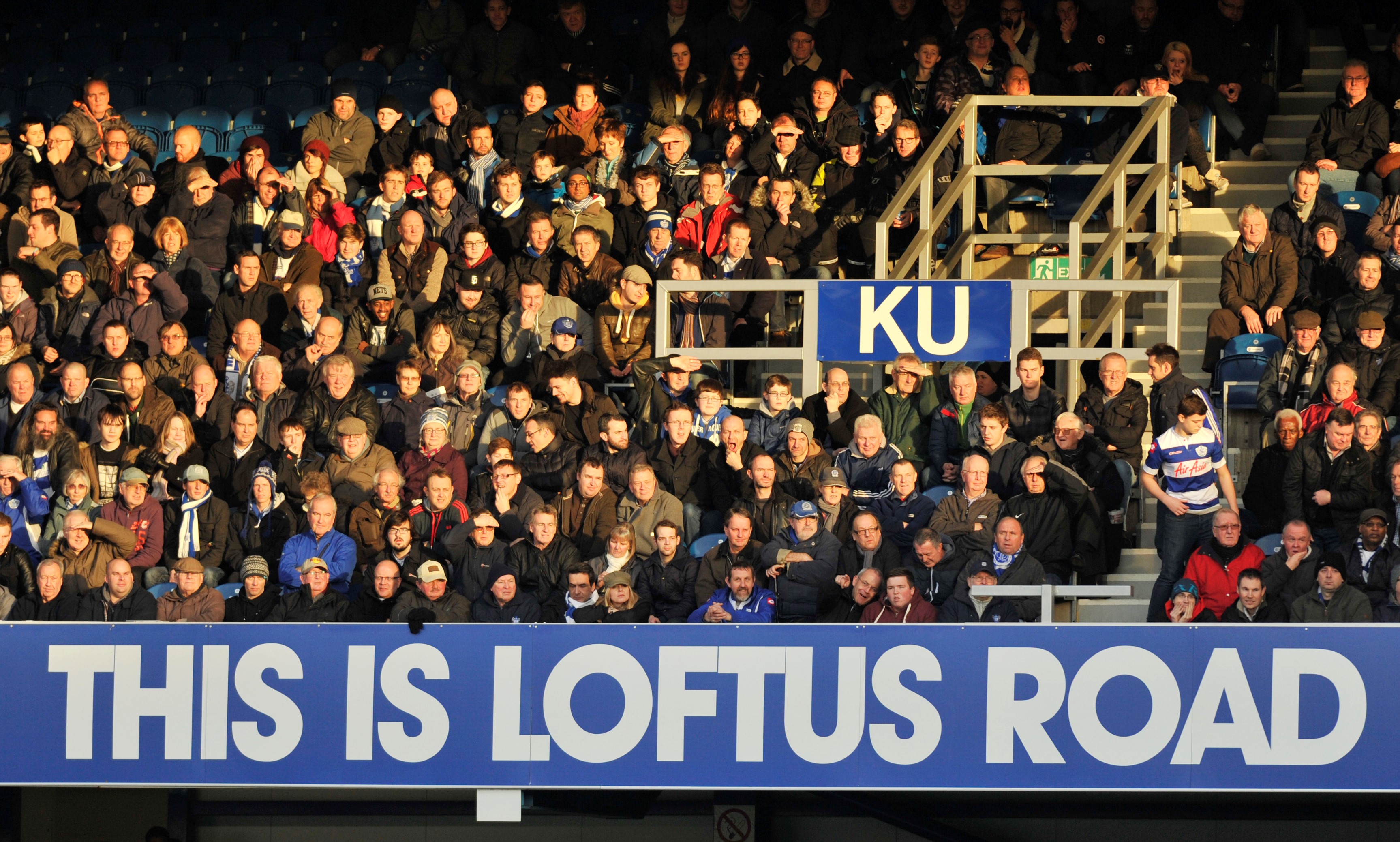 Rs fans remain loyal despite recent turmoil (©Reuters)
But trouble was just around the corner. The notorious Second Season Syndrome claimed another victim in QPR who waited for their first league win until December despite making some big-name signings such as Júlio César, Esteban Granero, Stéphane Mbia and Park Ji-sung. They performed poorly and Mark Hughes paid the price with Harry Redknapp coming in to try and turn it around. January spending spree saw club-record signing Christopher Samba, Loïc Rémy, Tal Ben Haim and Jermaine Jenas bolster the squad, but it’s done little to stop the slide. They poured in a total of £45M for incoming transfers and got precious little in terms of value. In the end they were punished for making poor decisions in the transfer market. The Rangers learned the hard way that an owner with money to spend on players doesn’t automatically guarantee results.
The following season Redknapp repeated his Portsmouth trick and dragged the club back into the Premier League via the play-offs with the likes of Charlie Austin and Junior Hoilett supplying the firepower. They beat Derby County in the play-off final when fan favourite Bobby Zamora scored the only goal in the dying seconds. The optimism was back as everyone prepared for another attempt of making it in the big time, but poor transfer dealings in the summer of 2014, notably the inability to replace Chelsea-bound forward Loïc Rémy meant the club was in for another season of struggle. And sure enough, the results were poor and Redknapp resigned in early February. He cited health issues as the reason behind his decision, not the club’s league position. He was replaced by Chris Ramsey, who couldn’t do anything but start planning for life in the Championship yet again.
The difference this time is that life in the Championship would last a lot longer. Fast forward five years and the Rangers are starting to worry about not dropping down even lower and facing the possibility of playing in the third tier of English football along with Ipswich Town, Sunderland, Wigan Athletic, Hull, Portsmouth and the others who suffered badly after being demoted from the top flight.
Tony Fernandes remains the majority shareholder, but is facing a whole set of problems outside football. His business ventures have been hit hard by the Covid-19 pandemic with around 2,400 people laid off at AirAsia, Fernandes’ most valuable company. It’s no wonder signing first team players isn’t a priority for the businessman. In fact, he went on record to say that he’s looking to give up his stake. The diamond he spoke about in 2011 remains raw and unpolished with worries that it may end up deep in the ground again.