


Iran's World Cup knight used to sleep in the streets and wash cars to survive
.jpg)
.jpg)

.jpg)
.jpg)


Reading Time: 5min | Mon. 22.06.26. | 13:06
Born into a family of shepherds, forced to sleep rough in Tehran and rejected countless times, Alireza Beiranvand is now carrying Iran's WC dream
Few teams have endured more adversity on their road to the World Cup than Iran.
The war in the Middle East disrupted preparations for months. Friendly matches required exhausting bus journeys to Turkey. Several members of the coaching staff were denied visas to enter the United States. Players and officials spent hours waiting at border crossings, uncertain whether they would even be allowed through.
Yet after two matches, Iran find themselves second in Group G with two points and a genuine chance of reaching the knockout stages. Defeat Egypt in their final group game and history could await.
Given everything they have been through, perhaps it should not come as a surprise.
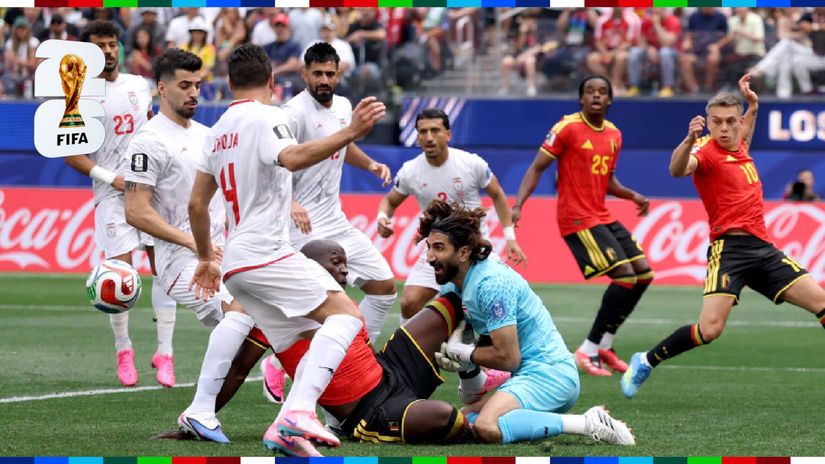
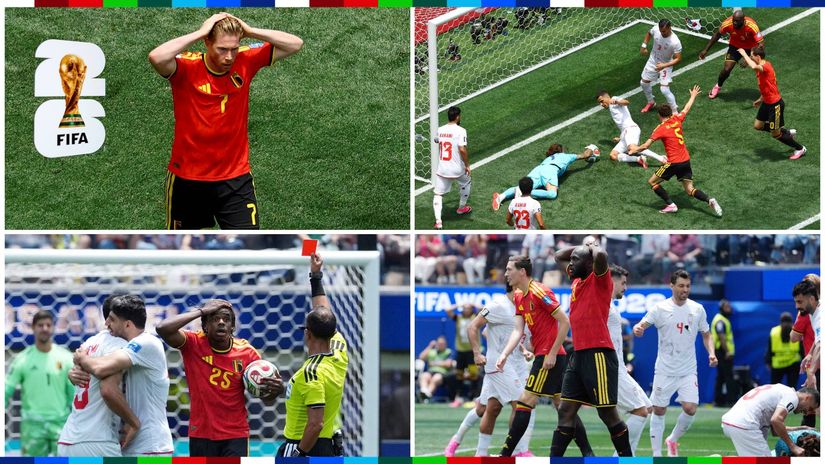
The Iranians played against Belgium as if their lives depended on it. Every challenge was contested, every loose ball fought for. At the heart of their resistance stood Alireza Beiranvand, the 33-year-old goalkeeper who delivered one of the performances of the tournament.
Time and again, Belgium thought they had found a way through. Time and again Beiranvand denied them.
For Beiranvand, however, overcoming impossible odds is nothing new.
Long before he was frustrating world-class forwards on football's biggest stage, he was fighting battles of a very different kind.
🌎🇮🇷 OFFICIAL: Aliza Beiranvand wins FIFA Man of the Match Award for Iran against Belgium.
— Fabrizio Romano (@FabrizioRomano) June 21, 2026
7 saves for the Iranian goalkeeper. 🧱 pic.twitter.com/y44OoqYZRJ
His remarkable life story was first brought to international attention by Iranian journalist Behnam Jafarzadeh in a feature for The Guardian ahead of the 2018 World Cup.
Beiranvand was born in a nomadic family whose life revolved around moving from one grazing ground to another in search of pasture for their sheep.
As the eldest son, he worked from an early age, helping to tend the family's flock. Whenever he found a spare moment, he would play football with friends or compete in Dal Paran, a traditional local game that involves throwing stones over long distances.
At the time, he could never have imagined how useful that unusual skill would one day become.
His family finally settled permanently when he was 12 years old, allowing him to join a local football team. Initially, he played as a forward, but when the team's goalkeeper suffered an injury, Beiranvand stepped between the posts.
One spectacular save later, he never left. The biggest obstacle to his dream was not the lack of talent but his own father. Mortaza Beiranvand believed football was a hobby, not a profession.
"My father hated football," Beiranvand once told The Guardian. "He wanted me to work. He even tore up my shirt and my gloves, so sometimes I had to play goalkeeper with bare hands."
Alireza Beiranvand save against Belgium 59' pic.twitter.com/bggqgblDmY
— Mu (@mu_H47) June 21, 2026
Many would have given up, but instead, Beiranvand ran away from home.
Borrowing money from relatives for a bus ticket, he travelled alone to Tehran in pursuit of a football career. He arrived with little more than hope, since there was no bed waiting for him. No contract, either. Nor salary.
A local coach, Hossein Feyz, agreed to let him train if he could pay a small fee. Beiranvand could not afford it.
For a time, he slept near Tehran's famous Azadi Tower alongside migrant workers and homeless people. On some nights, he slept outside the entrance to football clubs where he was on trial.
"When I woke up one morning, people had left coins beside me," he recalled. "They thought I was a beggar. That was the first proper breakfast I'd had in a long time."

Gradually, opportunities arrived... A teammate's family gave him a place to stay. He worked in a clothing factory. Later, he found employment at a car wash, where his 195-centimetre frame made him particularly useful for cleaning large vehicles.
One of the cars he washed belonged to Iranian football legend Ali Daei. Friends encouraged him to explain his situation and ask for help, but he refused.
"I knew he would help me," Beiranvand said. "But I was too embarrassed."
His struggle continued. He worked in a pizza restaurant and slept there at night. He cleaned streets and parks around Tehran. Sometimes he would spend entire nights working before training and playing matches the next day.
At one stage, he was balancing commitments with two clubs simultaneously, desperate to keep his dream alive. Eventually, Beiranvand returned to Naft Tehran and finally began to establish himself.
His rise was rapid. He became Iran's Under-23 goalkeeper, then Naft's first-choice keeper and eventually the national team's undisputed number one.
And that childhood game of throwing stones? It helped create one of his most famous moments.
In 2014, Beiranvand launched a throw from inside his own half that travelled all the way into the opposition's half, setting up a goal for a teammate. The astonishing assist became a viral sensation and showcased the extraordinary throwing power he had developed as a child.
Recordemos que Alireza Beiravand, el portero lesionado de Irán, posee el récord Guinness de saque con la mano más largo
— Manu Heredia (@ManuHeredia21) November 21, 2022
📽️@boavistaoficial pic.twitter.com/zsr2LxUmoV
By 2015, he was Iran's first-choice goalkeeper. Three years later, he was representing his country at the World Cup in Russia. His career subsequently took him to Europe, where he played for Antwerp and Boavista, before returning home to represent Iranian giants Persepolis and later Tractor.
Now, once again, he finds himself on the grandest stage of all.
"I've gone through many hardships to achieve my dreams," Beiranvand once reflected.
"But I never want to forget them, because they made me the person I am today."
Alireza Beiranvand's moment 🧤🔙#FIFAWorldCup pic.twitter.com/sBIya9yzGd
— FIFA World Cup (@FIFAWorldCup) June 15, 2026
Those words perhaps explain why Iran have become one of the most resilient teams at this World Cup. And why their goalkeeper remains impossible to break.
From sleeping on the streets of Tehran to producing miracles against Belgium in Los Angeles, Beiranvand's journey is still not over.
The nomad continues to travel. Only now, the whole world is watching.