



PRE MATCH TACTICAL ANALYSIS MOZZART BET CUP: Four Areas Nairobi United vs KCB match could be won or lost








Reading Time: 5min | Sun. 03.05.26. | 07:22
Ultimately, the winner of this Mozzart Bet Cup tie will be the team that manages the "transition moments" best
The upcoming Mozzart Bet Cup clash between Nairobi United and KCB promises to be a fascinating tactical battle, pitting Nairobi’s aggressive, man-oriented defensive system against KCB’s more patient, funneling mid-block.
With both teams showing distinct preferences in how they manipulate space and trigger their defensive actions, the outcome will likely be decided by which side can best exploit the structural vulnerabilities left behind by the other’s offensive rotations.
Download Our MozzartSport App For More News
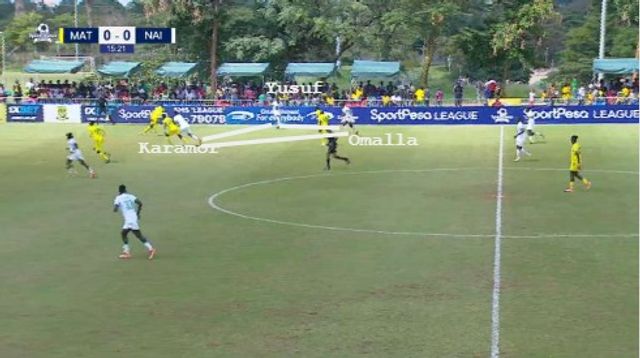
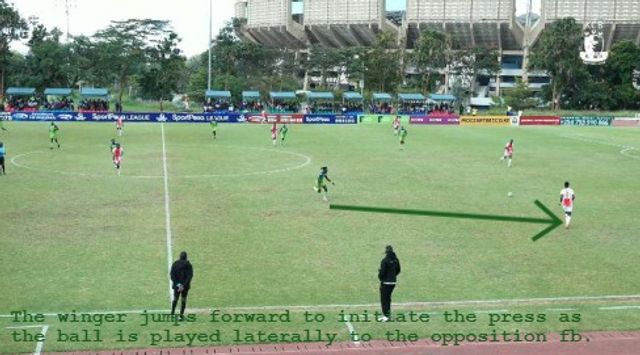
Nairobi United’s tactical identity is rooted in an aggressive high press. In their recent outing against Mathare United, they demonstrated a sophisticated ability to use the touchline as an "extra defender." By shifting their forward line laterally and with high synchrony, they congest wide areas, effectively suffocating the opponent’s progression.
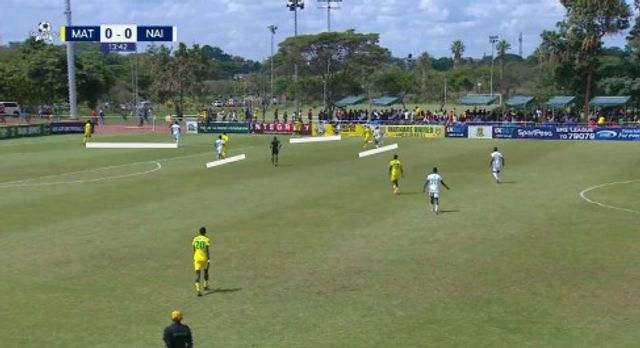
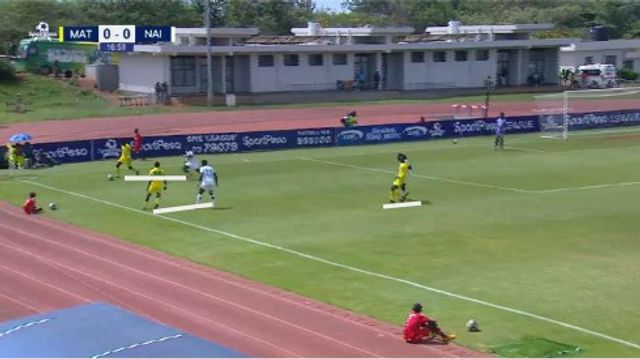
Their defensive organization out of possession typically settles into a 4-4-2 mid-block, but it is characterized by a high defensive line that seeks to compress the pitch.

The primary objective is to force high-value turnovers. The coordination between forwards Michael Karamor and Kevin Wangaya is the engine of this press; one striker typically curves their run to shadow the goalkeeper, while the other engages the center-backs.
Behind them, a midfielder - often Oliver Machaka - is tasked with "jumping" onto the opposition’s dropping pivot.
This was perfectly illustrated in their last goal, where a coordinated press forced a misplaced pass from the goalkeeper to a pressured pivot, leading to an immediate turnover and goal.
Offensively, Nairobi is highly flexible. While they are dangerous in attacking transitions - particularly in the second half - they are not averse to going direct. Center-back John Otieno is a key progressor, capable of bypassing lines with diagonal passes or long, vertical through-balls.
A prime example was his direct assist to Dancan Omalla, who exploited a high line to score.
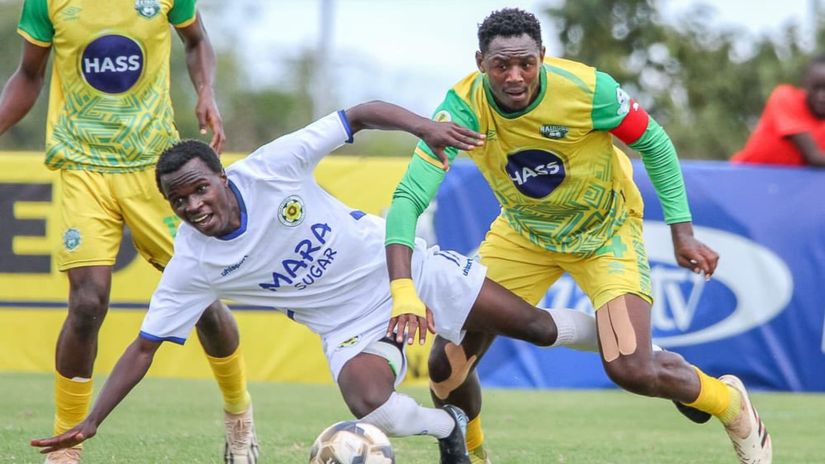
When building out wide, Nairobi utilizes the "third-man run" principle, with the striker Karamor dropping deep to link play with the fullback and winger, creating a numerical advantage to break the flank.
KCB approaches the game with a more measured, structural philosophy. They predominantly set up in a 4-2-3-1 in-possession shape, which morphs into a disciplined 4-4-2 mid-block out of possession.
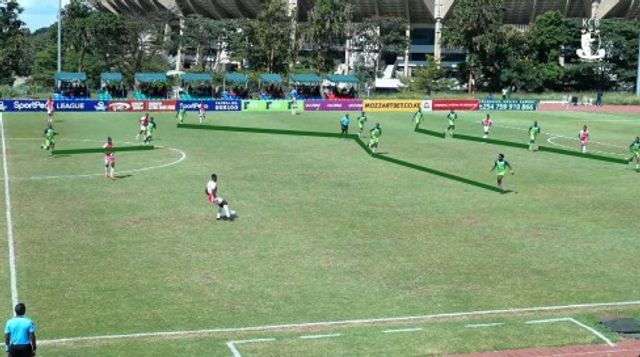
Unlike Nairobi’s immediate high-intensity jump, KCB often allows the opposition some time to build at the back, preferring to sit in a shape that denies interior channels and "funnels" the attack toward the wide areas where they feel more comfortable defending.
KCB’s offensive strategy follows a specific sequence: depth then width.
They look to find players between the lines - commonly Richard Omondi - before shifting the ball to the wingers.
This "inside-out" approach is designed to draw the opposition defense inward before exploiting the flanks. However, they also possess a "Plan B" in the form of direct play.
Goalkeeper restarts often target the striker, Samuel Feargod, who acts as a physical reference point. His role is to win aerial duels and provide "knockdowns" for late-arriving midfielders or wide attackers to battle for second-phase balls.
KCB’s pressing triggers are more specific than Nairobi’s. They typically jump when a pass is made to a dropping opposition midfielder or when a center-back attempts a pass to a wide fullback. Their wingers are tasked to curve their runs to block the return pass to the center-back, effectively isolating the fullback on the touchline.
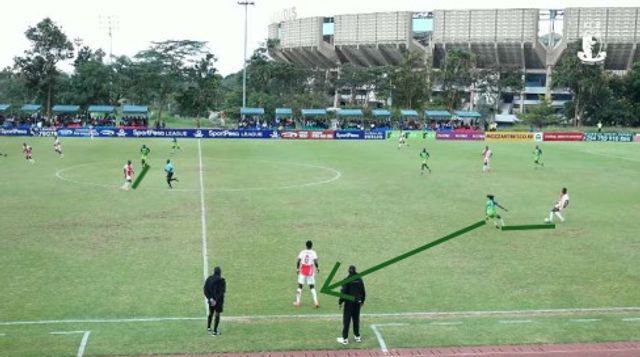
The most intriguing aspect of this matchup is how each team’s strengths align with the other’s weaknesses.
1. The fullback channel vs. overlapping runs
Nairobi United has a documented vulnerability in the half-space channels and the gaps between their fullbacks and center-backs.
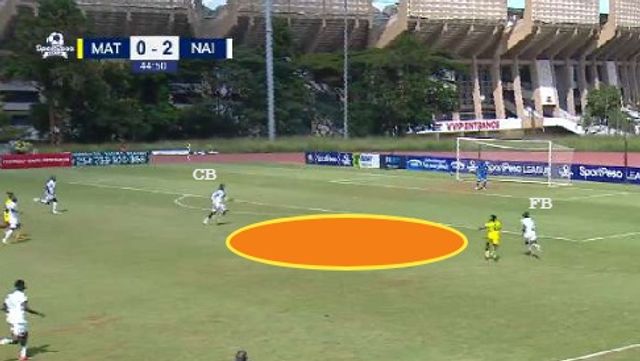
Mathare United previously capitalized on these "inside spaces" to great effect. KCB, with their "depth then width" approach and the vertical/horizontal runs of Feargod, are perfectly equipped to stretch Nairobi’s backline and exploit these pockets. If KCB can successfully find Omondi between the lines, he can slide through-balls into those vacated channels.
2. Transition vulnerability
Conversely, KCB is susceptible to quick breaks in attacking transitions, specifically in the spaces behind their fullbacks who push into advanced positions during sustained attacks. This plays directly into Nairobi United’s second-half strategy. If Nairobi can win the ball via their high press, the pace of Omalla and the technical delivery of Mustafa Kizza or Wangaya could punish KCB before their 4-4-2 block can recover.
3. Set-piece supremacy
KCB showed a lack of concentration in their recent match against KKH, conceding from a corner despite possessing significant height and physical presence. Nairobi United, boasting highly technical specialists like Kizza and Wangaya, will view set-pieces as a primary route to goal. If KCB remains "flat-footed" during dead-ball situations, Nairobi’s late-arriving midfielders could capitalize on second-ball scrambles.
4. High press vs. Build-up errors
Nairobi’s aggressive man-oriented press is designed to exploit teams that take risks at the back. While KCB often goes long, they do attempt to organize play through a dropping pivot. If Nairobi can synchronize their press to catch KCB’s pivot - as they did against Mathare - they can bypass KCB’s entire mid-block in a single movement.
However, Nairobi themselves can be susceptible to turnovers during their own build-up, and KCB’s curving winger press is designed to exploit exactly that.
Ultimately, the winner of this Mozzart Bet Cup tie will be the team that manages the "transition moments" best.
Nairobi United will want to turn the game into a high-octane, chaotic affair characterized by turnovers and vertical sprints.
KCB, meanwhile, will seek to lower the tempo, establish their 4-4-2 block, and use "overload to isolate" tactics to shift Nairobi’s defense before attacking the opposite flank.
If Nairobi United can maintain their physical intensity for 90 minutes and prevent KCB from finding the "interior channels," their high press might prove decisive.
However, if KCB can weather the initial storm and exploit the spaces behind Nairobi’s aggressive fullbacks, their structural discipline could see them through. In a cup tie where margins are thin, the battle between Nairobi’s synchronous press and KCB’s depth-to-width progression will be the defining tactical narrative.