


TACTICAL ANALYSIS: How Simba outclassed Yanga to lift Muungano Cup







Reading Time: 6min | Thu. 30.04.26. | 18:02
The decisive moment came not from open play but from sustained pressure and a breakdown in Yanga’s defensive organisation
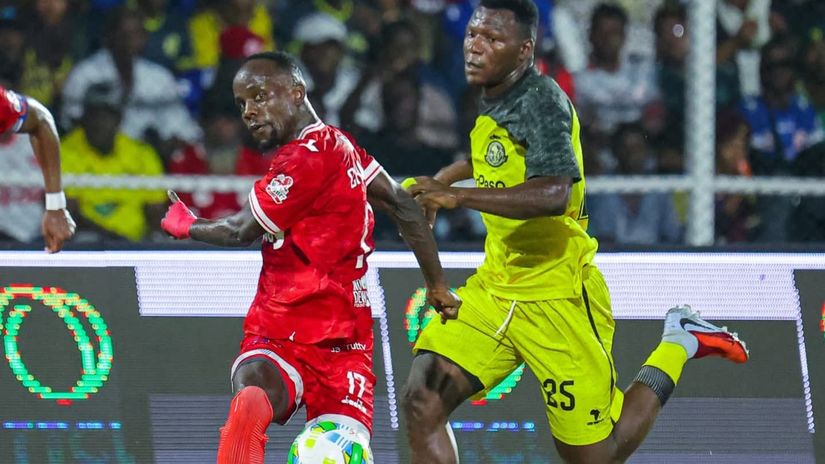
Simba SC secured a hard-fought 1-0 victory over Young Africans SC (Yanga) in the Muungano Cup final; however, the tactical contest beneath it revealed a complex duel of rotations, pressing schemes, and transitional threats.
Download our Mozzart Sport app for more news
This analysis explores the structural and tactical factors that shaped the contest, focusing on how both teams manipulated space, responded to each other’s systems, and ultimately how Simba edged the decisive moment.
From the outset, both sides mirrored each other structurally with nominal 4-2-3-1 formations, though their in-game interpretations differed significantly.
Yanga’s setup, led by Djigui Diarra in goal, featured a back four of Kouassi Yao, Bakari Mwamnyeto, Ibrahim Bacca, and Chadrack Boka.
In midfield, Mudathir Yahya and Damaro Mohammed formed the double pivot, supporting an attacking line where Max Nzengeli, Alan Okello, and Pacome Zouzoua operated fluidly behind striker Prince Dube.
However, this shape frequently morphed into a 4-4-2 or even a 4-2-4 during attacking phases, as wide players tucked inside and fullbacks pushed aggressively forward.

Simba, on the other hand, maintained a more controlled 4-2-3-1 structure. Djibrilla Kassali anchored the build-up from goal, with Shomari Kapombe and Nickson Kibabage as fullbacks, flanking central defenders Rushine De Reuck and Olivier Toure.
The double pivot of Yusuph Kagoma and Alassane Kante provided stability, while Clatous Chama operated as the advanced midfielder behind a fluid front line featuring Anicet Oura, Libasse Gueye, and false nine Elie Mpanzu.
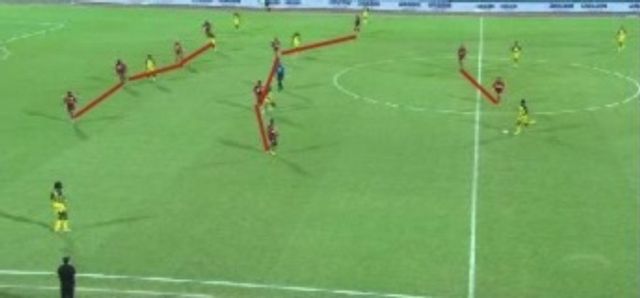
Unlike Yanga, Simba’s structure remained more consistent, prioritising controlled progression and compactness.
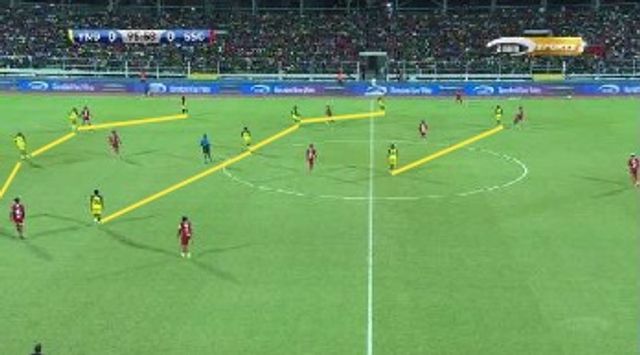
Out of possession, Simba adopted a disciplined 4-4-2 mid-block, a crucial defensive scheme that shaped much of the game.
This structure was designed to deny Yanga access to central zones, particularly the spaces between the lines where players like Mudathir and Pacome sought to operate. By maintaining horizontal compactness and using their front two to screen central passing lanes, Simba forced Yanga into wider areas.

This approach limited Yanga’s ability to combine centrally and forced them into predictable wide attacks.
Yanga’s build-up in the first half relied heavily on their double pivot dropping deep to support the backline.
Mudathir and Damaro frequently positioned themselves close to the central defenders, creating numerical superiority in the first phase.
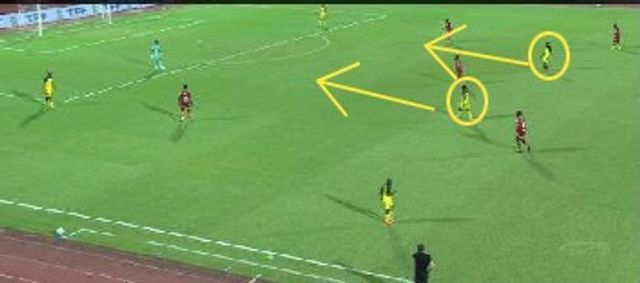
This allowed fullback Boka to push high aggressively, often becoming an auxiliary winger.
The rotations were fluid: Okello drifted into midfield or wide left, Pacome occupied central pockets, and Nzengeli switched roles across the frontline.
These movements aimed to create interior overloads and disorganise Simba’s pressing triggers.
However, Simba’s defensive response was proactive. De Reuck and Toure stepped out aggressively to close down Mudathir whenever he attempted to receive between the lines.
This denied Yanga’s primary progression route and disrupted their rhythm. Simba’s midfield line remained compact, ensuring that even when Yanga created overloads, the spaces were quickly contested.
The result was a pattern where Yanga had territorial presence but struggled to generate clean central penetrations.
Simba’s own build-up was more structured and varied. In deeper phases earlier on, they adopted a 3-2 shape, with one fullback - often Kibabage - tucking in alongside the centre-backs while the other pushed forward.
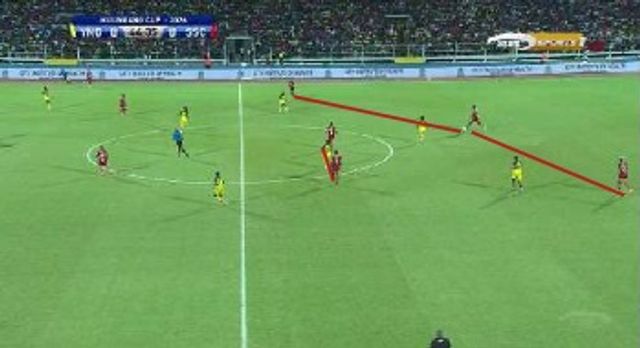
This created a stable base for progression while maintaining width. Their attacking approach focused on central progression, using Mpanzu as a false nine to drop between the lines and link play.
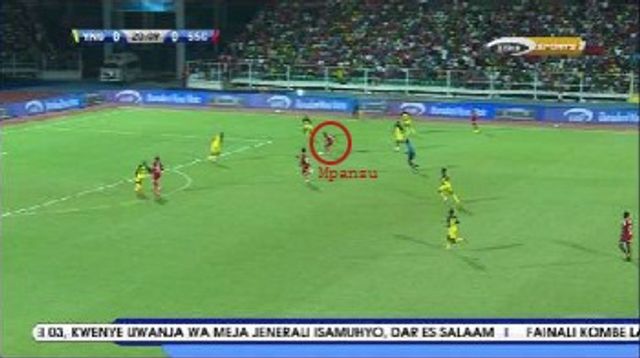
This created dilemmas for Yanga’s defenders, particularly when their left back, Boka, pushed high, leaving space behind.
The first half highlighted a recurring structural tension: Yanga’s attacking width versus Simba’s central compactness.
Yanga attempted to stretch the pitch using fullbacks and wingers, but Simba’s mid-block effectively neutralised central access.
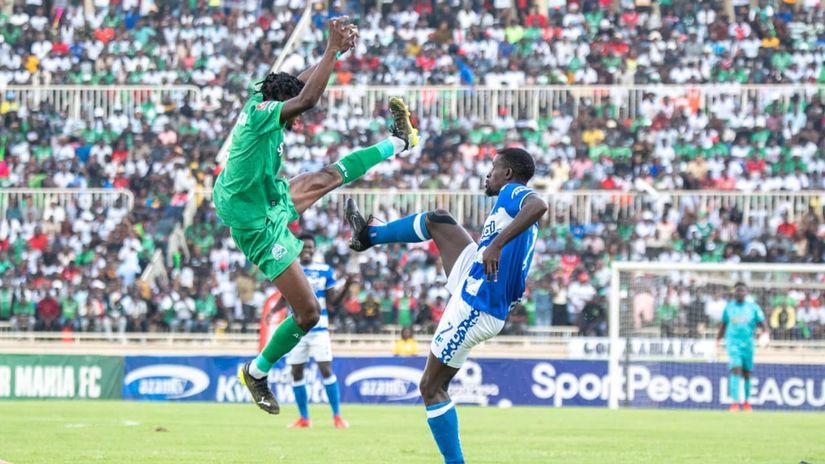
Meanwhile, Simba targeted transitional moments, particularly exploiting the space left by Boka’s advanced positioning. A key moment came in the 20th minute when Simba nearly scored through a transition, only for Yao to block Oura’s shot - an early warning of Simba’s threat.
As the game progressed into the second half, the tactical dynamics evolved.
Simba introduced more flexibility in their build-up, incorporating third-man combinations to bypass Yanga’s press.
Kassali also began playing longer balls into intermediate spaces, targeting runners and bypassing midfield congestion. This variation made Simba less predictable and more difficult to press.
Yanga responded by increasing their attacking intensity, particularly through wide overloads. They created 2v1 situations on the flanks, with Zouzoua and overlapping fullbacks combining to stretch Simba’s defense.
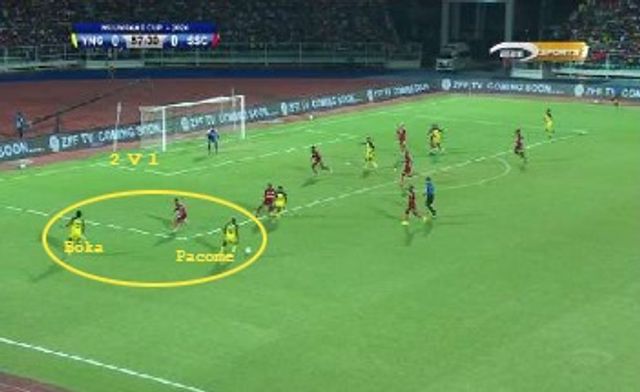
These patterns forced Simba into defensive dilemmas, as they had to decide whether to track wide runners or maintain central compactness. However, despite these overloads, Yanga struggled to convert territorial dominance into clear chances.
Pressing became a more prominent feature in the second half. Yanga shifted to a higher pressing scheme, with the forwards and midfielders leading the first line of pressure to disrupt Simba’s build-up.
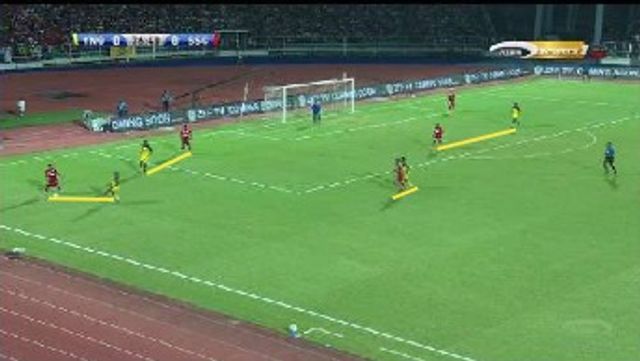
This approach yielded turnovers, particularly around the 77th minute, as Simba struggled momentarily under pressure.
However, Simba’s composure and ability to play through pressure - using bounce passes and quick combinations - allowed them to regain control.
Substitutions further influenced the tactical landscape. Yanga introduced Duke Abuya, and this approach yielded turnovers, particularly around the 77th minute, as Simba struggled momentarily under pressure.
However, Simba’s composure and ability to play through pressure - using bounce passes and quick combinations - allowed them to regain control.
Substitutions further influenced the tactical landscape. Yanga introduced Israel Mwenda to inject energy and maintain width, while Simba brought on Anthony Miligo and Neo Maema to reinforce midfield and attacking transitions.
These changes reflected both teams’ attempts to balance control with attacking threat as the game approached its crucial phase.
In extra time, Simba adjusted again, dropping Kagoma deeper to split the centre-backs and allowing fullbacks to push high.
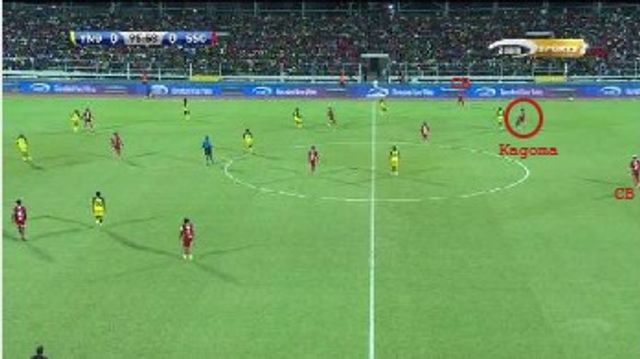
This created width and enabled more crossing opportunities, targeting blindside runners in the box. Their midfield trio also dropped deeper, prioritising ball retention and controlled progression.
Yanga, meanwhile, maintained a compact 4-4-2 mid-block, focusing on defensive solidity and counter-pressing immediately after regaining possession.
The decisive moment came not from open play but from sustained pressure and a breakdown in Yanga’s defensive organisation. After a corner and a series of second-ball situations, Simba capitalised on Yanga’s delayed clearance.
The sequence ended with Clatous Chama being fouled in the box, leading to a penalty. Selemani Mwalimu converted in the 124th minute, sealing the victory.
From a tactical perspective, Simba’s win was rooted in their structural discipline and adaptability.
Their mid-block effectively neutralised Yanga’s central threats, while their flexible build-up allowed them to navigate pressure and exploit transitions.
Yanga, despite their fluid attacking structure and wide overloads, struggled to consistently break through Simba’s compact defensive block.
In conclusion, this was a match where tactical control outweighed attacking flair. Yanga demonstrated positional flexibility and attacking intent but lacked the precision to convert structural advantages into goals.
Simba, by contrast, executed a more balanced game plan - combining defensive solidity with opportunistic attacking. The result was a narrow but tactically earned victory, underscoring the importance of structure, adaptability, and composure in their play.