


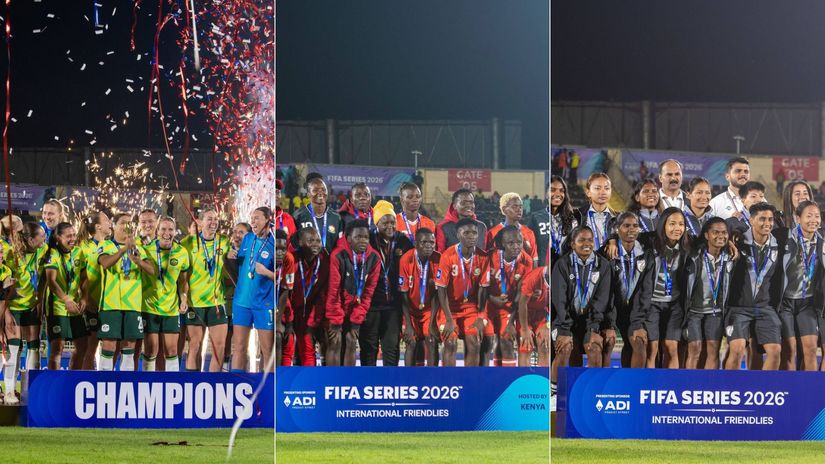
Six lessons learned from 2026 FIFA Series

.jpg)
.jpg)
.jpg)



Reading Time: 5min | Thu. 16.04.26. | 22:37
Having comprehensively covered the tournament, Mozzart Sport picked some of the six key lessons from the tourney
The inaugural 2026 Women's FIFA Series went down during the recently concluded women's international break, where Kenya hosted the tournament from Saturday to Wednesday, 15 April, putting the world's spotlight on the country and drawing plenty of lessons.
Download our Mozzart Sport app for more news
FIFA Series is a new initiative by the world governing football body to organise mini-tournaments during the international window, centrally assembling teams into a cluster of tournaments.
The tournaments are aimed at bringing together teams that would not ordinarily face each other due to ranking and location, together to bridge the competitive gap while also saving nations the headache of organising friendlies.
Under the lights, with your energy in the stands - thank you for showing up 🇰🇪⚽️
— Football Kenya Federation (@Football_Kenya) April 16, 2026
A strong FIFA Series all round: solid organisation, real progress from the Starlets, and encouraging backing from FIFA leadership. pic.twitter.com/Xn6cJpX8oc
Happening for the first time, the series took place in three different continents, hosted by four nations, including Brazil, Thailand, Ivory Coast and Kenya.
The Kenyan edition brought together Australia, Malawi, India, as well as the hosts, with the Aussies defeating Harambee Starlets 2-0 in the final to emerge as winners.
Having comprehensively covered the tournament, Mozzart Sport picked some of the six key lessons from the tourney.
Competitive exposure fast-tracks growth
The tournament brought together world giants Australia and Asian stars India, ranked 15th and 67th globally respectively, as well as Kenya and Malawi, ranked 134th and 155th by FIFA.
However, on the field of play, the minnows gave a good account of themselves and had to adjust quickly to match the level of the two highly ranked nations.
Kenya, for instance, upped their game against India and were on the front foot from the first whistle. While India’s quality was evident in how they moved the ball, Harambee Starlets were too strong and secured a 2-0 victory.
That’s a wrap on the first edition of the #FIFASeries 🙌
— Football Kenya Federation (@Football_Kenya) April 16, 2026
A time was had! quality football on display, top-tier musical entertainment, and most importantly, an incredible fan atmosphere. We truly enjoyed hosting this edition 😎#FIFASeriesWomenKe pic.twitter.com/ub6LLpGPLT
It was an even more demanding test when Starlets faced Australia, who had a battery of stars in the team.
Meeting a side that has qualified for the FIFA Women's World Cup nine times, the odds were stacked against Kenya, but the team settled quickly and even created a couple of big chances to score.
The tournament thus demonstrated structured international exposure that compresses years of learning into weeks if not days.

Quality won it for Australia
There was no doubt that Australia were the major attraction and focus in the tournament, owing to their FIFA ranking, and also the quality the team possesses.
The Matildas also boasted a couple of marquee players in their squad, including Chelsea Women striker Sam Kerr, her Arsenal counterpart Caitlin Foord, Everton midfielder Clare Wheeler, Brighton & Hove Albion defender Rule Charlize, as well as Malmö midfielder Amy Sayer.
The excellence of the Australian team made opponents wonder who to mark as they had quality all over the pitch, including the substitutes' bench, which made it easier to handle tough moments and clinch the title.
Tactical flexibility is king
The tournament demanded tactical flexibility from teams in order to overcome moments in the game as well as their opponents.
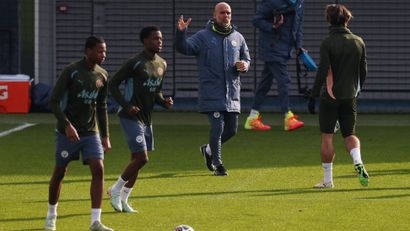
Kenya were on an all-out attack in the opening period against India before resorting to a mid-low block of defense to consolidate their win.
Against Australia, Beldine Odemba set up her side in a compact midfield, reducing the spaces between the lines before creating overloads on the right side of attack after they went down.
A 360 degree view of how you turned up for our Harambee Starlets 🙌
— Football Kenya Federation (@Football_Kenya) April 15, 2026
Nchi mbele siku zote 🇰🇪 pic.twitter.com/Dd27sx488m
Australia, on the other hand, slowed the tempo down in both matches to cope with the high altitude, attacking in phases, aided by their quality and experience.
Harambee Starlets midfield gap
The tournament once again exposed the gap in the middle of the park, especially in defensive midfield, where Kenya often struggled and lacked balance in some key moments.
With the exclusion of Simba Queens star Corazone Aquino, Odemba was forced to push captain Mwanalima Dogo Adam to midfield.
While the diminutive Adam gave her best, she often came second in physical battles, even as her influence in the attacking third was equally missed.
Investment translates directly to on-pitch outcomes
The levels of investment in football were directly proportional to the results recorded by teams in the tournament.
Australia had a technical bench and staff of about 15 individuals, each with distinct roles, including data analysts and video analysts.
The team also had numerous pieces of equipment and supplements to cater for their adaptation to high altitude. The numerous years of investing in women's football were visible in their performance.
Kenya’s women's football has also been on an upward trajectory with equal investment, and can even be better with continued and improved attention to it.
A glaring striker problem for Harambee Starlets
The tournament gave Odemba and Kenyan fans in general an opportunity to assess the team ahead of the 2026 Women's Africa Cup of Nations (WAFCON).
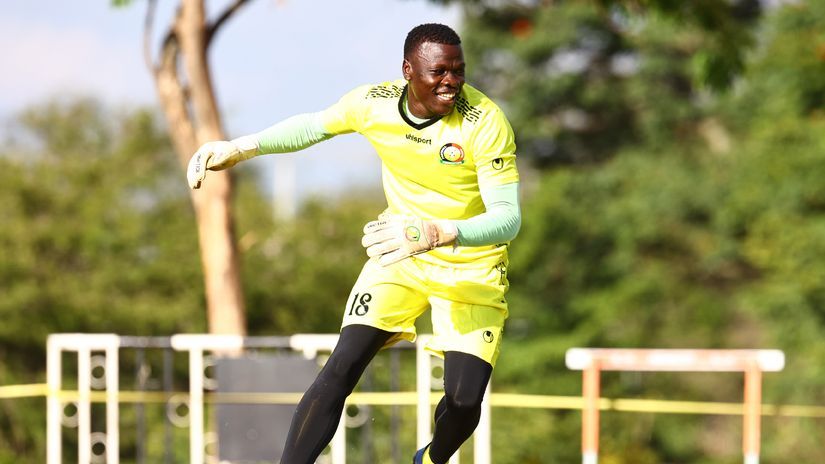
One aspect that came out clearly was the low conversion rate of the Kenyan strikers, something even Odemba acknowledged is a concern.
The former Kenya Police Bullets FC tactician must find a way of fixing that before WAFCON kicks off on Saturday, 25 July, and one of her options includes Simba Queens striker Jentrix Shikangwa.