


TACTICAL ANALYSIS: Belgium’s late comeback masks Senegal’s tactical superiority in dramatic 3-2 world cup classic

.jpg)
.jpg)
Reading Time: 6min | Fri. 03.07.26. | 10:30
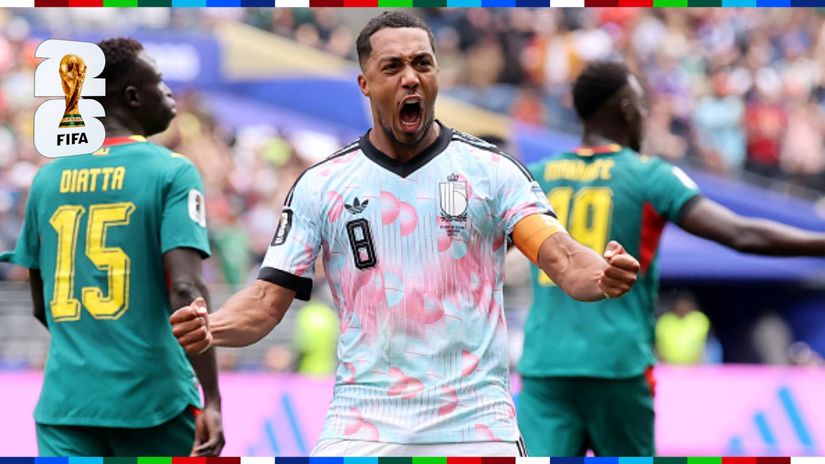
Youri Tielemans' penalty after 124 minutes and 44 seconds secured the latest winning goal ever scored in a men's World Cup, completing a remarkable turnaround that echoed Belgium's famous recovery against Japan in 2018
Belgium produced one of the most dramatic comebacks in FIFA World Cup history, overturning a two-goal deficit to defeat Senegal 3-2 after extra time in Seattle.
Download Our MozzartSport App For More News
Youri Tielemans' penalty after 124 minutes and 44 seconds secured the latest winning goal ever scored in a men's World Cup, completing a remarkable turnaround that echoed Belgium's famous recovery against Japan in 2018.
Yet while the result will be remembered for its late drama, the tactical story was far more nuanced.
For over 80 minutes, Senegal were the superior side both structurally and strategically, restricting Belgium to barely any meaningful attacking opportunities before emotion, individual mistakes and Romelu Lukaku's introduction completely altered the game's rhythm.
Belgium began in a 4-3-3 with Thibaut Courtois behind Timothy Castagne, Brandon Mechele, Arthur Theate and Maxim De Cuyper.
Tielemans operated alongside Hans Vanaken and Kevin De Bruyne in midfield, while Jeremy Doku and Leandro Trossard flanked Charles De Ketelaere.
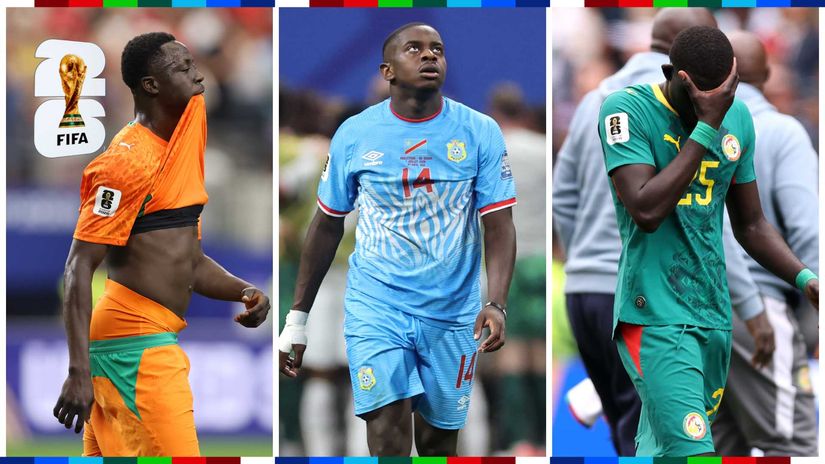
Senegal mirrored the same 4-3-3 structure with Mory Diaw in goal, Krépin Diatta, Pathé Ciss, Moussa Niakhaté and Ismail Jakobs across the back, Idrissa Gana Gueye anchoring midfield behind Pape Gueye and Habib Diarra, while Sadio Mané and Iliman Ndiaye supported Ismaïla Sarr.
Without possession, Belgium defended from a compact 4-4-2 mid-block,
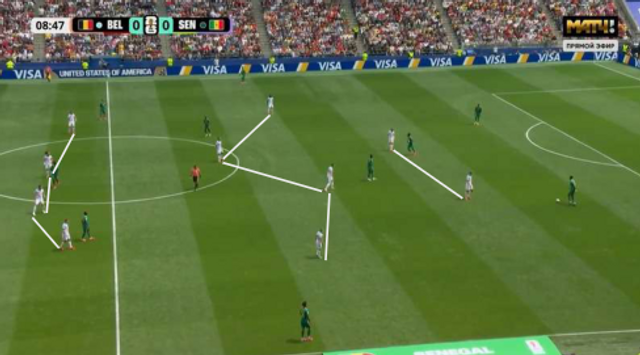
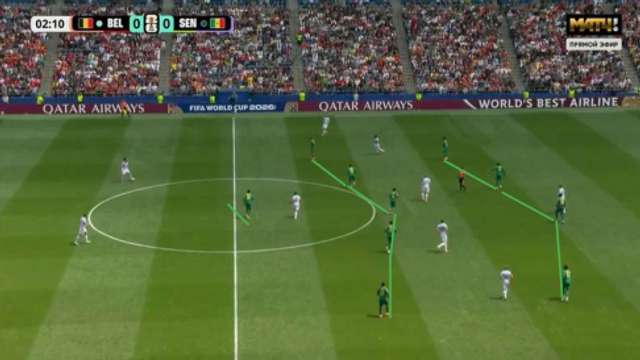
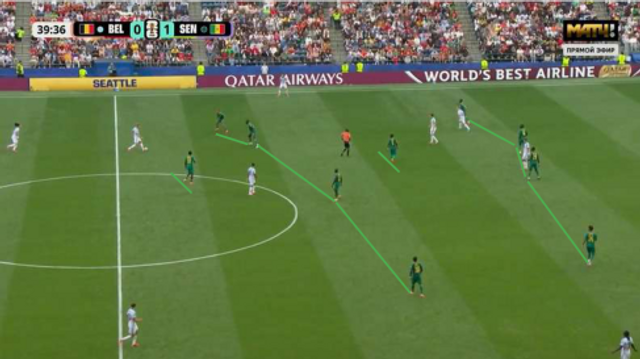
whereas Senegal generally dropped into a disciplined 4-5-1/ 4-1-4-1 while also displaying the flexibility to press higher in a 4-4-2 whenever opportunities arose.
The biggest tactical contrast emerged in possession. Belgium wanted to build patiently through their centre-backs and midfield before committing numbers high up the pitch, frequently creating 2-2-6/3-1-6 attacking structures.
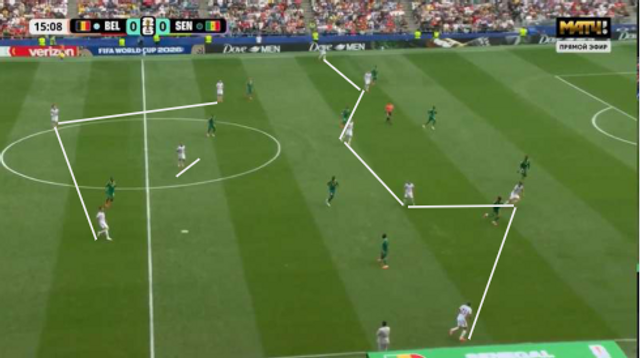
However, these aggressive occupations lacked connectivity. The distances between players became excessively large, central progression remained limited and Belgium rarely found effective ways of accessing the spaces between Senegal's compact midfield lines.
Their positional play appeared disconnected, with players occupying advanced positions without the necessary combinations to reach them.
Jeremy Doku's deployment on the right further reduced Belgium's ability to isolate defenders in one-versus-one situations,
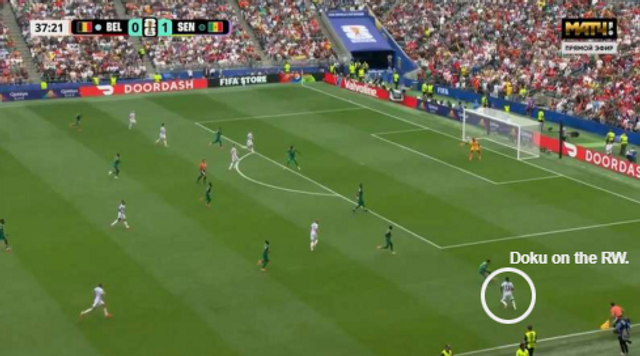
while their crossing lacked genuine penalty-box presence before Lukaku entered the contest.
Senegal, by comparison, displayed far clearer positional principles throughout the opening 80 minutes. Idrissa Gueye's role as the deeper midfielder proved fundamental to their structure. Rather than advancing aggressively beyond the ball, he remained behind play, constantly offering an outlet during build-up while simultaneously protecting Senegal's rest defence against Belgian transitions. This deeper positioning solved many of the defensive balance issues Senegal had previously experienced and allowed their more advanced midfielders far greater positional freedom.
Belgium's defensive organisation was continually tested by Senegal's outstanding rotational play in the final third. Rather than maintaining rigid positional discipline, the Lions of Teranga constantly exchanged spaces across the front five.
Ndiaye regularly abandoned the touchline to drift into inside-forward positions between Belgium's midfield and defensive lines, while Diarra consistently advanced as the highest midfielder. Pape Gueye intelligently occupied both half-spaces depending on the phase, creating overloads on either side of Belgium's midfield. Meanwhile, Sarr repeatedly dropped towards the ball to connect attacks before immediately threatening the space behind Belgium's defensive line.
These constant exchanges made individual marking almost impossible and repeatedly forced Belgium's defenders into difficult communication problems.
The wide dynamics became particularly effective because of the synchronised movements between Senegal's wingers, full-backs and midfielders.
Jakobs alternated between overlapping runs and narrow underlaps depending on Mané's positioning, while Mané himself constantly switched between hugging the touchline and moving inside.
Whenever one winger drifted into the half-space to receive, the nearest midfielder immediately attacked beyond Belgium's defensive line, creating third-man running opportunities.
These simultaneous movements repeatedly confused Belgium's wide defensive triangle consisting of the full-back, winger and nearest central midfielder. Belgium initially attempted to transition from zonal defending into man-oriented references but gradually abandoned that approach as Senegal's fluidity prevented them from establishing consistent marking assignments.
Belgium's 4-4-2 defensive block also contained structural vulnerabilities during Senegal's build-up.
Kevin De Bruyne was tasked with marking Idrissa Gueye, forcing the Senegal midfielder to intelligently drop into the defensive line to create numerical superiority during first-phase construction. At different moments all three Senegal midfielders temporarily joined the back line, ensuring Belgium's front two could never consistently lock onto clear pressing references. Senegal also varied their pressing strategy effectively.
Goal kicks were defended zonally, but higher pressing situations often became aggressively man-oriented, forcing Belgium into uncomfortable build-up situations and limiting their ability to establish sustained possession.
Senegal's superiority was fully reflected in both goals. Their opening strike stemmed from another wave of pressure generated through wide combinations before Habib Diarra reacted quickest after Sarr's header struck the post.
The second goal perfectly exposed Belgium's poor defensive coordination. As Moussa Niakhaté delivered an excellent forward pass,
Arthur Theate failed to recognise the danger developing behind him. Rather than dropping early to cover Sarr's run, he remained too high, allowing Senegal's striker to exploit the blindside of Brandon Mechele. With no defensive pressure on the ball carrier and no depth provided by Theate, Sarr brilliantly controlled the pass on his chest before emphatically finishing into the top corner.
For much of normal time, Belgium struggled to produce any coherent response. Their possession lacked recognisable attacking principles, while Senegal comfortably restricted them to approximately 0.50 expected goals before the final stages.
The underlying numbers highlighted the extent of Senegal's control, generating 3.54 xG compared to Belgium's 1.80.
More significantly, Belgium's total included the decisive penalty, meaning they created less than 1.0 xG from open play across 120 minutes despite eventually scoring three goals.
Recognising that his positional approach had failed, Rudi Garcia fundamentally altered Belgium's attacking profile by introducing Lukaku. Rather than persisting with patient combinations, Belgium increasingly abandoned structured progression in favour of direct deliveries towards the striker. Their attacks became significantly more vertical, with crosses arriving from wide areas at every opportunity. Although tactically simplistic, Lukaku's physical dominance immediately provided Belgium with a genuine focal point that had been absent throughout the match. His near-post finish from Thomas Meunier's cross with four minutes remaining transformed both the scoreline and, more importantly, the emotional state of the contest.
From that moment the match largely abandoned its earlier tactical patterns. Senegal, having controlled proceedings through intelligent possession and compact defensive organisation, retreated deeper towards their own penalty area.
Their focus shifted from controlling space to protecting the result, inviting sustained Belgian pressure.
Panic gradually replaced structure. Diaw's misjudgement under Trossard's delivery gifted Tielemans the equaliser before another chaotic sequence culminated in Lamine Camara's late challenge on the Belgian captain.
Following an extended VAR review, Tielemans converted from the penalty spot to complete one of the competition's most dramatic recoveries.
The closing stages should not overshadow Senegal's tactical excellence throughout the majority of the contest.
Their positional rotations, fluid attacking relationships and disciplined defensive structure consistently exposed Belgium's organisational weaknesses while limiting the Red Devils' attacking effectiveness.
Belgium ultimately advanced because football often extends beyond tactical planning during emotionally charged moments.
Lukaku's introduction changed the game's physical profile, individual errors accumulated under pressure and momentum replaced structure.
The final scoreline therefore tells only part of the story.
Belgium demonstrated remarkable resilience to become the first team since their own 2018 comeback against Japan to recover from two goals down and win a World Cup knockout match.
Senegal departs the tournament having produced arguably one of the strongest tactical performances of the round.
Their attacking mechanisms were clearer, their defensive organisation more coherent and their underlying performance substantially superior.
Belgium progressed through character and late-game chaos, but for over 80 minutes it was Senegal who delivered the more complete tactical display.