



TACTICAL ANALYSIS: Breakdown of Aldrine Kibet's Man of the Match performance for Celta Vigo

.jpg)
.jpg)
.jpg)

Reading Time: 5min | Thu. 12.02.26. | 21:02
Aldrine Kibet delivered a statement performance for Celta Vigo Juvenil, scoring and assisting in a 2-1 win over Athletic Club - here’s a closer look at how the Kenyan youngster ran the show
Harambee Stars teenage sensation Aldrine Kibet’s 88-minute cameo for Celta de Vigo Juvenil in their Copa del Rey U19 quarter-final against Athletic Club offered a detailed tactical window into both his individual development and how the Spanish side are shaping his profile within a structured collective system.
Follow our WhatsApp channel for more news
On paper, Kibet started as a left winger in a 4-3-3, but the reality of his role was far more fluid.
Celta operate with a flat 4-3-3 in their positional structure, emphasising organised build-up patterns and coordinated pressing triggers. Within that framework, Kibet was not just a touchline winger - he was a dynamic reference point across multiple phases of play.
In possession, Celta’s build-up is structured and methodical, often inviting pressure before accelerating into space.
Kibet contributes to this by initially holding width on the left to stretch the opposition back line horizontally.
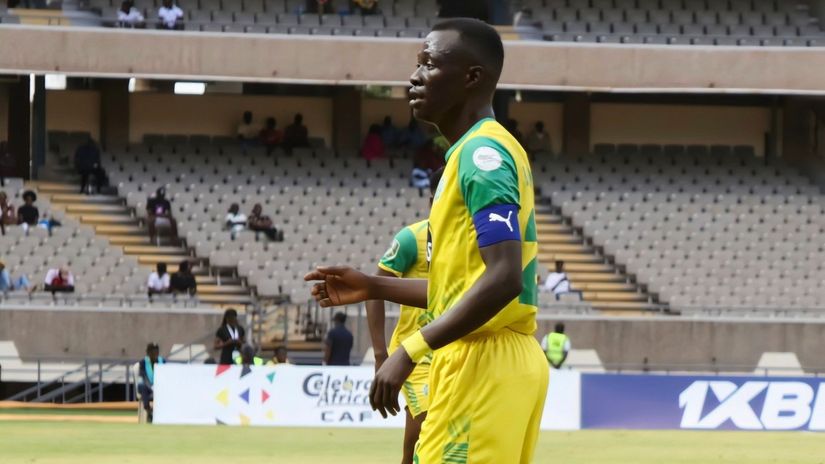
His task to exploit the flank is clear: pin the opposing right-back, create isolation scenarios, and open interior lanes for midfielders.
However, what stands out is his timing of movement. Rather than staying static on the chalk, he makes intelligent overlapping runs when the left-back underlaps or inverts.
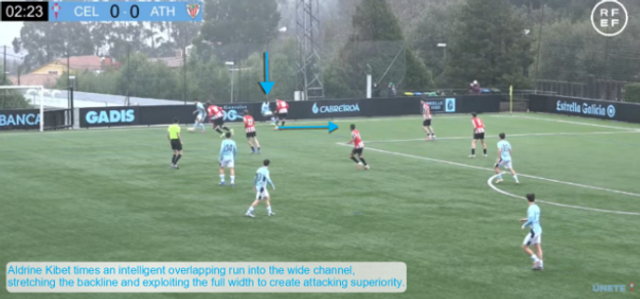
This rotational understanding is crucial in positional play systems, and Kibet executes it with maturity beyond his age.
One of his most impressive traits during the match was his work without the ball.

Celta’s high press begins with coordinated triggers, and Kibet is often the one who initiates it.
As Athletic Club attempted to build from the back, Kibet curved his pressing run toward the goalkeeper while blocking the return pass lane to the centre-back.
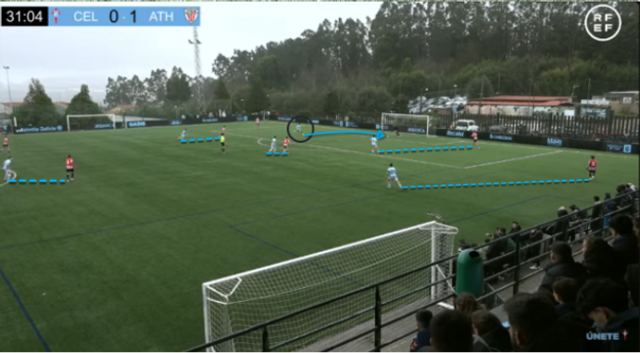
His body orientation was deliberate - angled to force play toward one side, limiting central progression.
This pressing intelligence forced rushed long balls, enabling Celta to regain second balls higher up the pitch. It shows a winger who understands collective defensive mechanics, not just individual attacking flair.
Out of possession, Celta shifted into a 5-2-3 or compact 4-4-2 block, with Kibet slotting in as the left-sided midfielder.
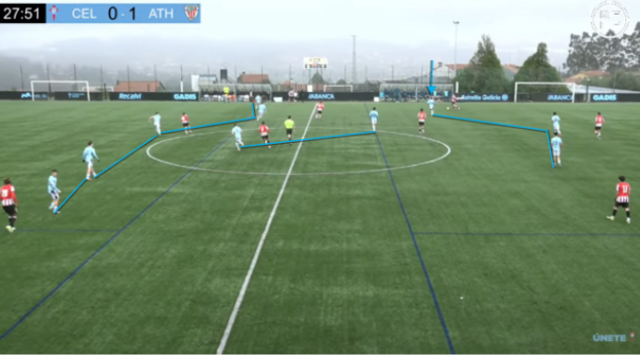
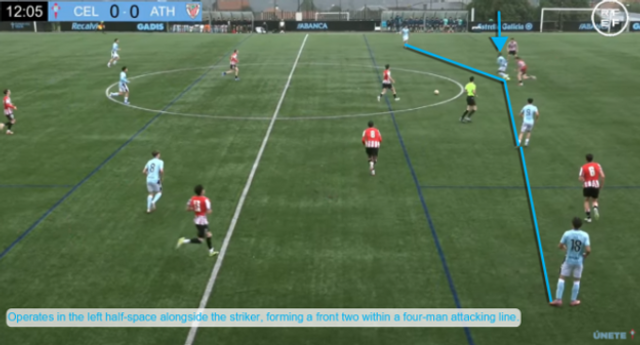
In high pressing and even attacking phases, the shape resembled a 4-2-4, with Kibet stepping alongside the striker as a second forward in the left half-space.
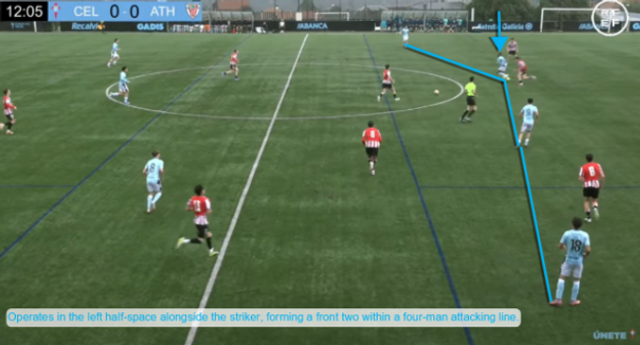
This hybrid role is significant. It highlights Celta’s trust in his tactical discipline and physical output.
He tracks back diligently, supports the left-back in defensive transitions, and recovers loose balls when play breaks down.
His ability to drop deep and assist in transition defense demonstrates that he is being developed as a complete wide forward rather than a purely attacking winger.

In possession transitions, Kibet’s verticality becomes evident. He is comfortable driving into large spaces in front of retreating defenses.
His ball-carrying ability is sharp and controlled, aided by his agility and low centre of gravity.
When he drives diagonally from the left flank into the half-space, it opens multiple attacking lanes.
His inward runs create space for overlapping or underlapping runs from wing-backs, particularly when Celta morph into a 3-5-2 structure in advanced phases.
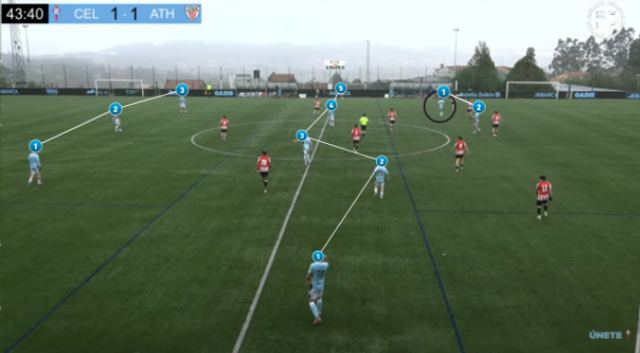
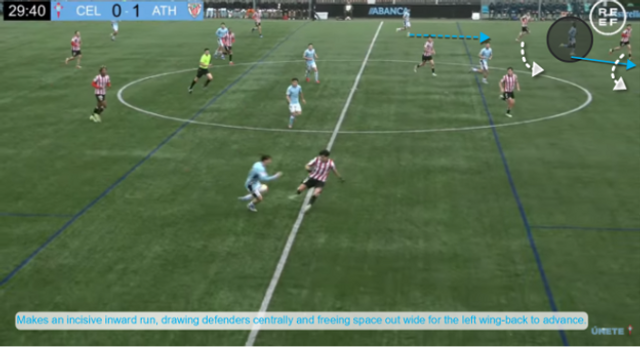
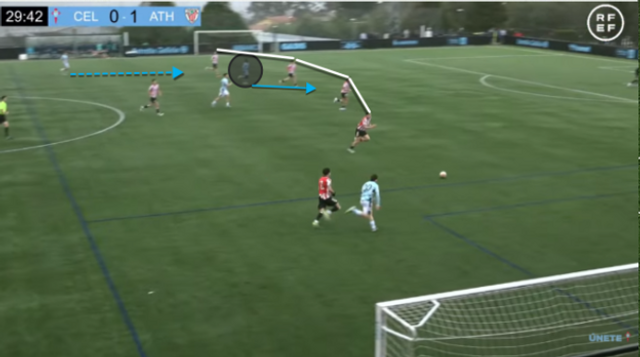
In these moments, he and the central striker lead the line, with Kibet operating slightly off the shoulder in the left channel.
Crucially, he is not limited to wing play. At times, he drops centrally, even occupying the striker’s position temporarily to offer hold-up play.
This is a sophisticated adaptation for a young winger. By dropping into midfield pockets or half-spaces during build-up, he lures opposing defenders or midfielders forward.
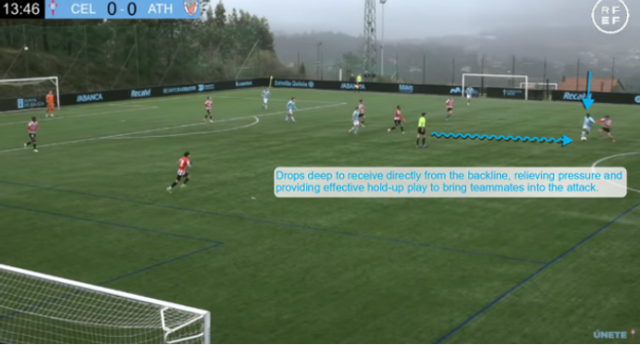
That movement frees the left-back to advance into wide space. It is a classic positional play manipulation - draw pressure centrally, exploit width externally. Kibet executed this repeatedly, showing awareness of spacing and timing.
His technical quality under pressure is also developing rapidly. In the 35th minute, he equalised with a superb curling effort after receiving in the left half-space inside the box.
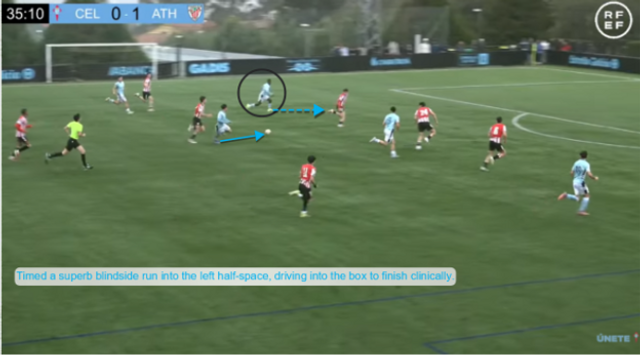
What made the goal stand out was his first touch - deft and controlled, drawing two defenders toward him and subtly shifting the goalkeeper off his line. With minimal backlift, he bent the ball into the far corner.
The sequence illustrated composure, spatial awareness, and two-footed striking ability. Kibet is comfortable attacking the ball with either foot, which adds unpredictability when cutting inside.
Beyond scoring, his assist in the 66th minute captured his game intelligence.
After making a wide run on the left, he delivered a perfectly weighted outside-of-the-foot pass into the six-yard box for a teammate on the right attacking the box.
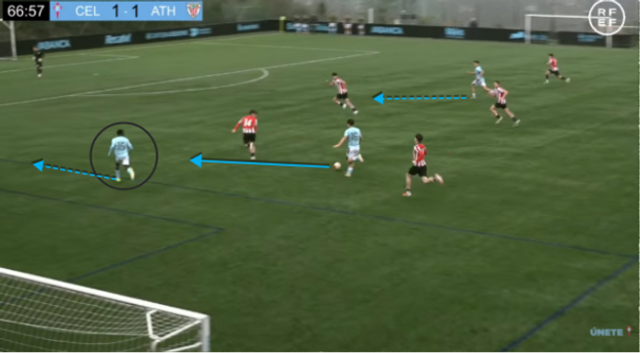
That pass required vision and timing - recognising the weak-side runner and executing with precision. It underlined his ability to read transitions and understand teammates’ positioning at speed.
For Celta, Kibet is being groomed as a multifunctional attacking weapon: wide in structure, central in effect.

His current role suggests the club sees him as more than a traditional winger. He is being integrated into positional rotations, pressing schemes, and transitional structures that demand tactical literacy.
His rapid development indicates he is on a pathway toward first-team involvement sooner rather than later.
For Kenya and head coach Benni McCarthy, Kibet offers exciting possibilities.
McCarthy prefers proactive attacking football, often built around quick transitions, verticality, and aggressive pressing from the front. Kibet fits that template naturally.
His ability to trigger the press intelligently could be invaluable in international football, where coordinated pressing often unsettles technically weaker build-up sides.
Kenya could deploy him as a left winger in a 4-3-3 or even as a second striker in a 4-4-2 diamond, depending on the tactical setup.
Importantly, Kibet’s capacity to drift centrally and operate in half-spaces could help Kenya solve creativity issues between the lines.
His willingness to drop into midfield pockets during build-up offers a link between defense and attack.
Additionally, his vertical dribbling in transition would be a weapon against teams that push their full-backs high. His defensive work rate also aligns with the demands of African international competition, where transitions are frequent and intense.
Kenya can expect a two-footed attacker who reads the game well, presses intelligently, and understands spatial manipulation.
He is not merely a flair player - he is tactically educated, adaptable across phases, and increasingly decisive in the final third.
If his development trajectory continues at this rate, Aldrine Kibet could soon become not only a first-team regular at Celta de Vigo but also a cornerstone of Benni McCarthy’s attacking plans for the national side.