


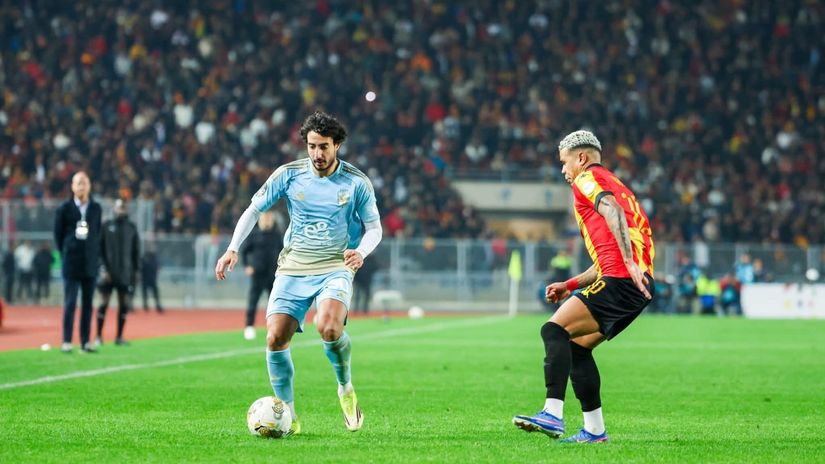
TACTICAL ANALYSIS: Esperance de Tunis' game plan that secured victory over Al Ahly



Reading Time: 4min | Tue. 17.03.26. | 15:32
The first-leg outcome sets up a finely poised second leg, but tactically, Espérance’s disciplined shape, proactive rotations, and acute awareness of transition moments gave them the edge in this CAF Champions League quarter-final clash
The first leg of the CAF Champions League quarter-final that saw Espérance de Tunis edge Al Ahly 1-0 was much-awaited and lived up to the hype tactically.
Follow Our WhatsApp Channel For More News
Espérance de Tunis approached the fixture with a 4-2-3-1 formation, setting up Ben Said in goal, while Mohamed Drager operated as the marauding right-back, Amine Ben Hamida as left-back, and a central defensive pairing of Hamza Jelassi and Mohamed Tougai.
The midfield duo of Houssem Teka and Onuche Ogbelu provided a deep-lying shield, allowing Ben Haj Ali to operate as the advanced midfielder.
In attack, Florian Danho led the line as the central striker, flanked by Yan Sasse on the right and Jack Diarra on the left, forming a dynamic front three capable of both width and central penetration.
Al Ahly countered with a slightly fluid system revolving around a 4-2-3-1 that featured Mostafa Shobeir in goal, a back four of Mohammed Hany, Ibrahim Yasser, Riyad Hady and Youssef Belammari.
Anchoring the midfield, Aliou Dieng and Ahmed Kouka provided control and distribution, while the attack was orchestrated by Achraf Bencharki on the right, Trezeguet on the left, and Zizo, who started as a false nine but constantly interchanged with Emam Ashour in the playmaker role, aiming to destabilise Espérance’s defensive lines.
From the outset, Al Ahly sought to impose possession dominance, probing Espérance’s defensive structure for early openings.
Around the 10th minute, Florian Danho nearly gave the hosts an early lead after receiving a deft looped ball past Yasser, only to see his effort parried by Shobeir.
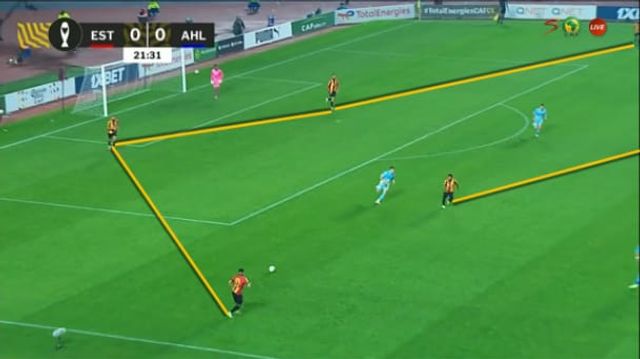
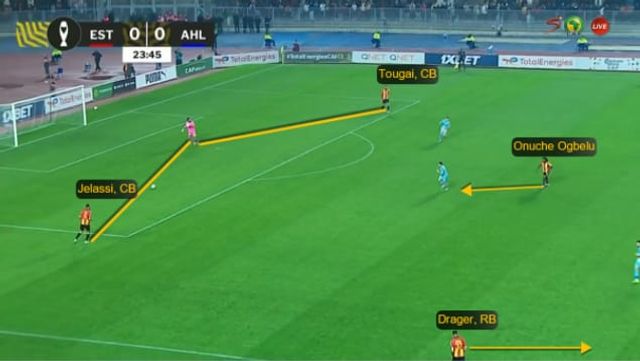
Espérance’s early strategy was a patient buildup from the back, often deploying a low-phase 4-2 structure with Onuche dropping deep to support the central defenders, allowing safe circulation and reducing the risk of turnovers in vulnerable zones.
By the 15th minute, Al Ahly had already shown danger from set-piece scenarios, indicating their intent to exploit transitional moments and set-piece proficiency in Espérance territory.
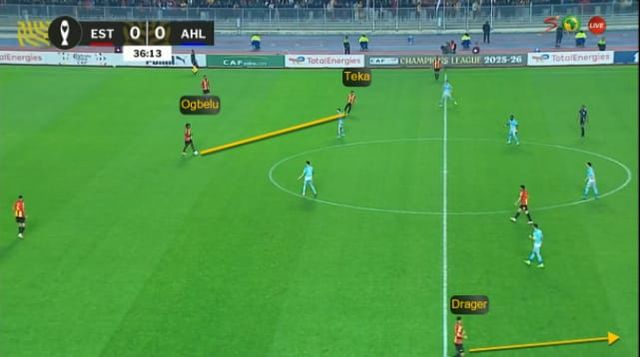
On the wings, Espérance relied heavily on Drager to provide width, stretching Al Ahly’s defensive lines, while Teka and Ogbelu maintained positional discipline, staying deep to secure defensive cover.
Al Ahly, for their part, defended in a compact 4-4-2 mid-block when out of possession, attempting to deny central penetration and force Espérance wide.
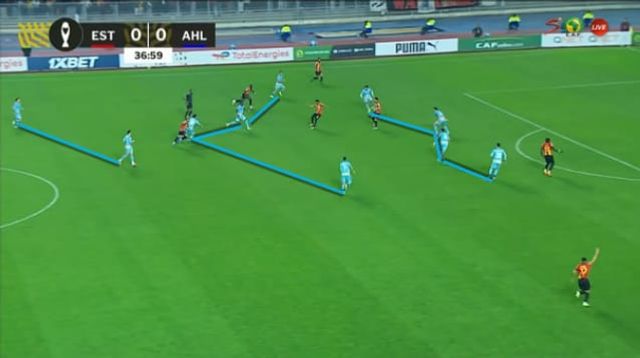
Positional rotations in Espérance’s attacking phase were visible, yet Al Ahly’s disciplined defensive organisation limited the visitors’ ability to break through centrally.
The interplay between Hany on the right and Bencharki’s movement centrally allowed Zizo and Ashour to drop deeper, linking midfield to attack while maintaining structure.
As the first half progressed, Espérance adjusted their shape to a 4-1-4-1 / 4-2-3-1 hybrid out-of-possession, enhancing their compactness without sacrificing offensive outlet options.

Despite Al Ahly’s intricate right-sided passing sequences that threatened the Espérance third, Ben Said and his backline remained resolute, with Diarra and Yan Sasse providing quick counter-attacking threats.
By halftime, Espérance had managed three shots on target compared to Al Ahly’s single effort, underlining their efficiency in transition and defensive solidity.
The second half saw tactical refreshes from both sides. Espérance introduced Ibrahima Keita and Abdaramane Konate for Haj Ali and Drager, signalling a shift to more dynamic wing play and higher pressing intensity.
This allowed them to applya high press, forcing Al Ahly into long clearances and disrupting their buildup from the back.
Al Ahly, meanwhile, used Zizo’s flexibility to oscillate between dropping deep and advancing forward, while Trezeguet rotated into the striker’s role and Belammari pushed high on the left, creating overloads and fluid attacking triangles.
Boualia’s introduction for Diarra further enhanced Espérance’s attacking depth, providing a fresh outlet on the left wing.

The critical moment came in the 72nd minute following a VAR-checked handball by Hany inside the box, awarding Espérance a penalty. Tougai calmly converted, demonstrating composure under pressure and giving the hosts a narrow lead.
Following the goal, Al Ahly intensified their forward movements with Marwan Attia and Marwan Otaka introduced for Bencharki and Kouka, attempting to reverse the scoreline.
Despite creating high-quality chances - a cross converted by Marwan that was neutralised by the Espérance defense later in the game - the Egyptian side struggled to penetrate Espérance’s disciplined structure.
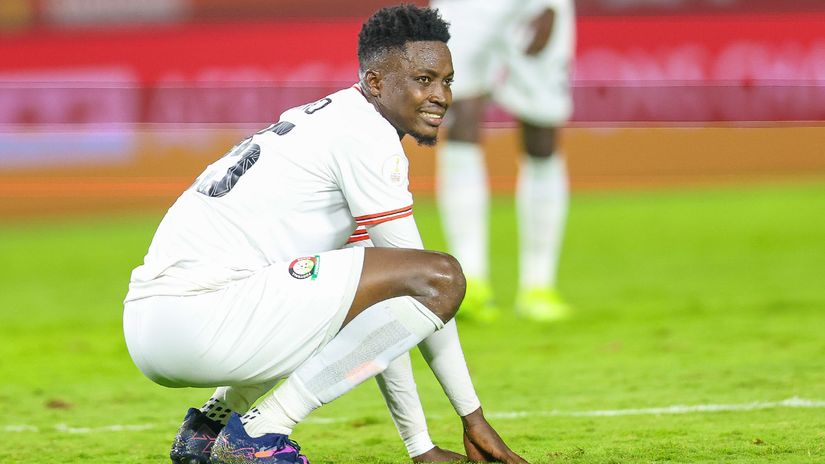
Espérance’s defensive organisation was paramount in the closing stages.
They maintained tight compact lines, carefully managing space between defenders and midfielders to stifle Al Ahly’s wide advances and central combinations.
Simultaneously, they remained alert to counter-attacking opportunities, exploiting turnovers with rapid transitions spearheaded by Sasse and Boualia rotations.
By combining high pressing moments, efficient counter-attacks, and tactical flexibility both in and out of possession, Espérance successfully contained Al Ahly’s increasingly frenetic attacking waves.
In summary, Espérance de Tunis’ 1-0 victory was a testament to meticulous tactical planning, intelligent player deployment, and precise situational adjustments.
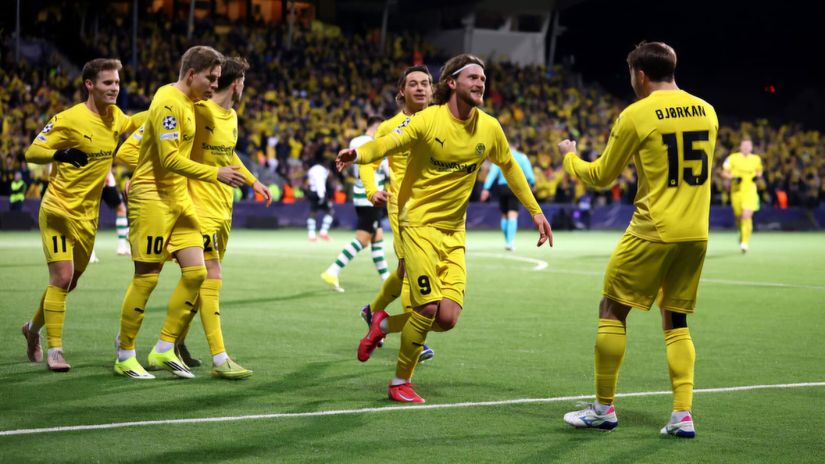
Their ability to balance defensive compactness, structured buildup, and transitional efficiency limited Al Ahly’s possession advantages while capitalising on key moments.
Al Ahly, despite controlling possession and creating intermittent chances, could not break down a well-coached, responsive Espérance side.
The first-leg outcome sets up a finely poised second leg, but tactically, Espérance’s disciplined shape, proactive rotations, and acute awareness of transition moments gave them the edge in this CAF Champions League quarter-final clash.