


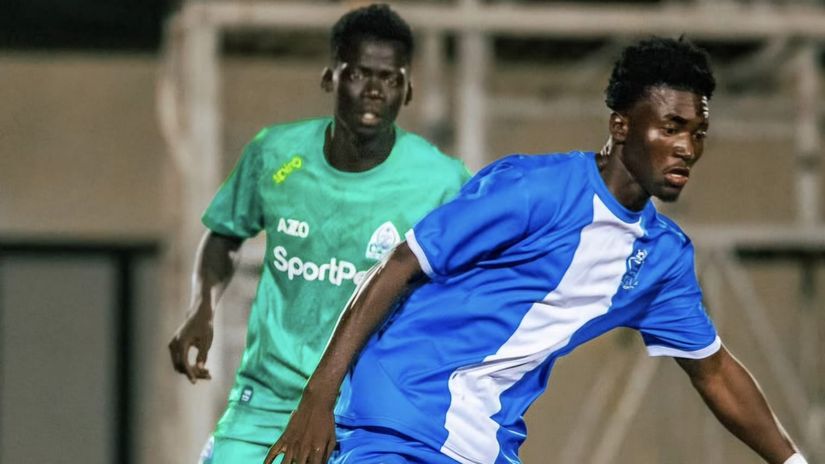
TACTICAL ANALYSIS: Gor Mahia’s midfield meltdown that gifted Rayon Sports regional bragging rights
Reading Time: 7min | Mon. 20.07.26. | 21:32
While Gor Mahia displayed encouraging signs of fluid, short-passing possession patterns, their structural vulnerabilities during deep build-up phases and an exposed rest-defense left them vulnerable to transition play
Rayon Sports ushered in a highly anticipated new era in emphatic fashion, securing a decisive 2-0 victory over Kenya’s Gor Mahia on Rayon Day at the Kigali Pelé Stadium.
Download Our MozzartSport App For More News
The annual exhibition showcase offered an eager fanbase a comprehensive first look at head coach Francis Haringingo’s radically revamped squad.
The extent of the structural overhaul was total; only Emmanuel Nshimiyimana and Elie Ganijuru retained their places from last season's starting eleven, with the remaining nine starters consisting entirely of debutants making their first appearances in Rayon Sports colours.
Far from a relaxed pre-season friendly, the contest unfolded as a high-intensity tactical chess match of contrasting structural methodologies.
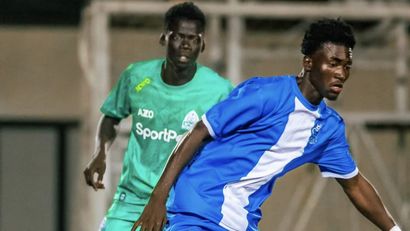
While Gor Mahia attempted to stamp their authority through patient, low build-up sequences and complex wide overloads, Rayon Sports counter-punched with devastating verticality, aggressive rest-defense manipulation, and targeted flank isolations.
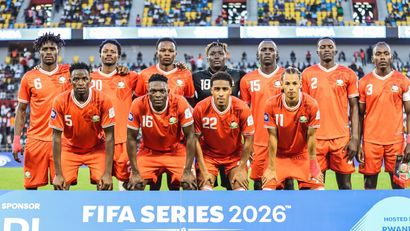
Francis Haringingo deployed his new-look Rayon Sports side in a balanced 4-2-3-1 base structure designed to facilitate rapid vertical transitions.
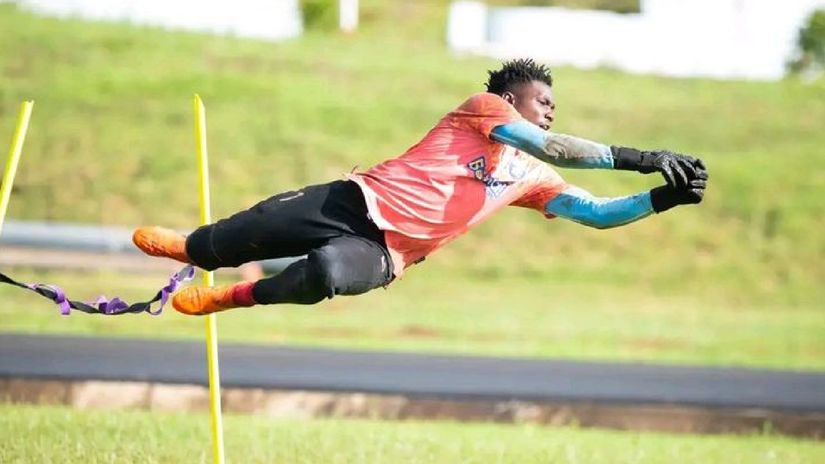
Dande Junior started between the sticks, protected by a center-back pairing of Chadian international Charles Tchouplaou and Obed Uwumukiza, flanked by retained full-backs Nshimiyimana on the right and Ganijuru on the left.
The double pivot featured Muderi Akbar and Ibrahim Djingarey tasked with anchoring the midfield, allowing Guinea's Issa Djiguiba to operate as an advanced, roaming number 10.
The frontline featured Boris Gbenou on the right wing and Antonio Atisso on the left flank, both situated to run in behind target man Mubaraka Nizeyimana.
Charles Akonnor’s Gor Mahia responded with a more traditional, possession-oriented 4-3-3 shape. Byrne Omondi occupied the goal line, shielded by a central defensive duo of Mike Kibwage and Sylvester Owino.
Paul Ochuoga started at right-back, while Bryton Onyona anchored the left-back position.
The midfield engine room relied on a dynamic trio consisting of Alpha Onyango, Lawrence Juma, and Jackson Dwang.
Up front, Hansel Ochieng acted as the focal point striker, flanked by the inverted profile of Ben Stanley and Ghanaian Ebenezer Adu-Kwaw.
Out of possession, Gor Mahia structured themselves into a zonal 4-4-2 mid-block.
The primary objective of this defensive scheme was central closure. Hansel Ochieng and Jackson Dwang would shift laterally to cut off passing lanes from Rayon's center-backs into their double pivot of Akbar and Djingarey.
The Kenyan champions intentionally allowed Charles Tchouplaou and Obed Uwumukiza prolonged spells on the ball, refusing to commit their forwards into a high press.
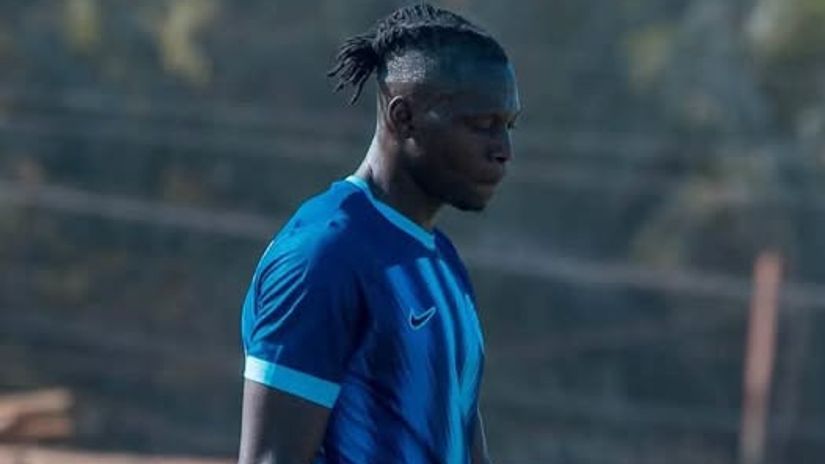
Instead, Gor Mahia’s pressing triggers were highly localized and boundary-dependent. The trigger was activated only when the ball was forced wide to Rayon’s full-backs, Nshimiyimana or Ganijuru.
The moment the ball traveled toward the touchline, Gor Mahia's wide midfielders aggressively compressed the space, attempting to lock Rayon Sports against the sideline.
The inherent risk in this scheme, however, was the structural disconnect it caused between their defensive line and the midfield block when Rayon bypassed the initial trap.
The defining tactical theme of the opening twenty minutes was Gor Mahia’s low, patient build-up phase and the structural malfunction it caused in central midfield.
In an effort to bypass Rayon Sports’ front-line pressure, both Alpha Onyango and Lawrence Juma began dropping deeply in between or alongside their center-backs, Kibwage and Owino.
However, this structural choice triggered an immediate negative domino effect higher up the pitch.
By having two members of their midfield trio vacate their standard horizontal lines to collect the ball deep, Gor Mahia completely hollowed out their own midfield. A massive spatial void emerged in Zone 14 and the central column of the pitch.
Rayon Sports’ advanced midfielder, Issa Djiguiba, and the pivot players quickly stepped up to occupy this vacated territory, effectively trapping Gor Mahia within their own defensive third and cutting off clean progression pathways to Hansel Ochieng.
Recognizing that Gor Mahia were leaving the center of the pitch completely exposed during their deep build-up phases, Rayon Sports altered their attacking methodology.
Rather than attempting to pass through the lines, Haringingo instructed his backline to hit direct, vertical long balls completely over Gor Mahia's mid-block. This approach aimed to catch K'Ogalo’s high defensive line completely flat-footed.
Rayon repeatedly punished this structural vulnerability by timing runs from out-to-in, exploiting the space behind full-backs Ochuoga and Onyona.
Even when an early blow forced the withdrawal of injured right-winger Boris Gbenou in the 27th minute - replaced by Elie Tatou Iradukunda - the tactical blueprint remained unchanged.
Rayon’s directness consistently isolated Gor Mahia’s center-backs in high-stakes footraces, converting Gor Mahia's prolonged possession metrics into high-turnover transition opportunities.
As the first half progressed, Gor Mahia adjusted by overloading the right flank, using the technical combinations of Paul Ochuoga and Ebenezer Adu-Kwaw to draw Rayon's defensive block across. Once the defense shifted, Gor Mahia looked to isolate left-back Bryton Onyona on the opposite flank, tasking him with delivering deep crosses into the penalty box.
Gor Mahia’s knock on the Rayon door nearly bore fruit in the 42nd minute when Jackson Dwang unleashed a ferocious long-range strike from just outside the box, forcing an elite fingertip save from Dande Junior to concede a corner.
However, it was Rayon Sports who ultimately dominated the vital spaces when it mattered most. In the third minute of first-half stoppage time, the hosts capitalized on their wide vertical strategy.
A rapid sequence down the right flank culminated in striker Mubaraka Nizeyimana picking up the ball and driving a dangerous, searching pass across the face of the penalty box toward the back post.
The delivery caused absolute confusion in the Gor Mahia area; goalkeeper Byrne Omondi failed to intercept the trajectory, allowing the arriving left-winger Antonio Atisso to react quickest. Atisso calmly rounded the stranded goalkeeper and slotted the ball into an empty net to break the deadlock at 1-0.
In the second half, Francis Haringingo refined Rayon Sports’ pressing mechanics to completely disrupt Gor Mahia’s structural flow. Rayon transitioned into a highly calculated 4-4-2 out-of-possession pressing block.
The substitute striker, Ausman Ndikumana - who replaced Nizeyimana at the interval - partnered with Djiguiba to form the first line of disruption.
Rather than chasing the ball aimlessly, their curved pressing runs intentionally steered Gor Mahia’s build-up outward toward left-back Bryton Onyona. Once the pass was made to the flank, Rayon locked the trap.
The right-winger and the nearest central pivot player stepped up aggressively, creating intense 2-v-1 overloads against the isolated fullback. This pressure repeatedly forced Gor Mahia into rushed, inaccurate long balls, which the commanding Chadian defender Charles Tchouplaou easily dealt with from deep.
Rayon Sports’ offensive efficiency in the second half was underpinned by an elite rest-defense structure.
When attacking through wide channels, Haringingo ensured that his double pivot of Akbar and Djingarey never advanced past the edge of the final third simultaneously. One pivot player always remained anchored centrally alongside Tchouplaou and Uwumukiza, forming a secure structural base behind the ball.
This disciplined spacing completely neutralized Gor Mahia’s primary counter-attacking outlets.
Whenever substitutes Shariff Musa, Ebenezer Assifuah or George Amono intercepted the ball, they were immediately met by an aggressive counter-press that choked out their time and space.
Because Rayon occupied these key central zones so effectively upon losing possession, K'Ogalo were unable to establish any meaningful sustained transitions from deep within their own half.
The second half saw a flurry of tactical alterations as both managers looked to utilize their benches. Haringingo made a double substitution at the break, introducing Ausman Ndikumana up front and swapping goalkeeper Dande Junior for Kouyate.
Gor Mahia’s technical bench responded in the 50th minute with a triple substitution: Ebenezer Assifuah, Lewis Bandi, Frank Odhiambo, as they came on for Hansel Ochieng, Paul Ochuoga, and Lawrence Juma.
This adjustment gave Gor Mahia greater physical presence in the final third, winning them a succession of corner kicks, but it severely compromised their defensive transition stability.
Recognizing the open space left behind by Gor Mahia's high full-backs, Rayon Sports entered an intelligent game-management mode.
They altered their style from explosive verticality to patient, low-risk possession circulation, baiting Gor Mahia to commit even more numbers forward as the clock ticked away.
In the final ten minutes of the match, Rayon Sports dropped into a compact, mid-block defensive shape to protect their one-goal cushion. The distance between their defensive line and midfield line was compressed to under fifteen meters, eliminating any space between the lines for Gor Mahia’s substitutes, Paul Okoth, Enock Machaka and George Amono, to exploit.
Gor Mahia’s golden opportunity to salvage a draw arrived in the 91st minute. Following a recycled corner kick, the ball was delivered to the back post where Paul Okoth rose highest to steer a powerful close-range header past Kouyate.
However, the effort crashed off the upright, and the goalkeeper quickly smothered the rebound to deny the Kenyan side. This defensive stand showcased the structural resilience of Haringingo’s new squad under late pressure.
Rayon Sports ultimately sealed the match in the 94th minute, exploiting the exact structural flaws created by Gor Mahia's desperate push for an equalizer.
As the Kenyan champions threw numbers forward,
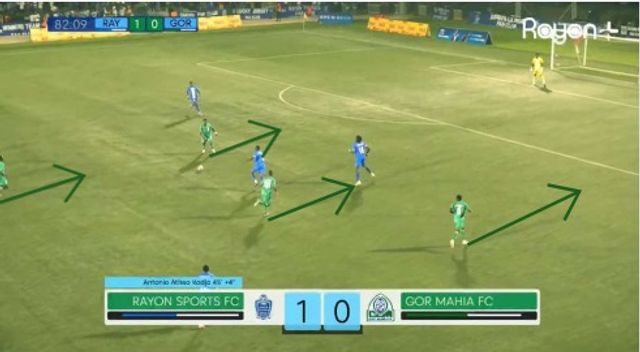
Substitute Herman Junior Kameni intercepted a loose ball and surged into the vacant space, driving directly at the isolated center-back Frank Odhiambo. Kameni bypassed the defender with ease before picking out Ndikumana Fabio, who calmly lofted a precise finish over the oncoming goalkeeper to make it 2-0.
Ultimately, this Rayon Day exhibition delivered a resounding tactical statement of intent for the upcoming season.