


TACTICAL ANALYSIS: How Algeria and DR Congo are built for 2026 World Cup
.png)
Reading Time: 7min | Fri. 12.06.26. | 14:49
We look to understand how Algeria and DR Congo will set up at the tournament and how to beat they can navigate out of their respective groups
Algeria enter the 2026 FIFA World Cup tournament as a continental giant , positioned third in Africa and comfortably inside the top 35 of the FIFA global rankings.
Under the guidance of veteran manager Vladimir Petković, the Desert Foxes are making their sixth World Cup appearance, eager to recapture the spirit of their historic 2014 Round of 16 run and their legendary 1982 upset of West Germany.
Download our MozzartSport App For More News
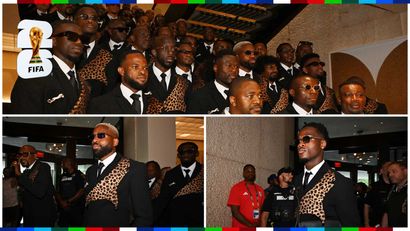
In stark contrast, Sébastien Desabre’s DR Congo arrive as a testament to collective resilience, ending a grueling 52-year tournament drought since their debut as Zaire in 1974.
Ranked 38th globally and fourth in Africa, the Leopards possess an ironclad defensive identity that has survived both rigorous qualification groups and severe external disruptions.
Placed in unforgiving groups - Algeria in Group J against Argentina, Austria, and Jordan; DR Congo in Group K alongside Portugal, Colombia, and Uzbekistan - both nations must rely on structural clarity to navigate the global stage.
Petković’s Algeria represents a highly technical, offensive powerhouse that prioritizes fluid, unpredictable movements across the pitch.
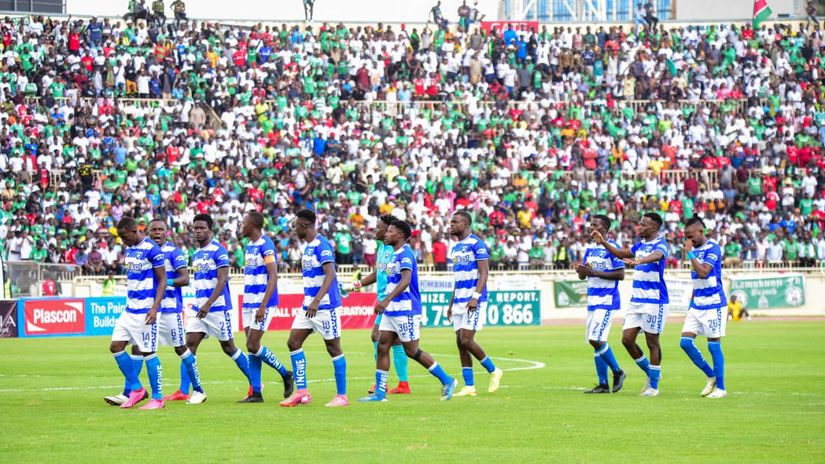
While their qualification campaign was a smooth, high-scoring affair, a recent Africa Cup of Nations quarter-final collapse against Nigeria exposed their psychological fragility under maximum duress.
To prevent structural breakdown, Petković has leaned heavily into a generation of explosive, adaptable talent.
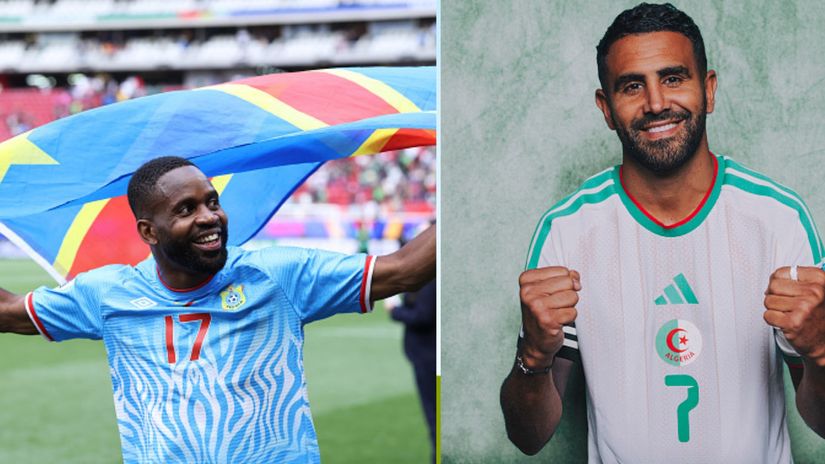
The undisputed talisman remains Riyad Mahrez, whose world-class 1v1 isolation quality on the right flank dictates how opponents shift their defensive lines.
However, the true tactical accelerator for the Desert Foxes is VfL Wolfsburg’s breakout star, Mohamed Amoura.
Operating seamlessly as a left winger or an advanced central attacking midfielder, Amoura brings a direct, high-speed dribbling profile to the final third, backed by an impressive record of 11 goal involvements in the Bundesliga and 14 goals during World Cup qualification.
Alongside teenage sensation Ibrahim Maza, Algeria boasts a pool of fluid attacking creators capable of dismantling low defensive blocks through sheer technical superiority.
Algeria structures their offensive phases around a nominal 4-3-3 baseline, which rapidly devolves into a highly fluid, non-dogmatic system of positional rotation.
Rather than adhering to rigid positional play guidelines, Petković gives his forward line total freedom to swap zones and overload specific corridors.
The primary mechanism for ball progression relies on intricate triangles formed by the fullback, the natural winger, and one of the two advanced attacking midfielders operating as dual 8s.
On the right, Mahrez will frequently pull wide to the touchline to isolate his marker 1v1, prompting the adjacent advanced midfielder to make a blind-side underlapping run through the half-space channel.
On the left, Amoura will rotate inside into central pockets, dragging the opposition fullback with him and opening a massive ocean of space for an overlapping fullback to exploit.
While Algeria proved highly competent in possession during the qualifiers, their deep build-up remains an area of structural concern.
To mitigate the risk of unforced errors against an aggressive high-pressing opponent, Petković frequently instructs his team to start their possession phase significantly higher up the pitch.
They deliberately bypass initial pressure zones by utilizing direct, vertical passes into the channels behind the opposition fullbacks, instantly stretching the pitch and utilizing the electric pace of Amoura to secure second balls in advanced territory.
Once possession is consolidated in the final third, Algeria focuses heavily on generating crossing volume.
Amoura, despite his compact frame, possesses an extraordinary leap in the air, allowing him to attack the back post alongside late-arriving midfielders to convert pinpoint deliveries from deep or wide areas.
Without the ball, Algeria shifts into an aggressive, front-footed defensive system designed to force immediate turnovers.
In the high-press phase, Algeria’s front three tucks incredibly narrow.
Their primary objective is to completely shadow the opposition’s deep defensive midfielders, denying central access and forcing the opponent to hit rushed, long vertical clearances.
If the initial high press is breached, Algeria drops into a compact 4-4-2 mid-block.
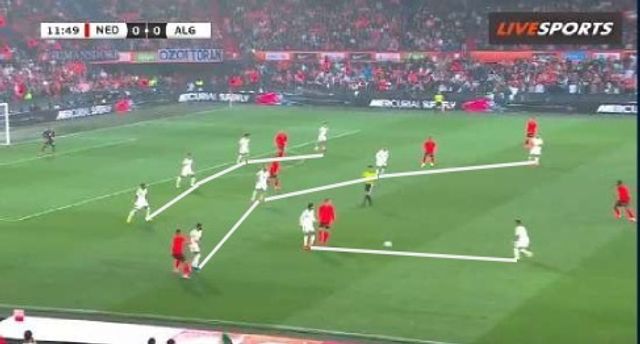
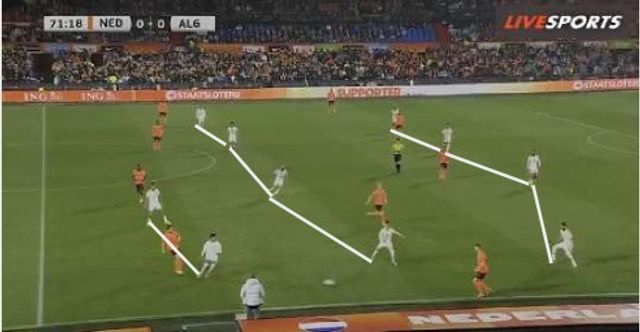
Rather than passively containing the opposition, they execute a drop and hunt policy, where midfielders aggressively jump out of the defensive line the moment a horizontal or backward pass is triggered.
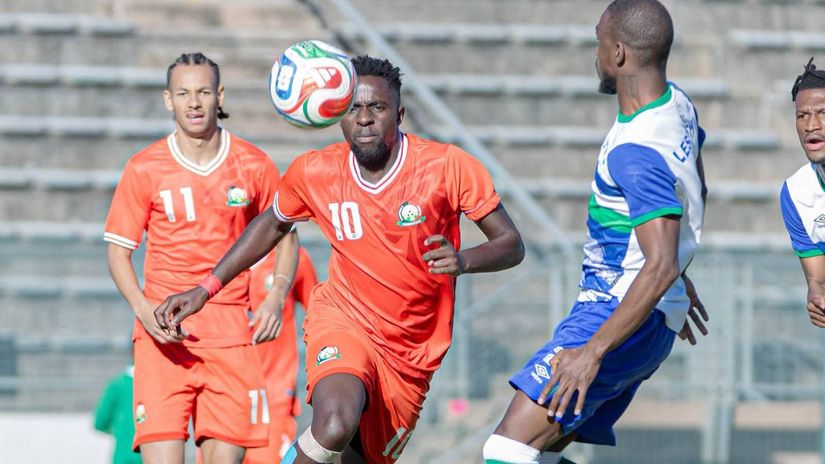
To protect themselves during advanced attacking phases, Algeria maintains a strict rest-defense foundation.
This structure utilizes a four-man defensive box consisting of the two central defenders, the lone holding defensive midfielder, and the conservative, opposite-side fullback, leaving numbers behind the ball to close down gaps or commit a tactical foul on fail.
Algeria's defensive record is heavily undermined by severe defensive frailties, particularly in dead-ball situations.
Five out of the eight goals they conceded during the qualifying phase originated directly from set-plays.
If they cannot correct this acute vulnerability to set-piece defending and occasional transitional lapses, their World Cup run could be cut short.
Sébastien Desabre’s DR Congo is built entirely on the principles of ultimate tactical pragmatism, defensive resilience, and lethal vertical efficiency.
Desabre, a meticulous and detail-obsessed coach, has united a squad that excels in low-block survival and lightning-fast attacking transitions.
Despite their preparations being heavily disrupted by a domestic Ebola outbreak, the Leopards boast immense mental toughness and are notoriously difficult to break down.
The undisputed focal point of their counter-attacking framework is Brentford's Yoane Wissa, who acts as the chief orchestrator and primary creative engine during rapid vertical breaks.
In the center of the pitch, the young and tenacious Noah Sadiki provides an elite ball-winning presence, driving forward with power after winning physical duels.
This grit is perfectly balanced by the technical possession circulation of Ngayel Mukau and Samuel Moutoussamy, who control the tempo from deep positions.
While DR Congo rarely seeks to dominate games or look for free-flowing expansion in open play, their possession structure is highly calculated to manipulate opposition pressing lines.
During the low phase of build-up, the Leopards utilize their goalkeeper as an active plus-one to escape high-pressing lines.
The center-backs split wide alongside their own six-yard box with the gk in between them, flanked by fullbacks Arthur Masuaku and Gédéon Kalulu/Aaron Wan Bissaka.
Mukau and Moutoussamy drop directly ahead of them to form a rigid 4-2 base structure.
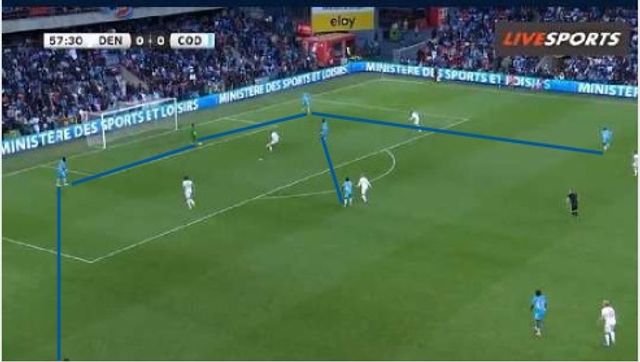
This ultra-deep posture deliberately baits the opponent to press high, vacuuming them forward and opening up space across the center line.
The moment the opponent's press commits, DR Congo hits direct, vertical long balls from goalkeeper Lionel Mpasi or the back three straight into veteran striker Cédric Bakambu. As they enter the attacking third, the structure dynamically morphs into a fluid 3-5-2 or 3-4-3.
In advanced stages, Desabre deploys two inside creative number tens who position themselves in close proximity to the wide players and Bakambu.
Width is consistently maintained by wingbacks Masuaku and Kalulu who are elite crossers.
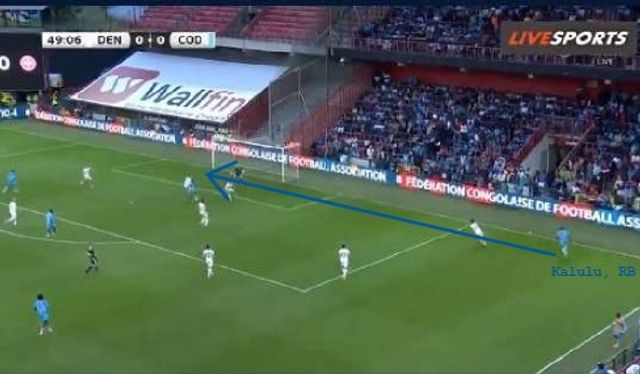
Bakambu constantly executes high-speed runs into depth against the opposition defensive line, dragging center-backs wide and setting up crossing scenarios for Wissa or late-arriving midfielders to finish.
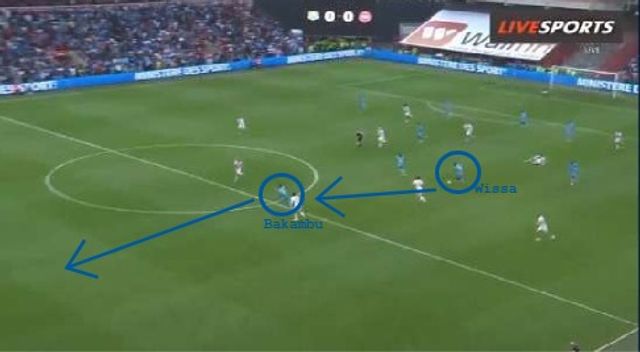
Defensively, DR Congo abandons all expansive pretenses, settling into a physically imposing defensive shape. Out of possession, the Leopards fold back into a deeply entrenched 5-3-2 mid-to-low block.
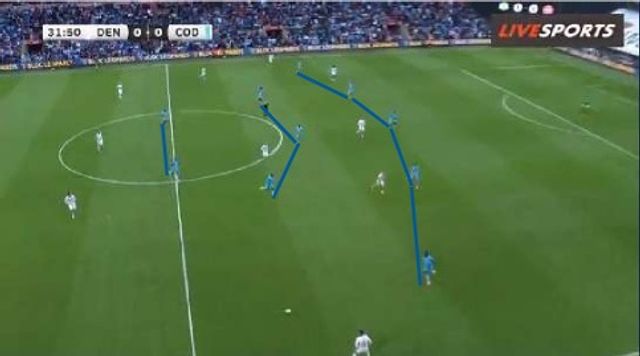
This configuration heavily emphasizes central , ensuring that the three central defenders and Sadiki completely plug the interior channels. The primary risk in Desabre's system occurs when the defensive block shifts laterally.
When the wide midfielders in the two defensive lines are drawn heavily toward the ball side to choke wide progression, they regularly concede massive spaces in central areas in deep transition.
Elite opposition sides can exploit this shifting mechanism by executing rapid, horizontal switches of play followed by immediate vertical passes through the intermediate spaces before the Congolese double pivot can slide across to cover the space.
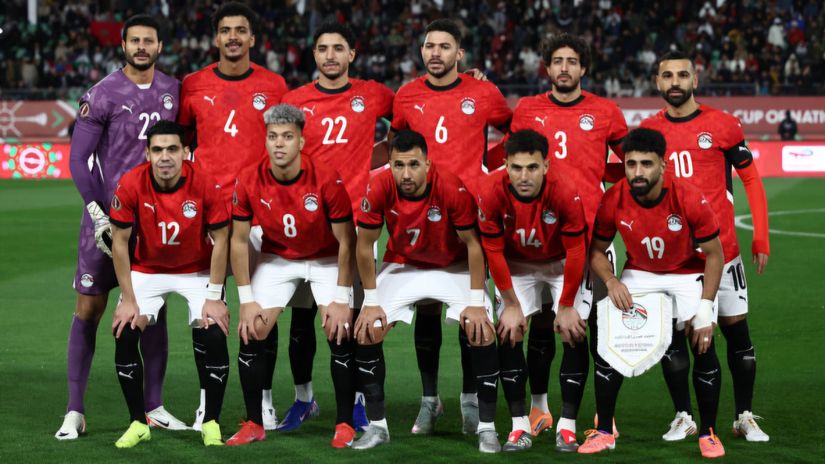
The contrasting structures of Algeria's fluid wide rotations and DR Congo's rigid transition framework will face ultimate stylistic tests in their respective groups.
Algeria is set to contest Group J alongside Argentina, Austria, and Jordan, where their primary hurdle will be eliminating unforced deep build-up errors and surviving set-play defensive routines against elite physical teams.
DR Congo will fight through Group K against Portugal, Colombia, and Uzbekistan, forced to focus on maintaining midfield coverage during lateral block shifts and creating open-play opportunities when transitions are denied.
Algeria's tournament trajectory in Kansas City and San Francisco relies on Petković's ability to maintain structural integrity while unleashing the creative genius of Amoura and Mahrez.
If their narrow high press can force opponents long, and their box rest-defense successfully smothers counter-attacks, the Fennec Foxes possess the attacking variety required to make a deep run into the knockout rounds.

Conversely, DR Congo will comfortably concede possession to powerhouses like Portugal and Colombia, waiting patiently within their unbreakable 5-3-2 fortress.
Their success hinges entirely on the clinical efficiency of Yoane Wissa and Cédric Bakambu during vertical transition phases.
If the Leopards can execute their deep 4-2 baiting templates without turning the ball over inside their own penalty box, their extraordinary mental resilience makes them a terrifying dark horse capable of grinding out historic results on football's grandest stage.