


TACTICAL ANALYSIS: How efficient Tusker shut down Sharks to reach Mozzart Bet Cup quarters




.jpg)



Reading Time: 6min | Sat. 11.04.26. | 11:32
With a place in the quarter-finals at stake, both teams approached the fixture with distinct identities
The Mozzart Bet Cup clash between Tusker and Kariobangi Sharks carried the familiar tension of knockout football, where margins are razor-thin and game-states dictate tactical risk.
Download our MozzartSport App For More News
With a place in the quarter-finals at stake, both teams approached the fixture with distinct identities - Tusker leaning toward structural stability and transition efficiency, while Kariobangi Sharks sought territorial dominance through aggressive pressing and expansive attacking play.
The eventual 1-0 scoreline hints at a tightly contested affair, but beneath that lies a deeper tactical story: one of early efficiency versus sustained pressure, of controlled defending against increasingly desperate attacking waves.
Tusker set up in a classic 4-4-2, a system that emphasized vertical compactness and direct outlets.
Pavel Ndzhila anchored the team from goal, shielded by a back four of Servyl Akouala, Collins Odhiambo, Francis Oduor, and Charles Momanyi.
In midfield, Chrispine Erambo and Fabian Adikiny formed a disciplined double pivot, tasked with screening central spaces and recycling possession.

The wide midfielders, Ian Simiyu on the right and Stephen Etyang on the left, balanced defensive tracking with transitional bursts.
Up front, the partnership of Erick Kapaito and Ibrahim Joshua was asymmetrical - Kapaito frequently dropping into deeper pockets, while Joshua stretched the defensive line with runs in behind.
Kariobangi Sharks, on the other hand, adopted a 4-3-3 that morphed fluidly into a 2-2-6 or 2-3-5 in possession.
Sebastian Wekesa started in goal behind a central defensive pairing of Kevin Luke Otiala and Ian Taifa.
The width was provided by wing-backs Zablon Kutela and Raphael Owino, while Faiz Opande and Patilah Omoto operated as the double pivot.
Keegan Ndemi played as the advanced midfielder between the lines, linking with a fluid front three of Markvivan Kesa, Victor Ngume, and Humphrey Aroko, who functioned as inside forwards occupying the half-spaces.
From the outset, Kariobangi Sharks imposed an aggressive high press, aiming to disrupt Tusker’s build-up.
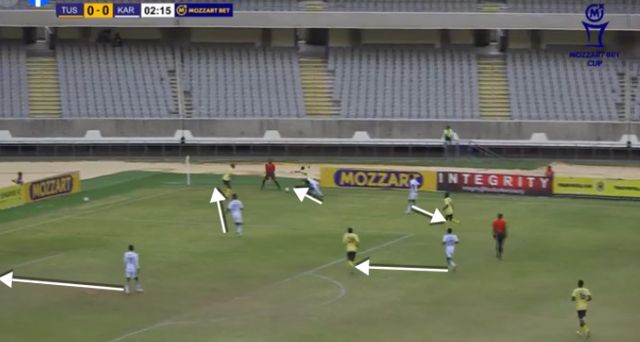
Their pressing scheme was well-coordinated, with triggers including lateral passes across Tusker’s backline, balls played to the fullbacks, and passes into back-facing midfielders.
Structurally, this press resembled a front-loaded shape that sought to isolate Tusker’s defenders near their own box.

However, while the intent was clear, execution flaws emerged - particularly in covering central passing lanes once the first line was bypassed.
Tusker’s build-up, initially conservative with a 4-2 base, adapted cleverly to this pressure.
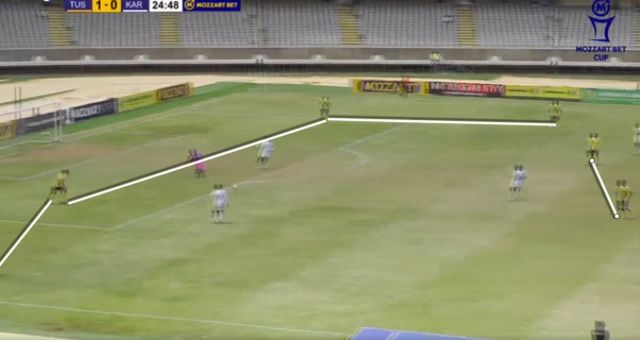
The key mechanism was Kapaito’s dropping movements into midfield, effectively creating a temporary overload and providing a vertical outlet to bypass the press.
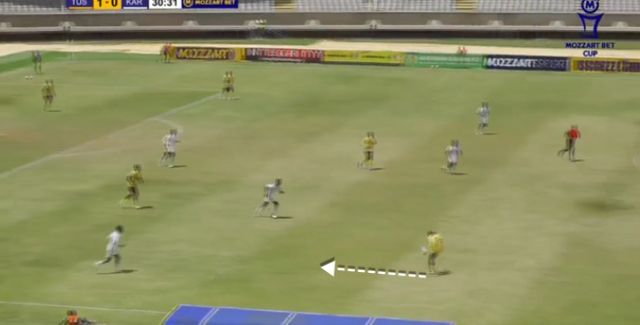
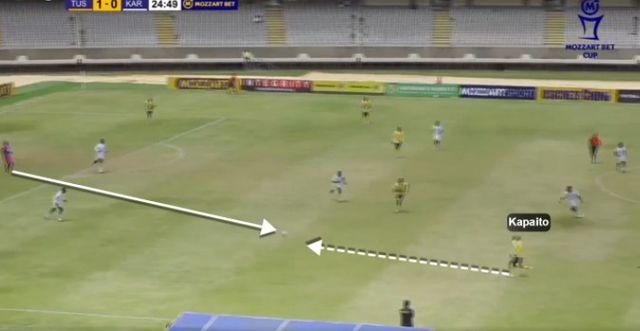
This movement disrupted Kariobangi’s defensive staggering, pulling center-backs out of position and opening space behind.
Joshua’s role complemented this perfectly, as he constantly threatened the depth with well-timed runs.
The decisive moment came in the eighth minute and encapsulated Tusker’s transitional threat. After regaining possession in midfield, Kapaito quickly linked with Simiyu, who drove forward with pace down the right flank.
Exploiting the disorganized defensive transition of Kariobangi Sharks, Simiyu finished clinically to make it 1-0.
This goal highlighted Tusker’s efficiency - minimal passes, vertical intent, and exploitation of space in wide channels during moments of defensive imbalance.
Kariobangi Sharks continued to dominate possession, particularly through wide progression.
Their attacking structure emphasized width, with wing-backs pushing high and inside forwards occupying half-spaces.
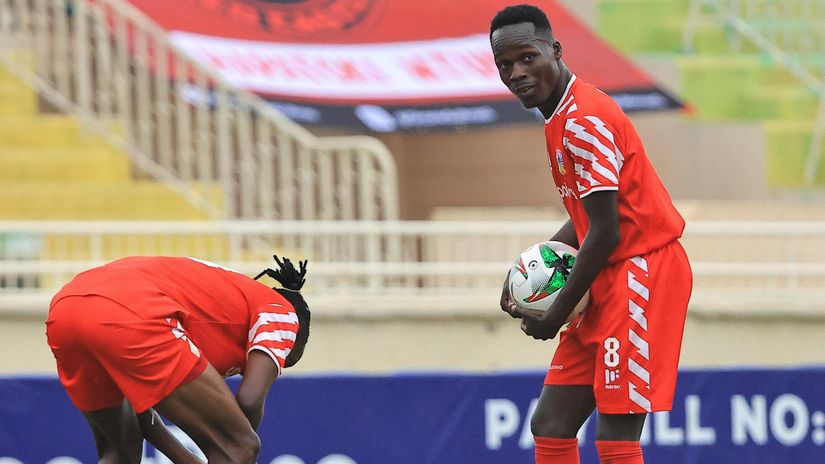
Crosses into the box were a recurring theme, often aimed at attacking the far post or creating second-ball situations.
However, their inefficiency in Zone 14 and central areas was evident; despite their territorial control, they struggled to create high-quality chances through the middle.
Tusker’s defensive scheme was a disciplined mid-block in a 4-4-2 shape.
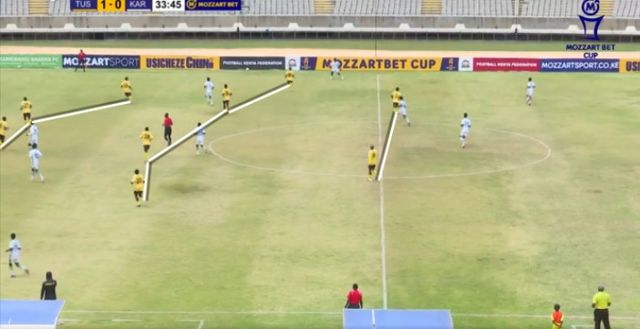
The lines remained compact vertically, limiting space between midfield and defense.
Wide areas were deliberately conceded to some extent, with the understanding that crosses could be managed by their center-backs.
Their compactness denied Kariobangi central penetration, forcing them into predictable wide attacks.
.jpg)
As the first half progressed, Kariobangi intensified their use of overloads and third-man combinations, particularly on one flank before switching play to the opposite side.
This approach aimed to stretch Tusker’s defensive block laterally, but Tusker’s shifting remained cohesive.
By the 36th minute, Sharks had increased their crossing frequency but lacked clinical finishing to restore parity.
The second half introduced a new dynamic. Early substitutions, including the forced change of goalkeeper Sebastian Wekesa for Collins Omondi, slightly disrupted Kariobangi’s rhythm.
Tactical changes also followed, with Razel Omondi replacing Markvivan Kesa, pushing Humphrey Aroko into a central striker role.
This adjustment aimed to improve central presence but did not significantly alter their inefficiency in front of goal.
Kariobangi Sharks dominated possession in the second half, pushing Tusker deeper into their own half. Tusker responded by transitioning into a lower block, at times resembling a back five as Etyang tracked back extensively.
This defensive adaptation reinforced their rest-defense structure, ensuring numerical superiority in the defensive third and limiting space for cutbacks and central combinations.
Tusker’s transition strategy remained focused on the right flank, now through Thomas Omole after Simiyu’s substitution.
These counterattacks were less frequent but still posed a threat, particularly against Kariobangi’s aggressive attacking shape that often left them vulnerable to turnovers.
A crucial tactical shift occurred in the 59th minute when Tusker withdrew Joshua for Denis Iguma, transitioning into a 4-2-3-1. This change sacrificed vertical depth for midfield control, adding an extra layer of protection against Kariobangi’s sustained pressure.
Kapaito now operated as a lone striker, continuing his role as a pressing outlet and link player.
Kariobangi’s build-up remained structured around a 2-2 base, with one midfielder - often Opande - dropping between the center-backs to facilitate progression.
Their passing sequences were fluid, but the lack of incision in the final third persisted.
Their dominance in wide channels did not translate into effective occupation of central scoring zones.
By the 70th minute, further substitutions by Tusker reinforced their defensive intent. Fresh legs in wide and defensive areas helped maintain compactness.
Meanwhile, Kariobangi doubled down on their attacking approach, introducing David Majak and Armstrong to increase offensive presence.
Their pressing intensified again around the 71st minute, with effective use of the touchline as a pressing trap.
Tusker were frequently forced into hurried clearances, unable to sustain possession.
However, their rest-defense and counterpressure ensured that second balls were contested effectively, preventing Kariobangi from capitalizing fully.
The defining narrative of the final stages was Kariobangi’s profligacy.
Despite creating moments, including a glaring opportunity in the 81st minute where Armstrong missed an open net, their decision-making and execution in the final third failed them.
Tusker’s low block, disciplined positioning, and commitment to defensive duels ensured they preserved their lead.

Out of possession, Tusker excelled in compactness and timing of defensive actions. Their stepping triggers were measured, avoiding unnecessary pressing that could open spaces. Recovery runs, particularly from wide players, were crucial in maintaining defensive integrity.
In conclusion, this match was a classic example of efficiency versus dominance.
Tusker’s strategy was clear: absorb pressure, exploit transitions, and protect the lead through structural discipline.
Kariobangi Sharks, despite their territorial superiority, were undermined by inefficiency in key zones and a lack of clinical edge.
The tactical battle ultimately favored Tusker’s pragmatism and game management, securing a narrow but well-executed victory.