


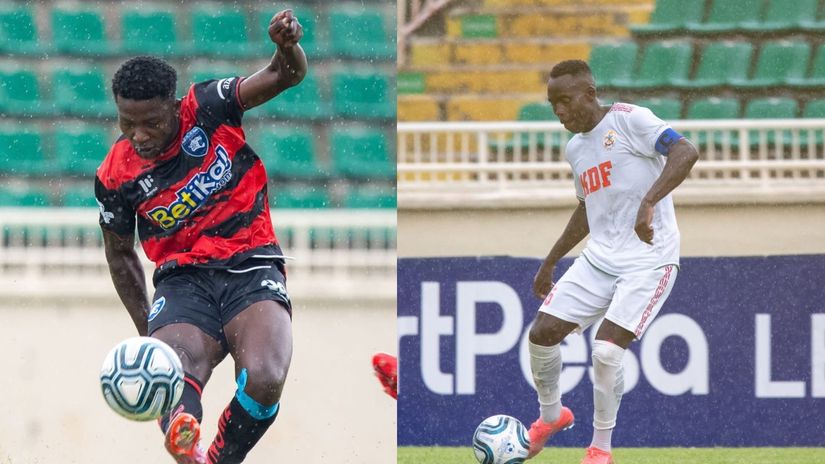
TACTICAL ANALYSIS: How inverted fullback role redefined Ulinzi vs AFC Leopards encounter


.jpg)



Reading Time: 4min | Tue. 19.05.26. | 22:00
Both teams utilised the inverted full-back to solve a modern tactical problem: how to penetrate a compact mid-block without sacrificing defensive stability
The midweek FKF Premier League encounter between Ulinzi Stars and AFC Leopards served as a masterclass in how the inverting full-back can dictate match structure.
Moving beyond traditional flank duties to become the primary engine of both possession and defensive transition.
Download our Mozzart Sport app for more news
For the opening 45 minutes, the central zones became the primary battleground, with Brian Ojok for Leopards and Brian Birgen for Ulinzi acting as auxiliary midfielders.
Their positioning forced constant structural reconfigurations, resulting in a half defined by midfield overloads, half-space occupation, and a rest defence that sat significantly higher than either side’s base formation suggested.
AFC Leopards built from the back with a clear intent to manufacture numerical superiority. When settling into their low build-up, right-back Brian Ojok stepped into the midfield half-space frequently on the half-turn, dragging Ulinzi’s wide midfielder inside.
This movement triggered a chain reaction: James Kinyanjui stayed high and wide on the touchline to stretch the Ulinzi block horizontally, opening a vertical channel for Ojok to receive between the lines.
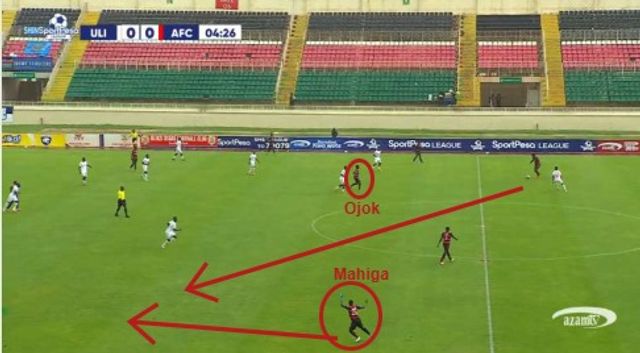
By operating as a fourth central midfielder alongside Leopards’ pivot Musa Oundo and the other dropping midfielders, the numerical balance shifted to a 4v3 in midfield.
This overload provided a safe outlet to bypass the press while simultaneously creating a free man on the opposite flank.
Left-back Vincent Mahiga recognised this immediately, pushing high into the left half-space, joining the left winger Hassan Beja wide to turn Leopards’ shape into a situational 3-2-5.
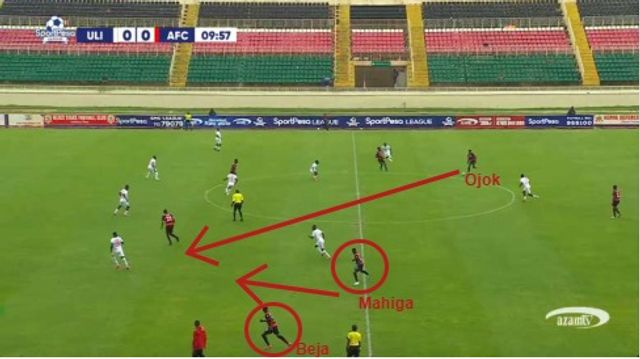
Ojok’s role as the engine of build-up was evidenced by his consistent reception on the half-turn, which forced Ulinzi’s anchorman into an uncomfortable dilemma.
If the pivot dropped, Leopards had time to find the front line; if he stepped out to press, space opened behind him for Mahiga’s underlapping runs or for Tyson Otieno\Victor Omune to drop into "Zone 14."
Leopards’ principle was to invert on the strong side to create a local overload, then exploit the weak side with a quick switch or a vertical pass.
Most apparent in the 26th minute when Ojok received centrally and carried into Zone 14, forcing Ulinzi’s left-sided defenders into a crisis of space.
The midfielder could not step without leaving the central lane open, and the full-back could not press without exposing the channel for James Kinyanjui to run in behind.
This manipulation ensured that wide attackers could engage their markers in isolation rather than facing a doubled-up defence.
Ulinzi Stars responded with a similar tactical inversion, using right-back Brian Birgen to create a situational 5v4 in their build-up phase.
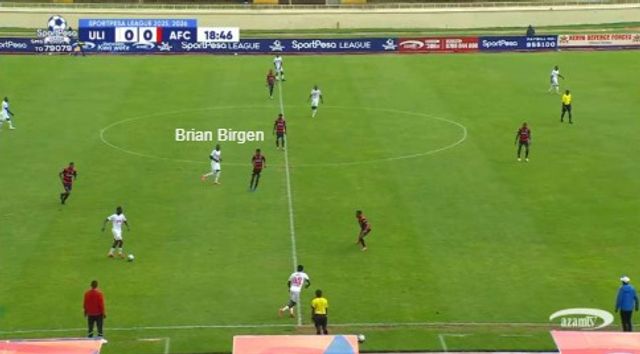
Birgen’s movement was slightly deeper and more controlled, designed to drag Leopards’ left wide midfielder out of position.
This created an avenue for Boniface Muchiri to drop into the right half-space and participate in a 3-2\3-3 first-phase build-up system.
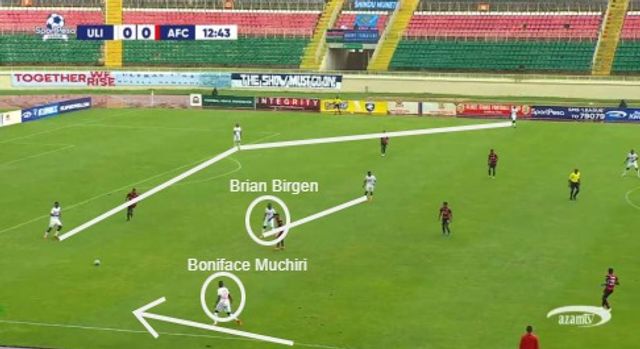
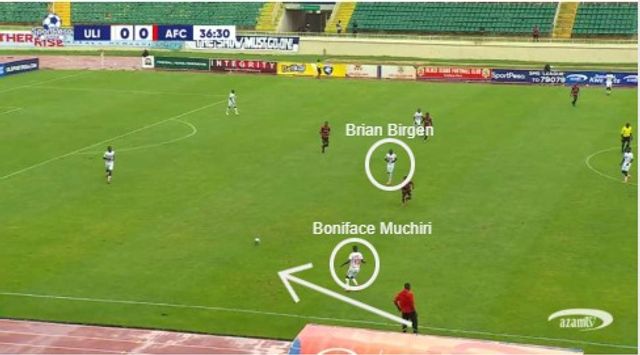
By creating an extra man against Leopards’ first line of press, Ulinzi were able to play through the pressure rather than over it.
Birgen’s positioning also served a vital defensive purpose; because he occupied a central station during the possession phase, he was already inside the structure to counter-press and block passing lanes into the transition zone upon a turnover.
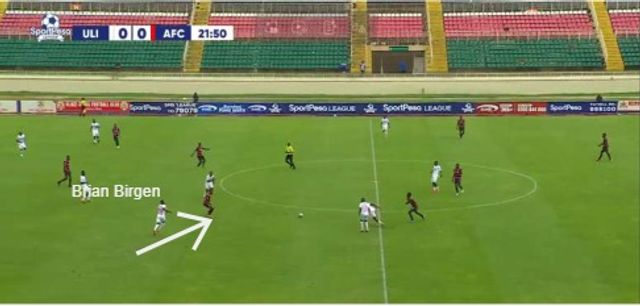
This provided Ulinzi with a compact rest defence, preventing central counter-attacks without requiring their central midfielders to scramble back over large distances.
The decisive tactical battle centred on how each side resolved the problem of the inverting full-back out of possession.
Leopards forced Ulinzi into a reactive posture through Ojok’s constant presence in the right half-space.
Ulinzi’s left midfielder had to choose between tracking Ojok inside, which pulled the block narrow and opened the wide lane for Kinyanjui, or staying wide and granting Ojok time to play forward.
When Ulinzi’s anchorman finally stepped out to engage Ojok, it broke the screen in front of the back four, allowing Mahiga on the other side to time underlapping runs into the vacated left half-space.
These underlaps added a layer of attacking dynamic that frequently bypassed Ulinzi’s defensive planning.
Ulinzi’s inversion was effective at bypassing the initial press, but they lacked the same consistency in exploiting the space once the first line was beaten.
While Birgen’s movement created the overload and Muchiri provided a short option, Leopards’ own rest defence was able to counter-press effectively.
This highlighted the two-sided nature of the inverted full-back: while it grants a numerical advantage in build-up, it also serves as a protective shield.
If the offensive side is slow to exploit the resulting space, the inverting full-back simply acts as a stabiliser for the opposition's defensive reset.
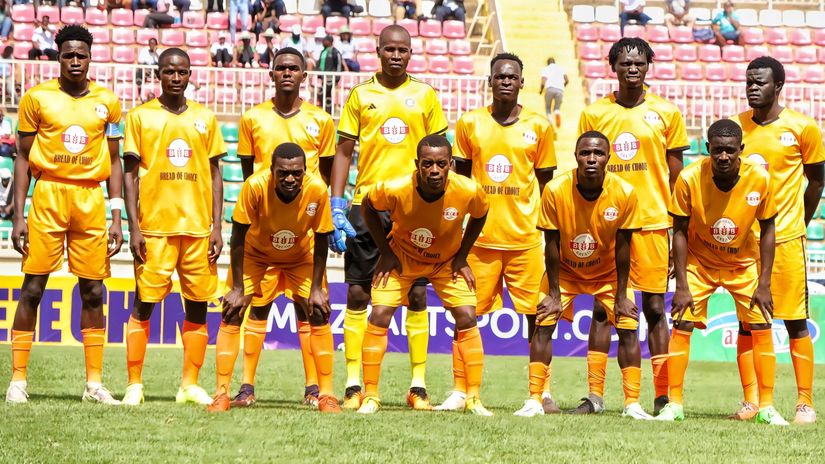
Ultimately, Leopards leaned on width and penetration through half-space manipulation, using the inversion to free their wingers for 1v1s.
Ulinzi’s principle was rooted in control and circulation, using Birgen to ensure clean progression and a secure counter-press.
The cumulative effect was a game where central zones were perpetually overloaded, and wide areas were manipulated as a consequence rather than attacked directly.
Both teams utilised the inverted full-back to solve a modern tactical problem: how to penetrate a compact mid-block without sacrificing defensive stability.