


TACTICAL ANALYSIS: How Okidi outsmarted Tusker’s French coach with bold formation shift

.jpg)
.jpg)
.jpg)


Reading Time: 5min | Mon. 23.02.26. | 14:41
While the scoreline was settled by a deflected cross, the narrative was written through Shabana’s ability to disrupt Julian Mette’s "Brewers" from finding their rhythm in central zones
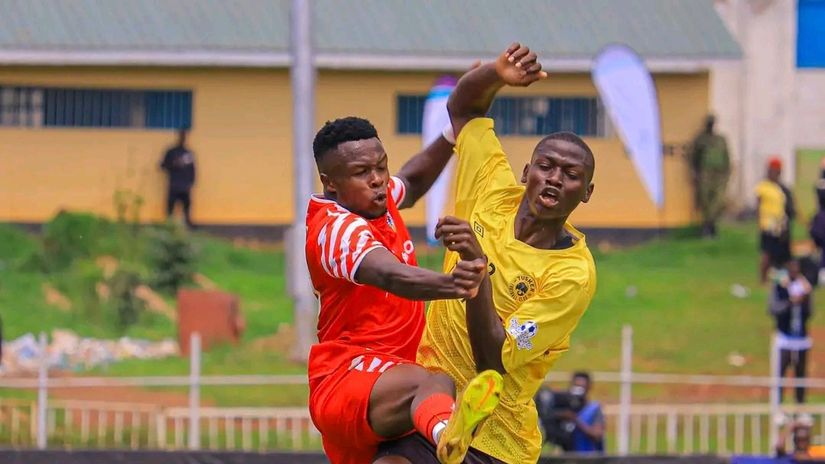
Shabana FC secured a gritty 1-0 victory over Tusker FC in an FKF Premier League clash defined by high-pressing triggers and superior transitional efficiency.
While the scoreline was settled by a deflected cross, the narrative was written through Shabana’s ability to disrupt Julian Mette’s Tusker from finding their rhythm in central zones.
Follow our WhatsApp channel for more news
This analysis explores how Shabana’s aggressive front-foot defending and wide-area rotations neutralized Tusker’s sophisticated positional play.
Both managers entered the fray with distinct structural philosophies.
Shabana utilized a 4-3-3 organization designed for balance and verticality.
Stephen Ochieng started in goal, shielded by a back four of: Brian Bett,James Mazembe and a central pairing of Wycliffe Omondi and George Onyango.
The midfield engine consisted of Byron Otieno as the deep-lying anchor, supported by Kevin Omundi in a box-to-box role and Keith Imbali as the primary creative link.
Up front, Pape Diallo and Bryan Michira provided width to support striker Batshi Assis.
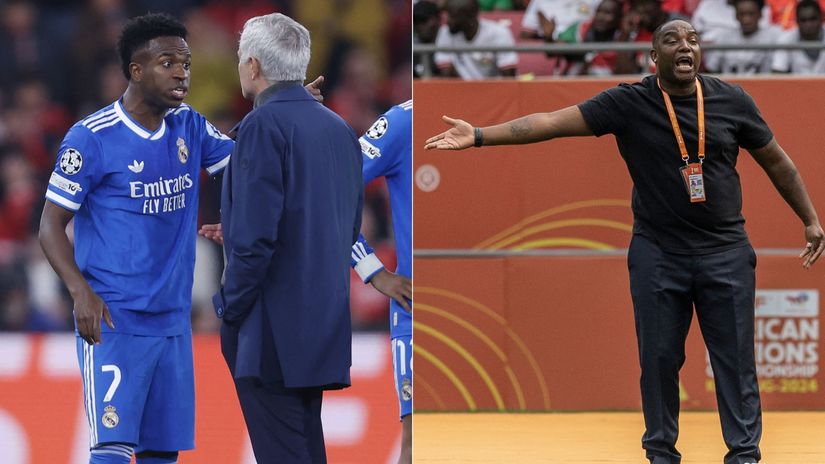
Tusker, under the tactical shift of new coach Mette, deployed a 4-4-2 that often morphed into a 4-1-3-2 during high-press phases.
Brandon Obiero started between the posts, with Eugene Ikutwa and Collins Odhiambo as fullbacks.
Charles Momanyi and Thomas Teka started at the heart of the defence.
The double pivot of Chrispine Erambo and Fabian Adikiny aimed to control the tempo, while Thomas Omole and Stephen Etyang provided width.
Crucially, Denis Oalo operated as a "shadow striker" just off Eric Kapaito, acting as the bridge between midfield and attack.
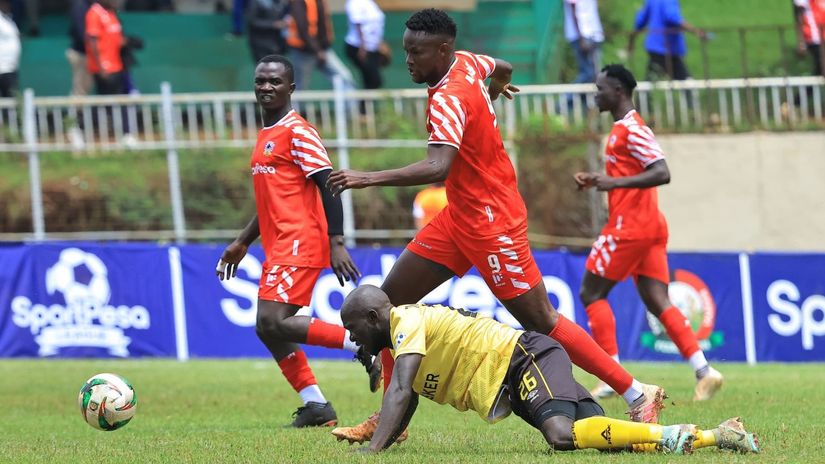
The match was defined by two distinct pressing philosophies.
Tusker employed a high defensive line that pushed close to the halfway line.
Their pressing trigger was lateral: when Shabana’s center-backs played the ball to the fullbacks in the low build-up, Tusker’s wingers would jump to initiate a trap, forcing Shabana into hurried clearances.
Conversely, Shabana’s press was more localized around the Tusker penalty area.
They aimed to force turnovers in high-value zones, utilizing the energy of Diallo and Michira to harass Tusker’s center-backs during their low patient 4-2 build-up structure.
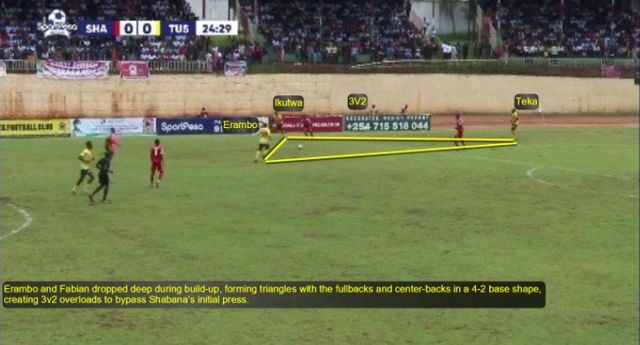
This aggressive stance from Shabana forced Tusker to abandon their short-passing game by the 30th minute, switching to long goal kicks to bypass a congested midfield.
Tusker’s offensive logic relied on positional rotations to create overloads.
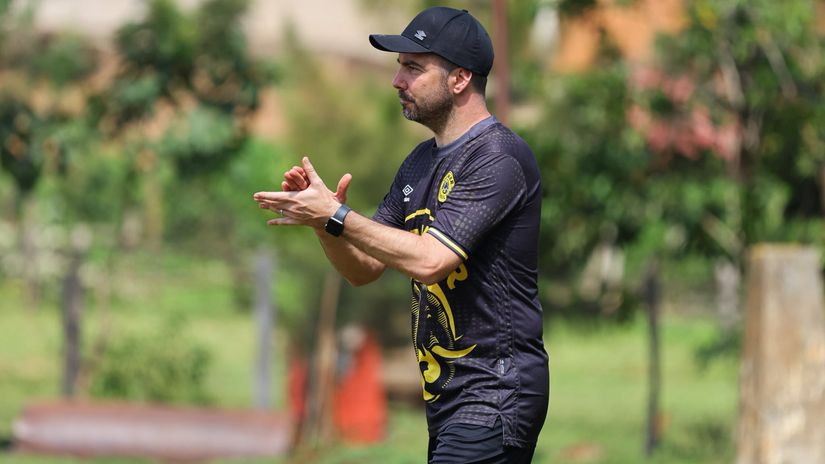
Etyang often dropped deep from the left wing, drawing Brian Bett out of position.
This movement allowed Eric Kapaito to drift into the vacated left channel, stretching the Shabana central defense.
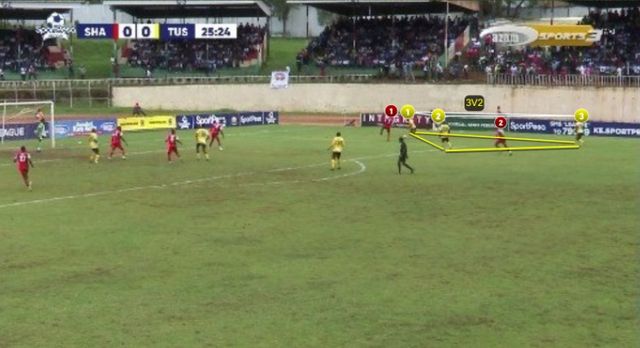
Oalo supplemented this by dropping into the "10" space, creating a 3v2 overload against Shabana’s midfield pivot.
Shabana’s build-up was more direct. Byron Otieno would drop between the center-backs to create a back three, providing security against Tusker’s two-man front line.
However, the primary mechanism of progression was the overlapping fullback.
Bett pushed high into the final third, allowing Michira to tuck inside as an "inside forward" in the half-space.
This created a dilemma for Tusker’s Collins Odhiambo: mark the winger inside or track the galloping fullback outside?
The winning goal in the 40th minute was a direct result of Shabana’s wide exploitation. By stretching Tusker’s back four, Shabana created the space for Michira to isolate his marker on the right wing.
The Goal Pattern: A quick transition shifted the ball to the right flank.
Michira’s cross, intended for Asis, took a wicked deflection off Teka.
The trajectory caught Obiero - who had stepped off his line to anticipate the cross - out of position, looping into the net.
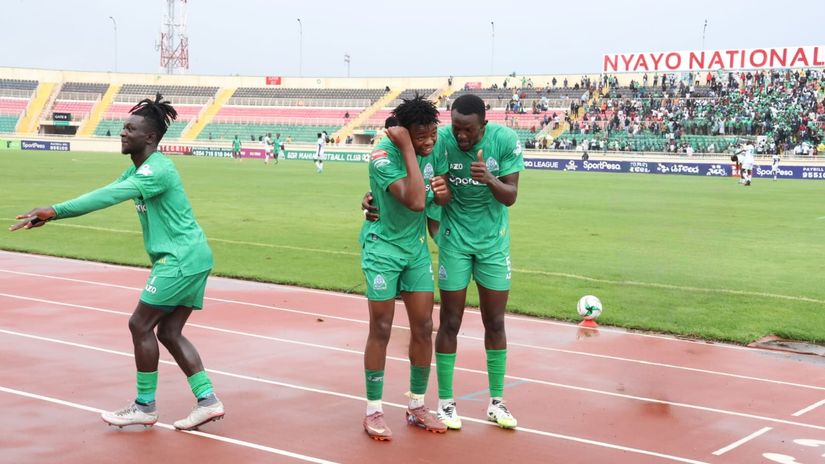
While fortunate in its finish, the goal highlighted Tusker’s vulnerability when their fullbacks were caught between defending the wing and pinching inside to help the center-backs against interior runs.
In the second half, the tactical chess match intensified.
Shabana introduced John Owira for Omundi to solidify the midfield, while Mette pushed Oalo even deeper to act as a deep-lying playmaker.
Tusker began "switching the point of attack" with greater frequency. Oalo would drop deep, receive from the defenders, and spray long diagonals to isolated wingers on the opposite flank.
This was designed to bypass Shabana’s compact mid-block.
By the 67th minute, the introduction of Ian Simiyu provided fresh overlapping runs on the right, aiming to overload the wide areas where Shabana’s Diallo had previously found joy.
As the game progressed, Shabana moved from a proactive 4-3-3 to a reactive 4-5-1 block.
The introduction of Bronson Nsubuga shifted Michira to a central striking role, focusing entirely on long-ball restarts and quick breaks.
This signaled a shift in game state: Shabana surrendered possession (accepting "defensive reactivity") to protect their 1-0 lead, banking on set-pieces and transitions to kill the game.
In the closing stages, Shabana’s "Rest-Defence" - became purely precautionary. They kept their fullbacks deeper, refusing to commit numbers forward to ensure they weren't caught by Tusker's wingers, who remained a constant threat on the counter-attack.
Tusker flooded the box in the final ten minutes, utilizing heavy wing play and crosses.
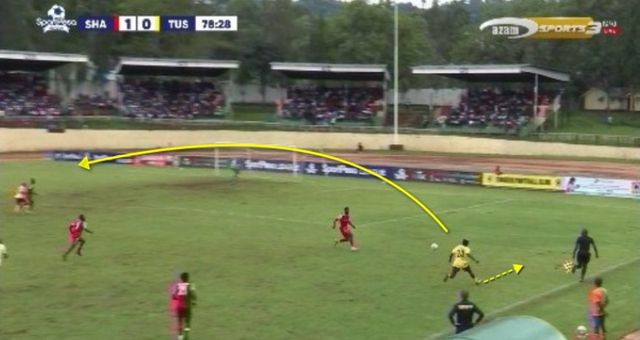
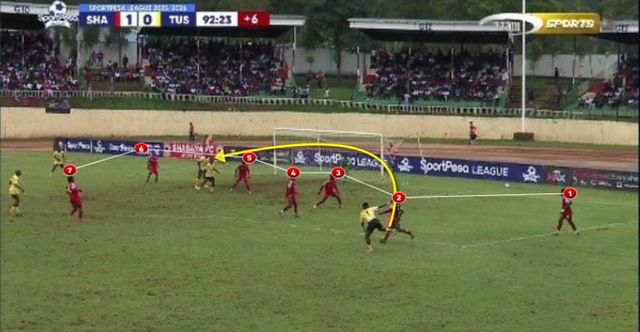
However, Shabana’s central compactness remained unbroken. Stephen Ochieng proved to be the hero of the defensive phase, producing several crucial saves as Tusker’s momentum shifted into a desperate "all-out attack" mode.
The final whistle confirmed a 1-0 victory for Shabana, a result that reflected tactical discipline over aesthetic dominance.

Shabana: Successfully used a high-pressing start to unsettle Tusker’s new system, then showed enough tactical flexibility to drop into a low block and absorb pressure.
Their use of wide overloads was the primary catalyst for the winning goal.
Tusker: Displayed sophisticated rotations and a clear identity under Mette, but struggled with the "final ball" and were punished for a high line that left their goalkeeper exposed on the goal-scoring cross.
Ultimately, Shabana’s ability to transition from an aggressive press to a stubborn low block proved too much for a Tusker side still finding its rhythm under new leadership.