


There will be Serie A and La Liga matches abroad





.jpg)
Reading Time: 3min | Tue. 07.10.25. | 09:34
UEFA 'reluctantly' allowed two games to be played in Australia and the USA
It was September 25 when UEFA sent an official letter to each of its 55 national associations, clearly stating that domestic league matches should not be played outside the country’s borders without prior consultation with UEFA. The reason was the news that Milan and Como planned to play a league match in Australia, since San Siro would be unavailable during the 2026 Winter Olympics, and that Barcelona vs. Villarreal was scheduled for Miami. At the time, president Aleksander Ceferin openly voiced his dissatisfaction, warning that such moves could undermine the integrity of national competitions and the rights of home supporters. UEFA then announced that the issue would be discussed at the next Executive Committee meeting.
We are opposed to domestic league matches being played abroad.
— UEFA (@UEFA) October 6, 2025
Two requests have been approved on an exceptional basis due to regulatory gaps at global level.
We are committed to anchoring the integrity of domestic competitions and fans’ perspectives in forthcoming FIFA rules.
And today, just 11 days later, UEFA has changed its stance and approved the playing of two league matches outside European territory: Milan vs. Como in Australia and Barcelona vs. Villarreal in Miami. This is a precedent that has sparked controversy, coming barely ten days after UEFA had strongly opposed the idea and warned all associations against staging domestic league games abroad. Only ten days later, UEFA nevertheless decided to allow both matches, stating that these were exceptional cases that must not become the norm. According to the statement following the meeting in Tirana, UEFA—after consulting with all relevant parties—acknowledged that FIFA’s current regulations are not sufficiently clear regarding league matches played outside a club’s home country.
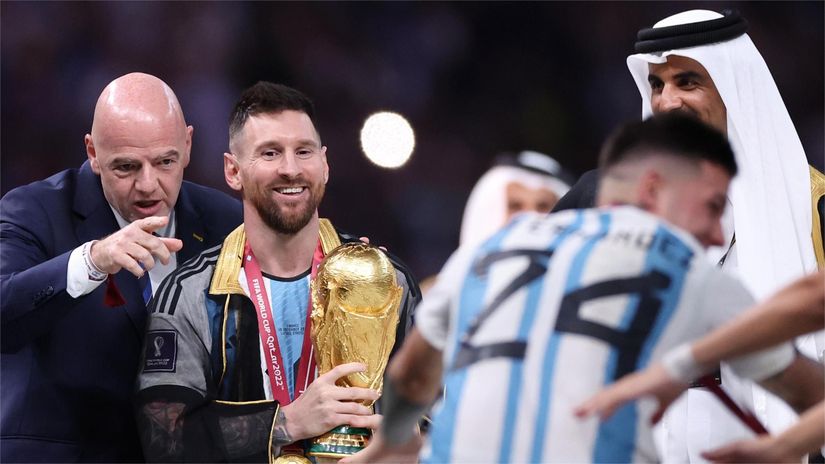
As a result, UEFA’s Executive Committee granted temporary approval to Italy and Spain to carry out their plans, with the note that new rules would be developed to clearly protect football’s local character in the future.
“Our fans have the right to watch their clubs at home. Anything else introduces elements that compromise the competition. Although we regret having to allow these two matches to be played abroad, this is an exception that must not become a rule. Our duty is to protect the integrity of domestic leagues and the connection between clubs and local communities” said Aleksander Ceferin in the new statement..
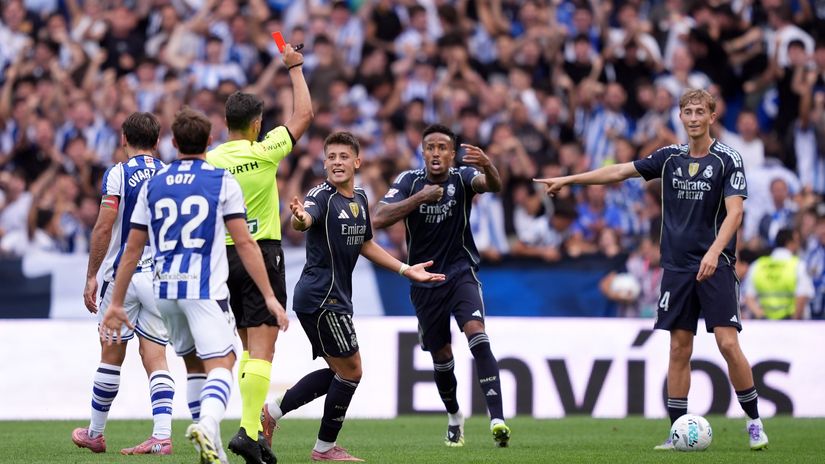
With this, UEFA has formally opened the door to the “export” of league matches—albeit with a clear message that this is a temporary, one-off measure. And while fans in Miami and Melbourne will have the chance to see Barcelona and Milan live, European football remains divided between the pursuit of global markets and the fear of losing its local identity. This decision raises serious questions about UEFA’s consistency. The organization that just ten days ago positioned itself as the defender of “local football” and fan tradition has now, under the pressure of commercial interests and legal ambiguity within FIFA’s framework, created a precedent that undermines its own principles. Critics point out that UEFA has once again demonstrated that its boundaries become flexible when big money and powerful brands like Milan and Barcelona are involved.
Even commercialization has not escaped UEFA’s hand. Despite insisting for years that “football belongs to the fans,” the organization has increasingly used the UEFA Super Cup as a testing ground for the global market. Instead of being played in the participating countries, the trophy has traveled to cities like Skopje, Helsinki, Istanbul, and Tirana, with recent discussions even considering venues outside Europe, such as Qatar and the United States. By approving Milan and Barcelona to play their league matches outside Europe, UEFA has perfectly fit this pattern of saying one thing and doing another. While officially calling for the preservation of tradition and the integrity of domestic competitions, it continues to yield to the demands of major clubs—justifying its actions as “exceptional circumstances.” Such behavior has long eroded UEFA’s credibility. It is becoming increasingly clear that UEFA no longer manages football as a sport, but rather trades in it, exchanging principles for profit and tradition for the global market.