


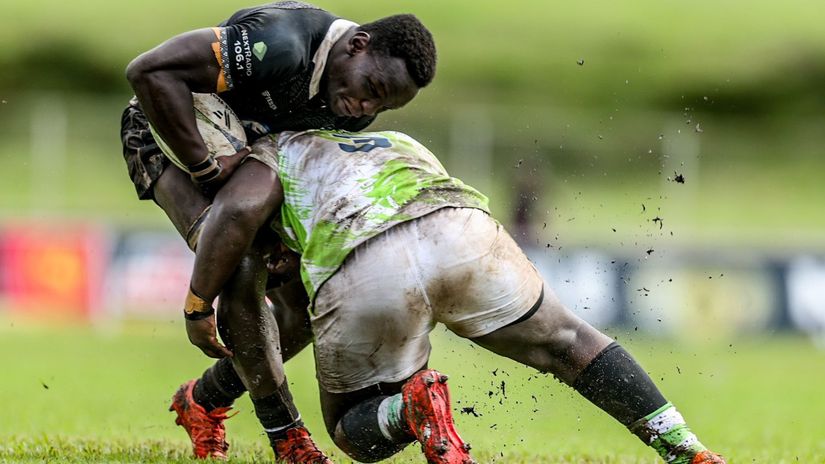
Lessons learned from 2026 Enterprise Cup quarterfinals









Reading Time: 3min | Mon. 23.03.26. | 16:20
Mozzart Sport takes a look at some key lessons from the action-packed weekend
The 2026 Enterprise Cup quarterfinals will be remembered as one of the most compelling stages in the tournament’s recent history.
On Saturday, 21 March, fixtures were split across Kenya and Uganda, with each encounter delivering intensity both on and off the pitch.
Download our Mozzart Sport app for more news
By the end of the round, three Kenyan teams, Nondescripts (Nondies), Menengai Oilers, and Kabras RFC had secured semifinal spots, joined by Uganda’s Stanbic Bank Pirates.
.jpg)
Mozzart Sport takes a look at some key lessons from the action-packed weekend.
Overreliance on key players can prove costly
KCB Rugby’s shock exit served as a stark reminder of the risks of depending too heavily on a core group of players.
The Bankers were without several key figures, including head coach Andrew Amonde and players Vincent Onyala, George Ooro, Samuel Asati, Floyd Wabwire, and Festus Shiasi, who were away on national duty with Kenya Sevens at the HSBC SVNS 2 in South America.
In their absence, responsibility fell on a mix of emerging and experienced players such as Miheso Eric, Andycole Omollo, Tyson Maina, Emmanuel Silungi, Brian Wahinya, Elvis Olukusi, and Jenkins Kipruto.
.jpg)
Despite a spirited second-half fightback, KCB fell 11-10 to defending Uganda Rugby Premiership champions Stanbic Bank Pirates after trailing 6-0 at halftime.
There are no more ‘favourites’ in knockout rugby
This year’s competition shattered the predictability that has often defined the Enterprise Cup. The elimination of traditional powerhouses like KCB, Heathens, and Toyota Buffaloes showed the increasing competitiveness of the tournament.
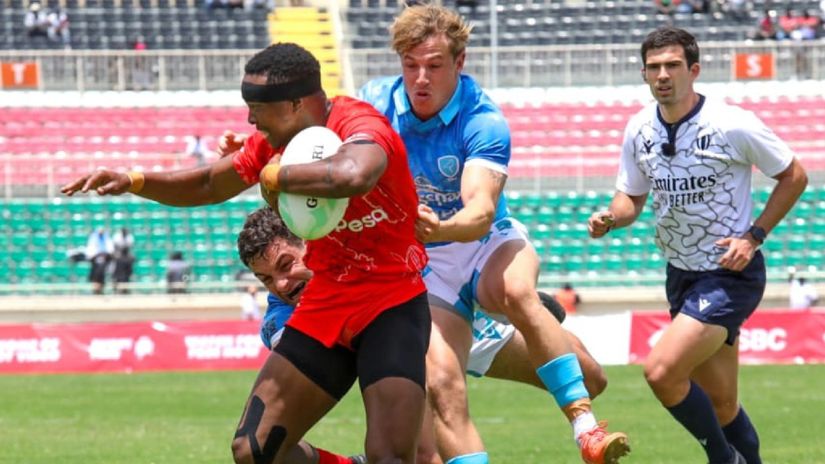
With the semifinal lineup confirmed, the focus now shifts to which of the remaining contenders can hold their nerve when it matters most.
Ugandan sides are no longer pushovers
For years, Kenyan teams have largely dominated regional encounters, shaping the perception that Ugandan sides were a tier below. However, the quarterfinal performances told a different story.
Ugandan rugby is clearly on an upward trajectory, not just in performance, but also in presentation. The Uganda Rugby Union (URU) impressed with its professional approach to match promotion, squad announcements, photography, and storytelling.
If this momentum continues, the regional balance of power could shift significantly in the coming years.
Physical dominance still wins matches
Menengai Oilers offered a masterclass in forward play, showing how physicality and structure can dismantle opponents. Their dominance in the set-piece and rolling mauls overwhelmed the Toyota Buffaloes, resulting in a commanding 60-15 victory.
Notably, the Oilers achieved this despite missing key players such as Dennis Abukuse and John Okoth, further proof of their depth and system efficiency.
The competition is evolving into a true regional spectacle
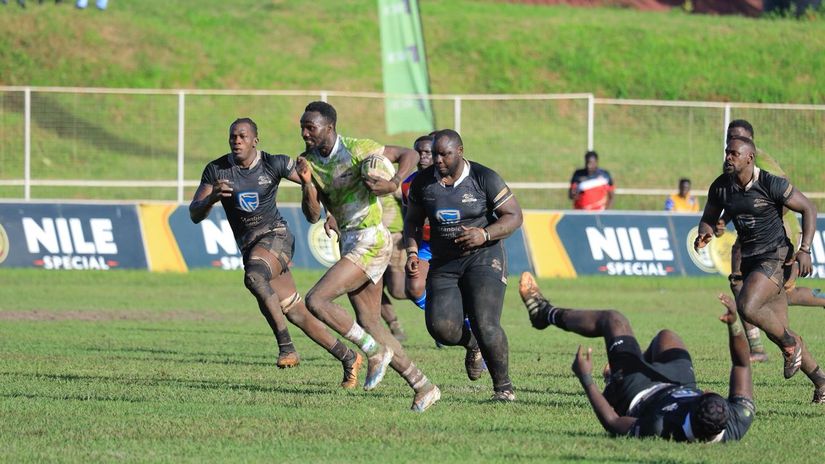
The inclusion of Ugandan teams has transformed the Enterprise Cup from a largely domestic knockout competition into a genuine East African showcase.
Collaboration between the Kenya Rugby Union (KRU) and Uganda Rugby Union (URU) signals the potential for broader regional growth, including expanded competitions, shared development pathways, and increased talent exchange.
Social media is amplifying the tournament’s reach
The rivalry extended well beyond the pitch, with Kenyan and Ugandan fans engaging in lively exchanges across social media platforms. X (formerly Twitter), Instagram, and TikTok became extensions of the competition, keeping fans engaged throughout the week.
Nice Squad, but hope you got the memo....😡💪🏾#RugbyKe #KabrasSugar #KenyasSweetest #EnterpriseCup https://t.co/Z80V3CGxD4 pic.twitter.com/mBZN7aoHmV
— Kabras Sugar RFC (@RfcKabras) March 20, 2026
Highlights, memes, score updates, and witty banter boosted visibility, particularly among younger audiences. Results like Pirates’ upset over KCB did not just make headlines; they trended, sparked debate, and circulated widely online.
Cross-border fixtures are now as much about fan culture as they are about rugby, adding an extra layer of excitement to the competition.
The semifinals are scheduled for Saturday, 11 April.