


Rugby Africa President explains reasons for HSBC SVNS structural overhaul

.jpg)
.jpg)
.jpg)



Reading Time: 3min | Thu. 19.02.26. | 16:51
Last year, World Rugby reduced the number of core teams per gender from 12 to eight, a move that significantly altered the global rugby sevens landscape
Rugby Africa president Herbert Mensah has shed light on the rationale behind the major structural overhaul of the HSBC SVNS series.
According to the Ghanaian administrator, the changes were made to safeguard the future of the sport in a challenging global economic climate.
Follow our WhatsApp channel for more news
Last year, World Rugby reduced the number of core teams per gender from 12 to eight, a move that significantly altered the global rugby sevens landscape.

The restructuring introduced a three-division format designed to ensure financial sustainability while creating a clearer pathway for nations to rise through the ranks.
“The world has never fully recovered from COVID-19, and losses were made across all sports. We all had to reposition.
World Rugby had to reposition with the Sevens. We were operating at a loss globally, so we broke it down into SVNS 1, 2 and 3,” he explained.
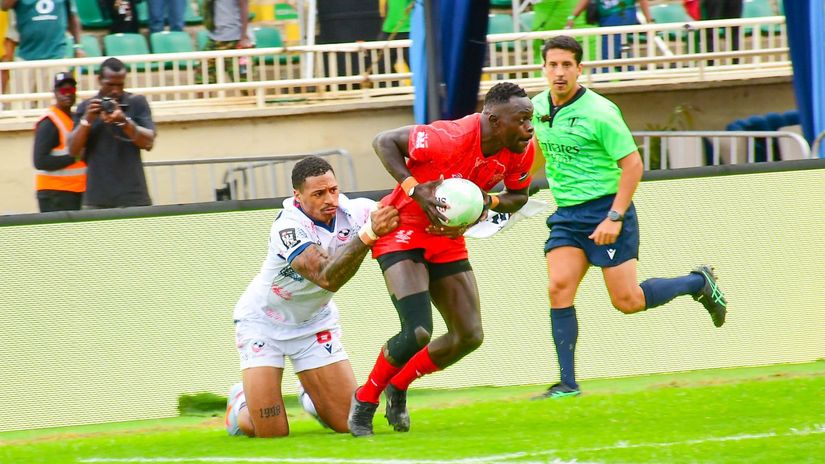
Under the new model, Division 1 features eight men’s and eight women’s teams competing in six high-impact series events.
Division 2 consists of six teams per gender contesting three events, while Division 3 operates as a standalone Challenger competition with eight teams per gender qualifying from regional tournaments.
The season will culminate in three SVNS World Championship Series events, bringing together the top 12 teams per gender: eight from Division 1 and four from Division 2, to determine the world champions.

The revamped structure also guarantees integrated tournaments with equal participation fees and representation for men’s and women’s teams, an expanded 2026 calendar featuring 13 tournaments, and a defined progression pathway that allows teams to move from regional qualifiers to global championship contention within a single season.
Mensah maintained that Kenya has what it takes to compete at the highest level despite recent setbacks.
“My point is, Kenya belongs in SVNS 1. When I became president, Kenya had just been relegated. Within a year, they were back up again. And I don’t think anyone knew we would be restructured so soon. I expect Kenya to get back,” he said.
He further expressed optimism about the team’s future, insisting that the positives outweigh the negatives.
“You have extraordinary talent. Yes, you were disappointed in the last match, but I see positives, I don’t see negatives.”
With SVNS 2 heading to South America next, Mensah backed Kenya to bounce back strongly and reclaim its place in Division 1.
.jpg)
“When SVNS 2 goes to South America, I expect Kenya to win and be back in SVNS 1. My job is to fight at World Rugby, so they recognise who Africa is, who Kenya is,” he said.
He also praised Kenya’s capacity to host major tournaments, noting the impressive turnout witnessed at the HSBC SVNS 2 held at the Nyayo National Stadium over the weekend.
VALENTINES AND RUGBY💕🏉
— Solomon (@adwarogoro) February 17, 2026
Sights and Sounds of the HSBC Tournament in Nairobi.#HSBCSVNS #RugbyKE #Kenya7s #HSBCSVNS2 pic.twitter.com/3UStRBFAIB
“You have shown that you can stage a tournament of this nature without a problem. You have bigger crowds than in Australia. I want to remind my chairman of the board that Kenya can deliver even better than Australia,” he offered.
The SVNS Division Two circuit will now head to Montevideo, Uruguay, from Saturday, 21 to Sunday, 22 March.