


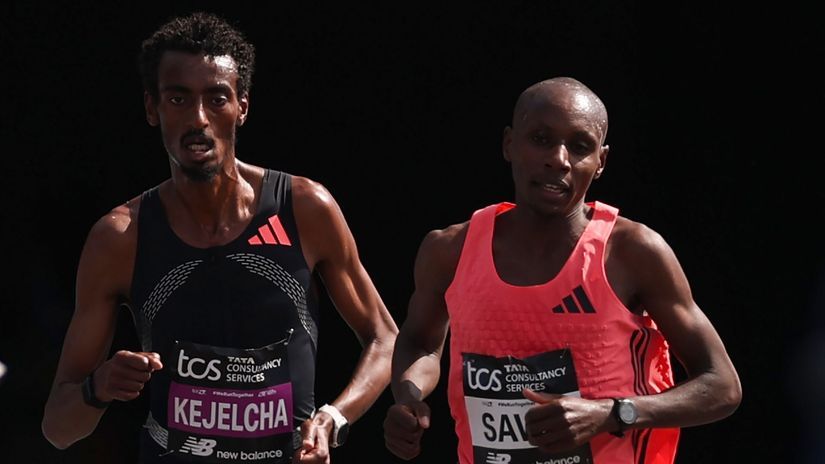
Five longstanding records under threat after Sabastian Sawe’s historic London run









Reading Time: 5min | Fri. 01.05.26. | 08:25
For years, certain records in athletics have seemed untouchable, marks set by once-in-a-generation athletes whose achievements bordered on myth. But Sawe’s run has reignited the belief that even the most impossible barriers can eventually fall
When Sebastian Sawe crossed the finish line at the London Marathon in a staggering 1:59:30 on Sunday, 26 April, he did more than just win another major marathon.
Download our Mozzart Sport App for more news
He fundamentally changed the conversation around human limits in athletics.
Sawe shattered the previous marathon world record of 2:00:35 set by the late Kelvin Kiptum at the Chicago Marathon and became the first athlete in history to officially run a sub-two-hour marathon in competitive conditions.
In the process, he also eclipsed Kiptum’s London course record of 2:01:25 while successfully defending his London title.
The significance of the performance stretches beyond the roads of London.
For years, certain records in athletics have seemed untouchable, marks set by once-in-a-generation athletes whose achievements bordered on myth. But Sawe’s run has reignited the belief that even the most impossible barriers can eventually fall.
With 2026 not being an Olympic or World Championship year, athletes now have more freedom to target records across the Diamond League circuit and at the upcoming inaugural World Ultimate Championships.
Here are five iconic marks that suddenly feel more vulnerable than ever.
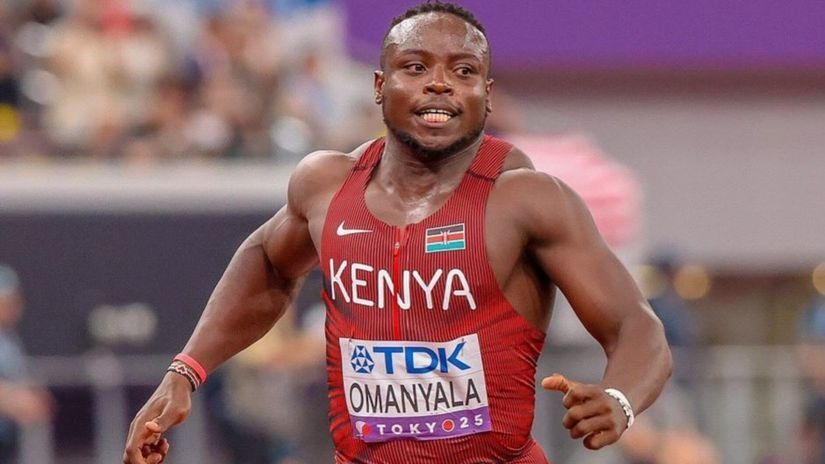
Sub-9.50 in the 100m
Usain Bolt remains the gold standard of sprinting. His world record of 9.58 seconds, set at the 2009 World Championships in Berlin, still feels almost superhuman.
But records are ultimately designed to be chased.
The idea of a legal sub-9.50 race has long been viewed as an athletics fantasy, yet a new generation of sprinters is beginning to push the conversation back into reality. Among them is teenage Australian sensation Gout Gout, whose explosive rise has already sparked comparisons with Bolt.
Closer to home, Ferdinand Omanyala is also refusing to limit his ambitions. The African record holder has openly stated that he wants to challenge the fastest times in the world this season after rebuilding physically and mentally over recent months.
He is currently targeting the world-leading 9.89 set by Botswana’s Collen Kebinatshipi.
“Now that I have built up momentum, I have to stand on business. I am hoping for a sub-10-second race, but at the back of my mind, I am looking at the world lead,” said Omanyala.
A sub-9.50 still sounds outrageous until someone actually does it.
Rudisha’s 800m record under threat
Some records are remembered not just for the time, but for the manner in which they were achieved.
🔥 1:40.91 🔥
— The Olympic Games (@Olympics) July 1, 2023
"It's a tough one"
Since London 2012, no athlete has come close to beating David Rudisha's world record. The double Olympic champ opens up in an exclusive interview on his epic mark, his regret on retirement and future 800m stars.@rudishadavid | @athletics_kenya
David Rudisha’s breathtaking 1:40.91 at the 2012 Summer Olympics remains one of the greatest races ever run. Rudisha led from the front from gun to tape, producing a performance many still consider perfect.
For years, the mark appeared unreachable.
Now, however, Emmanuel Wanyonyi is edging dangerously close.
After a sensational 2025 campaign that saw him crowned World Athletics Male Track Athlete of the Year, Wanyonyi now owns the second-fastest time in history, 1:41.11, set at the Lausanne Diamond League. That places him just 0.20 seconds behind Rudisha.

In modern middle-distance terms, that gap is tiny.
With advancements in track surfaces, pacing, and shoe technology, the possibility of a sub-1:40 race no longer feels impossible.
The hunt for a sub-four-minute women’s mile
Breaking four minutes for the women’s mile remains perhaps the sport’s most romantic unfinished mission.
Faith Kipyegon already pushed the boundaries when she clocked 4:06 last year, the fastest women’s mile ever recorded. Yet six seconds over a mile is an enormous gap at elite level.
To put it into perspective, when Eliud Kipchoge first attempted the sub-two-hour marathon during Nike’s Breaking2 project, he missed by just 25 seconds.
Kipyegon’s challenge is even steeper.
At 32, time is no longer fully on her side, though writing her off would be foolish given her history of redefining women’s middle-distance running.
If the barrier does fall soon, Kipyegon will likely still be central to the attempt, whether as the record-breaker herself or as the athlete who dragged the event into a new era.
A clean sub-2:10 women’s marathon
The women’s marathon is also approaching another historic frontier.
Ruth Chepngetich became the first woman to run under 2:10, but her subsequent three-year doping ban has inevitably cast a shadow over the achievement.
That leaves the sport searching for a more universally celebrated breakthrough.

The athlete best positioned to deliver it appears to be Tigst Assefa. Fresh off victory at this year’s London Marathon, Assefa owns a personal best of 2:11:53 and continues to improve in an era where advancements in shoe technology, race pacing, and fuelling strategies are transforming marathon running.
Dropping nearly two minutes remains a monumental challenge, but after Sawe’s sub-two marathon, athletics has learned to be careful about declaring anything impossible.
Under 12:30 in the 5,000m
Finally, there is the brutally unforgiving mathematics of the 5,000m.
Joshua Cheptegei currently holds the world record at 12:35.36, already one of the most astonishing endurance performances ever produced.
But the next great barrier is obvious: under 12 minutes and 30 seconds.
To achieve that, an athlete would need to average just under 60 seconds per lap for 12-and-a-half laps, a level of sustained speed and endurance that borders on absurd.
Yet modern distance running continues to evolve rapidly. Training science is improving, recovery methods are becoming more sophisticated, and pacing systems are increasingly precise.
After Sawe’s historic afternoon in London, the impossible suddenly feels a little less permanent.