


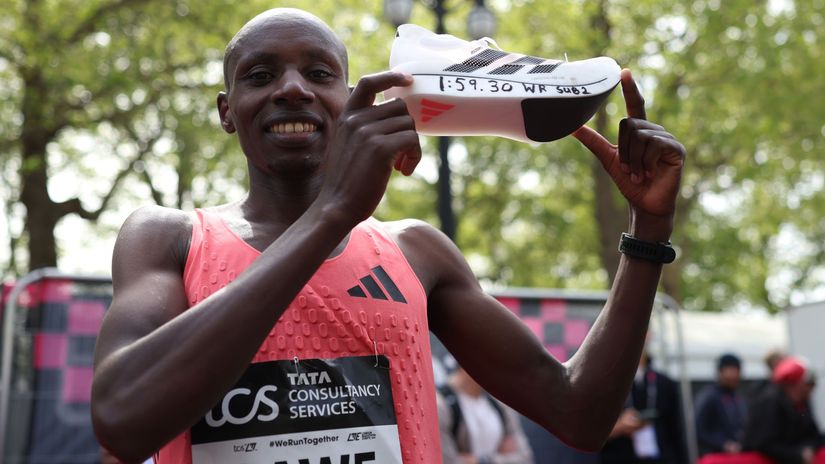
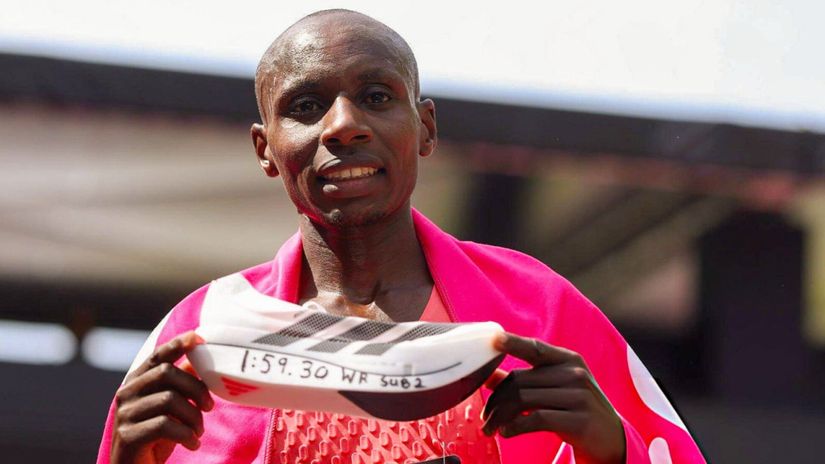
The 97 gram shoe valued at Ksh64,000 and millions Adidas invested on Sabastian Sawe


.jpg)

.jpg)
Reading Time: 3min | Wed. 29.04.26. | 11:35
The Evo 3 did not emerge overnight. Adidas reportedly spent three years refining the design, focusing on energy return, weight reduction, and running efficiency
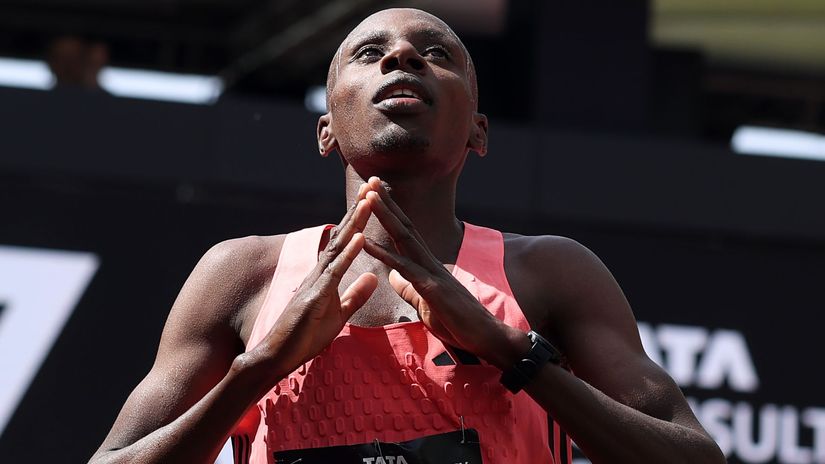
When Sabastian Sawe crossed the finish line at the London Marathon in 1:59:30, the headlines rightly celebrated a human milestone.
Download our Mozzart Sport app for more news
However, beneath the historic run lay a deeper story shaped by cutting-edge technology, strategic investment, and a calculated process years in the making.
For nearly a decade, breaking the two-hour marathon barrier had been treated as the sport’s "moonshot". Sportswear giant Nike poured millions into its ambitious Breaking2 project, building custom shoes, deploying rotating pacemakers, and even using a pace car with a laser guide.
The effort culminated in Eliud Kipchoge clocking 1:59:40 in Vienna in 2019, a remarkable feat, but not officially recognised due to controlled race conditions.
Years later, it was Adidas that quietly cracked the code, not through spectacle, but through refinement.
At the heart of Sawe’s record-breaking run was the Adidas Adizero Adios Pro Evo 3, a revolutionary racing shoe weighing just 96–97 grams. Dubbed a “sub-100-gram supershoe,” it represents a dramatic drop from the typical 138–200 grams of elite running shoes.
That difference is not trivial. A study cited by the Wall Street Journal suggests that reducing shoe weight by about 100 grams (3.5 ounces) can save roughly 57 seconds over a marathon distance.
In London, that marginal gain translated into dominance. Sawe beat the third-place finisher by 58 seconds, almost identical to the projected advantage offered by the lighter shoe.
The Evo 3 did not emerge overnight. Adidas reportedly spent three years refining the design, focusing on energy return, weight reduction, and running efficiency.
The sub 2 hour marathon barrier has been broken in London
— Marcus Milione (@MarcusMilione) April 26, 2026
Sabastian Sawe: 1:59:30
Yomif Kejelcha: 1:59:41
4:34/mile for 26.2 miles... insanepic.twitter.com/f3LqVSLa2Y
The result is a shoe not yet available to the public, reserved only for select elite athletes, with a projected retail price of about $500, approximately Ksh64,600, when it launches globally around September.
But the innovation extended beyond footwear.
In an era where record-breaking performances are often met with scrutiny, Adidas made a bold financial commitment to credibility.
The company funded enhanced anti-doping measures by contributing a reported $50,000 (about Ksh 6.46 million) to the sport’s testing body, ensuring Sawe underwent rigorous scrutiny.
In just two months leading up to the Berlin Marathon, he was tested 25 times, one of the most intensive testing regimens ever for a distance runner.
This proactive approach was strategic. With the shadow of doping controversies, including the 2025 ban of Ruth Chepng'etich, Adidas anticipated scepticism and chose to address it before questions even arose.
The sub 2 hour marathon barrier has been broken in London
— Marcus Milione (@MarcusMilione) April 26, 2026
Sabastian Sawe: 1:59:30
Yomif Kejelcha: 1:59:41
4:34/mile for 26.2 miles... insanepic.twitter.com/f3LqVSLa2Y
Sawe’s journey itself mirrors this evolution of process and opportunity. Once a pacemaker, he had never raced beyond short distances until a half-marathon in Spain in 2022.
Instead of dropping out as planned, he ran through the finish line and won. That unexpected victory caught Adidas’ attention, and within four years, he was leading the most significant breakthrough in marathon history.
Meanwhile, the competitive landscape in the running industry has also shifted dramatically.
While Nike’s early dominance in performance innovation once set the pace, newer and resurgent brands have surged.
On Running grew from $330 million (about Ksh 42.6 billion) to $1.8 billion (about Ksh 232.6 billion) between 2020 and 2025, while Hoka nearly quadrupled its market presence.
Even tennis icon Roger Federer shifted allegiance from Nike to On, signalling changing tides in athlete partnerships.
Adidas, however, appears to have found its edge in precision rather than publicity. In the 2024 marathon season, its Adizero line accounted for half of all major marathon victories. In London, four of the top five finishers wore the same model as Sawe.