


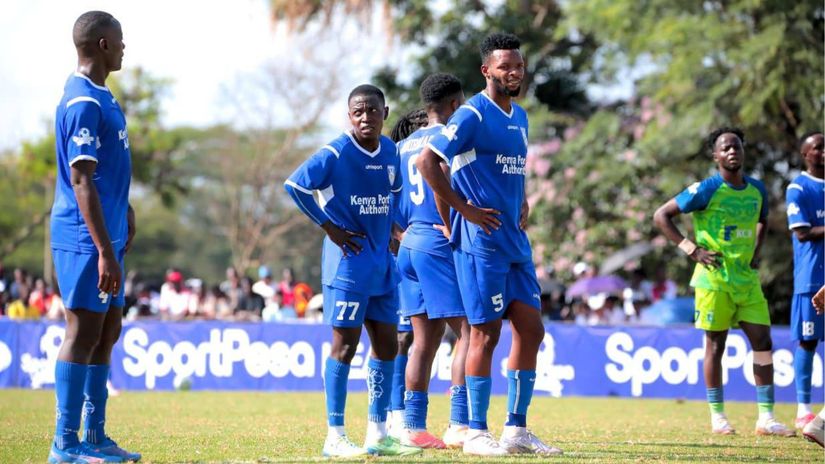
Bandari FC: A story of the rich kid who fails to consistently perform



.jpg)





Reading Time: 7min | Wed. 03.06.26. | 08:27
While several clubs routinely battle salary delays, sponsorship uncertainty and administrative instability, Bandari have largely operated from a position of security and comfort
Few clubs in Kenyan football carry expectations quite like Bandari FC. For years, the Mombasa-based side has been regarded as one of the most stable outfits in the FKF Premier League. Backed by the financial might of the Kenya Ports Authority (KPA), the Dockers have often enjoyed privileges unavailable to many of their rivals.
Download our Mozzart Sport app for more news
While several clubs routinely battle salary delays, sponsorship uncertainty and administrative instability, Bandari have largely operated from a position of security and comfort.
That stability should, in theory, translate into consistent success. Instead, it has increasingly produced frustration.
As another underwhelming campaign closes - 12th position out of 18 - and just above Ulinzi Stars, who until the last day of the season were in real threat of relegation, Bandari once again find themselves reflecting on a season that promised much but delivered little.
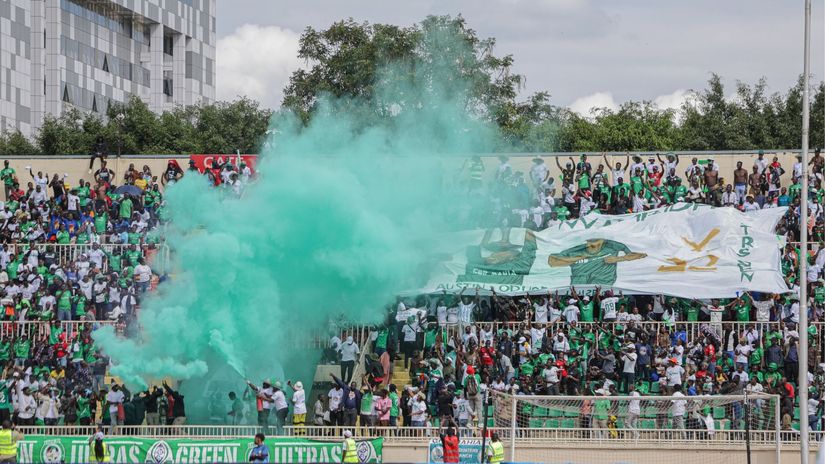
The disappointment is not simply about league position. It is about the widening gap between what the club should be achieving and what it continues to produce on the pitch.
This is, after all, a club that not long ago was challenging for league honours, regularly competing for continental qualification and presenting itself as one of the most ambitious projects in Kenyan football.
Today, however, the Dockers appear trapped in a cycle of inconsistency that has become difficult to ignore.
Perhaps the most striking thing about the club's current struggles is that they are no longer surprising. The warning signs have existed for years.
Back in 2022, former head coach Anthony 'Modo' Kimani openly questioned why a club with Bandari's resources was failing to meet expectations. Speaking during a difficult spell, Kimani admitted that "the position we are in on the table is unacceptable", given the quality within the squad and the support provided by the Kenya Ports Authority.
At the time, the remarks were viewed as a rallying call. Now they sound more like a diagnosis.
Three years later, Bandari continues to wrestle with many of the same problems.
The current season began with optimism. The appointment of Moroccan tactician Mohammed Borji was viewed as an ambitious move by a club eager to rediscover its competitive edge.
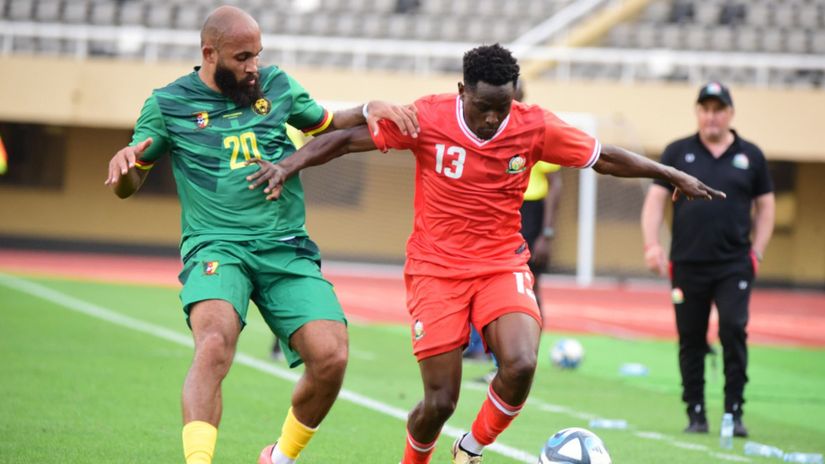
Foreign coaches often arrive carrying the promise of new ideas, tactical innovation and a fresh footballing culture. For supporters who had grown tired of mediocrity, Borji represented the possibility of change.
But as the weeks passed, the optimism gradually faded.
Results remained inconsistent, and the team's performances rarely reflected the ambition surrounding the project. Eventually, Borji's tenure came to an end, later culminating in a FIFA compensation dispute that only added to the sense of instability surrounding the club.
The temptation is to blame the season entirely on coaching changes, but Bandari's problems appear deeper than that.
Throughout the campaign, the Dockers have often looked like a side still searching for an identity. There have been games in which they controlled possession without creating enough clear chances.
There have been matches where they looked comfortable for long periods before conceding avoidable goals. At times, they have shown flashes of quality that suggest a team capable of competing near the top of the table (read, Mozzart Bet Cup run). Yet those moments have rarely translated into sustained momentum.
Borji himself repeatedly highlighted some of the obstacles facing his team.
Following a frustrating draw against Ulinzi Stars, the Moroccan pointed to the realities of Kenyan football's demanding travel schedules, admitting: "We've had to travel long hours again, and it's leaving us very fatigued."
.jpg)
He argued that the physical and mental toll of away trips was affecting performances, particularly in matches played far from Mombasa.
The explanation was understandable.
Yet it also exposed a difficult truth.
Travel fatigue affects almost every club in the FKF Premier League. Long road journeys, congested schedules and difficult playing conditions are part of the environment in which all teams operate. The difference is that successful clubs find ways to overcome those challenges.
Bandari have struggled to do so.
Borji also acknowledged another recurring weakness when he admitted that Bandari’s attack was not at the level he would have wanted. It was a candid assessment of a problem that repeatedly undermined the team's season.
Too often, Bandari dominated phases of matches without converting that control into goals. Possession frequently failed to produce an end product, while promising performances were undone by inefficiency in the final third.
Ironically, even as he criticised certain aspects of the team, Borji remained convinced of the squad's potential.

"We have a lot of players with a good future because of their talents," he said. "This is an exciting project,” he said.
That contradiction perhaps sums up Bandari better than anything else. Potential has never been the problem. The inability to maximise that potential has been.
The clearest evidence of this comes when Bandari are compared not with traditional powerhouses such as Gor Mahia, AFC Leopards or Tusker, but with clubs operating under far more modest circumstances.
Few observers expected newly promoted APS Bomet and Mara Sugar to become some of the league's most compelling stories this season. The duo’s objectives were straightforward: survive, adapt and establish themselves at the top level.
Yet both clubs have arguably exceeded expectations while Bandari have fallen short of theirs.
Mara Sugar entered the top flight in 2024 without the financial muscle of Kenya Ports Authority, without the star names available to Bandari and without the pressure that accompanies a club expected to compete near the top.
What they did possess, however, was clarity. From the opening weeks of the campaign, Mara Sugar displayed a clear understanding of how they wanted to play. Their performances were organised, disciplined and purposeful.
APS Bomet adopted a similarly pragmatic approach. Faltering at the start before picking up after a coaching change and never looking back.

Despite competing in an unfamiliar territory, they consistently demonstrated resilience and tactical structure. While they occasionally lacked the individual quality of more established opponents, they often compensated through collective organisation and commitment.
The contrast with Bandari has been impossible to ignore.
While Mara Sugar and APS Bomet have spent much of the season punching above their weight, Bandari have frequently looked like a team carrying the burden of expectation rather than embracing it.
The Dockers possess greater resources. They possess greater experience. They possess a stronger institutional foundation. Yet the newcomers often appeared more coherent in mettle.
Even after Bernard Mwalala returned to steady the ship, consistency remained elusive. Mwalala inherited a team short on confidence and searching for direction, and while there were signs of improvement, the broader issues remained.
Ahead of a key clash against Tusker, the coach openly acknowledged the challenge facing his squad.
"We know what this match means," Mwalala had said. "It is a big test, but it is also a big opportunity for us."
More revealing, however, was his admission that the club needed to reverse its inconsistent form and rebuild confidence. And by that stage of the season, Bandari were no longer discussing title ambitions. They were discussing recovery.
.jpg)
That shift in mindset says everything about how dramatically expectations have changed. As frustrations mounted, pressure eventually reached the boardroom.
In one of the most dramatic developments of the campaign, KPA Managing Director Captain William Ruto dissolved the club's board of trustees, citing poor performance and the need to re-strategise the club's direction.
The decision sent a powerful message.
Sponsors rarely intervene so publicly unless concerns have become significant. The move suggested that dissatisfaction with Bandari's trajectory extended beyond supporters and pundits. It had reached the highest levels of the institution that finances the club.
The significance of that intervention cannot be overstated.
For years, Bandari have been viewed as one of the safest and most stable projects in Kenyan football. When even that stability begins to show signs of strain, difficult questions inevitably follow.
And what exactly is Bandari's long-term football vision?
Are they building around youth development?

Are they pursuing immediate success through recruitment?
Do they possess a clear football philosophy capable of surviving beyond individual coaches?
The uncertainty surrounding those questions may explain why clubs with fewer resources have often looked more convincing.
Mara Sugar and APS Bomet may lack Bandari's financial strength, but they have spent much of the season displaying something equally important: identity. Players understand their roles. Both teams understand their strengths.
Bandari, by contrast, have often appeared caught somewhere between ambition and execution.
The danger now is not merely another disappointing season. The greater risk is that underachievement becomes accepted as normal. Expectations gradually lower. Finishing in mid-table begins to feel acceptable for a club that once measured itself against the very best in the country.
That would represent a far greater failure than any single campaign. Yet despite the criticism, there remains genuine reason for optimism.
Unlike many clubs across the Kenyan football landscape, Bandari are not facing financial collapse. They are not struggling to pay players. They are not battling ownership disputes or fighting for survival.

Their problems are football problems, and football problems can be fixed.
The resources remain. The fanbase remains. The institutional support remains. What appears missing is direction.
Until Bandari establishes a clear identity and a coherent long-term vision, they will continue to represent one of the great paradoxes of Kenyan football: a club blessed with resources, ambition and potential, yet still searching for the formula capable of turning those advantages into sustained success.