


.jpg)
From beggar to Word Cup defender playing against Vinicius


.jpg)

.jpg)

.jpeg)

Reading Time: 6min | Fri. 19.06.26. | 11:45
A remarkable story of Haiti defender should be an inspiration for many
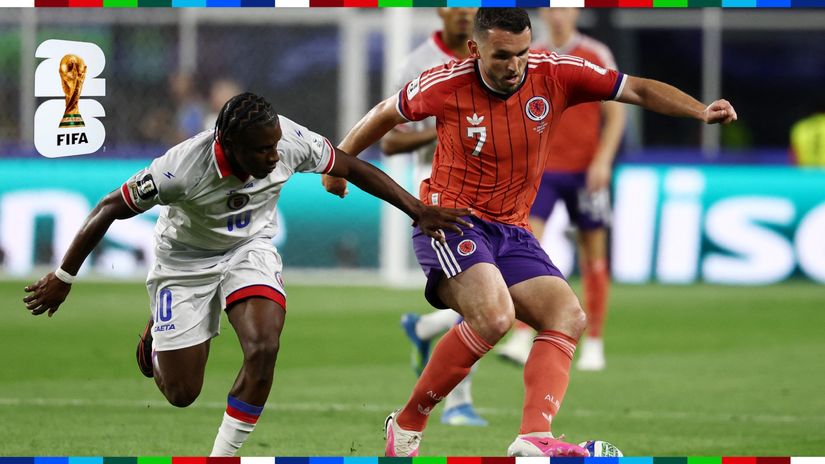
“The Game of Their Lives” is the title of a 2005 film about one of the greatest upsets the sporting world has ever witnessed. It tells the story of the United States national team defeating England at the 1950 World Cup in Brazil. 76 years later, at Lincoln Financial Field in Philadelphia, a group of players considered complete underdogs will play the biggest match of their lives. Haiti will face mighty Brazil, led by Ricardo Ade as one of the team's leaders. Rest assured, he will not tremble at the sight of Igor Thiago, Raphinha, or Vinícius Junior. Ricardo has endured horrors that are difficult to explain and can only truly be understood by someone who has lived through something similar. He was never afraid of opposing attackers; he feared being deported. He did not worry about being dribbled past; he worried about surviving another day as a homeless man thousands of miles away from his parents.
Download our MozzartSport App For More News
It all began when he was a teenager. While playing for local club Baltimore SC, Ricardo was contacted by an anonymous man claiming to be an influential football agent. The story sounded like a fairy tale. He promised Ricardo a contract in Thailand with a good salary. The only condition was that the player had to cover all travel expenses himself. Ricardo’s parents gave up their last savings so their son could pursue a better future. To understand the Ade family, one must know their circumstances. They lived on the edge of poverty in Saint-Marc, a city about 80 kilometers from Port-au-Prince. The devastating 2010 earthquake claimed between 220,000 and 316,000 lives. Many survivors relocated to Saint-Marc. It marked the beginning of one of the greatest humanitarian disasters in history. Ricardo Ade witnessed the horror firsthand.
📊🇭🇹 60e sélection ce soir pour Ricardo Adé sous le maillot des Grenadiers. Devenu l’un des piliers de la défense haïtienne au fil des années, le vice capitaine continue d’écrire son histoire avec la sélection nationale. #Respect. 👏⚽ pic.twitter.com/cFy5WW630X
— FootKole (@FootKole) June 14, 2026
Tens of thousands of people poured into the city, a cholera epidemic broke out, and Saint-Marc’s hospital became overwhelmed. People lived in constant fear of another earthquake. Patients died lying on the floor because there were not enough beds. Some lay on mats and even on sidewalks. Returning home from training, Ricardo regularly encountered unbearable smells. Patients lay on concrete like living skeletons, desperately begging for a sip of water. Soon, all football stadiums were converted into quarantine centers, forcing the league to suspend operations. With nowhere else to turn, Ricardo decided to trust the stranger and travel to Thailand. There, he was met with complete shock. He called the agent three times and received no answer. The fourth time, he heard a message saying: “The person you are trying to reach is currently unavailable”.
It turned out that the club supposedly interested in signing him did not exist, nor was there any contract. He had just enough money left for one meal a day. Suddenly, he was a foreigner abandoned to his fate—a homeless man with no chance of finding legal work because he was staying in the country illegally. He wandered the streets of Bangkok fighting for survival. When his money ran out, he starved and slept on park benches while constantly fearing that Thai police would arrest and deport him.
“People insulted me because of my skin color. I didn’t have money even for a bottle of water, let alone anything else. The clothes I arrived in stayed on me for two months, day and night. I smelled so bad that people passing by had to cover their noses,” Ade later recalled in an interview.

The nightmare lasted three months. Ricardo survived only thanks to kind-hearted strangers who gave him food and prevented him from starving. Somehow, Thai authorities never found him. Eventually, with help from his parents and friends, he gathered enough money to return to Haiti. The experience left him so psychologically shattered that he nearly quit football forever. That probably would have happened had he not received a call from the Americas. This time, it was no scam. It was not a professional contract yet, but it marked a turning point in his career. During a match, a scout from Chile noticed him and suggested signing him for Santiago Morning. When Ricardo’s agent learned of the opportunity, he sent video footage of his client to the club’s president, and the deal was quickly arranged. After a brief return to Haiti, Ricardo moved to South America a few months later. He signed his first professional contract at the age of 26.
There was even a chance he could have moved to Italy, but the deal collapsed because the club involved had already reached its foreign-player quota. Very quickly, Ade earned a reputation as a tough, combative defender who never backed down. Such players remain highly valued across Latin America.
“Everything I experienced in life shaped me as a footballer. Anyone who has gone through what I have is not afraid of any striker in the world, no matter what his name is”.
He carried all his personal struggles with him like badges of honor. They were not ordinary scars but permanent marks on his soul and heart, reminders of everything he endured in Bangkok and back home. His resilience and leadership made him one of Haiti’s captains, while his performances continued to improve. After establishing himself in Chile, he moved to Ecuador in 2021 and now plays for LDU Quito, with whom he won the Copa Sudamericana in 2023.

Today, Ricardo Ade is not only one of Haiti’s most important players but also one of the leaders of a generation determined to change the image of a country that often seems abandoned by the world. During World Cup qualifying, Haiti did not play a single home match because criminal gangs effectively controlled Port-au-Prince. Ade and his teammates want only one thing: to give a nation burdened by tragedy at least a small reason to smile.
“Wherever I go, Haiti’s flag goes with me. I want to open doors for footballers from my country. There are many talented players, but they cannot get opportunities abroad. My message to them is never give up and keep working. One day the doors will open. In life, you must always search for something better. You have to believe in yourself. God exists.”
Because of everything he has endured, when he walks out of the tunnel on Saturday morning alongside his teammates and faces the most successful national team in World Cup history, there will be no fear. Ricardo has already faced and conquered his greatest fears in the harshest possible way. He is a man on a mission. He wants to give hope to the people of Haiti, to help brighten their difficult everyday lives, even if only for a moment. That is why he will feel absolutely no fear when he stands across from a player of Vinícius Junior’s caliber. His greatest opponents in life were poverty, hardship, and the fear of deportation. Those opponents, Ricardo defeated. That is why the match against Brazil will be a reward—a celebration of how far he has come.