


TACTICAL ANALYSIS: How Police neutralised Shabana to advance to Mozzart Bet Cup semis



.jpg)


Reading Time: 5min | Mon. 04.05.26. | 19:49
Ultimately, Kenya Police's ability to manage the game state - knowing when to probe and when to bunker - proved the difference
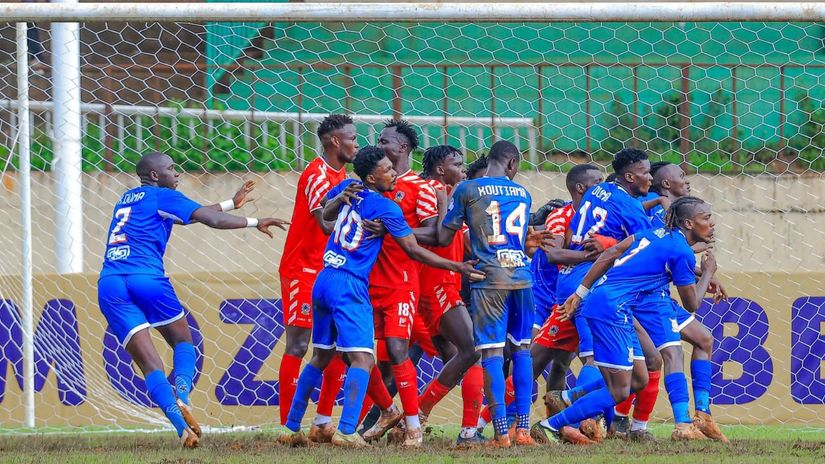
Reigning FKF Premier League champions Kenya Police FC secured a pivotal 1-0 victory over Shabana FC in the Mozzart Bet Cup quarter-finals.
The tactical story was one of Kenya Police’s ability to manipulate the width of the pitch and manage the game state through structural shifts. From high-pressing disruptions to a pragmatic transition into a five-man backline, the Law Enforcers showcased the tactical maturity required for knockout football.
Download our Mozzart Sport app for more news
The encounter began with both sides utilising variations of modern back four systems. Shabana lined up in a structured 4-2-3-1, with Stephen Ochieng in goal, protected by centre-backs George Onyango and Wycliffe Omondi.
Mark Okola and Kevin Musamali provided the width, while the double pivot of Byron Otieno and Kevin Omundi aimed to provide a screen for playmaker Derick Otieno.
Upfront, the wings were occupied by Danson Kiprono and Bryan Michira, with Batshi Assis acting as the focal point.
Kenya Police mirrored their opponents with a flexible 4-3-3 that often morphed depending on the positioning of their advanced midfielder.
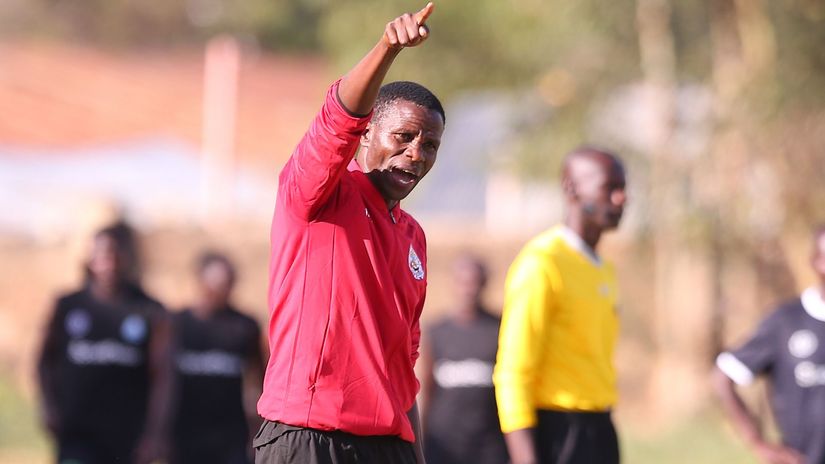
Daniel Ogembo started between the sticks, with a defensive line of Daniel Sakari, Hernest Malonga, Kevin Ouma, and the experienced Abud Omar.
In the engine room, Charles Ouma and Nana Kusi provided the industrial base, allowing Marvin Nabwire to operate as a free-roaming number ten, drifting between the lines to create overloads. Brian Otieno and Zakayo Ngava provided verticality on the flanks for striker Yves Koutiama.
Kenya Police established a proactive defensive logic early in the first half. They utilised a high-block pressing system designed to prevent Shabana from establishing any rhythm in their own third.
Police’s front three, supported by Nabwire, focused on cutting off central passing lanes, forcing Shabana into uncomfortable long-ball scenarios as early as the 18th minute.
Shabana, in response, attempted to maintain a 4-4-2 mid-block when out of possession.
However, their primary defensive struggle was containing the drifting movements of the Police attackers. While Shabana’s block was relatively compact centrally, they struggled to manage the "overload-to-isolate" tactics used by Kenya Police on the left flank.
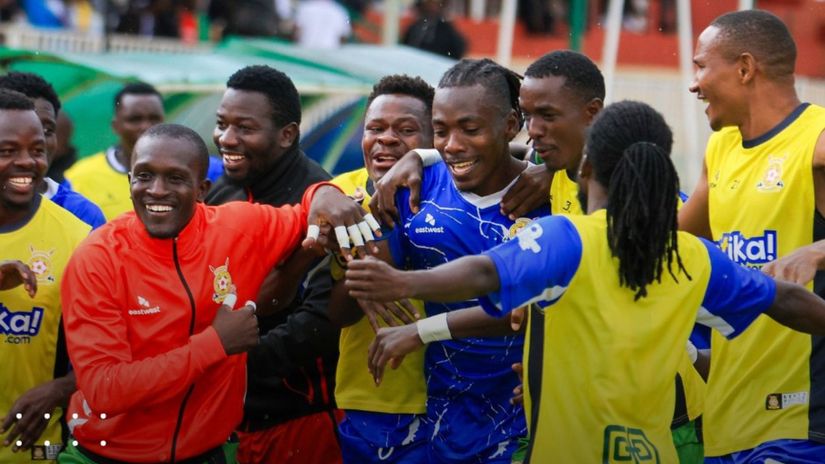
Police’s defensive principle centred on forcing Shabana wide and then using the touchline as an extra defender, a strategy that consistently won them back possession in the middle third.
The tactical differentiation between the two sides was most evident in their progression phases. Kenya Police used their centre-backs, Kevin Ouma and Abud Omar, as the primary architects of play.
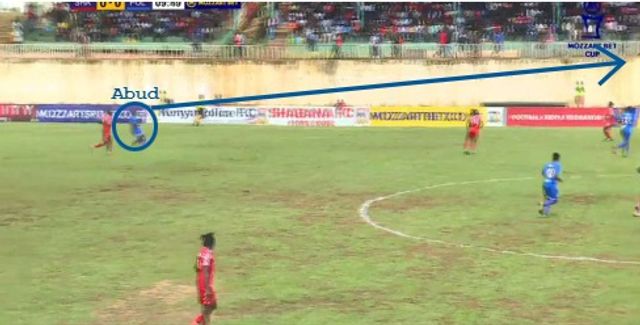
Instead of purely recycling possession, the pair looked for immediate verticality, often targeting the wide channels.
A key rotation involved left-back Hernest Malonga aggressively marauding forward, which allowed winger Zakayo Ngava to drop into the half-space.
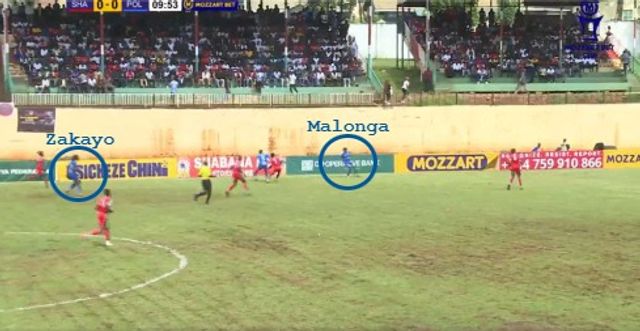
This movement created a dilemma for Shabana's right-back: stay with the winger or track the overlapping fullback.
Shabana’s build-up was more deliberate but less consistent. In the first phase, pivot Byron Otieno would drop between the two centre-backs to create a back three, allowing the fullbacks to push high.
While this "3-1" or "3-2" structure provided numerical superiority against the Police press, it often lacked a secondary outlet, leading to turnovers when the ball reached the mid-pitch transition zone.
Kenya Police repeatedly targeted the space behind Shabana's fullbacks. By using Daniel Sakari’s overlapping runs on the right and Malonga’s depth on the left, Police stretched the Shabana defensive line until gaps appeared between the centre-backs and fullbacks.
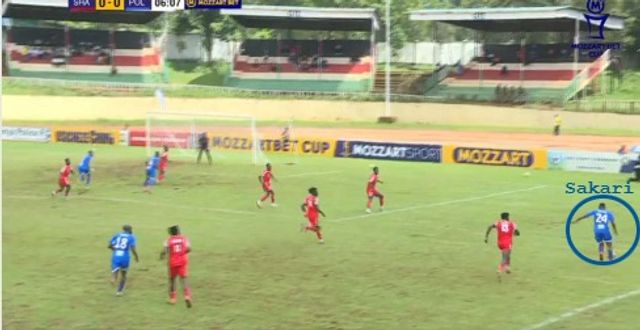
Police used long throws from Sakari as a "set-piece substitute" to maintain pressure in the attacking third, a tactic that disoriented Shabana's marking scheme.
The breakthrough in the 40th minute, however, came from a moment of individual technical brilliance that punished a foul caused by sustained pressure. Abud Omar stepped up to a free-kick meters outside the box, executing a strike with enough technique to bypass the wall and the keeper.
While the goal was a dead-ball situation, it was the logical conclusion of a half where Police had consistently probed the edges of Shabana’s structure.

Police’s disruption of Shabana’s build-up was a cornerstone of their first-half dominance.
They employed a "trap" where they allowed the Shabana centre-backs to receive the ball but immediately collapsed the space once the pass was made to the dropping pivot, Byron Otieno. This forced Shabana to abandon their low build-up and opt for direct long balls to Batshi Assis.
While Assis was capable of winning aerial duels and providing knockdowns, the lack of late midfield arrivals meant that Police's centre-backs often cleaned up the second-phase balls with ease.
The second half saw a significant tactical pivot from both managers. Shabana’s technical bench opted for a triple substitution at the restart, bringing on Humphrey Obinna, Derrick Oketch, and Bronson Nsubuga.
This necessitated a structural shift: Derick Otieno dropped deeper into a central midfield role to compensate for the withdrawal of Omundi, while Oketch took over the advanced midfield role. This change initially gave Shabana more energy in the transition phase.
Kenya Police, however, showed elite game-state awareness. As the weather conditions shifted and Shabana began to find joy through quick transitions and long-range efforts - notably from substitutes Imbali and Diallo - Police manager opted for pragmatism.

In the 78th minute, winger Zakayo Ngava was replaced by defender Baraka Badi. This move signalled a shift to a 5-4-1 defensive block.
By adding another defender, Police effectively "killed" the game, removing the spaces in the channels that Shabana had been attempting to exploit with crosses and late runs.
In the final 15 minutes, Kenya Police’s deeper block was a masterclass in compactness.
The five-man defensive line remained narrow, daring Shabana to cross from deep positions. Police’s midfield four stayed goal-side of the ball, prioritising central protection over chasing the ball to the flanks.
This forced Shabana into low-quality shots from distance. Despite Shabana’s increased urgency and transition speed, the lack of "interior access" meant their attacks were consistently funnelled into harmless wide areas where Police’s height advantage in the box could deal with any deliveries.
The match was won on the basis of structural adaptability. Kenya Police dominated the first half through expansive wide play and a high press, then secured the result in the second half through a disciplined transition into a low-block, five-back system.
Shabana showed flashes of danger, particularly after their triple sub and when going direct to Assis, but they lacked the final-third precision to break down a settled Police defense.
Ultimately, Kenya Police's ability to manage the game state - knowing when to probe and when to bunker - proved the difference.
Their use of the centre-backs as ball progressors and the decisive shift to a back five are the tactical hallmarks of a team capable of going all the way in the Mozzart Bet Cup.