


TACTICAL ANALYSIS: How Al Ahly’s rotational overloads suffocated Zamalek in Cairo Derby


.jpg)



Reading Time: 5min | Mon. 04.05.26. | 14:06
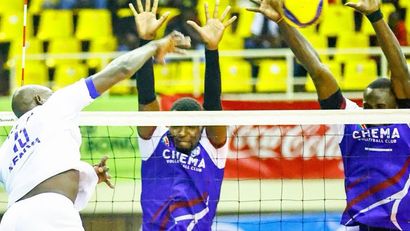
Zamalek is home to national U20 team right back/wing back Baron Ochieng
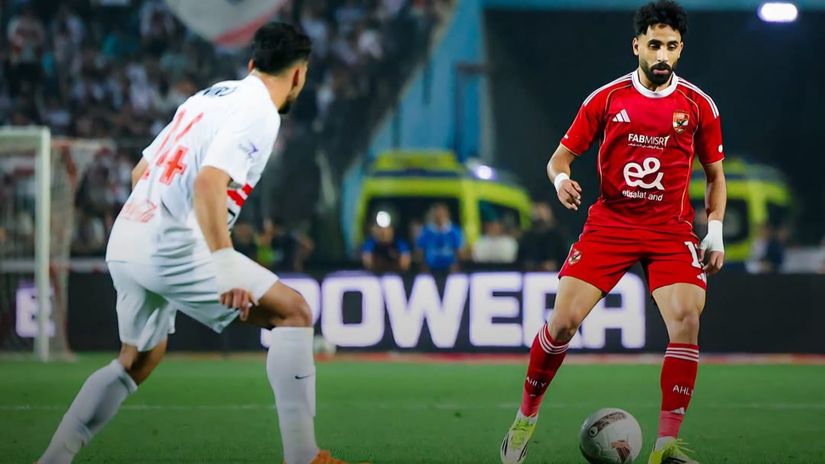
Al Ahly SC secured a commanding 3-0 victory over rivals Zamalek SC in the Cairo Derby.
While the scoreline reflects a heavy defeat for Zamalek, the tactical story is one of Al Ahly’s disciplined 4-2-4 offensive shape successfully baiting and then breaking Zamalek’s disjointed build-up.
Download our MozzartSport App For More News
Both teams entered the pitch with distinct tactical blueprints.
Zamalek SC lined up in a 4-2-3-1 base formation.
Soliman Al Mahdi started in goal, shielded by a center-back pairing of Abdelmaguid Hossam and El Wensh Mahmoud.
Mohamed Ismail and Mahmoud Bentayg occupied the fullback slots, while Mohamed Shehata and Ahmed Fatouh formed the double pivot.
Dabbagh Oday operated as the attacking midfielder, flanked by Juan Alvina and Abdallah El Said, with Mansy leading the line as the lone striker.
In contrast, Al Ahly SC deployed a highly fluid 4-2-4 system.
Shobeir Mostafa guarded the sticks, with a back four of Ramadan Ahmed, Hady Reyad, Yasin Marei, and Ahmed Kouka.
The central midfield was anchored by Marwan Ateya and Emam Ashour.
The front four was the centerpiece of their tactical dominance:
Achraf Bencharki and El Shahat Hussein operated in the interior channels, while Mohammed Taher and Trezeguet provided width and verticality.
This 4-2-4 was less a fixed line and more a rotational engine, designed to create overloads in the half-spaces.
Al Ahly’s defensive success was rooted in a sophisticated 4-4-2 mid-to-low block out of possession early on.
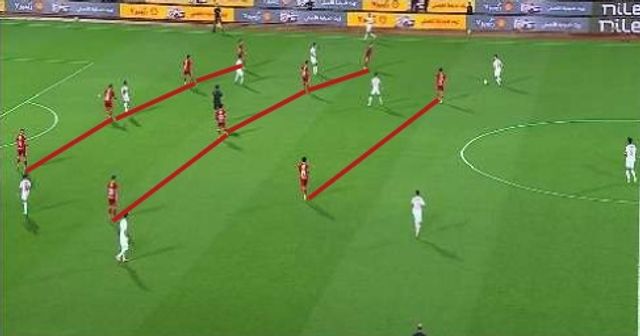
Their primary objective was to disrupt Zamalek’s attempt to play out from the back.
The "main trigger" for Al Ahly’s high press was the lateral pass to a Zamalek fullback.
As soon as the ball moved toward Ismail or Bentayg, Al Ahly’s wingers would aggressively jump to pressure the receiver, cutting off vertical passing lanes and forcing hurried decisions.
Conversely, Zamalek’s defensive phase struggled with compactness.
Operating in their own 4-4-2 out of possession, they failed to squeeze the lines, leaving significant gaps in Zone 14.
This lack of central density allowed Al Ahly’s creative players to receive the ball between the lines, turning and facing the defense with ease - a recurring theme that eventually led to Al Ahly's second goal.
Al Ahly’s build-up was characterized by wide overloads and diagonal switches.
When progressing the ball, left-back Ahmed Kouka pushed extremely high, effectively becoming a fifth attacker.
This allowed Trezeguet to pin the opposition fullback inside, creating space for Kouka to deliver dangerous cutbacks.
Zamalek initially attempted a 3-2 build-up shape, with left-back Bentay pushing up to join the defensive line as the right-back tucked in, supported by the Shehata-Fatouh pivot.
However, Al Ahly’s pressing triggers exploited the slow ball circulation of this "3-2" structure.
Later in the first half, Zamalek transitioned to a more aggressive four-at-the-back build-up, utilizing diagonal through-balls to Mansy to bypass Al Ahly’s high line, though this yielded little fruit beyond winning corners that were poorly executed.
The opening goal in the 17th minute was a direct result of Al Ahly’s wide-area focus.
By overloading the right flank through Mohamed Taher, Al Ahly drew Zamalek’s defensive block toward the ball.
A well-dispatched cross found Achraf Bencharki, who exploited a lapse in Zamalek’s marking to score a free header.
The second goal (31st minute) highlighted the fragility of Zamalek’s low build-up.
Under pressure from Al Ahly’s mid-block, a Zamalek midfielder attempted a pass with his back to goal - a cardinal sin against a high-pressing side.
Bencharki intercepted the loose ball, instantly feeding El Shahat, who capitalized on the disoriented defense to make it 2-0.
This sequence proved that Al Ahly’s analysis of Zamalek’s central exposure was pinpoint accurate.
Trailing by two at the half, Zamalek coach opted for an immediate change, bringing on Chico Banza for Abdallah El Said.
This moved Juan Alvina to the right and placed Banza on the left. To counter this, Al Ahly displayed tactical maturity by shifting into a compact 5-4-1 defensive block.
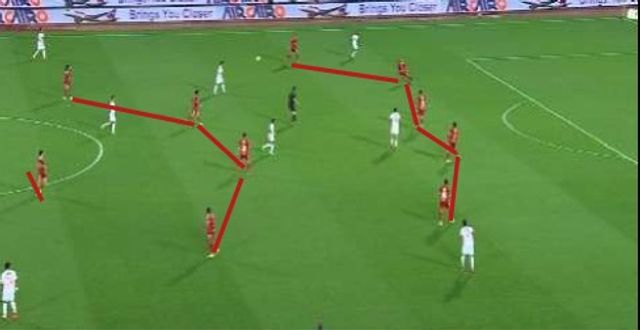
This adjustment prioritized central protection and dared Zamalek to beat them from wide areas.
Zamalek did find a lifeline in the 52nd minute when Dabbagh was fouled in the box.
However, Shobeir Mostafa’s brilliant save of Abdelmaguid Hossam’s penalty preserved the momentum for Al Ahly. E

Even when Al Ahly conceded a penalty of their own (after a Mohamed Shehata handball), the theme of the night continued as Soliman saved Trezeguet’s effort.
Despite these chaotic moments, Al Ahly remained structurally disciplined, whereas Zamalek’s reliance on "third man combinations" on the left flank became predictable and easily neutralized.
As the game reached its final quarter, Al Ahly utilized Aliou Dieng (on for El Shahat) to solidify the midfield.
Their "rest-defence" was impeccable, preventing Zamalek from launching any meaningful counter-attacks.
The third goal in the 75th minute was a masterclass in positional play. Al Ahly engaged in a series of triangles involving Dieng and Ashour, pulling Zamalek’s defenders out of their slots. Kouka and Bencharki rotated wide, stretching the backline until Ashour spotted the gap.
A perfectly timed through-ball sent Bencharki behind the defense to slot home the third, effectively ending the contest.
The 3-0 result was a fair reflection of Al Ahly’s superior tactical preparation.
By using a 4-2-4 that morphed into a 5-4-1 to manage the game state, Al Ahly showcased a level of adaptability that Zamalek could not match.
Zamalek’s failure to maintain compactness in Zone 14 and their struggles with high-pressure build-up were ruthlessly exploited.
Ultimately, Al Ahly’s ability to circulate the ball with "passing triangles" in the closing stages served as both a defensive mechanism and a psychological tool, starving Zamalek of the ball and securing a dominant derby win.
For Zamalek, the lesson lies in the necessity of defensive compactness; for Al Ahly, it was a validation of their fluid, rotational attacking philosophy.