


TACTICAL ANALYSIS: How resolute Nairobi United held KCB to draw


.jpg)
.jpg)
Reading Time: 6min | Fri. 06.03.26. | 11:06
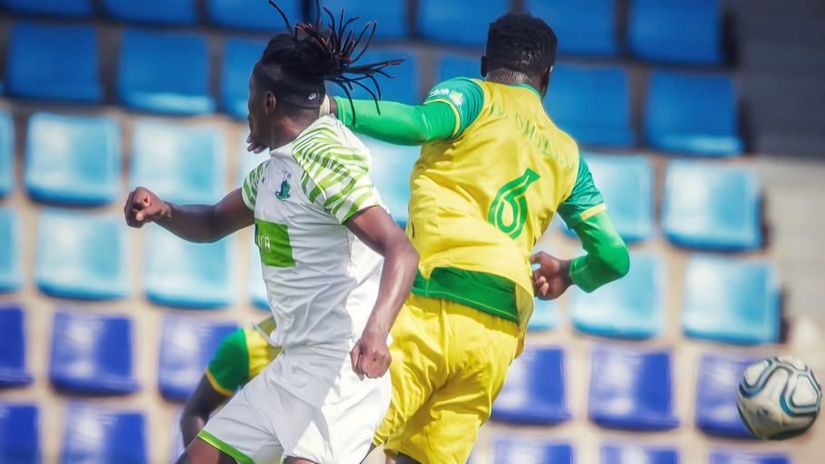
While KCB struck first through Boniface Omondi, Nairobi United responded from the penalty spot via Benson Omalla in a contest defined less by sustained dominance and more by tactical adaptation
Nairobi United and KCB shared a tense 1-1 draw in a match shaped by transitional moments and a dramatic red card that altered the game’s rhythm.
While KCB struck first through Boniface Omondi, Nairobi United responded from the penalty spot via Benson Omalla in a contest defined less by sustained dominance and more by tactical adaptation.
Follow Our WhatsApp Channel for more news
Nairobi United began in a 4-3-3 structure that morphed significantly in possession. Benard Jairo operated in goal behind a back four of David Wanjala at right-back, Steve Biko and Kepha Aswani as center-backs, and Mustapha Kizza at left-back.
In midfield, Brian Mzee and Lesley Owino operated centrally, with Kevin Wangaya drifting from the left into advanced interior spaces.
Up front, Machaka Enock drifted from the right, while Gideon Omondi and Benson Omalla functioned as dual central forwards in fluid occupation of the last line.
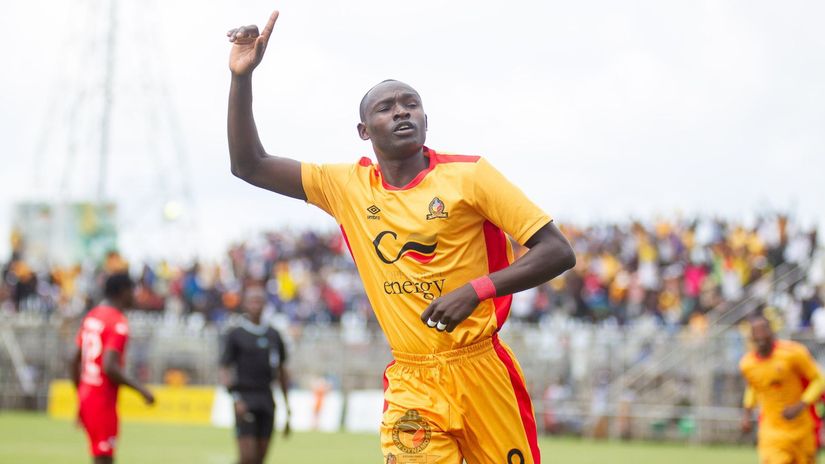
KCB set up in a 4-2-3-1. Elvis Ochoro started in goal, shielded by Nashon Wekesa, Siraj Mohammed, Clyde Senaji, and Amatton Samunya.
Rowland Makati and Humphrey Mieno formed the double pivot behind advanced midfielder David Sakwa. Boniface Omondi and Kelvin Etemesi held width, with Francis Kahiro leading the line.
Nairobi United frequently transformed into a typical 3-3-4 in possession, while KCB maintained their 4-2-3-1 mid-block out of possession.
KCB defended in a compact mid-block 4-2-3-1, with clear horizontal compactness between their double pivot and backline.
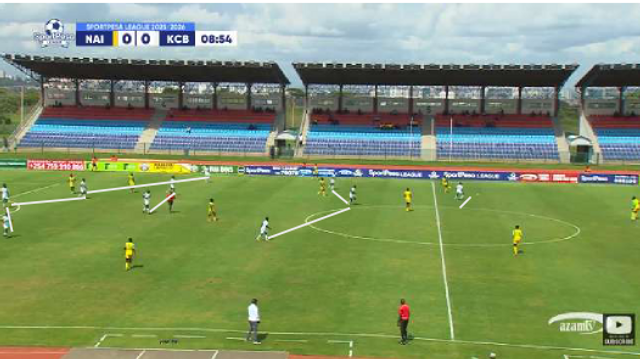
Their wingers tracked Nairobi’s full-backs selectively, prioritizing central protection and forcing play wide.
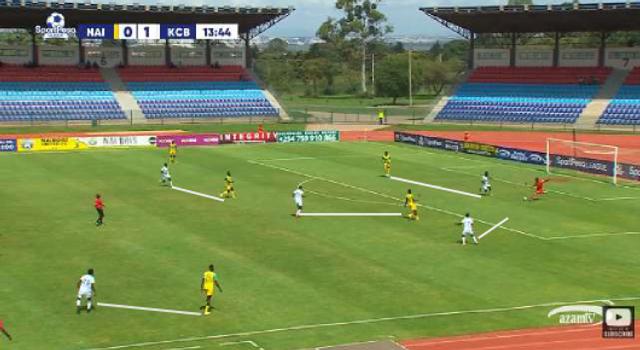
The block height was moderate—neither aggressively high nor deep—designed to deny interior penetration while inviting longer passes.
Nairobi United, out of possession, mirrored with a 4-4-2 mid-block.
One forward would step alongside Omalla, narrowing central lanes and attempting to screen passes into advanced midfield. However, their main structural issue emerged during defensive transitions.
With Kizza pushing high on the left in attacking phases, recovery coverage behind him was inconsistent.
That vulnerability was exposed early.
KCB’s build-up was relatively conservative in early phases. They initiated possession through their center-backs, often circulating laterally before progressing directly toward the wings.
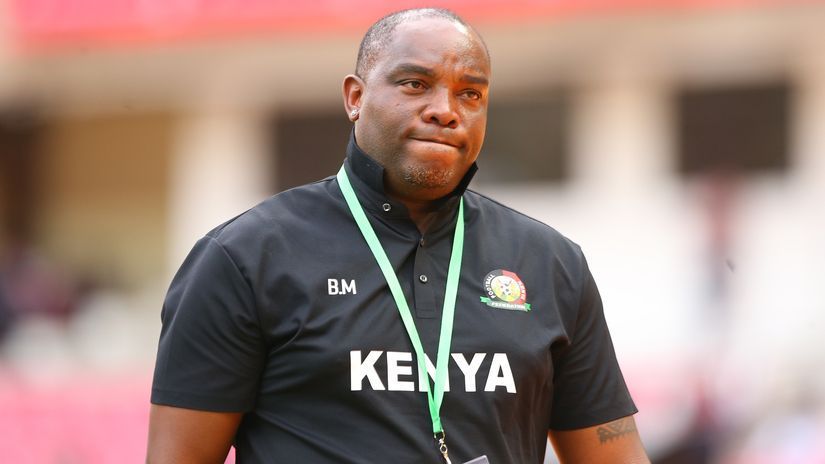
Rather than complex central combinations, they looked for quick vertical access into wide channels—particularly targeting Etemesi on the left and Boniface Omondi on the right.
In the ninth minute, this approach paid off. A direct progression found Kahiro, whose hold-up play drew defenders inward. He set up Boniface Omondi, who capitalized on the advanced positioning of Kizza.
With Nairobi’s left back high and transitional cover delayed, the right-sided channel was exposed. The finish reflected structural exploitation rather than isolated brilliance: wide progression, central hold-up, and weak-side exposure.
The goal reinforced KCB’s reading of pressing cues. Whenever Nairobi attempted to build short, KCB pressed from the front, angling runs to force long distributions.
In response, Nairobi refined their build-up. They adopted a 3-1 structure in deeper phases, with one midfielder—often Brian Mzee—dropping in front of the center-backs.
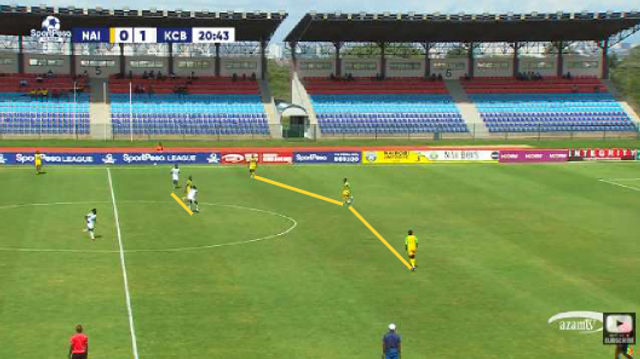
This created a temporary back three, allowing a full-back, particularly Kizza, to push higher.
Kevin Wangaya’s movement was central to progression. Rather than remaining wide, he drifted into interior pockets between KCB’s midfield and defensive lines. His dropping movements created overloads in the first phase and facilitated penetrative passes toward Omalla.
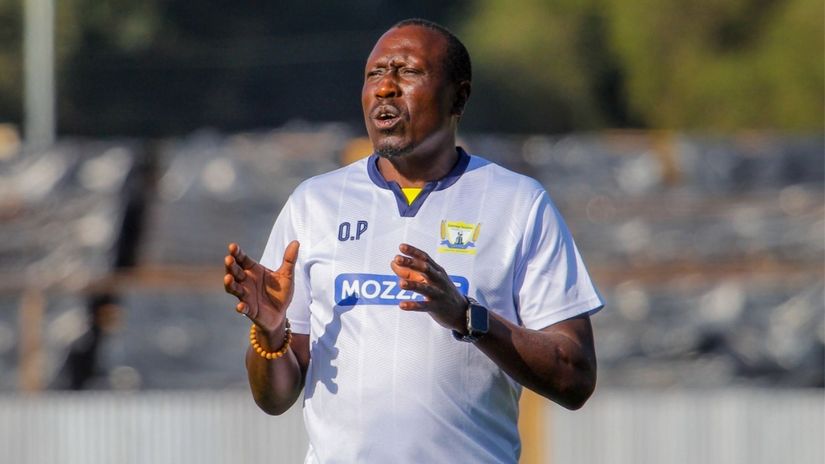
Nairobi’s verticality was evident. Direct passes from deep targeted runners in behind, especially Omalla. Rather than patient circulation, they sought early exploitation of space beyond KCB’s line.
Nairobi also found threats from set pieces, particularly inswinging deliveries from Kizza on the left. These corners troubled KCB’s defensive organization, forcing reactive clearances.
The equalizer arrived in the 28th minute from open play but followed similar structural patterns. A progressive pass from Lesley Owino into the left channel initiated penetration. Machaka attacked the box and was fouled between the goalkeeper and the defender. Omalla converted clinically in the 30th minute.
The sequence reflected Nairobi’s commitment to vertical incision through wide channels combined with central occupation by dual strikers.
In sustained possession, Nairobi adopted a 3-3-4. Kizza pushed high, Wanjala tucked in to form a back three alongside Aswani and Biko, and Wangaya drifted inside as an advanced playmaker. Gideon Omondi and Benson Omalla pinned center-backs, while Machaka provided temporary width on the right.
This shape created an attacking presence but exposed their rest defense. With three defenders holding width across the first line and only two midfielders screening transitions, defensive security depended on compact distances.
When possession was lost, recovery positioning was sometimes stretched.
Conversely, KCB’s rest defense was not optimally structured either. Their double pivot occasionally became disconnected from the defensive line during forward surges, allowing Nairobi to find spaces between lines. However, Nairobi’s final pass lacked precision, limiting their ability to convert structural advantages into clear chances.
The second half introduced subtle shifts. Humphrey Mieno increasingly dropped deeper to support KCB’s center-backs, particularly in aerial duels.
This anchoring presence improved defensive stability and reduced vulnerability to long balls targeting the likes of Omalla.
KCB circulated more calmly down the left flank, combining Etemesi and Siraj Mohammed with Mieno joining progression phases. This triangle allowed them to advance methodically rather than relying solely on direct wide deliveries.
Nairobi attempted third-man combinations on the right, involving Machaka and Owino.
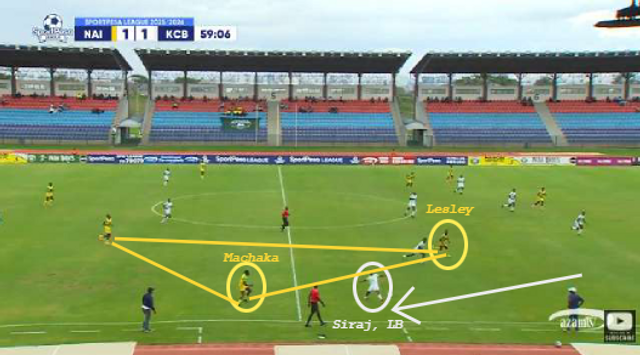
These movements aimed to destabilize KCB’s left full-back and pivot coordination, but KCB’s compactness limited clear breakthroughs.
The decisive structural shift occurred in the 60th minute. A long ball over Nairobi’s defensive line forced goalkeeper Benard Jairo to handle outside the box, resulting in a red card.
This moment fundamentally altered Nairobi’s approach.
Gideon Omondi was sacrificed for substitute goalkeeper Kevin Oduor. Nairobi abandoned expansive build-up and increasingly relied on long restarts, targeting runners directly.
.jpg)
Their structure shifted into a 4-4-1 mid-block, prioritizing horizontal compactness and defensive resilience.
At minute 74, Brian Magare replaced Machaka, reinforcing midfield solidity over attacking width. The adjustment was clear: protect central zones, deny penetration, survive transitions.
With numerical superiority, KCB pushed numbers forward. Francis Kahata’s introduction in the 80th minute added creative presence between lines.
Their structure resembled an aggressive 4-2-4 in advanced phases, with overlapping full-backs and increased box occupation. Yet territorial dominance did not translate into decisive penetration. Nairobi’s 4-4-1 block remained compact.
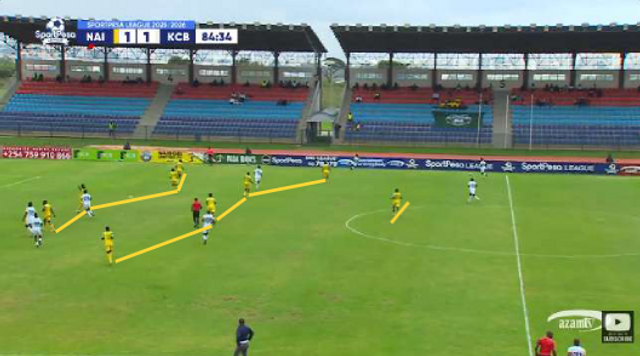
Distances between midfield and defense were tight, and central stepping triggers were disciplined.
Amatton Samunya nearly secured victory with a long-range effort in the 81st minute, but Oduor produced a strong save. KCB circulated patiently, probing for openings, yet lacked vertical sharpness against a condensed block.

Nairobi’s defensive phase after the red card was structurally coherent. Their mid-block denied central access, forcing KCB wide. Crosses were contested effectively, and second-ball reactions improved as the match progressed.
KCB demonstrated control and composure but did not sufficiently manipulate Nairobi’s compactness. Their earlier direct approach had yielded reward; their later positional dominance lacked unpredictability.
In summary, this contest was shaped by structural contrasts and transitional moments. KCB exploited early wide exposure and pressing triggers to lead.
Nairobi responded through adaptive build-up and vertical incision. The red card forced a strategic retreat, but defensive organization preserved parity.
Tactically, Nairobi displayed flexibility but revealed vulnerabilities in rest defense and build-up communication. KCB showed structural discipline and game control yet struggled to convert superiority into decisive penetration.
The draw ultimately reflected a match where both teams imposed phases of control without fully resolving the opponent’s core defensive framework.