


TACTICAL ANALYSIS: How USM Alger’s positional pressure broke Zamalek’s resilient block


.jpg)


Reading Time: 5min | Mon. 11.05.26. | 21:33
This analysis explores the structural mechanisms, pressing triggers, and rotational build-up play that eventually allowed USM Alger to exploit a singular moment of defensive instability
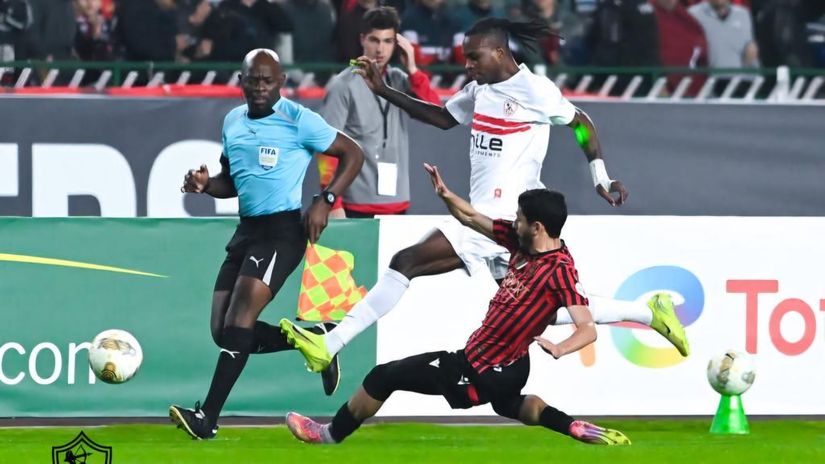
USM Alger secured a narrow 1-0 victory over Zamalek SC in the first leg of the CAF Confederation Cup final, a match defined by contrasting tactical identities and a chaotic, VAR-dominated climax at the end.
Download our Mozzart Sport app for more news
In a contest that pitted Alger’s expansive, high-tempo possession game against Zamalek’s disciplined defensive structure, the North African giants played out a technical chess match with continental silverware at stake.
This analysis explores the structural mechanisms, pressing triggers, and rotational build-up play that eventually allowed USM Alger to exploit a singular moment of defensive instability.
USM Alger lined up in a dynamic 4-1-2-3 formation, designed to maximise width and interior overloads.
Benbot Oussama started in goal, protected by a backline of Radouani Saadi and Haithem Loucif at fullback, with Hocine Dehiri and Che Malone Jnr as the central pairing.
Merili acted as the defensive anchor, sitting behind the creative engine room of Benzaza Brahim and Etane Tendeng. The frontline featured Ahmed Khaidi and Zakaria Draoui flanking the central focal point, Dramane Kamagate.
Zamalek countered with a versatile 4-3-3 that often functioned as a 4-3-1-2 in transition.
Mohamed Soliman stood between the sticks, with a defensive quartet of Ismail Mohamed, Bentayg Mahmoud, El Wensh Mahmoud, and Abdelsalam Abedlmegeed.
In midfield, Mohamed Shehata operated as the deepest pivot, flanked by Ahmed El Fotouh, while Abdallah El Said occupied the "number 10" space.
Their attack relied on the speed of Oday Dabbagh and Chico Banza, with Hamza Kaied dropping deep as a false nine to facilitate counters.
Zamalek’s defensive logic was centred on a zonal mid-block in their 4-3-3 shape. Their primary objective was to deny USM Alger access to the central corridors, forcing the Algerians into wide areas where the touchline acted as an extra defender.
When pushed deeper, Zamalek shifted into a compact 4-4-2\5-4-1, dropping their wingers into the midfield line to eliminate passing lanes between the lines.
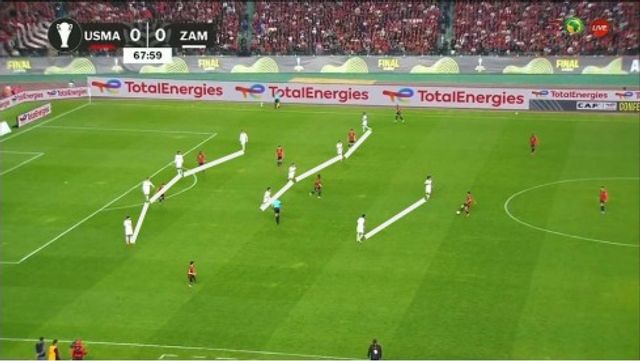
This compactness made them incredibly difficult to break down, as El Wensh and Abedlmegeed excelled in "box defending," successfully clearing numerous deliveries that Alger funnelled in from the flanks.
The Egyptian side prioritised central protection, banking on their ability to weather the storm and strike in the transition.
USM Alger’s possession game was characterised by sophisticated rotations designed to manipulate Zamalek’s block. In the first half, they utilised their fullbacks high and wide to stretch the pitch, attempting to create 1v1 situations for Khaidi and Draoui.

As the game progressed into the second half, USM Alger adjusted their build-up to a double-pivot system.
Benzaza dropped deep alongside Merili, forming a 2-2 base with the centre-backs. This movement was a tactical masterstroke; it lured Zamalek’s midfielders forward, creating a "vacuum" behind them that the interior midfielders could exploit.
By dropping the pivots, Alger freed their fullbacks to push even higher, essentially becoming auxiliary wingers and forcing Zamalek’s wide men into a defensive retreat.
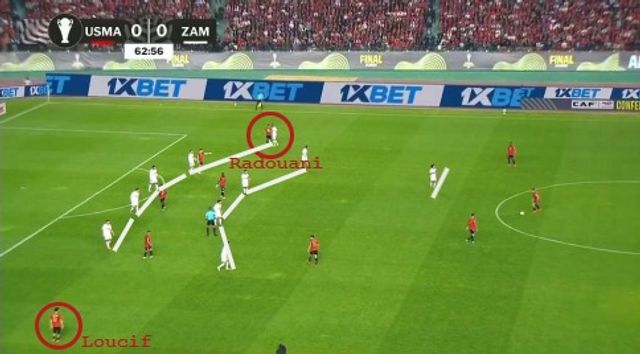
USM Alger’s defensive phase was defined by a high-intensity press. Against Zamalek’s low build-up - which often saw Shehata drop in front of the centre-backs to form a 3-1 shape with the goalkeeper - Alger deployed a two-man frontline press who curved their runs toward the centre-backs.
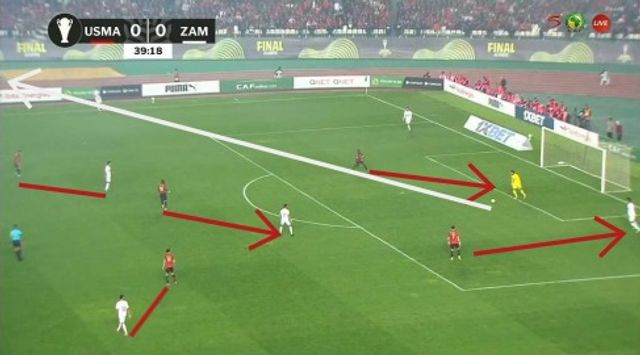
The pressing triggers were clear: Alger’s forwards used curved runs to cut off the lateral passing lanes between Zamalek’s centre-backs, funnelling the ball into the crowded centre or forcing Soliman to go long.
This disruption effectively neutralised Zamalek's short-passing game, forcing the visitors into low-percentage long balls that Che Malone Jnr and Dehiri easily recycled, allowing Alger to maintain the "lion's share" of possession.
Despite Alger’s dominance, Zamalek remained dangerous through verticality.
Their primary outlet was the right flank, where Ismail Mohamed pushed high to join Dabbagh. By targeting USM Alger’s left side, Zamalek bypassed the initial pressure lines, using quick combinations to spring Chico Banza into space.
In the 52nd minute, this mechanism almost broke the deadlock. A lightning-fast break from the left forced Benbot off his line, and only a heroic goal-line clearance from Dehiri prevented Banza from scoring. This demonstrated the fragility of Alger’s rest-defense when their fullbacks were committed too high.
USM Alger’s breakthrough attempts relied heavily on third-man combinations. To beat Zamalek’s man-marking in midfield, an Alger player would play a vertical pass to a high receiver (the striker), who would then "lay off" the ball to a third player running from deep (the "third man").
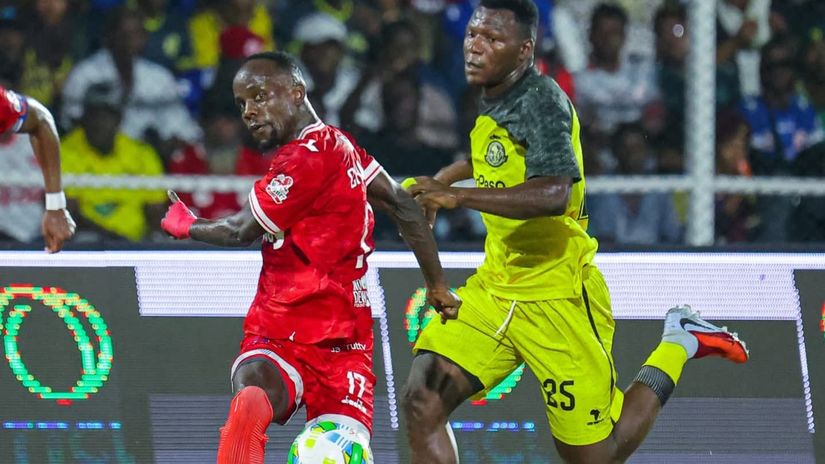
This high-tempo ball movement was designed to exploit the split-second hesitation in Zamalek’s defensive reactions.
Late in the game, a ball played in behind the defense found substitute Lukonza, whose shot was blocked by a desperate El Wensh.
While the initial shot failed, the constant pressure on the box created the environment for the final drama.

The final ten minutes of the match saw a total collapse of the established tactical order. Zamalek appeared to have snatched a victory through substitute Alvina Bezeera following a rare unforced error from Dehiri.
However, the goal was chalked off due to a prior incident at the other end of the pitch.
VAR intervention revealed that Abdelsalam Abedlmegeed had committed a handball in his own box during an earlier Alger attack.
This "game-state" shift was catastrophic for Zamalek; not only was their goal overturned, but Bentayg was sent off, leaving them with ten men and a penalty to defend.
USM Alger’s 1-0 victory was a testament to the power of sustained positional pressure. While Zamalek’s defensive block was statistically impressive for 89 minutes, the cumulative fatigue caused by Alger’s high-tempo rotations and high press eventually forced the structural crack that led to the penalty.
Ahmed Khaidi’s clinical finish from the spot in the eighth minute of stoppage time ensures USM Alger takes a vital lead to Cairo.
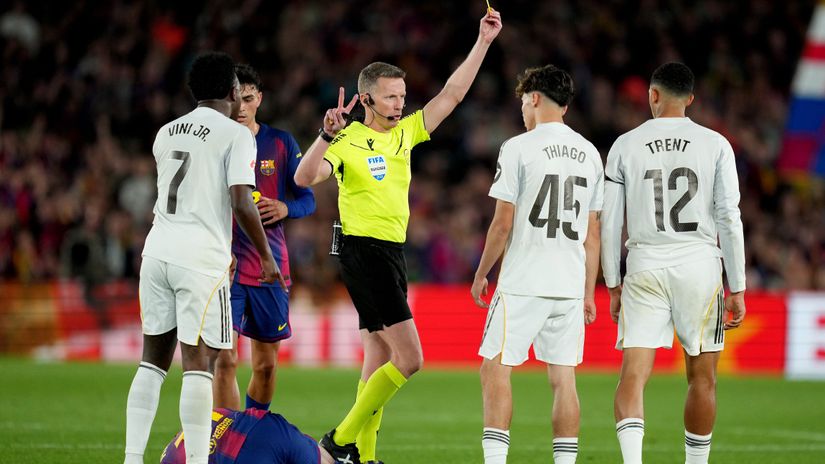
For Zamalek, the return leg will require a more proactive approach, as they can no longer rely solely on the low block that served them for most of the first leg.
Alger, meanwhile, proved that their "3rd man" philosophy and pressing triggers are elite continental tools, capable of breaking even the most disciplined Egyptian defenses.