


TACTICAL ANALYSIS MOZZART BET CUP: Another One Bites The Dust- How Minnows BB Bread eliminated Gor Mahia


.jpg)


Reading Time: 6min | Mon. 09.03.26. | 11:38
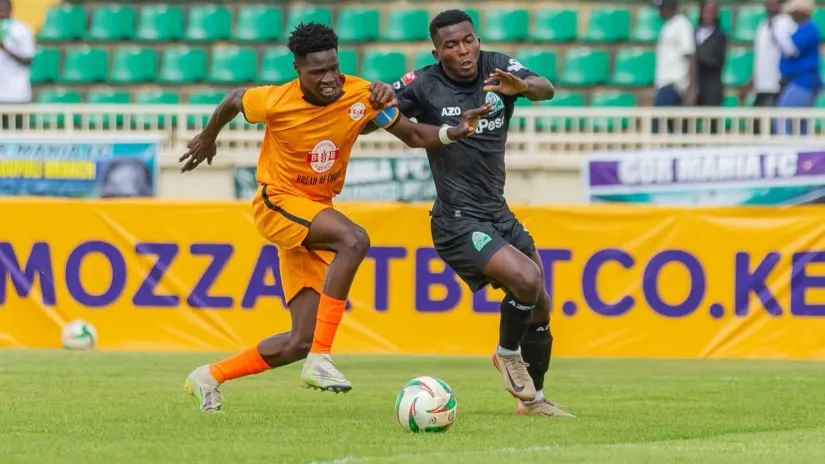
While Gor Mahia dominated territory and possession for large spells, they struggled to penetrate a well-organized defensive block and were repeatedly frustrated by the underdog’s structural resilience
BB Bread FC delivered one of the most memorable upsets in the Mozzart Bet Cup as they defeated Kenyan giants Gor Mahia FC 1-0 in a match defined by defensive discipline, structural compactness, and ruthless execution in transition.
Follow Our WhatsApp Channel For More News
Despite entering the match as clear underdogs, BB Bread produced a tactically mature performance that neutralized Gor Mahia’s attacking patterns and ultimately punished them late in the game.
.jpg)
While Gor Mahia dominated territory and possession for large spells, they struggled to penetrate a well-organized defensive block and were repeatedly frustrated by the underdog’s structural resilience.
This analysis explores the tactical foundations behind BB Bread’s victory, examining the starting structures, defensive schemes, build-up strategies, key zones of control, pressing dynamics, and the decisive moment that sealed the upset.
Both teams entered the match with distinct structural setups that shaped the early tactical battle.
Gor Mahia started in a 4-3-3 formation with Kevin Omondi in goal.
The defensive line consisted of Philemon Otieno at right back, Joseph Levin at left back, and the central defensive pairing of Frank Odhiambo and Mike Kibwage. In midfield, Ernest Wendo operated as the deep pivot, with Fidel Origa providing support as the linking midfielder while Ben Stanley functioned as the advanced playmaker who frequently moved between midfield and attacking zones.
On the flanks, Bryson Wangai and Elly Owande provided width as wingers, while Patrick Esombe led the attack as the central striker.
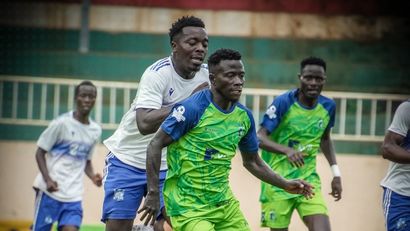
BB Bread, by contrast, adopted a far more conservative 5-2-3 structure designed primarily for defensive stability. Ezekiel Owande started in goal behind a five-man defensive line consisting of Oliver Iryamukuru as the right wing-back, Reagan Chavulimu as the left wing-back, and a central defensive trio of David Oduor, Tindo Joseph, and Robert Yugi.
Dominic Waithaka and Maqbul Ochola formed the midfield double pivot tasked with screening the defensive line and protecting the central channels.
Up front, Charles Munala operated from the left wing, Denis Mbevi from the right, and Samuel Oluogo led the line as the central striker.
Out of possession, BB Bread’s defensive structure shifted seamlessly into a compact 5-3-2 or 5-2-3 block that focused heavily on denying Gor Mahia access to interior spaces.
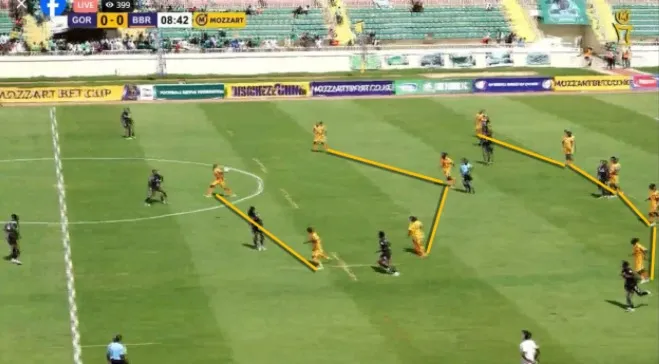
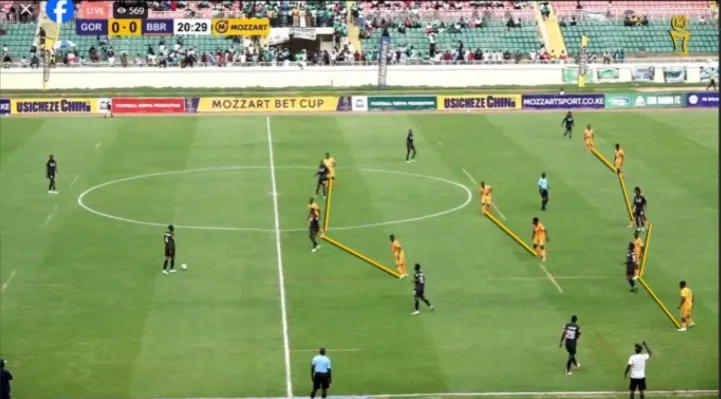
Their defensive approach was largely zonal, with the back five maintaining tight horizontal spacing while the midfield pair screened passing lanes into central attacking zones.
This structural compactness ensured that Gor Mahia struggled to progress through the middle of the pitch, forcing them to rely heavily on wide areas and crosses rather than penetrating passes through the central channels.
The defensive line also maintained a surprisingly high starting position, stepping forward aggressively whenever Gor Mahia attempted to progress the ball through midfield.
This proactive defending disrupted Gor Mahia’s rhythm during build-up phases and prevented their attackers from receiving comfortably between the lines.
The defensive coordination within the back five was particularly notable, as players consistently communicated and handed over marking responsibilities when Gor Mahia attackers attempted to drift into half-spaces.
Gor Mahia initially attempted to assert dominance through controlled possession and positional rotations.
Joseph Levin frequently pushed forward from the left-back position, effectively operating as a wide playmaker in advanced areas. His forward positioning allowed Bryson Wangai to drift inward into the left half-space, creating potential overloads between the defensive and midfield lines of BB Bread.
On the opposite flank, Elly Owande occasionally dropped deeper to assist in build-up phases, forming temporary passing triangles with right-back Philemon Otieno and central midfielders, Fidel Origa or Ben Stanley.
However, BB Bread’s defensive organisation proved extremely difficult to break down.
The five-man defensive line tilted intelligently depending on the side of attack, ensuring that wide crosses were met by multiple defenders inside the penalty area.
This box defending repeatedly nullified Gor Mahia’s attempts to deliver dangerous balls into the area.
Even when crosses did enter the penalty box, BB Bread defenders consistently cleared the danger or forced attacking players into poor finishing positions.
In response to the defensive congestion in central zones, Gor Mahia attempted to alter their build-up structure.
Ernest Wendo frequently dropped between the two centre-backs during the first phase of possession, temporarily forming a back three to facilitate ball progression through the initial line of pressure.
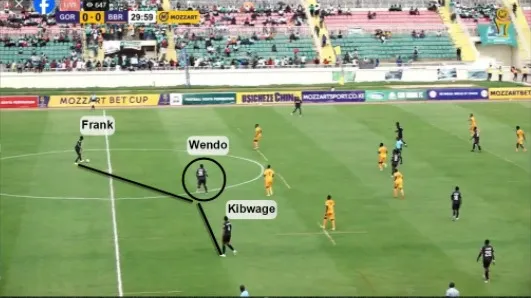
Fidel Origa also dropped deeper at times to assist in circulating possession, allowing Ben Stanley and the right back Philemon Otieno to push higher up the pitch and make runs behind the defensive line.
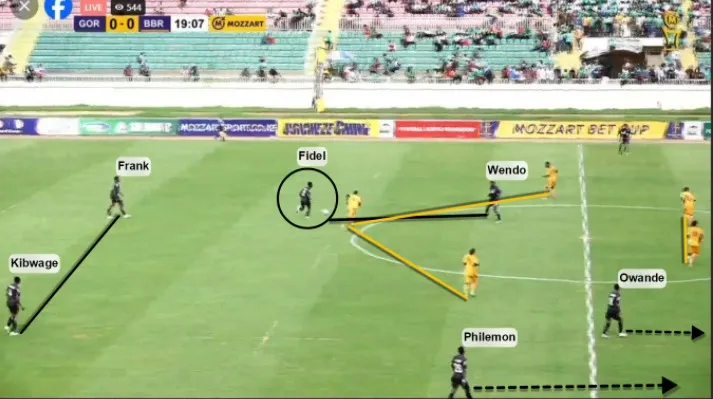
These adjustments allowed Gor Mahia to create a 3-2-5 attacking structure during advanced phases of possession.
The idea behind this structure was to stretch the BB Bread defensive block horizontally while maintaining central presence between the lines.
Wingers began interchanging flanks and making dropping movements designed to lure defenders out of position. The objective was to create momentary disorganisation within the back five that could be exploited by runners attacking the penalty area.
.jpg.webp)
Despite these tactical adjustments, BB Bread’s defensive discipline remained remarkably consistent.
Their back line demonstrated excellent coordination in tracking runners while maintaining structural integrity.
Defensive players were particularly effective at handing over marking responsibilities when attackers attempted to move across zones, ensuring that Gor Mahia never found sustained numerical superiority inside dangerous areas.
While BB Bread spent large periods defending, they also showed clear attacking intentions when possession was regained.
Their primary strategy involved bypassing midfield entirely with long passes from goal kicks or defensive clearances.
63234
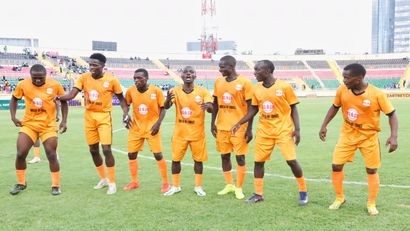
These long balls targeted the front three, who attempted to bring the ball down and create opportunities through second-ball situations.
Although the technical execution of these attacking phases occasionally lacked precision, the strategy still served an important purpose: it relieved defensive pressure and pushed Gor Mahia’s defensive line backward.
As the match progressed into the second half, Gor Mahia attempted to increase attacking intensity through tactical substitutions.
Shariff Musa and Paul Ochuoga were introduced in an effort to add creativity and attacking quality, replacing Elly Owande and Philemon Otieno.
The changes signalled a shift toward even more aggressive wing play as Gor Mahia attempted to stretch BB Bread’s defensive block through repeated flank attacks.
BB Bread responded by dropping deeper into a more compact 5-4-1 defensive block. This lower defensive line further reduced the space available behind the defence while forcing Gor Mahia to deliver crosses from increasingly predictable wide positions.
Despite multiple attempts to switch play from flank to flank in order to destabilize the defensive structure, Gor Mahia continued to struggle to create clear scoring opportunities.
Further substitutions from Gor Mahia followed in the 57th minute when Enock Morrison and Ebenezer Assifuah were introduced to strengthen the attack.
Morrison began attempting longer forward passes from deeper positions in midfield, searching for runners behind the defensive line.
However, BB Bread’s defensive line anticipated these passes effectively and produced several timely interceptions.
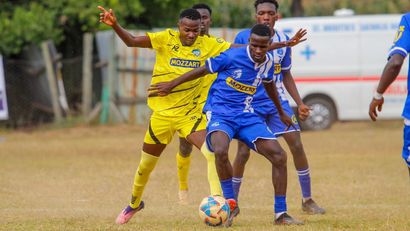
As Gor Mahia pushed more players forward in search of a breakthrough, the match gradually opened spaces for BB Bread’s transitional attacks.
With Gor Mahia committing numbers high up the pitch, counterattacking opportunities began to emerge for the underdogs, who increasingly looked to exploit the spaces left behind by the attacking full-backs.
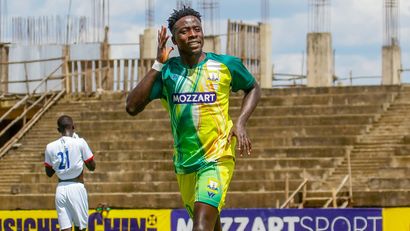
The decisive moment arrived in the 85th minute. A well-constructed attacking move down the left side resulted in a low cross delivered into the penalty area.
Substitute Denis Muthini timed his run perfectly and controlled the ball before finishing calmly with a low left-footed shot into the net, giving BB Bread a stunning 1-0 lead.
The goal perfectly illustrated the effectiveness of BB Bread’s strategy: defend compactly, absorb pressure, and strike decisively when the opportunity arises.

In the closing stages, Gor Mahia threw numbers forward in a desperate attempt to equalise. However, BB Bread’s defensive resilience remained unbroken.
A crucial goal-line clearance denied Ebenezer Assifuah following a corner delivery from Enock Morrison, while goalkeeper Ezekiel Owande produced a decisive save from Frank Odhiambo’s late header.
Ultimately, the match served as a powerful reminder that tactical discipline and defensive organisation can neutralize even the most dominant attacking sides.
BB Bread executed their defensive game plan with remarkable precision, maintaining compact spacing, denying central access, and capitalising on transitional opportunities.
Gor Mahia, despite dominating possession and territory, struggled to translate their structural adjustments into clear scoring chances.
The underdogs’ ability to maintain defensive integrity while delivering a decisive counterattacking blow ensured that the giant-killing narrative would once again define this remarkable cup run.