



TACTICAL ANALYSIS: Tusker's smart game plan that deepened Kariobangi Sharks relegation fears






Reading Time: 6min | Tue. 03.03.26. | 17:04
Tusker ultimately prevailed 2-1, capitalising on defensive disorganisation and transitional superiority
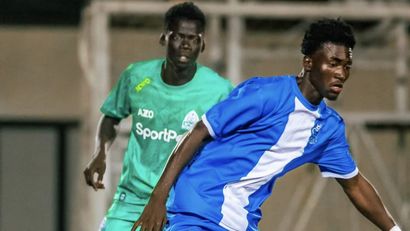
Two FKF Premier League sides enjoying a mini-revival, Kariobangi Sharks and Tusker FC, produced a tactically layered contest defined by wing-focused progression and contrasting build-up ideologies.
In a match where control varied between patient circulation and direct exploitation of wide areas, Tusker ultimately prevailed 2-1, capitalising on defensive disorganisation and transitional superiority.
Beyond the scoreline, this encounter was shaped by Kariobangi Sharks’ asymmetric 3-2-5 possession structure and Tusker’s adaptable 4-4-2 framework that morphed intelligently across phases.
Kariobangi Sharks began in their familiar 3-2-5 organisational structure in possession. Sebastian Wekesa operated behind a back three of Timothy Ekhavi, Kevin Luke Otiala and Ghai Panchol.

Ahead of them, Keegan Ndemi and Faiz Opande formed a double pivot tasked with securing circulation and protecting rest-defence zones.
Taifa Karani functioned as the right wing-back, dropping into the defensive line out of possession, while Ally Salum and Izzadin Juma occupied the half-spaces as inside forwards.
Humphrey Aroko held width on the left, with David Majak acting as the nominal central striker and focal point for direct phases.
Tusker, by contrast, set up in a classic 4-4-2: Brandon Obiero in goal; Eugene Ikutwa and Collins Odhiambo as full-backs; Francis Oduor and Charles Momanyi centrally; Denis Iguma and Fabian Adikiny as the midfield pairing; Yakeen Mutheheli and Denis Oalo on the wings; and Ibrahim Joshua partnered by Erick Kapaito up front.
Out of possession, Sharks shifted into a 4-1-4-1 before later settling into a 5-2-3 mid-block, while Tusker defended in a compact 4-4-2 mid-block.
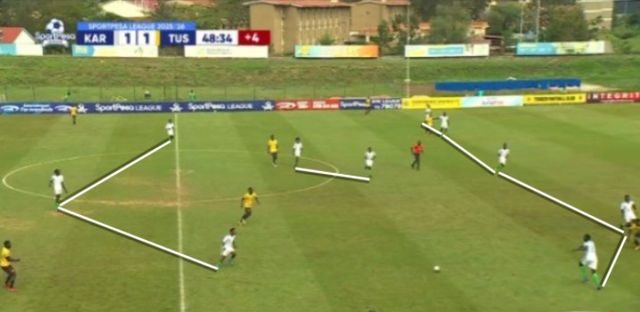
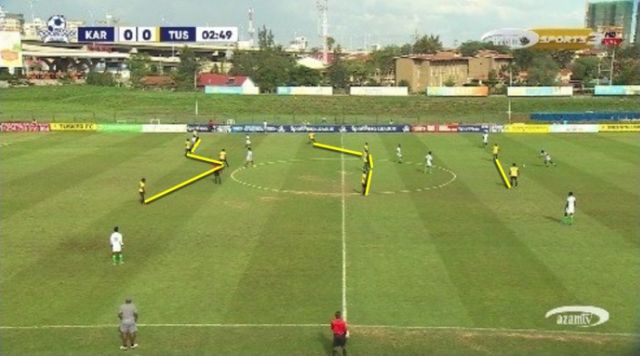
The defining defensive contrast lay in Tusker’s structured high pressing triggers.
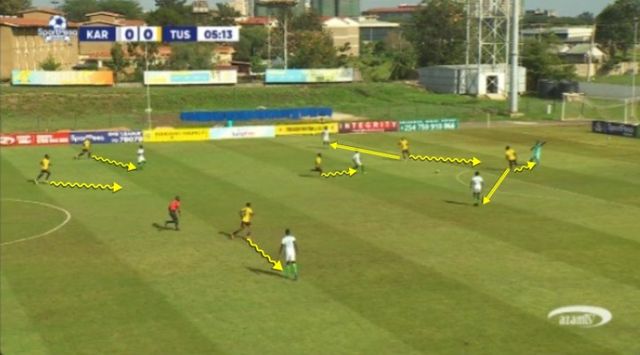
When Sharks recycled possession backwards, one striker would initiate the press, supported by Mutheheli jumping aggressively, especially from the right side.
The objective was clear: force hurried long passes and contest second balls.
This directional pressing repeatedly disrupted Sharks’ build-up rhythm and reduced their central progression options.
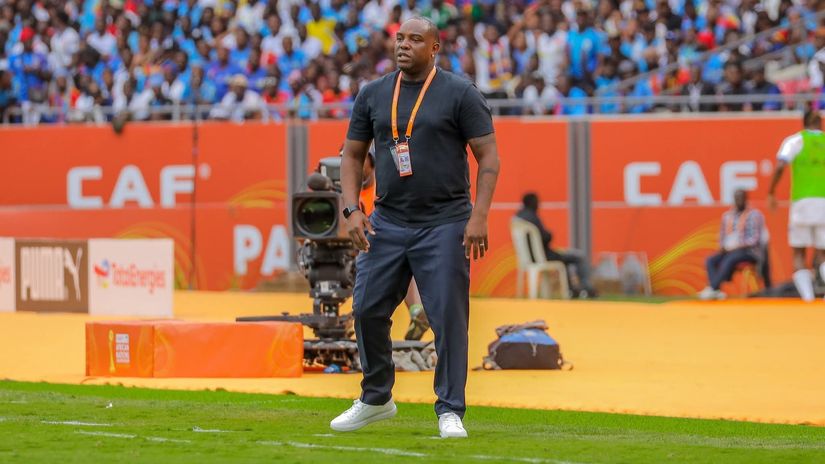
In early phases, Sharks attempted to progress through third-man combinations, especially down the right wing.
Their idea was to draw Tusker’s first line before releasing an interior runner.
However, Tusker’s mid-block spacing limited vertical access into the half-spaces. By minute 10, Sharks increasingly resorted to long restarts, targeting Majak’s aerial presence.
This shift illustrated how Tusker’s block height and coordinated pressing altered Sharks’ spacing behaviour - forcing them away from structured build-up into direct territory.
Tusker’s own build-up displayed greater composure and variation.
They frequently constructed a 5-2 and later 4-2 shape in the first phase, with Obiero actively involved to create numerical superiority.
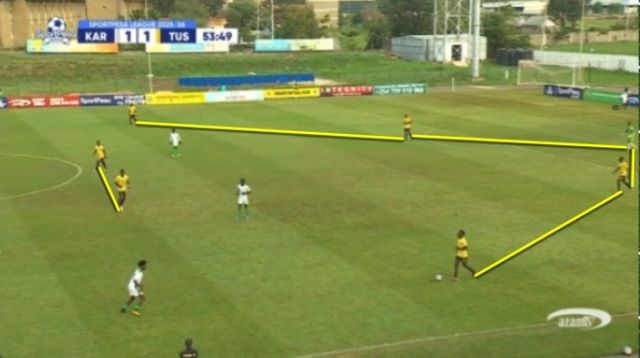
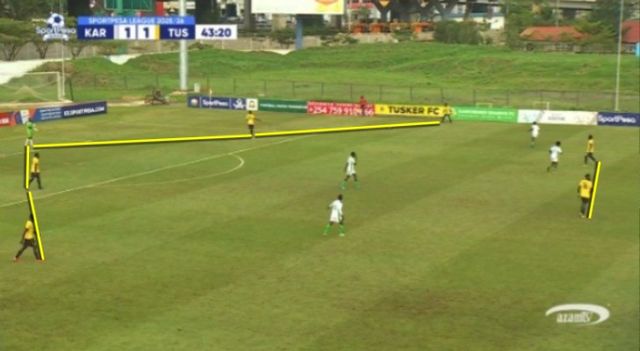
The full-backs remained relatively wide but close enough to support central defenders, while Iguma and Adikiny controlled the tempo ahead.
Ikutwa occasionally inverted into midfield, creating overloads, while Oalo dropped from the left wing to act as a third midfielder during circulation.
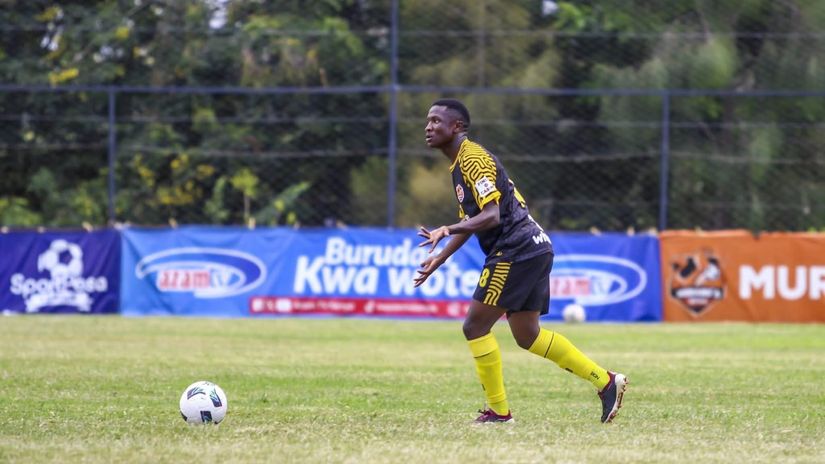
These rotations created 4v3 advantages centrally, especially when Kapaito drifted left to combine with Oalo and Odhiambo.
The left flank became Tusker’s primary attacking outlet in the first half.
Odhiambo pushed aggressively high to deliver crosses, targeting Joshua’s penalty-box positioning and Kapaito’s drifting movements.
This wide protection by Sharks often left central pockets exposed, and Tusker exploited these channels through intricate passing triangles and third-man combinations.
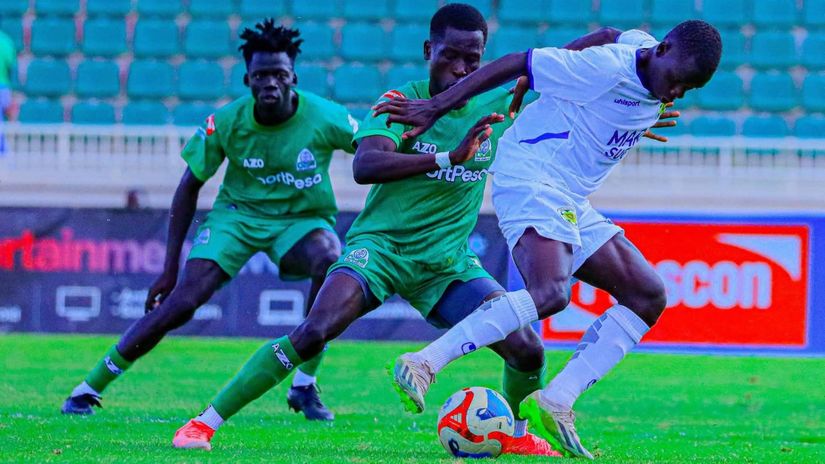
The opening goal in the 16th minute emerged from this territorial dominance: Odhiambo’s outswinging corner found Oduor, who capitalised with a free header to give Tusker the lead.
The set-piece reward reflected sustained pressure rather than isolated fortune.
Sharks responded quickly. In the 18th minute, Aroko equalised with a strike from outside the box after Tusker failed to clear decisively.
Notably, the goal stemmed from second-ball chaos rather than crafted build-up, reinforcing the pattern that Sharks’ most threatening moments arose from transitional or direct scenarios rather than controlled possession.
As the half progressed, Tusker’s left-sided overloads forced Sharks into a disjointed defensive shape.
When Oalo dropped deep, Odhiambo advanced; when Kapaito drifted wide, interior lanes opened.
This manipulation of defensive references often isolated Mutheheli on the right wing during switches of play.
Iguma and Adikiny dictated rhythm centrally, ensuring Tusker retained territorial authority.
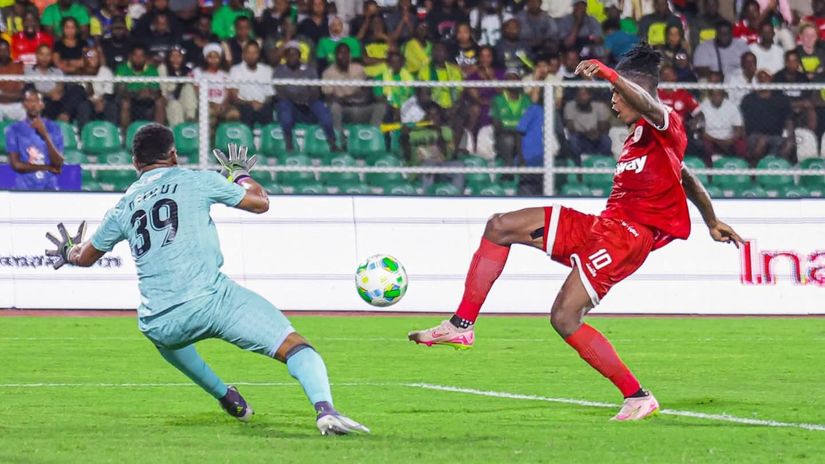
Crucially, Tusker positioned themselves well for second-ball recoveries, preventing Sharks from launching meaningful counterattacks.
Sharks’ rest-defence struggled with compactness.
Although they maintained three centre-backs behind the ball, the distances to their midfield screen were occasionally stretched.
This allowed Tusker to progress through the central corridors once initial pressure was bypassed.
Conversely, when Sharks attempted high pressing spells - most notably around minute five and again early in the second half - they showed potential to destabilise
Tusker’s short build-up
Inside minute 62, a coordinated high press forced turnovers and briefly shifted momentum toward Sharks, with Aroko again the focal wide outlet.

The second half introduced tactical adjustments shaped by personnel changes. An injury to Ally Salum forced Sharks into alterations, with Eusters Chesara and Patila Omotto introduced to maintain an attacking presence.
Tusker responded by bringing on Ian Simiyu and Bless Selasie, later adding David Polepole and Chrispine Erambo to reinforce midfield control.
Selasie’s deeper dropping movements offered hold-up security, while Ikutwa’s continued inversion and overlaps strengthened right-sided overloads.
As the game evolved, Tusker began progressing more frequently through the right wing. Kapaito dropped into midfield to create 4v3 numerical superiority, while Ikutwa occupied the right half-space during build-up.
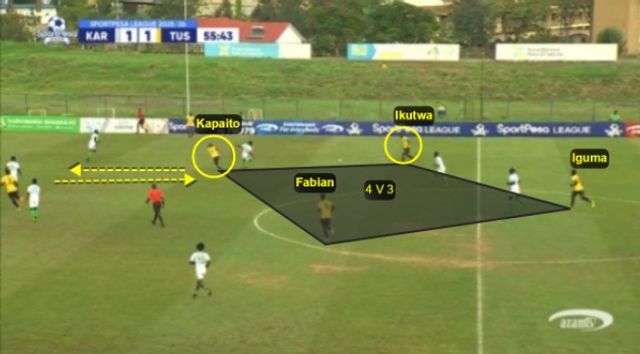
This structural tweak destabilised Sharks’ mid-block and rebalanced Tusker’s earlier left-heavy focus.
By minute 70, intricate right-sided combinations regained territorial momentum.
The decisive moment in the 77th minute encapsulated Tusker’s wing-oriented persistence.
Ikutwa delivered a cross from the right; miscommunication between Wekesa and Ekhavi led to a poor punch clearance, and Simiyu reacted quickest to convert into an unguarded net.

The goal was less about elaborate construction and more about sustained structural pressure forcing defensive error - a culmination of repeated flank targeting.
In the closing stages, Sharks increased attacking numbers and delivered more crosses, especially from the left. However, Tusker adjusted to a higher defensive line, stepping out aggressively to intercept forward runners.
Their rest-defence distances remained compact enough to manage transitions, and Obiero handled aerial deliveries with assurance.
Game management became paramount: longer restarts, territorial clearances, and disciplined spacing denied Sharks central penetration.
Tactically, the match underscored several themes. First, Tusker’s rotational flexibility - particularly the dropping movements of Oalo and Kapaito and the inversion of Ikutwa - consistently generated midfield overloads.
Second, their pressing triggers disrupted Sharks’ build-up rhythm, forcing direct play.
Third, Sharks’ reliance on wide progression, especially through Aroko, lacked consistent central occupation to destabilise Tusker’s rest defense.

While Sharks demonstrated resilience and occasional pressing cohesion, their structural spacing without the ball proved vulnerable to overloads and switches.
Tusker, by contrast, displayed greater phase connectivity: build-up structure supported pressing organisation, and wing progression aligned with second-ball control.
Ultimately, this was a contest where structural clarity and adaptive wing exploitation prevailed over intermittent direct surges.
Tusker’s 4-4-2 was not rigid; it morphed intelligently across phases to create overloads and control tempo.
Sharks’ 3-2-5 offered theoretical attacking width but struggled to sustain central superiority against disciplined mid-block pressure.
Over the ninety minutes, tactical clarity and collective synchronisation proved the defining difference.