


TACTICAL ANALYSIS: Soweto Derby- How Orlando Pirates Overpowered Kaizer Chiefs

.jpg)
.jpg)
.jpg)

Reading Time: 6min | Mon. 02.03.26. | 11:00
Beyond the emotional weight and rivalry narrative that typically surrounds this fixture, the contest was shaped by clear tactical contrasts: Pirates’ proactive 4-3-3 framework against Chiefs’ morphing 3-5-2 into a 3-2-5 attacking structure
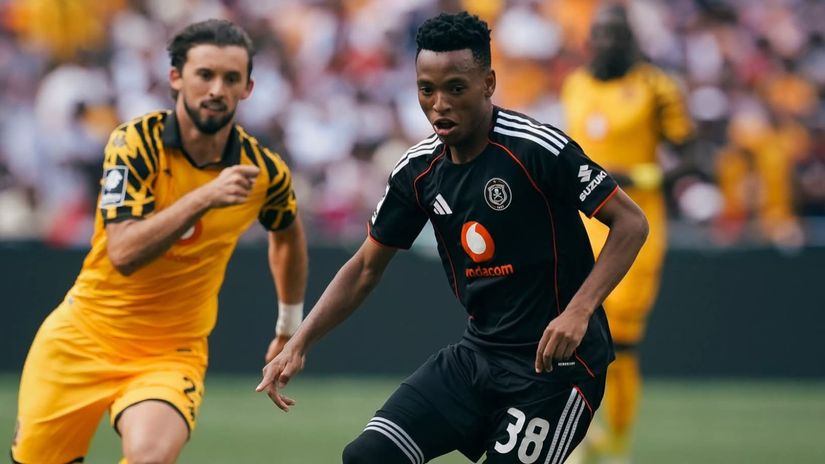
Orlando Pirates secured a commanding 3-0 victory over Kaizer Chiefs in a Soweto Derby defined by structural superiority, aggressive counter-pressing, and intelligent exploitation of transitional space.
Beyond the emotional weight and rivalry narrative that typically surrounds this fixture, the contest was shaped by clear tactical contrasts: Pirates’ proactive 4-3-3 framework against Chiefs’ morphing 3-5-2 into a 3-2-5 attacking structure.
Follow Our WhatsApp Channel for more news
Kaizer Chiefs lined up in a nominal 3-5-2 formation that morphed significantly in possession.
Bruce Bvuma operated in goal behind a back three of Zitho Kwinika, Miguel Inacio, and Aden McCarthy.
In midfield, Ngcobo Nkosingiphile, Lebohang Maboe, and Ethan Chislett formed the central trio, while Thabiso Monyane and Pule Mmodi provided width as wing-backs.
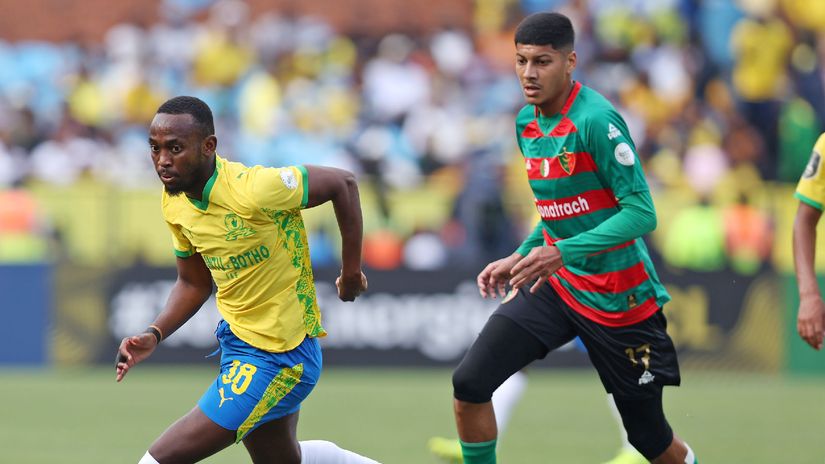
Lilepo Glody partnered Flavio Silva in the front two.
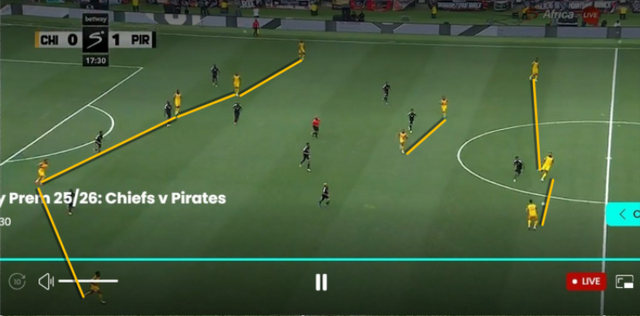
In possession, the wing-backs advanced aggressively to create a front five, while the central defenders formed a back three, forming a 3-2 base intended to stabilize build-up and provide rest-defense security.
Orlando Pirates began in a 4-3-3 structure with Sipho Chaine in goal, protected by central defenders Seema Lebone and Nkosinathi Sibisi. Deon Hotto and Sebelebele Kamogelo operated as adventurous full-backs.
In midfield, Makhaula Makhehleni and Thalente Mbatha functioned as a double pivot responsible for ball progression and defensive balance.
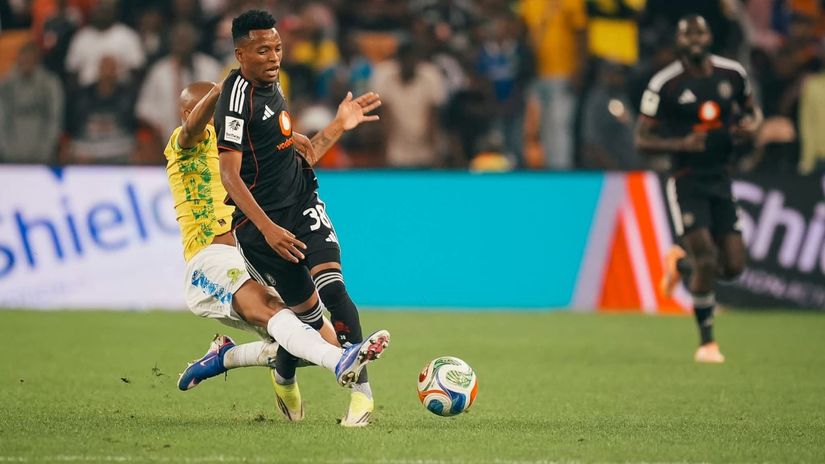
Relebohile Mofokeng played between the lines, Oswin Appolis drifted infield from the right,
Tshepang Moremi maintained width on the left, and Yanela Mbuthuma led the line.
While Chiefs aimed to stretch the pitch horizontally, Pirates’ structure was built to destabilize them vertically and attack transitional gaps.
Chiefs’ defensive approach proved central to the match dynamic. Despite operating with a back three, they maintained a relatively high defensive line.
Out of possession, their shape resembled a 4-4-2 midblock with one wing-back recovering into the back line in a 5-3-2.
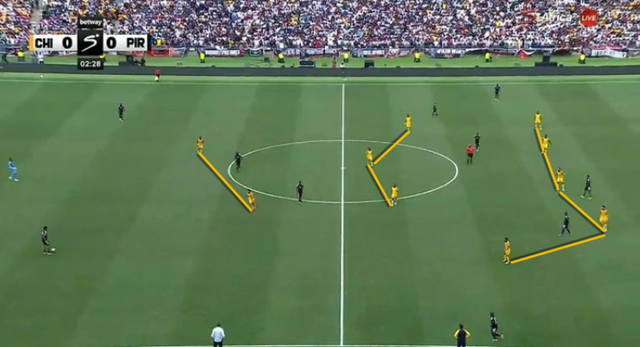
The issue was not numerical weakness but spacing vulnerability. When wing-backs were caught high during transitions, the wide center-backs were isolated in open channels.
This repeatedly exposed the space behind the right center-back, a zone Pirates targeted with precision. Chiefs’ pressing lacked consistency; when Pirates bypassed the initial pressure, Chiefs retreated rather than compressing central space, creating transitional windows instead of sustained compactness.
Pirates set the tone immediately by adopting a front-foot approach. Their aggressive positioning forced Chiefs’ back line deep inside their own half in the opening minutes. This territorial dominance translated into early attacking pressure, particularly from set pieces.
The opening goal in the fifth minute stemmed from a short corner taken by Hotto, leading to Moremi’s shot that deflected off Flavio Silva and into the net.
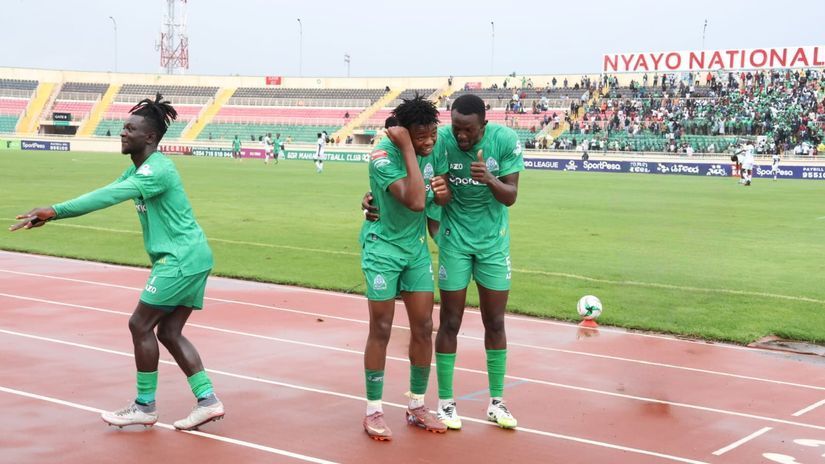
The goal was a product of sustained pressure and intelligent variation rather than isolated fortune. Pirates had already demonstrated threat from corners and second-ball scenarios before capitalizing.
In build-up, Pirates relied on structured depth. Mbatha and Makhaula frequently dropped in front of the center-backs to facilitate clean circulation.
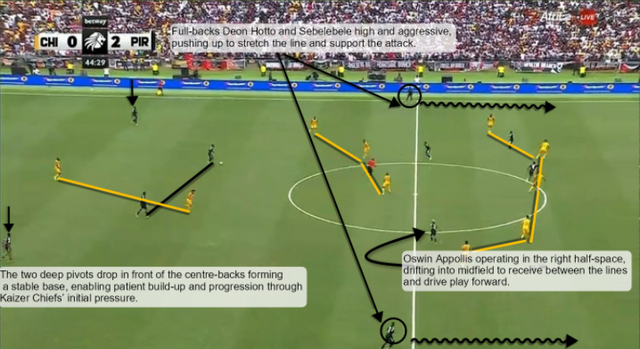
This movement enabled the full-backs to push high and wide, stretching Chiefs’ defensive block. A key rotational mechanism involved Appolis drifting from the right flank into the right half-space toward midfield.
His movement vacated the wide channel for Sebelebele to advance while simultaneously overloading the interior corridor alongside Mofokeng.
Chiefs’ midfield was forced to collapse centrally to contain the interior presence, which in turn exposed the opposite flank. These rotations consistently created defender dilemmas: track inside and concede width, or hold shape and allow central progression.
The recurring structural weakness in Chiefs’ setup was the space left behind their wing-backs and the gaps between wide center-backs and midfielders.
Pirates exploited these through diagonal long balls from Chaine toward Hotto, direct switches from Mbatha to Moremi, and incisive vertical passes from Mofokeng into runners attacking the high line.
The second goal in the 38th minute encapsulated this pattern. Mofokeng timed a precise forward pass into Appolis, who drifted into the left half-space toward the penalty box and finished clinically.
The sequence highlighted Chiefs’ exposed defensive line, the value of interior access through timing rather than forced dribbling, and Pirates’ speed before defensive recovery could occur.
Pirates dominated key zones, particularly the half-spaces. Appolis effectively operated as a second number ten, rotating fluidly and combining with Mofokeng to destabilize Chiefs’ midfield trio.
The wide channels became transition highways due to the advanced positioning of Chiefs’ wing-backs. Pirates’ attackers timed their runs into these vacated areas, repeatedly stretching the back three.
Wide overloads forced defensive shifts, which in turn exposed central spaces for diagonal penetration.
Off the ball, Pirates’ superiority was equally decisive. Their pressing shape resembled a 4-4-2, with Mbuthuma and Mofokeng forming the first line of pressure while Appolis and Moremi tracked back to ensure midfield compactness.
They counter-pressed immediately after losing possession, used curved runs to block central lanes, and directed Chiefs’ build-up toward the flanks. Chiefs struggled to establish controlled possession and were frequently dispossessed when attempting to settle.
Even when forced long, Pirates’ midfield spacing ensured dominance in second-ball contests. This pressing structure prevented Chiefs’ 3-2-5 attacking shape from translating into sustained final-third occupation.
Chiefs found their most consistent progression down the left flank. Mmodi dropped deeper to receive, with Maboe drifting across to provide support and crossing angles. Early deliveries were attempted around the half-hour mark, but these lacked central density and coordinated box occupation.
Pirates’ rest-defense positioning limited second-phase opportunities and ensured numerical superiority in defensive duels. Whenever Chiefs attacks broke down, Pirates immediately attacked the space left behind, compounding Chiefs’ structural risk.
The second half introduced tactical adjustments. Chiefs brought on Asanele Vellebayi and Thabo Cele to inject vertical thrust and renewed pressing intensity. Vellebayi, in particular, alternated between wide and half-space positions, adding aggression to left-sided attacks.
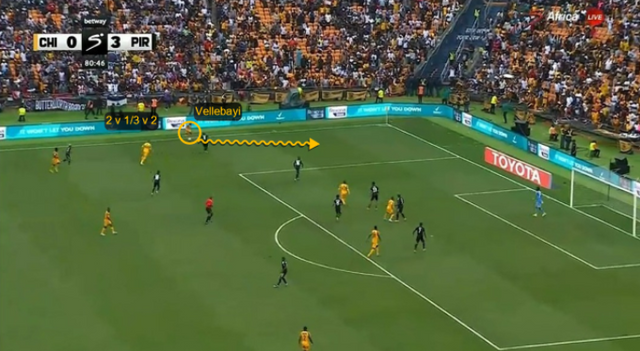
Chiefs briefly improved their off-ball organization and began forcing Pirates into longer clearances. However, the increased commitment forward heightened their exposure in transition.
Pirates responded with substitutions of their own, introducing Masindi Nemtajela to stabilize midfield control and Evidence Makgopa to provide fresh physical presence up front.
Pirates’ rest-defense remained a cornerstone of their control. Even during attacks, their double pivot and disciplined center-backs ensured central compactness.
As Chiefs attempted overloads late in the match, Pirates’ wingers tracked back diligently, forming a compact 4-4-2 mid-block.
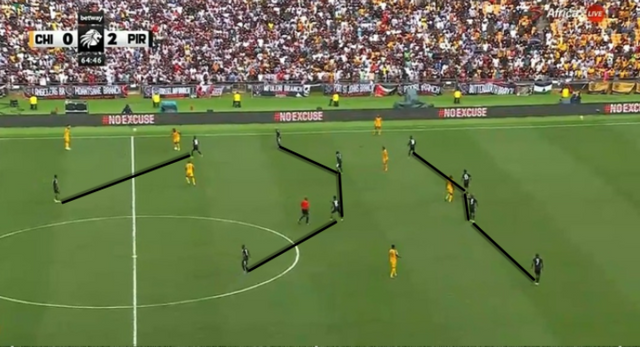
The third goal in the 78th minute illustrated game-state management. A quickly taken throw by Hotto initiated a rapid sequence that ended with Moremi delivering a cross for Makgopa to head home. The speed of execution prevented Chiefs from reorganizing defensively, sealing the outcome.
Even with a comfortable lead, Pirates maintained defensive discipline. Their mid-block remained compact, stepping out aggressively when Chiefs received with their back to goal.
Wide players recovered diligently, ensuring box protection and controlling depth. Chiefs’ late corner, cleared off the line following an initial save, symbolized effort but not structural breakthrough.
Pirates controlled central lanes, second balls, and transitional phases throughout.
This derby was won through systemic clarity rather than isolated moments. Pirates combined proactive pressing, intelligent half-space occupation, and ruthless exploitation of transitional vulnerabilities.
Chiefs’ ambitious 3-2-5 attacking structure exposed them defensively against a side capable of vertical acceleration and rotational fluidity.
The high line, inconsistent pressing, and vulnerable wide channels became recurring points of entry for Pirates’ attacks.
Ultimately, Pirates demonstrated superiority across build-up, pressing, transitions, rest-defense, and game-state control.
The 3–0 scoreline accurately reflected the structural imbalance between the sides. In a fixture often driven by emotion, this edition of the Soweto Derby was defined by tactical precision, spatial manipulation, and disciplined execution from Orlando Pirates.