


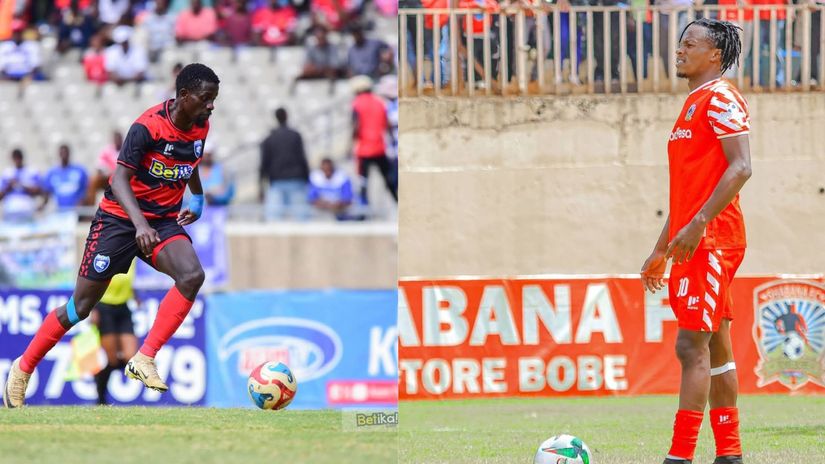
PLAYER ANALYSIS: The Kenyan Creator; AFC Leopards' Tyson Otieno and Shabana's Brian Michira






.jpg)
Reading Time: 6min | Thu. 19.02.26. | 11:05
Modern football has compressed central spaces through compact mid-blocks, narrow defensive spacing, and rigid positional structures designed to suffocate creativity between the lines. Yet players like Tyson Otieno, Bryan Michira, Ulinzi Stars’ Boniface Muchiri, and Kariobangi Sharks’ Humphrey Aroko continue to prove that imagination still bends structure
In modern football’s chessboard of controlled spacing and synchronized movements, there remains one figure who refuses to be boxed into predictable patterns - the creator who thrives where the pitch feels smallest.
This not merely a position; it is a responsibility to interpret chaos, to see passing lanes before they open, and to dictate rhythm in zones others fear to occupy.
Operating in the delicate space between midfield and attack, this role demands intelligence, bravery, and technical clarity under suffocating pressure.
Follow our WhatsApp channel for more news
Within Kenyan football, that creative burden is carried prominently by Tyson Otieno of AFC Leopards and Bryan Michira of Shabana FC. Both are specialists in the art of receiving between lines, both invite pressure rather than avoid it, and both possess the imagination to deform defensive blocks.
Yet while they share the same tactical postcode, their interpretations of the craft differ - shaped by team structures, physical tools, and the specific demands of their respective systems.
Tyson Otieno: The Rhythm Manipulator
At AFC Leopards, Otieno functions within a double-midfield system, often paired with Kelly Madada and protected by a holding midfielder. That structural base provides him the security classic trequartistas historically enjoyed - freedom ahead of a stabilizing pivot.
His operating zone is clear: behind the opposition midfield line, just off the striker, constantly scanning for pockets that flicker open and shut in seconds.
.jpg)
What separates Otieno is his ability to dictate tempo in the final third. He is not merely a connector; he is the metronome.
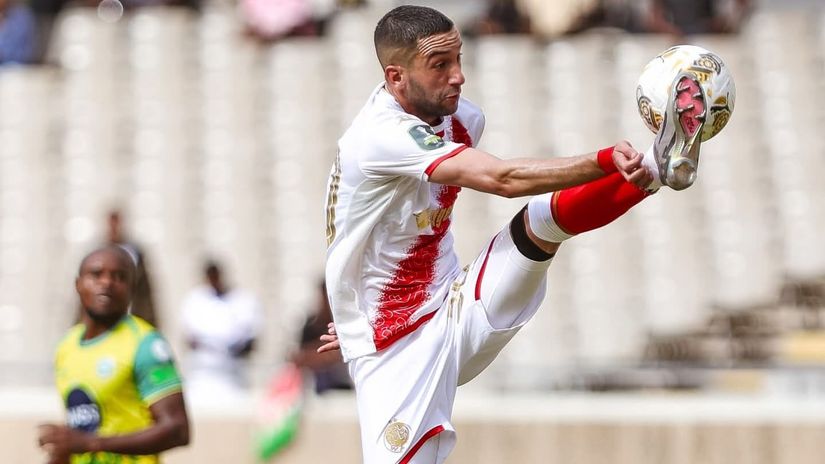
His first touch is one of his most refined weapons - cushioned with the upper instep, setting up immediate directional shifts.
In tight spaces, he thrives on short-burst dribbling, using agility and balance to create micro-separation from markers who may be physically stronger but tactically slower.
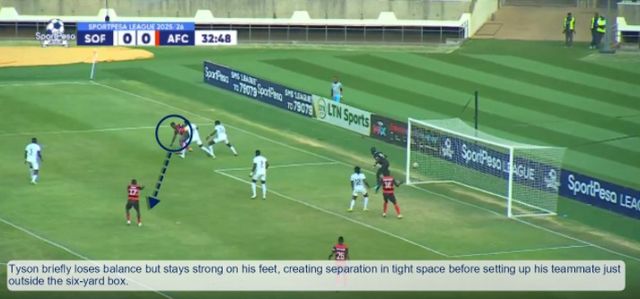
His dribbling is purposeful rather than ornamental. Otieno delays just enough to lure defensive blocks into retreat before accelerating into the vacated channel.
That pause - that half-second of composure - forces defenders into uncomfortable decisions: step out and risk being bypassed, or hold shape and allow him to turn. It is the subtle art of manipulation.
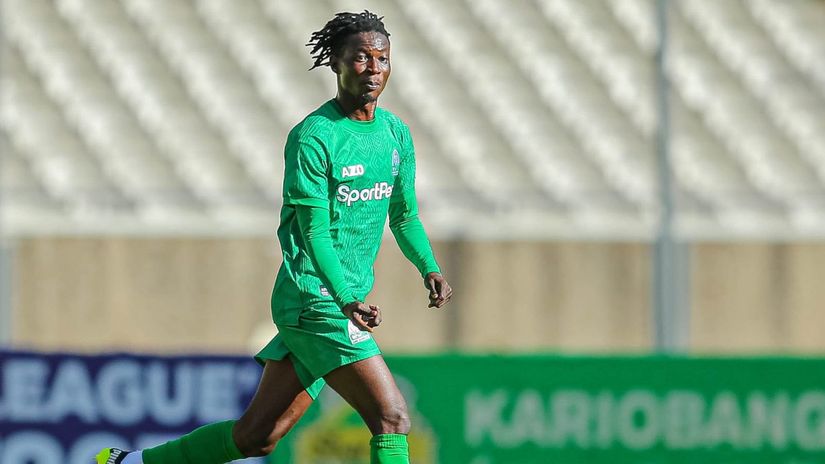
Statistically, his output reinforces the visual impact. In a 1-0 win over Sofapaka, he created five chances, posted a 0.94 expected involvement metric, completed five of seven dribbles, and recovered possession ten times in 71 minutes.
Against APS Bomet, he produced four clear-cut chances, maintained 83% passing accuracy across 46 passes, and won back possession 14 times.
Those numbers illustrate not only creativity but transitional responsibility - he leads the first line of press alongside the striker, embodying the modern attacking midfielder who contributes defensively without sacrificing attacking freedom.
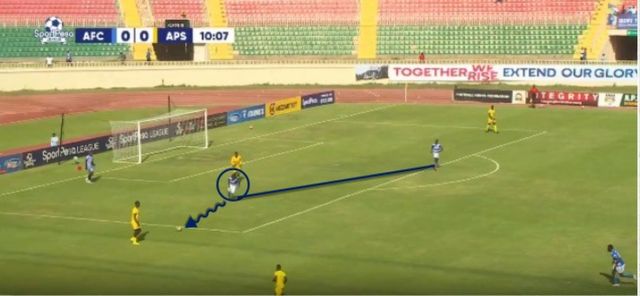
Otieno’s passing range is sharp and disguised, often executed with minimal backlift.
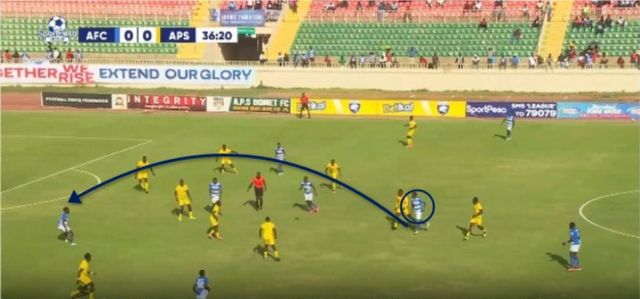
His one-touch combinations in transition accelerate attacking phases, particularly through third-man patterns on the flanks.
He drops deep at times to bait opposition pressure, then releases wingers into space - a classic pressing trap turned creative launchpad.
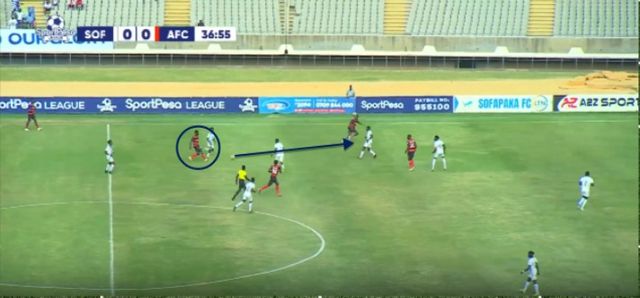
His psychological profile enhances his tactical value. Calm under pressure, fearless in risk-taking, he often sacrifices safe lateral passes for penetrative vertical options.

That willingness to attempt high-value actions sometimes lowers his raw passing accuracy, but it increases the probability of decisive moments.
His only notable limitation remains finishing consistency, particularly on his weaker left foot when arriving late into the box after a striker’s decoy movement.
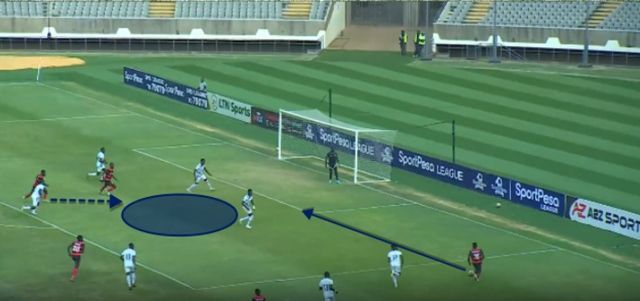
In essence, Otieno is a pure between-the-lines conductor - a tempo regulator who thrives in structured possession and controlled progression.
Bryan Michira: The Fluid Disruptor
Bryan Michira offers a more versatile, almost hybridized interpretation of the creator. While he too operates centrally, his positional flexibility distinguishes him.
For Shabana, he can drift from left wing to central half-space, even occupying centre-backs as a false nine. Where Otieno manipulates rhythm, Michira manipulates space.
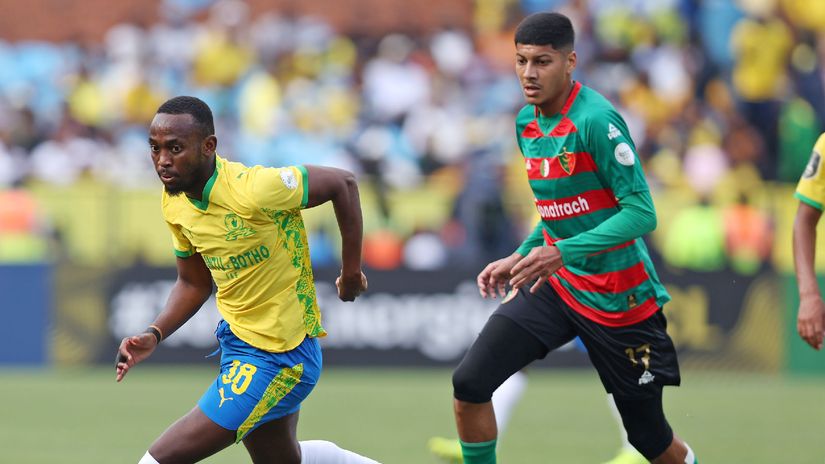
After a lengthy injury spell, Michira’s return - notably against Sofapaka - showcased his multi-dimensional threat.
In that game, he recorded 1.05 xG, completed all five dribbles attempted, passed at 81% accuracy, and won eight possessions back, though he lost the ball 13 times under pressure - evidence of his risk-heavy involvement in congested zones.
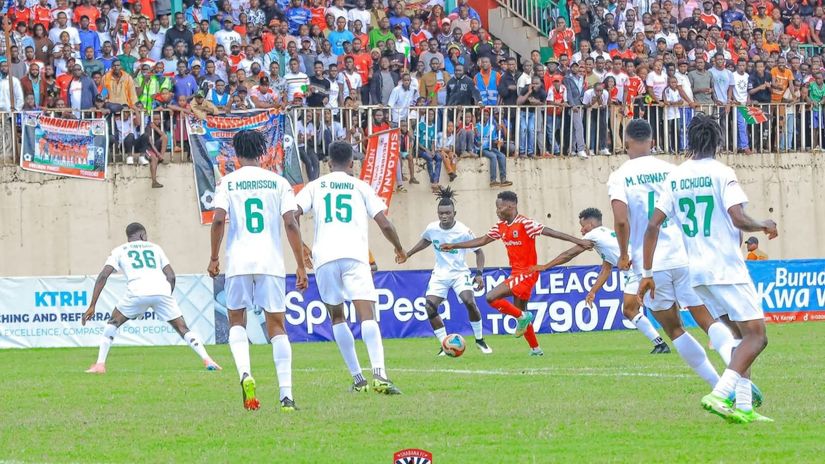
Michira excels in transition-heavy systems. His game is built on verticality. From the left flank, he attacks the full-back’s weaker side before cutting inside into the half-space.
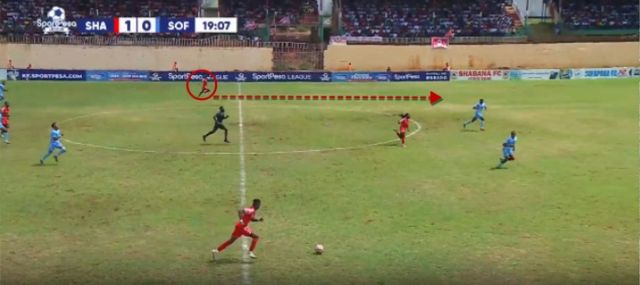
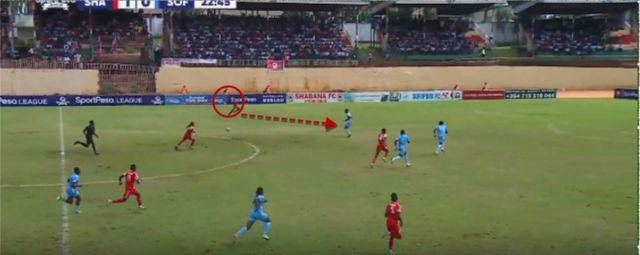
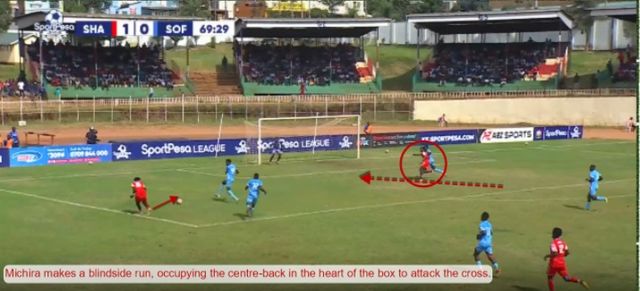
He times late runs into the central defensive corridor, arriving from blind spots to attack cutbacks or second balls.
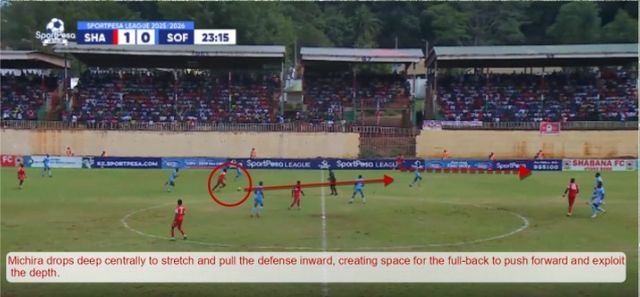
Unlike Otieno, who prefers orchestrating centrally, Michira stretches defensive lines first before collapsing them inward.
Physically, he brings more duel-winning capacity. He is comfortable in aerial contests and can provide hold-up play when deployed as a false nine, occupying two centre-backs and inviting runners beyond him.
That ability to blend depth and width adds tactical unpredictability.
Technically, he mirrors many creator traits: excellent first touch, creative passing range, quick scanning before reception. But his ball striking - especially on set pieces - gives him an additional edge.
His free-kick execution carries power and precision, and he is comfortable striking with his weaker foot, making him less predictable inside the box.
Michira’s leadership role within Shabana, even wearing the armband, reflects his psychological authority. He accepts responsibility in decisive phases, whether through progressive carries, defensive interceptions, or transitional triggers.
Structured Freedom vs Fluid Dynamism
The primary difference between the two lies in how their teams structure around them. AFC Leopards’ system gives Otieno controlled liberty - a stable platform from which he dictates possession and tempo.
Shabana’s more transition-oriented setup allows Michira to roam across multiple attacking channels, blending trequartista creativity with winger explosiveness and false-nine occupation.
Otieno is the architect in structured build-up. Michira is the disruptor in dynamic transition.
Both, however, embody the core responsibilities of the trequartista: receiving between lines under immediate pressure, creating chances through intelligent combination play, and delivering decisive final-third actions.
They scan constantly. They manipulate defensive shapes. They alter rhythm.
The Modern Kenyan Creator
Modern football has compressed central spaces through compact mid-blocks, narrow defensive spacing, and rigid positional structures designed to suffocate creativity between the lines.
Yet players like Tyson Otieno, Bryan Michira, Ulinzi Stars’ Boniface Muchiri, and Kariobangi Sharks’ Humphrey Aroko continue to prove that imagination still bends structure. Whether it’s a delicate half-turn under pressure, a disguised vertical pass through a congested lane, or an explosive carry through the half-space, they reawaken the spirit of the modern No.10 within Kenya’s tactical landscape.
As low-blocks and compact defensive schemes increasingly dominate, the premium on players who can unlock them will only rise.

Coaches in search of unpredictability will inevitably turn to intelligent central creators - footballers capable of balancing positional discipline with improvisational flair, capable of scanning, manipulating, and accelerating tempo in one seamless action.
In Tyson Otieno and Bryan Michira, we witness two interpretations of the same artistic blueprint: one a tempo-controlling maestro who orchestrates rhythm, the other a fluid spatial manipulator who destabilizes defensive shapes.
Together, they reinforce a timeless truth - systems may evolve, but imagination between the lines remains football’s most decisive currency.