


.jpg)
JKUAT Cougars rise to maiden Kenya Cup promotion under former KCB Rugby ace
.jpg)
.jpg)




Reading Time: 6min | Tue. 26.05.26. | 16:22
Now the challenge shifts toward survival in the Kenya Cup, where the physical and tactical demands rise dramatically
On cold, muddy Saturday mornings in Juja, when most university students were still asleep or recovering from a long week of classes and hustles, Smith Muhoya would stand quietly on the edge of the training field and observe.
The grass was soaked. Fog hung low over the pitch. Boots disappeared into wet patches of mud during fitness drills. Yet every player kept showing up.
Download our Mozzart Sport app for more news
Nobody complained.
For Muhoya, that was the moment belief stopped being theory and became something real.
“This would be in November of last year, when it was rainy and cold, and we had these fitness conditioning sessions on Saturday mornings,” he recalls.
“The entire squad kept coming in to train on a muddy, wet field in the fog. The team had decided what it wanted and was ready to put in the work for it,” Muhoya tells Mozzart Sport.
.jpg)
Months later, that commitment delivered one of the biggest milestones in Kenyan university rugby history.
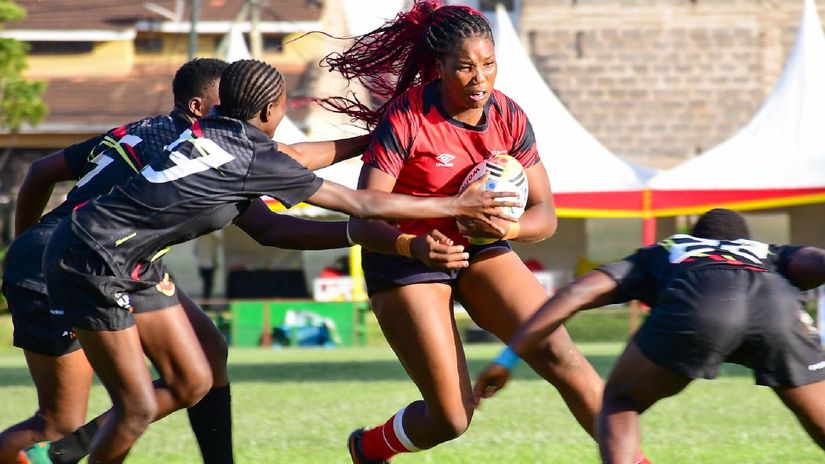
On April 18, Jomo Kenyatta University of Agriculture and Technology (JKUAT) Cougars secured promotion to the Kenya Cup for the first time in the club’s history after dismantling Homeboyz RFC 40-9.
For many rugby fans, it was a feel-good underdog story, but for Muhoya, it was the culmination of a dream that had survived for nearly two decades.
“It has been maybe a 20-odd-year-old dream to get JKUAT Cougars into the Kenya Cup. This was also a dream that was shared with me when we were admitted to the university way back in May of 2009,” he says.
Muhoya understands that dream better than most, having lived through almost every phase of the club’s modern journey. Long before he became head coach, before promotions, finals, and touchline pressure, he was simply another student trying to balance rugby with campus life.
His rugby journey took him through Mang’u High School, JKUAT, Kenya Harlequins, and eventually KCB Rugby, where he established himself as one of the country’s dependable fly-halves.
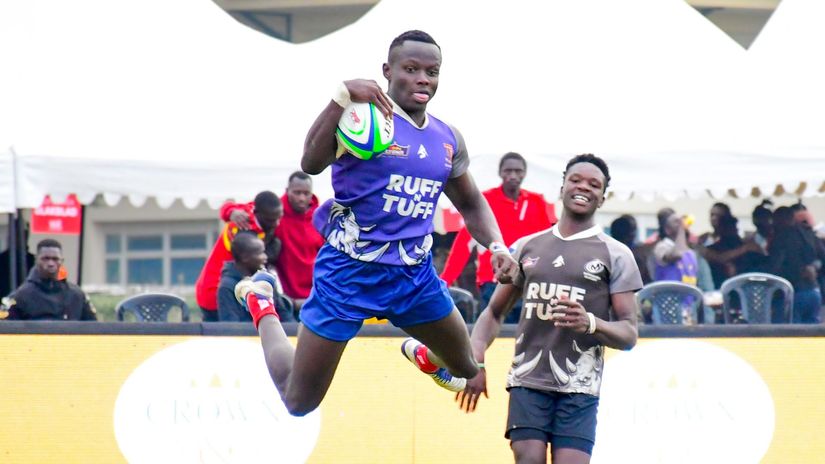
At KCB, he won the Kenya Cup and Eric Shirley Shield while building a reputation for composure, tactical awareness, and leadership.
Fly-halves are often rugby’s problem solvers. They manage tempo, organise attacks, absorb pressure, and make difficult decisions while everyone else is operating at full speed around them. Muhoya believes those years shaped the way he sees people and the game itself.
“As a fly-half, I have been able to see the game in a way most don’t see it. I see it more technically and tactically. It shaped how I coach because I don’t just want players to know the ‘what’ and ‘how’ of rugby. I want them to understand the 'why',” he explains.
Coaching entered his life gradually rather than through some carefully planned transition. In 2014, while still a university student and active player, Muhoya started coaching JKUAT’s 7s programme. At the same time, he was still actively playing 15s rugby for both the university and Kenya Harlequins.
The responsibility grew naturally from leadership.
He officially began his 15s coaching journey during the 2019/20 season as an assistant coach under Moses Muiruri. Ironically, that same period marked one of the darkest chapters in the club’s recent history.
In 2019, JKUAT Cougars were relegated to the KRU Nationwide. Like many university teams before them, they risked disappearing into the endless cycle that traps varsity clubs after talented players graduate.
For years, the Cougars drifted through the lower divisions trying to rediscover stability.
Nothing brings out the physical side of the game, than a close fought Final. A mega-hit in defense by the @jkuatcougars in the #KRUChampionship final. Don't miss out on the extended match highlights over on youtube at #xixsports #RugbyKE pic.twitter.com/tzRF2Js4a0
— sophisticated fruit (@dmango19) May 14, 2026
Then came the climb back.
The club earned promotion from Nationwide to the Championship during the 2023/24 season. Their first Championship campaign became a year of learning and adjustment. Their second season became the breakthrough.
Muhoya returned to the technical bench in mid-2023 as assistant coach under Newton Partet before taking over as head coach in January 2024. Today, he combines coaching duties with a player-coach role alongside assistant coach and former teammate Bramwel Kilwake, who oversees the forwards.
Behind the scenes, however, the project was far from glamorous.
Congratulations to the Juja boys @jkuatcougars on being the first runners up of the 2025/2026 #KRUChampionship pic.twitter.com/MZ3RIHCdGQ
— Kenya Cup (@TheKenyaCup) May 9, 2026
Resources were limited almost every step of the way. Being attached to a public university meant the team often had to survive on sacrifice rather than comfort. Players routinely funded necessities from their pockets.
“The biggest obstacle has been resources. The team members have had to make sacrifices and go the extra mile financially to make this happen. Buying their own medical equipment, such as strappings, training gear, balls, cones, and much more,” he says.
The realities off the field were equally demanding. Some players balanced lectures and exams while others juggled work schedules and side hustles to survive financially. Instead of allowing those pressures to fragment the squad, the team built support systems around each other.
“We have a buddy system where we ensure everyone is doing well off-field with either their studies, work, or hustles,” he says.
.jpg)
That sense of brotherhood became the foundation of everything.
It was also heavily influenced by Muhoya’s own experiences at Kenya Harlequins and KCB Rugby, where he learned that successful teams are usually built on relationships before results.
“The team was driven by brotherhood, and the results didn’t come first. It was your teammate who came first, and if this relationship was okay, the results would follow,” he offers.
Inside the Cougars' dressing room, belief slowly replaced doubt. While outsiders questioned whether a university side could truly survive the grind of promotion chasing, the players focused inward.
“There were many doubters. But within the group, we believed that we had put in the work and made the sacrifices for each other. I told the team that it is we who will make this happen, not those on the outside,” he tells Mozzart Sport.
The squad’s core leadership group also helped change the culture around the team. Senior players chose continuity over convenience, staying to mentor younger teammates and stabilise the system instead of leaving at the first opportunity.
“The main difference is the resolve. Players such as Tosh, Masinga, Ojuok, Wekulo, Phil, Mikey, Manyara, and many more stayed with the team and helped develop the younger players coming up the ranks.”
The growth became visible not only in 15s rugby but also in sevens. In September last year, Muhoya attained World Rugby Level Two 7s coaching accreditation under respected rugby educators Nicolas Abok and Paul Odera. He says the experience sharpened his session planning, communication, and tactical management.
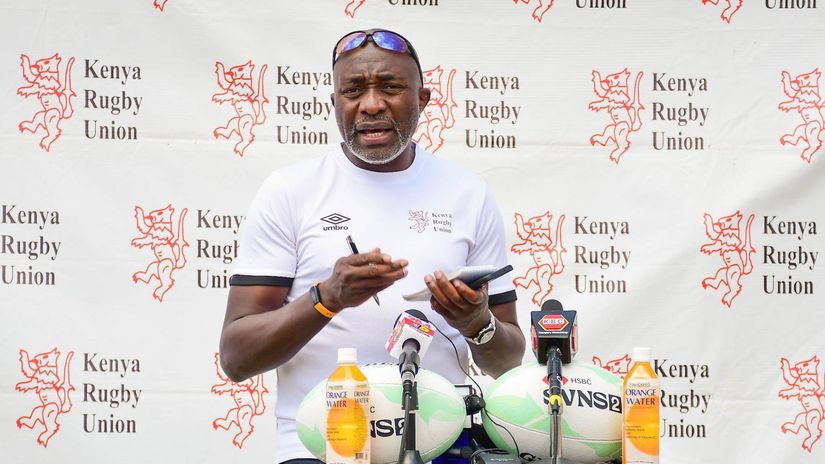
Months later, JKUAT won the Federation of African University Sports Rugby 7s (FASU) 7s title.
Then came the promotion push that changed the club forever.
.jpg)
Even after sealing their Kenya Cup slot against Homeboyz RFC, the Cougars still showed they belonged among stronger opposition. In the KRU Championship final against Mwamba RFC at the Goan Institute, they pushed one of Kenya’s established rugby institutions to the brink before narrowly losing 34-33 after late Mwamba tries and a decisive penalty.
Painful as the defeat was, it reinforced a bigger message.
JKUAT Cougars were no longer simply visitors in serious rugby conversations.
Now the challenge shifts toward survival in the Kenya Cup, where the physical and tactical demands rise dramatically. Muhoya already knows what needs improvement: strength and conditioning, execution, set-piece quality, and squad depth.
Still, even with promotion secured and expectations growing, his personal definition of success remains surprisingly simple.
When asked what he hopes people say about his role in this story a decade from now, he does not mention trophies, recognition, or legacy.
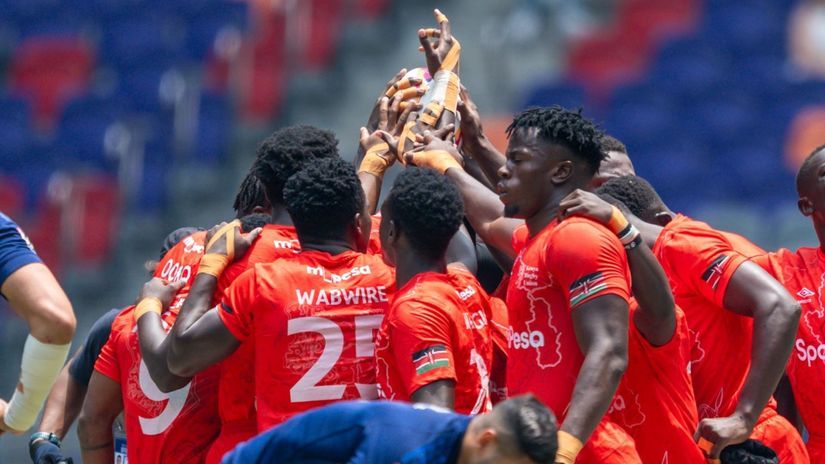
“Nothing much. Just that I cared for the players, I gave them everything I could, did my best to bring out the best in them and make their dreams a reality,” he says quietly.
For Muhoya, that has always been the point.
Not just building rugby players.
Building family.