


Helena Duplantis shares Insights and lessons from raising record breaking son

.jpg)
Reading Time: 3min | Fri. 26.09.25. | 19:54
She has been by her son’s side from his first steps right up to his winning vault in Tokyo, where he broke the world record for the 14th time with a clearance of 6.30m
She may no longer compete, but she now wins medals of a different kind.
Follow our WhatsApp channel for more news
Helena Duplantis, the coach behind one of the most decorated athletes in recent years, Armand Mondo Duplantis, has been by his side from the World Athletics Championships in Oregon back in 2022, when he claimed his first world pole vault title with 6.21m, to Tokyo, where he set his 14th world record at 6.30m.
A former heptathlete from Sweden, who came to coaching by accident when she realised that the exceptional athletic abilities of her four children were in danger of foundering for a lack of access to expert coaching in Lafayette, where they live, she has supported her son’s journey from his very first steps, first as a mother, and later as his coach.
.jpg)
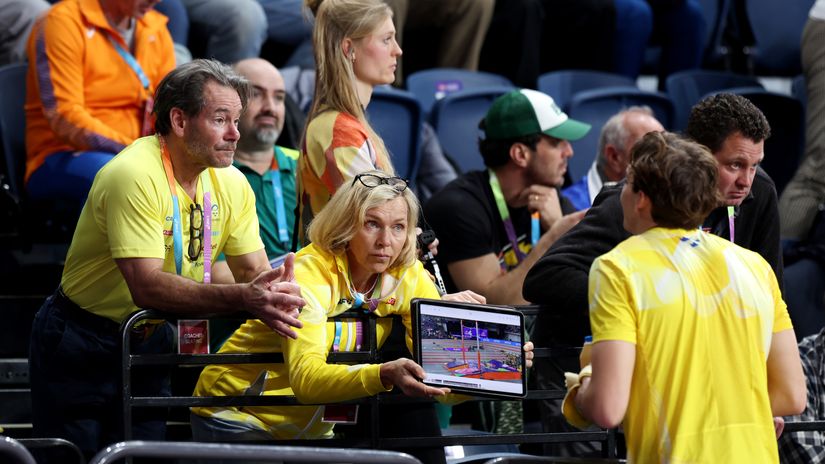
As coaches, teachers, and sports decision-makers came together once again for the Coaches’ Club during the World Athletics Championships in Tokyo, Helena shared her perspective, tips, and lessons from guiding elite athletes.
“You can tell the world about your aspirations and goals, even if they sound a little out of the box,” said Helena, reflecting on what she has learned from coaching her son over the years.
She grew up in Sweden in an environment where everyone was expected to blend in.
Standing out or showing confidence sometimes felt out of place.
She describes this mindset with the Swedish word ‘lagom’: not too much, not too little.
“Being average is not good enough and you can be vocal about it,” says the former heptathlete, who represented Sweden at the international level.
Mondo, the two-time Olympic pole vault champion, grew up in Louisiana, where Helena had moved at 20 to study at the State University.
There she met pole vaulter Greg Duplantis, who later became her husband.
Both former athletes, Helena and her husband Greg, were determined not to repeat the mistakes of their own careers when guiding their son.
“I was built pretty thin, and our coach wanted us to bulk up,” recalls Helena. “I was doing low-intensity but high-volume workouts.” Those experiences shaped the careful, individualised approach she has applied with Mondo.
The mother-of-four offered another simple insight into their training philosophy: “Do not make it more difficult than it already is”.
Greg believes that physical conditioning alone is not enough; in pole vault, technical work must progress alongside strength and speed because the event is so unique.
“The stronger and faster you get, the more your pole selection changes,” explains Helena. “You ca not just show up after two months without vaulting.”
The pair, who have nurtured a record-breaking athlete redefining the limits of his discipline, have also guided other vaulters. “You really have to have the drive to want it. I do not always see that in others. When they do not jump well, it does not seem to affect them as much.”
That principle is captured in one of Helena’s favourite sayings: ‘If losing doesn’t hurt, winning doesn’t matter’.
“He absolutely hates to lose and loves to compete, no matter what it is,” Helena says of Mondo, who seemingly thrives under pressure. But reaching the top requires more than just competitiveness.
In case you missed it 👀
— World Athletics (@WorldAthletics) September 15, 2025
6.30m 🤝 @mondohoss600 #WorldAthleticsChamps pic.twitter.com/BCIJQQ1V0X
“In pole vault, you have to be fearless and confident,” she says, stressing the importance of overcoming the fear of planting the pole. “You have to select the right pole for the right height and conditions, and be fully confident in it.”
Helena has been by her son’s side from his first steps right up to his winning vault in Tokyo, where he broke the world record for the 14th time with a clearance of 6.30m. But her guidance goes beyond technique; she has also instilled values that transcend sport.
“Respect for competitors, coaches, and officials,” she says. “It’s important to just be a good person.”
Additional Reporting by World Athletics