


 T. Nashipae
Tecla Chemabwai Sang: The story of the first woman to represent Kenya in the Olympics




.jpg)


Reading Time: 7min | Wed. 15.02.23. | 14:30
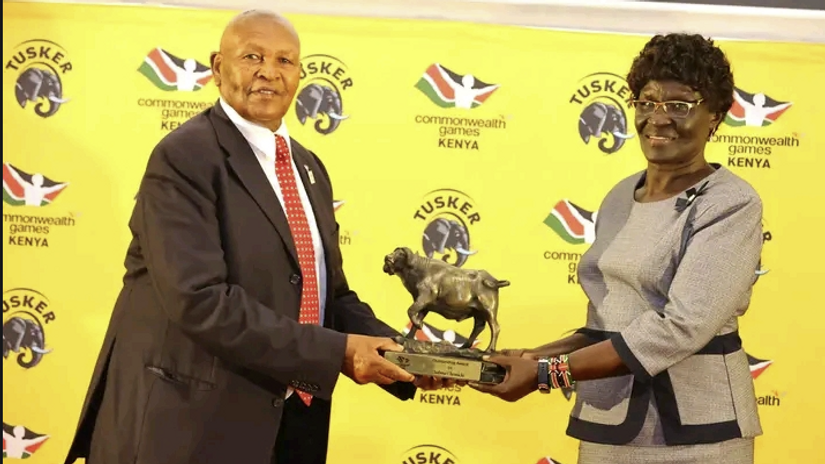
Tecla Chemabwai Sang was the first woman to represent Kenya in the Olympics at just 13 years old in 1968.
It is Woman Crush Wednesday (WCW). Today we celebrate the woman who broke the ice as the first woman to participate in the Olympics in Kenya.
When people hear of the first woman to represent Kenya in the Olympics, lots of questions are asked, is she alive, where is she, what does she do, how does she look?
Mozzart Sport embarked on a journey to look for this history-maker, who challenged all the obstacles en route to glory and broke cultural norms to rightfully win everything that is there to win.
Background roots
Tecla Chemabwai Sang was born in 1956 in Chepkunyuk, Nandi County. While in primary school, Tecla would cover at least 22km daily on her way to school and back and she credits her resilience to those days.
Here is one statement from Tecla that paints the picture of how resilience and toughness were built in her.
“I remember one time when I woke up thinking I was late, but it was the full moon. Upon looking outside, I saw it was bright and I started running to school. There were many wild animals along the way but I kept running.”
She adds: “When I reached the school, there was no one. So, I went to the toilet because the classrooms were locked. I stood there for a very long time, I think I reached the school at midnight, and I stayed in the toilet until morning when people came. You can now understand how resilience was built.”
She started as a footballer and back then there were not many games for the girls. She would then graduate to play volleyball and netball before turning to athletics.
Major breakthrough
Kenya participated in the Olympics for her second time in 1968, just in time for Tecla’s international debut. There were ‘qualifying standards’ back then in 1965, and athletes were gauged using the East Africa Championships.
Tecla qualified alongside two other ladies who were Lydia Stevens and Elizabeth Chesire and they were taken to Thompson Falls for training before the major event. To Tecla, all that mattered to her was boarding a plane, since she had only seen it over her head previously.
Back then, minors were not given passports, and the state had to lie that she was 18, not 13 for her to get a visa to fly to Mexico for the 1968 Olympics. This might explain why people think she is 71 years old now, but she is only 67.
In Mexico, she was unfortunately eliminated as she came in at position four, but she was young and inexperienced, so the loss did not really matter to her.
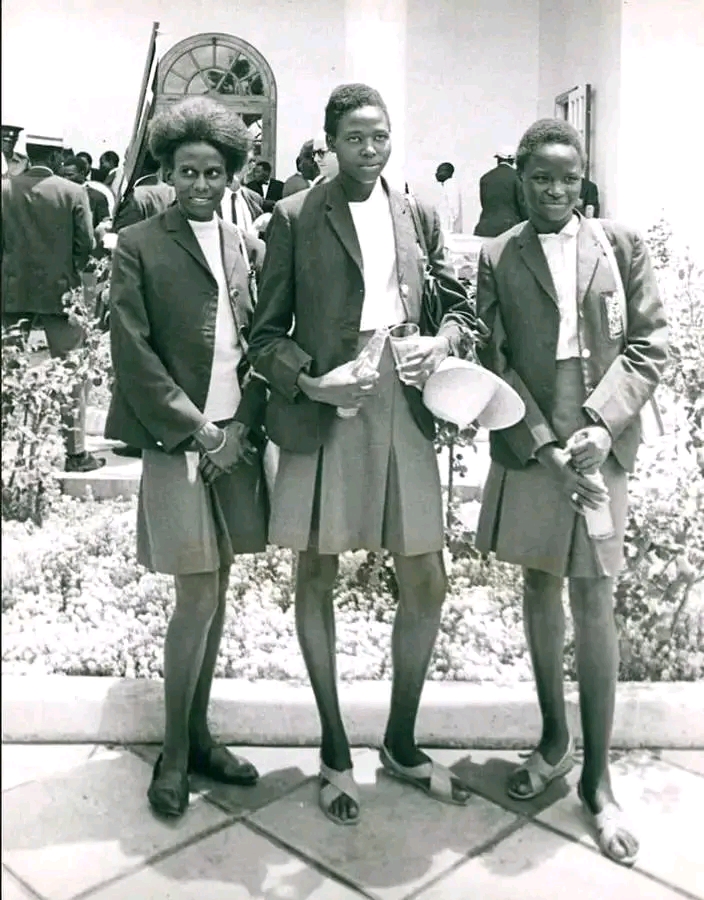
Courtesy
In 1972 however, she was experienced enough as she was in high school, and under the guidance of games teachers. Despite being eliminated again in Munich the same year, Tecla had run the best Kenyan time of 53:6 at the age of 17 years. She won all the All-African Games that she participated in.
In 1976 when she was in Australia, Tecla met a lady coach who saw her potential as an athlete. The coach’s name was Dorothy Richie. Richie advised her to shift to middle-distance running since there were many sprinters in the US, and Tecla would not get a chance as a sprinter. She would then qualify for the 1976 Olympics in Monroe, but Kenya pulled out due to apartheid in South Africa which saw all African countries pull out of the competitions to support South Africa.
In 1978, she was at the peak of her career. She flew back to Kenya for the Commonwealth Games, and for the first time, she was on the podium for a major achievement, and the National Anthem was played in her honor.
Professional background
Being a teacher by profession, Tecla joined the Rift Valley Institute of Science and Technology in Eldoret as a Dean of Students. It was then that she met Tecla Loroupe who was her mentee. Loroupe is a long-distance track and road runner who holds world records for 25 and 30 kilometers and previously held the world marathon record. She then joined Mosoriot Teachers College as a tutor for physical education where she taught before joining Moi University in 1988 where she introduced a Department of Sports that is still functional to date. She then retired in 2020 following the COVID-19 pandemic.
But how have athletics changed since then?
Athletes are no longer valued like in the past
In the past, when athletes won in competitions, they would be displayed in all the provinces (which have now devolved into counties) and would be entertained by locals while being displayed on land cruisers and vans, similar to the treatment politicians get these days.
“At that time, sports in Kenya were so good. When we came back with a win, we’d be entertained from Mombasa to Rift Valley to Nyanza, and Kenyan people were so excited whereby we’d go to each town and we were being displayed on land rovers, and we went round the city and around the town, and people would line-up. It is not like now when athletes come back, return the flags, and everybody goes their way. We were out for almost two months, and in every town we went we were given presents.”
Running is now commercialized
Unlike in the past when athletes ran to represent their districts and provinces, today athletes run for the money.
In addition, Tecla says that back then, they would be paid Kshs3 for home games and Kshs7 for away games, which she saved to almost Kshs6,000 which bought her land in Kapsabet.
“Everybody now wants to run because there is money. It is now a business. One spends an hour, and money is there. It is not like in the past when they were training to represent the District Commissioner, Provincial Commissioner, people are now running to see how much they can make in the race.” Tecla states.
Technology is now improved
Back then, technology was so poor, and there were no timekeeping devices like phones and watches. For instance, even if there was a full moon and it looked like daylight already, Tecla could not know the time because there were no devices, and she ran to school at midnight when she could be asleep.
“Now there is a lot of technology which has come in.”
There are also spikes in shoes that fasten speed, which were not there in the past.

What should change in athletics today?
She urges coaches to train the athletes mentally for the game. Citing her own example, Tecla says that she lost major international competitions because she was competing with white people, and she saw them as way more qualified than she was.
According to the Olympian, if her coaches had mentally prepared her to overpower the white people, she would have had the best career.
She also calls upon the coaches to identify the inclinations of athletes at a tender age, so as to not only nurture the talents but also the inclinations.
What does she do today?
Tecla is the director of Chemabwai Sang Educational Center which is based in Eldoret. She is also a farmer and herder. In addition to that, she manages her late husband’s property. Her husband, Julius Sang died on April 9, 2004, and was a 4 by 400 relay race winner at the 1972 Summer Olympics in Kenya. He also took a bronze medal in the individual 400-meter race. She has also invested in real estate.