


FKF official reveals Arsène Wenger’s concern over Africa’s untapped football talent
.jpg)
Reading Time: 4min | Sat. 16.05.26. | 19:27
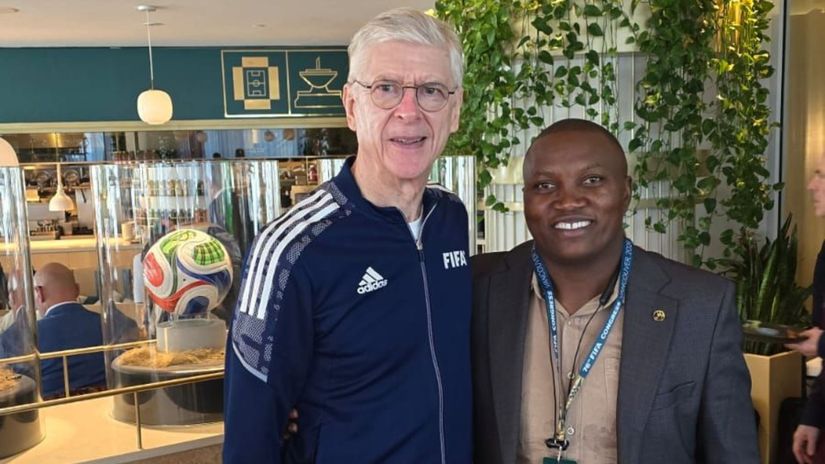
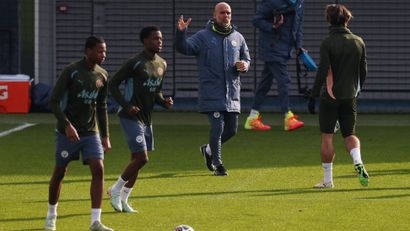
Wenger, currently serving as FIFA’s Chief of Global Football Development, delivered a detailed presentation during the congress touching on talent development, infrastructure, youth academies and the “Football Unites the World” initiative
Football administrator and FKF Eastern Region NEC member Charles Njagi Njoka has revealed what legendary former Arsenal manager Arsène Wenger believes is holding back the development of African football despite the continent’s immense talent pool.
Download our Mozzart Sport app for more news
Njoka, who spoke exclusively to Mozzart Sport after attending the 76th FIFA Congress at the Vancouver Convention Centre in Canada alongside FKF President Hussein Mohammed, said Wenger remains deeply invested in Africa’s football growth through FIFA’s development structures.
Wenger, currently serving as FIFA’s Chief of Global Football Development, delivered a detailed presentation during the congress touching on talent development, infrastructure, youth academies and the “Football Unites the World” initiative.
According to Njoka, the French tactician believes Africa’s biggest challenge is not talent shortage, but the lack of proper systems and structures to nurture and transition players.
“You realise people like former Arsenal coach Arsène Wenger believe there is so much Africa still needs to do in terms of developing new programmes and growing football,” Njoka told Mozzart Sport.
“Wenger believes Africa has a lot of talent that is not tapped properly because we lack the right systems for player transition and development.”
During his 22-year spell at Arsenal, Wenger became renowned for identifying and nurturing African talent, handing opportunities to several players from the continent, including Liberian legend George Weah, the last African player to win the Ballon d’Or.
Njoka, who doubles up as 3K FC chairperson, further disclosed that the seven-time FA Cup winner expressed concern over the quality of infrastructure available to young African players compared to what is accessible in Europe.
🌍 Africa’s first and only Ballon d’Or winner, King George Weah on Arsène Wenger:
— Gooner Chris (@ArsenalN7) October 2, 2025
When racism was at its peak, Arsène Wenger took care of me like his son. He taught me that black and white guys can live together. He’s a father figure.
Every time I was on the field, I was ready… pic.twitter.com/qFmFP5eKs9
“Even at the congress, they spoke about the amount of money FIFA is allocating towards infrastructure and development programmes to ensure children under the U13, U15 and U16 categories have proper places to train and quality playing surfaces,” he explained.
“You realise that is where we fail. The pitches children train on in Europe are different from what we use here, and even the passes they make are different because of the surfaces.”
He added that the football great is pushing for more resources to be directed towards African countries to improve football infrastructure and create better pathways for local talent.
“He is lobbying for more resources to be channelled to African countries so that football infrastructure can improve. Once the infrastructure improves, it becomes easier for local talents to be exposed internationally,” he added.
FIFA currently supports its 211 Member Associations through the FIFA Forward Programme, with each federation entitled to approximately Ksh1 billion over a four-year cycle to support operations, infrastructure and youth development initiatives.
Out of that allocation, nearly Ksh390 million is specifically reserved for targeted development projects, while the rest caters for operational and travel expenses.
Spent the day at the new FIFA regional office in Rabat 🇲🇦 to learn more on stuff like the Forward Programs and funding to federations like FKF.
— Eric Njiru ⚽️ (@EricNjiiru) January 8, 2026
The office in Rabat is the only FIFA office located in Africa to support the development of football on the continent.#AFCON2025 pic.twitter.com/JyYXwmIJA4
In Kenya, a significant portion of the funding, estimated at around Ksh600 million, is being invested in the construction of a Technical Development Centre in Machakos.
The facility is expected to include three football pitches, accommodation and administrative offices to support both youth and senior national teams.
Federations can also access additional support through FIFA’s Talent Development Scheme, which offers specialised consultancy services and annual funding of approximately Ksh6.5 million to strengthen youth scouting and player development structures.
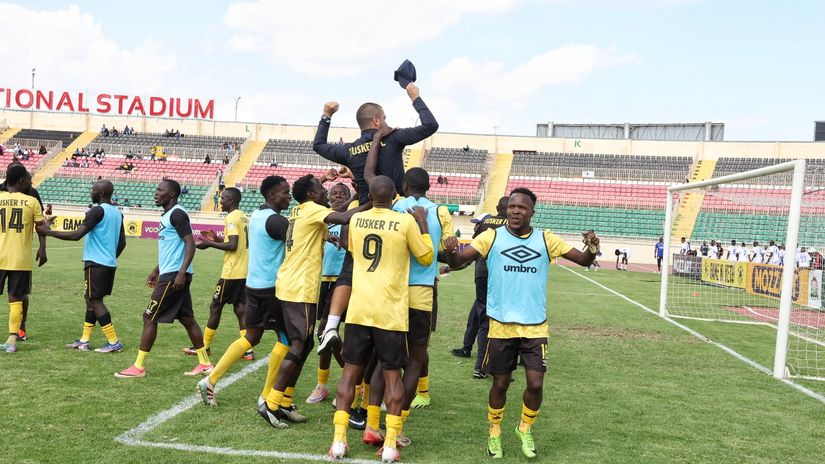
Beyond development matters, the chairperson, who is about to lead his side to the top tier, noted that one of the biggest lessons from the FIFA Congress was how seriously sports is treated as a business and community movement in other parts of the world.
“I think people need to appreciate that sports is a movement. In many countries, communities fully embrace sports and support their local teams,” he said.
“Corporate companies come in numbers to support community clubs and become part of the support base. One unique thing I realised is that while some people here take sports casually, elsewhere it is serious business.”
.jpg)
The administrator also pointed to the global media attention the FIFA Congress attracted as proof of football’s commercial and social power.
“You could even see media people travelling from different countries just to be part of the congress because they understand its importance. Sports can unite communities and create a common purpose,” he concluded.