



How much National Super League clubs spend per season



.jpg)

Reading Time: 3min | Thu. 18.12.25. | 20:36
Despite its significance in the Kenyan football pyramid, the NSL has long struggled with inadequate sponsorship, a situation that has made running clubs increasingly difficult
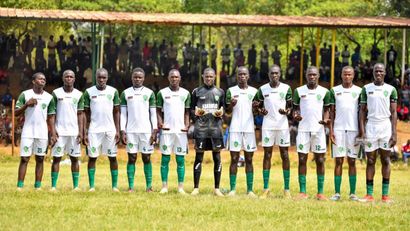
The National Super League (NSL) sits just below the FKF Premier League and serves as the main pathway to top-flight football in Kenya.
Follow Our WhatsApp Channel For More News
The second-tier features 20 teams, with three now earning automatic promotion to the Premier League at the end of the season, while four will be relegated to FKF Division One.
Despite its significance in the Kenyan football pyramid, the NSL has long struggled with inadequate sponsorship, a situation that has made running clubs increasingly difficult.
Over the years, the league has often been viewed as semi-professional, with frequent walkovers, team withdrawals, and slot mergers highlighting the financial strain faced by clubs.
The challenges have raised questions among fans and stakeholders about the actual cost of running a team in the NSL.

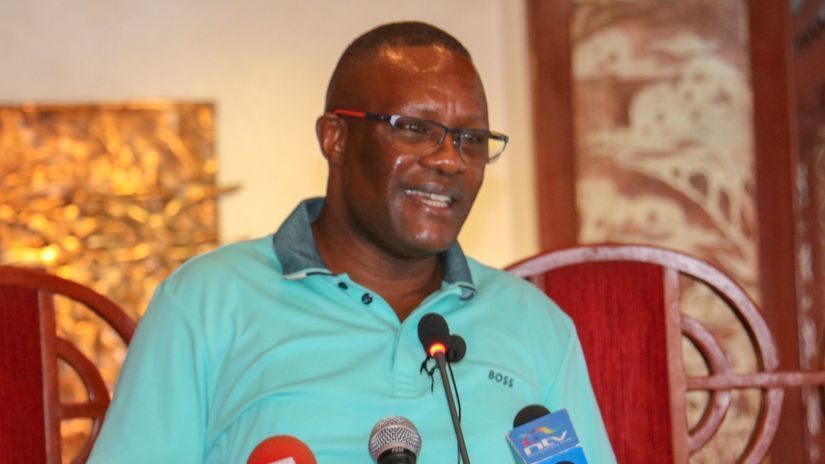
Speaking to Sporty FM, Migori Youth team leader Aziz Osman described the NSL as one of the most expensive leagues to contest in the country.
Aziz, who has over a decade of experience managing teams in the second tier, has heavily invested in Migori Youth since taking charge of the club in 2016.
Despite competitive performances over the years, financial constraints have repeatedly stalled the club’s push for promotion.
According to Aziz, most NSL teams cannot afford to pay monthly salaries due to limited revenue streams.
Instead, clubs rely on match allowances and performance bonuses, costs that quickly accumulate over the course of a season.
“In the NSL, about 80 per cent of teams do not pay salaries. They mostly give allowances and sporting bonuses, which means a club needs around Ksh6 million to Ksh7 million per season,” Aziz explained.
He added that match-day expenses, especially for away fixtures, pose the biggest challenge, largely because of the league’s wide geographical spread.
The NSL includes teams from nearly every region of the country, forcing clubs to travel frequently to places such as Mombasa, Bungoma, Central Kenya, Nyanza, and Western Kenya, far more than in other domestic competitions.
“Per match day, a team needs around Ksh150,000 for an away fixture in Nairobi and more than Ksh250,000 for a match in Mombasa,” Aziz said.
“It is a very expensive league, and teams are struggling a lot. It is high time the NSL got a sponsor.”
Aziz pointed out that transportation costs remain the single biggest burden for most clubs and expressed hope that, in the future, NSL teams will be able to own buses to ease the strain.
“I think one thing people don’t know is that, in terms of transport, the National Super League is the most expensive league in Kenya,” he noted.
“In the FKF Premier League, you might travel to Mombasa once in a season. In the NSL, you go there at least twice. Most FKFPL teams are based in Nairobi, so a team like Nairobi United can go even two months without travelling.”
He highlighted Migori Youth’s recent travel demands as an example.
“In the last two months, Migori Youth have travelled to Nairobi almost every weekend. You go to Kakamega, Bungoma, Kisumu, and Mombasa three times. It is very expensive,” Aziz said.
“If teams had their own buses, it would make things easier. That is my dream, to see a day when all NSL teams own buses.”