


"I still feel sorry for Wirtz joining Liverpool"





.jpg)
Reading Time: 4min | Thu. 25.09.25. | 10:56
Bayern executive still cannot get over Wirtz and Woltemade's transfers to England
Karl-Heinz Rummenigge, a man who for decades has been one of the most recognizable faces of Bayern, is once again at the center of attention in the German and European football public after openly criticizing the transfer policy of Liverpool and Newcastle, while also indirectly sending a message about Bayern’s changed position in modern football. His words resonated especially strongly because, in just a few sentences, they summed up both the frustration over lost football gems and a reminder of the traditional Bavarian philosophy of running the club, but also a slight contradiction showing that even Bayern is no longer immune to market pressures.
Rummenigge on the failed moves for Wirtz and Woltemade: "In the case of Florian Wirtz, it still hurts. He would have been better off at FC Bayern than at Liverpool. We could have signed Woltemade. But FC Bayern are wise enough not to engage in every kind of financial madness" pic.twitter.com/cqYzqLizKz
— The World Sport (@TheWorld_Sport) September 24, 2025
Speaking to Germany’s ‘Welt’, Rummenigge was blunt in saying several particularly interesting things:
“I have to honestly say, I still feel sorry for Florian Wirtz because I think the player would be better off at Bayern Munich than at Liverpool.”
His sentence echoed disappointment after Liverpool spent 136 million euros (including bonuses) to bring in the biggest jewel of Bayer Leverkusen, despite months of speculation in the German press that Wirtz would end up at the Allianz Arena. So far, Wirtz has no goals or assists in the Premier League or Champions League, which has further fueled comments that perhaps he went to England too early.
🚨 𝗖𝗥𝗔𝗭𝗬 𝗙𝗔𝗖𝗧: André Onana has more direct goal contributions than Florian Wirtz this season. pic.twitter.com/RyI7pSaAuC
— The Touchline | 𝐓 (@TouchlineX) September 21, 2025
Another topic Rummenigge touched on was the transfer of Nick Woltemade from Stuttgart to Newcastle. Bayern wanted the tall center-forward as an alternative to Harry Kane, but the English side paid 80 million euros and brought him to St. James’ Park, where he immediately scored on his debut. Rummenigge was very direct:
“We could have signed Woltemade. But I also have to say this: Bayern should think carefully about whether to follow every financial madness. In fact, I even think it’s great that Bayern doesn’t participate in such transfer madness.” What adds another layer to his words is the fact that this June Bayern themselves signed Luis Díaz from Liverpool for almost the same amount, 65 million. That’s why many in Germany believe Rummenigge’s words reveal more bitterness over losing German talents than consistent economic logic.
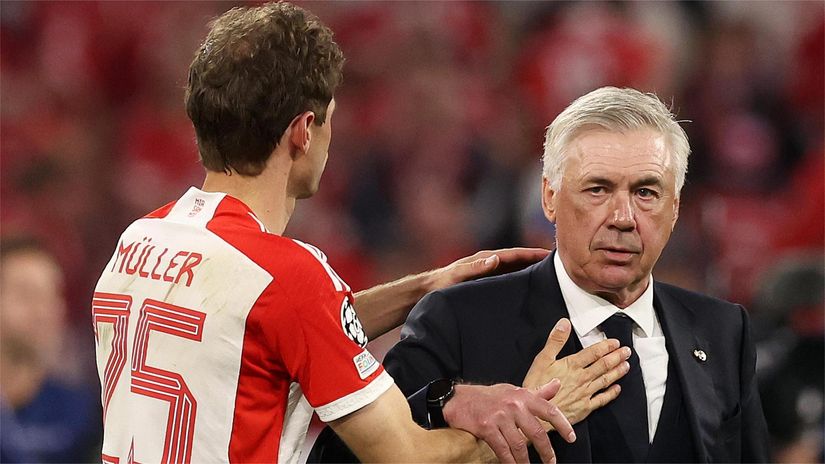
Still, Rummenigge wanted to emphasize the club’s philosophy:
“I’ve always said: we want sporting success, but, please, with serious and solid financing. We have a top-class team. We’ll be back again this year. And when our three injured players, Jamal Musiala, Alphonso Davies, and Hiroki Ito, return soon, then we’ll have a great squad.”
Wirtz himself, although under pressure, remains calm and sent a clear message to the German media:
“Of course, I would love to have already scored a goal or registered a few assists. But regardless of what anyone says, I keep a cool head. I don’t want to keep hearing ‘give him time, give him time.’ Instead, I try to play better each time than before. I know how good I am, and I’m convinced that the numbers will get back to normal.”
Unlike him, Woltemade has had a brilliant start in the Premier League, scoring immediately, while Bayern were left empty-handed and in the end brought in Nicolas Jackson on loan from Chelsea as a temporary solution. All in all, Rummenigge’s words reveal a kind of bitterness and nostalgia. Bayern is still a club that wins trophies, but no longer has a monopoly over German gems. Wirtz and Woltemade chose a different path, and the reactions from Munich—no matter how much they are presented as rational market analysis—carry the tone of offense and a sense of lost control. In that sense, Rummenigge not only criticized rivals but also indirectly admitted that Bayern has entered an era in which it will have to fight much harder for talents, not only with sporting arguments, but also with financial and emotional ones.