


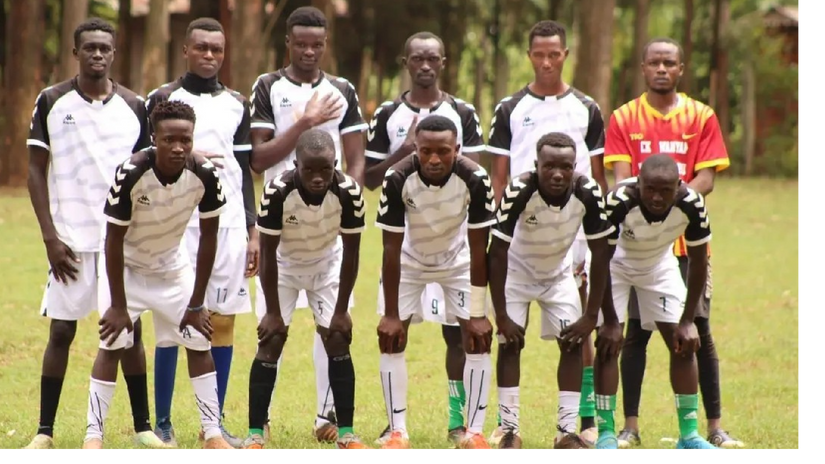
Inside Kiminini Premier League's rise from improvised friendlies to structured competition



.jpg)





Reading Time: 7min | Mon. 01.06.26. | 14:50
What started as a handful of friendlies has grown into one of Kiminini's most ambitious football projects in just over a year
What began as frustration with broken trust in structured football has, in just over a year, evolved into one of Kiminini’s most ambitious grassroots sporting projects.
The Kiminini Premier League was never born out of luxury or long-term planning in a boardroom.
Download our Mozzart Sport App for more news
It emerged from necessity, urgency, and a shared belief that local football could function better if the community took control of its own destiny.
When Eclip Wandela, the league’s Matches and Fixtures Coordinator, reflects on January 2024, he does not describe a polished launch or a fully equipped committee.
Instead, he describes uncertainty.
Only a handful of teams were willing to commit at first, forcing the organizers to start with improvised friendlies before anything resembling a formal competition existed.
“At the beginning, we had no structure,” explains Wandela. “We just knew we could do it better.”
That conviction was shared by co-founders Bramwel Kakai, who served as treasurer, and Wandela himself, who stepped in as secretary and fixtures coordinator.
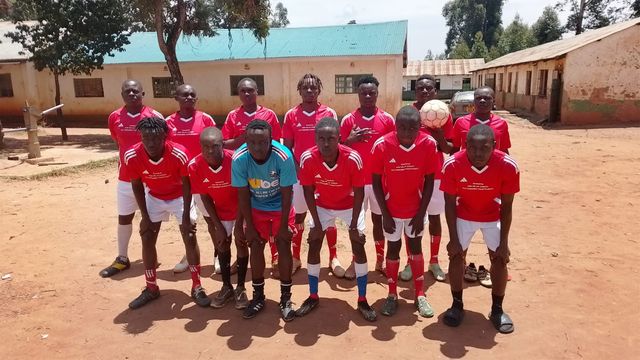
The early days were built on trust between a small group of football enthusiasts who believed that Kiminini’s football ecosystem had been neglected and poorly managed under previous systems.
“We had talked to every team and not many teams had given us an assurance, so the first week we did it like friendlies,” recalls Wandela.
In those first weeks, only four teams were fully committed to the idea of a league.
Royal Bullets FC, Milele Warriors, Small Tiger, and Kiminini Rangers became the unlikely foundation of what would soon grow into a structured competition.
Fixtures were arranged on the fly, a table was created informally, and matches were played not as a grand tournament but as proof of concept.
From those modest beginnings, momentum began to shift.
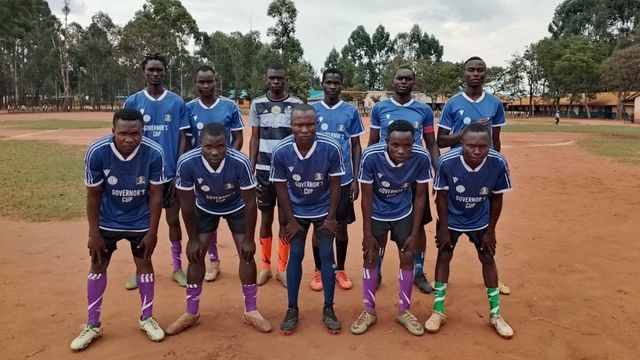
The idea behind the league was never just administrative reform. It was deeply rooted in football culture in Kiminini, where talent is abundant but opportunities are inconsistent.
Wandela points to players such as David Sakwa, who now features for KCB FC, and Kevin Bulimo of MOFA, as examples of homegrown talent that validated what many already knew; Kiminini was producing quality footballers, but lacked a consistent platform to nurture them.
“We have a lot of talent but many boys wait for tournaments only in December and that’s when they start playing,” he explains.
For years, many young players relied on December tournaments as their only competitive outlet.
Once those tournaments ended, football activity would slow down, leaving a long gap before the next cycle of play.
The league was designed to change that rhythm entirely.
“We wanted something that keeps players active locally,” says Wandela. “Even if it won’t be expensive like that of the federation.”
That consistency proved to be the turning point.

What started as a small experiment quickly attracted more teams, growing beyond expectations.
Within a short time, participation expanded to more than twenty teams, transforming the league into a serious community competition rather than an informal gathering of friendlies.
Yet the growth did not erase the structural problems that had inspired its creation in the first place.
In fact, those challenges became part of the league’s identity.
“We looked at something that will engage them locally, so we came up with this small local league with mostly young players.”
Leadership was initially informal, and even as structure developed, the league continued to rely on volunteer-driven administration.
Fixtures had to be carefully coordinated, especially because multiple teams shared playing fields.
Wandela’s role became central in ensuring that matches were organized smoothly across a growing calendar of fixtures.
The league adopted a straightforward home-and-away format, a decision that mirrored more established football systems.
Each team plays both legs of the season, hosting matches on its own designated ground.
Registration is opened annually between November and January, allowing new teams to join while maintaining an open-door philosophy.
That inclusivity has allowed the league to expand across Kiminini’s six wards, with strong participation from areas such as Nabiswa, Kiminini and Sikhendu.
Over time, the league has even attracted teams from outside the constituency, including neighboring regions, signaling a growing reputation that extends beyond its original boundaries.
“We don’t handpick teams,” says Wandela.
“Those interested join and register and we sit down and make all the fixtures.”
Despite this expansion, the league maintains a clear stance; participation is open, and no team is handpicked.
Any interested group can register and be included in the fixtures.
It is a system built on accessibility rather than exclusivity.
Still, operating outside FKF affiliation comes with consequences.
Funding is limited, resources are scarce, and the league has had to develop its own internal systems to function.
Referees are sourced and nurtured locally, with teams contributing small fees to facilitate officiating.
It is a model that prioritizes sustainability over professionalism, but it is far from without strain.
“We don’t pay referees like the federation does,” explains Wandela. “We nurture our own referees and whatever we pay them, they are satisfied.”
Challenges remain persistent. Many teams struggle with basic equipment such as balls and kits.

Sponsorship is inconsistent, and at the end of the season, limited resources mean that prize distribution is often symbolic rather than substantial.
Yet for the organizers, the absence of heavy funding has also reinforced the league’s communal identity.
“We are actively looking for a sponsor who can come in and help in any way possible,” he admits.
Even in the face of these limitations, the league has begun to produce tangible results. Players have progressed into FKF competitions, including Division One football.
Others have earned trials in Nairobi or secured opportunities in vocational institutions through sports exposure.
For Wandela and the leadership team, these outcomes represent the most important measure of success.
“We encourage players to go out and try out there,” he says. “We don’t want to have good players in their prime just playing this local league.”
A key rule introduced by the league underscores this development-first philosophy.
Once a player advances to a higher-level competition, they are not allowed to return.
“When we see a player has gone to a top league, he cannot come back and play this league,” explains Wandela.
In many ways, this approach reflects the broader philosophy that has defined the Kiminini Premier League since its inception.
It is not designed to trap talent but to release it.
Perhaps its most significant achievement is psychological rather than structural.
The league has changed how young players in Kiminini view their football calendar.
Instead of waiting for seasonal tournaments, they now have a consistent platform from January onwards.
“We have changed that mindset,” says Wandela.
Beyond competition, the league has also created a sense of belonging.

Wandela describes it as a “family structure,” where players are tracked, top performers are recognized, and young talent is given visibility across positions and categories.
A data system has even been introduced to organize player and match information, an unusual but significant step for a grassroots competition.
“We have a system that looks like FIFA Connect and even better,” he notes.
Leadership within the league has also stabilized over time, with a structure now in place that includes experienced teachers and former players.
This blend of educational and sporting backgrounds has helped bring discipline to what began as an informal idea.
Still, the ambition goes beyond organization.
The long-term vision is to ensure that no team remains in the league for more than three years if it is capable of progressing.
“When we see a team that is good and can compete in FKF leagues, we encourage them to go up there,” says Wandela.
There is also a deeper social objective that runs through the project. Wandela is clear that football is not just about competition. It is about shaping behaviour and opportunity.
The league’s leadership has deliberately emphasized discipline, including a vision for a drug-free football environment in Kiminini.
“We want to ensure there’s a drug-free Kiminini,” he states.
As the league continues to grow, its success is increasingly measured not just in trophies or standings, but in transitions, players moving upward, teams evolving, and the community embracing structured football as a permanent feature rather than a seasonal activity.

From four teams playing improvised friendlies to a structured league hosting nearly twenty teams across multiple wards, the Kiminini Premier League is still young.
But in its short existence, it has already reshaped how grassroots football is understood in the region.
And for Wandela and his team, the journey is only just beginning.