


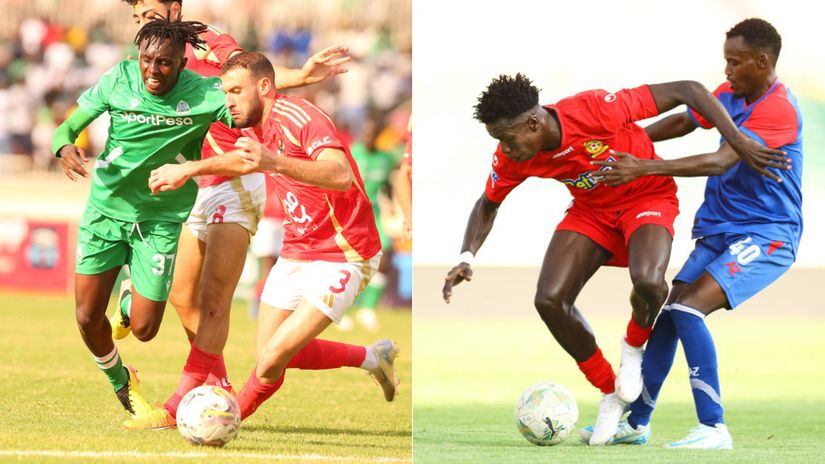
Shabana Secretary General details why Kenyan clubs struggle in CAF inter-club competitions

.jpg)
.jpg)
.jpg)



Reading Time: 4min | Thu. 05.02.26. | 21:30
Kenyan clubs’ struggles on the continental stage over the last 15 years underline Kerama’s concerns
Shabana FC Secretary General Elizaphan Kerama has challenged FKF Premier League clubs to fully embrace professionalism if Kenyan teams are to become competitive in continental competitions.
Follow Our WhatsApp Channel For More News
Kerama believes the persistent early exits suffered by Kenyan representatives in the CAF Champions League and CAF Confederation Cup are a direct result of poor domestic standards.
Speaking to Mozzart Sport, the Tore Bobe administrator said Kenyan clubs must compete professionally and consistently at home to produce genuine champions capable of standing up to Africa’s elite.
“It is time teams compete professionally so that we produce real champions who can go out there and fight,” Kerama said.
“Some teams make it very easy for others during the season, and when those teams go to represent the country, they get exposed.
That is why we keep getting knocked out at the preliminary stages and end up embarrassed.”

Kerama stressed that strong domestic competition and not favouritism or shortcuts is the foundation of continental success.
“Football is not a matter of life and death, let us prepare our teams professionally so that even if I am not the one winning the league, the champion truly deserves it because everyone gave him a real fight.”
“That is the only way we will stop sending teams to CAF competitions only for them to be knocked out in the preliminary rounds.”
The Shabana life member noted that Kenyan clubs often dominate domestically without facing real resistance, a situation that leaves them unprepared when they step onto the continental stage.
“When teams are given an easy time locally, they don’t feel the heat of competition,” he explained. “But the moment they go to CAF, they realise football there is different. Before you know it, after one or two matches, they are already out.”
Kerama pointed to the current league standings as a positive sign, noting the tight race involving Gor Mahia, AFC Leopards, Shabana, Kakamega Homeboyz and Murang’a Seal.
“This is healthy competition. If we maintain this level across the league, the eventual champion will be a team that was properly tested and squeezed from all sides,” he said.
“When such a team goes to represent Kenya, they won’t be knocked out in the preliminary rounds. They will push deeper into the competition and compete with confidence.”
The Shabana official also raised concerns over the quality of individual accolades produced by the league, particularly top scorers, arguing that weak officiating and cheap goals distort the true measure of quality.

“My wish for Kenyan football is to have real competition where the winner is truly the best,” Kerama said.
“Let the top scorer be a genuine top scorer, not one who benefits from offside goals or funny decisions. When such players go to international football, where every rule is strictly applied, they struggle. That is painful for the country.”
He added that true competitiveness at home would naturally translate into better performances at the international level.
“If you are the best striker in the league, you should still perform when given national team duties,” he said.
“If a team wins the league fairly, it should deliver when representing the nation in CAF competitions. From that angle, the entire football fraternity wins.”
Kenyan clubs’ struggles on the continental stage over the last 15 years underline Kerama’s concerns.
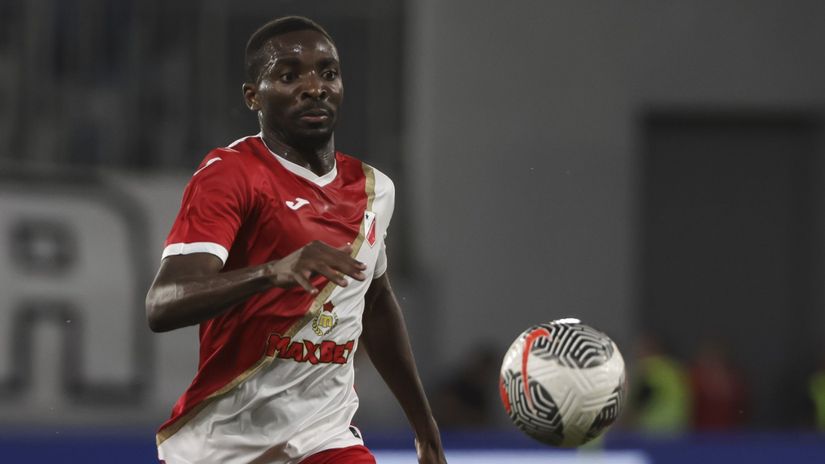
Between 2010 and 2025, Kenyan teams have endured a frustrating relationship with CAF competitions, with early exits becoming the norm despite regular representation through league champions and domestic cup winners.
Gor Mahia have dominated Kenya’s participation in the CAF Champions League during this period, alongside appearances from Tusker, Ulinzi Stars and, more recently, Kenya Police.

However, success has been limited, with most representatives eliminated in the preliminary or first rounds.
Ulinzi Stars’ first-round exit in 2010 set the tone for a pattern that persisted for more than a decade.
Despite Gor Mahia’s domestic dominance from 2013 onwards, the club failed to reach the group stages in any Champions League campaign during that period.
Tusker faced similar struggles whenever they represented the country, often bowing out early without making a lasting impact.
The closest Kenya came to a modest breakthrough was during the 2024-25 season, when Gor Mahia reached the second round before being eliminated by African giants Al Ahly.