


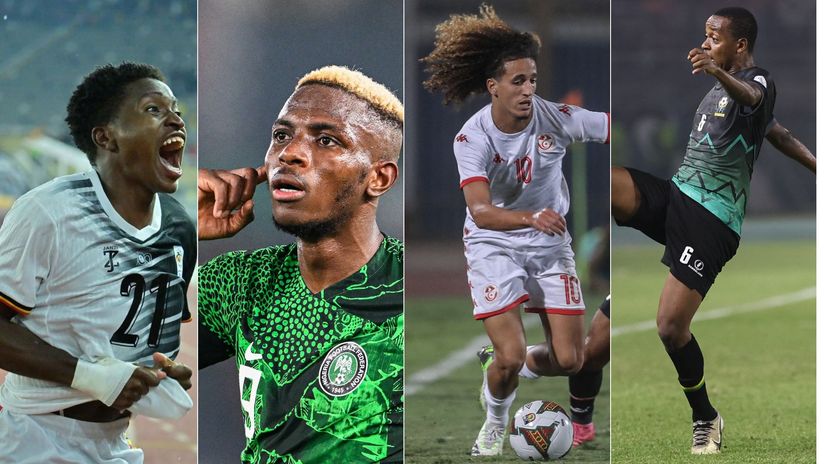
TACTICAL ANALYSIS: A look at Tanzania's wide progression, Uganda's attacks, Nigeria's diamond and Tunisia's solidity




.jpg)




Reading Time: 6min | Mon. 15.12.25. | 08:07
The four nations will be arriving with different footballing identities, contrasting squad qualities and very distinct motivations
With Africa’s premier football showpiece gracing us once again, Mozzart Sport Kenya brings you in-depth tactical analysis of all the participating teams, what to expect from the coaches, the key players who make the systems work, and who will advance to the next round.
Follow our WhatsApp channel for more news
Group C of the 2025 Africa Cup of Nations promises one of the most tactically diverse and competitive clusters in Morocco, featuring Nigeria, Tunisia, Tanzania and Uganda.
The four nations will be arriving with different footballing identities, contrasting squad qualities and very distinct motivations.
From Nigeria’s redemption mission to Tunisia’s defensive rebirth, Tanzania’s search for its first-ever AFCON win, and Uganda’s rise as dangerous dark horses, Group C blends tradition, desperation, structure and unpredictability.
Expect mini battles in the group.
Tanzania
Tanzania (Taifa Stars) approach AFCON 2025 with renewed structure and modern identity under Miguel Gamondi, entering their fourth appearance, but still searching for their first-ever win in the competition.
Gamondi has reshaped the Taifa Stars through well-defined positional play, aggressive wide progression and compact defensive organisation.
In possession, their full-backs push high yet remain close to the centre-backs during the early build-up, providing stability under pressure and enabling smooth short-passing combinations, while also creating a strong platform for wide progression, especially through crossing patterns.
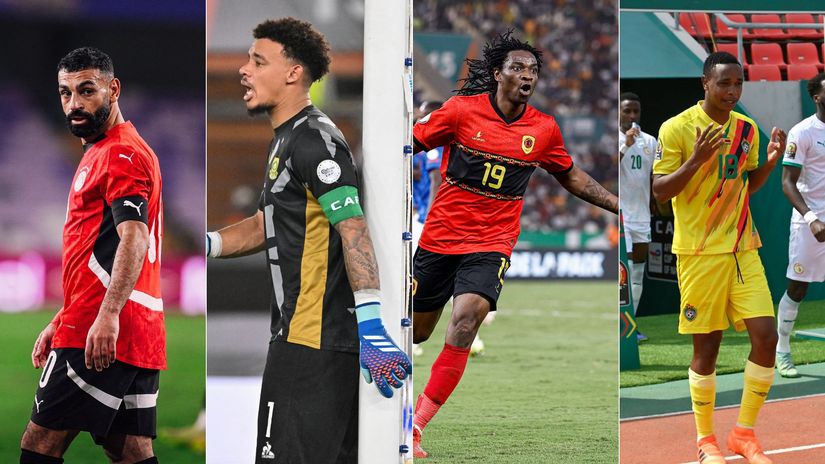
Their attack is heavily wing-oriented, leaning on quick diagonal switches, deep or advanced full-back crosses and transitional moments aimed at wide runners bursting into space.
Out of possession, Tanzania commits to a compact 4-4-2 block that remains extremely tight both vertically and horizontally; the close distances between lines allow them to regain second balls, suffocate central spaces and funnel opponents toward predictable wide channels.
Their squad features several standout players such as Yussuf Kagoma, an explosive wide creator from Simba SC; Feisal Salum of Azam FC, the team’s central metronome; Mbwana Samatta, the most experienced attacker now at Le Havre; and Kelvin John of Aalborg BK, a pace-driven forward capable of unsettling defences.
Historically, Tanzania’s AFCON record is modest, marked by group-stage exits and no victories, but Gamondi’s tactical refinement, combined with a growing pool of players stationed in Europe and the Middle East, gives the sense of a more competitive Taifa Stars than in previous editions.
Uganda
Uganda, their close neighbours, meanwhile, return to AFCON for the first time since 2019, and arrive as genuine dark horses thanks to a tactical rebirth engineered by Belgian coach Paul Put.
The Cranes now blend calm, patient build-up with sudden direct verticality.
Their 4-2-3-1 structure in possession uses two pivots who offer composed circulation, create triangular passing lanes with centre-backs and provide escape routes to break pressure lines.
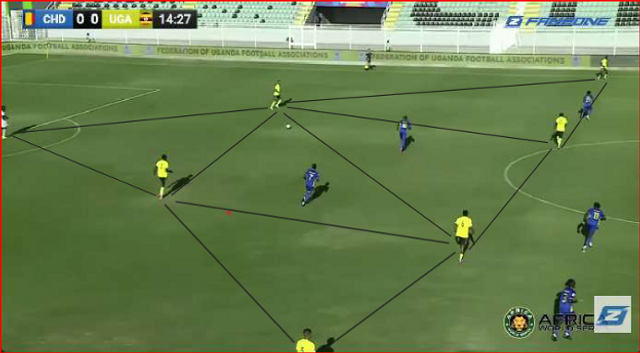
Uganda Cranes’ backline and double pivots creating passing triangles through precise positioning, spacing and zone occupation to build up patiently and progress the ball in a highly organised manner during their 2–1 friendly win over Chad on 14/11/2025
Once progression is achieved into midfield, Uganda dramatically increases tempo through fast vertical attacks, early passes toward channel runners and fluid rotations among the front four.

Out of possession, they shift into a 4-1-4-1 block designed to stay narrow, execute intelligent counter-pressing and guide opponents into predictable wide areas.
From the squad, their greatest strengths lie in the dynamism of their attackers: Rogers Mato, an explosive goal threat from FK Vardar; Okello Allan of Vipers SC, a refined creative midfielder; Ssemakula Kenneth from Al-Adalah FC, a strong midfield ball-winner; and Jude Ssemugabi Jude from Jamus SC, a rapidly developing winger.
Historically, Uganda’s most memorable AFCON run came in 1978 when they reached the final, while their recent 2017 and 2019 campaigns provided only modest returns.
This 2025 version, however, mirrors the cohesion and hunger of the 2017 group but with upgraded technical quality and more depth in attack, making them capable of unsettling even the giants of Group C.
Nigeria
Nigeria enters the tournament carrying immense emotional weight after missing back-to-back World Cups, and coach Eric Chele has been charged with restoring the nation’s footballing authority.
His tactical plan prioritises central progression to lure opponents inward before exploiting wide overloads, with full-backs pushing high and dangerous crosses directed toward elite forwards such as Victor Osimhen.
Nigeria remains lethal in transitions thanks to their speedy wingers, assertive full-backs and aggressive runners attacking half-spaces, making them one of Africa’s most dangerous teams when the rhythm becomes chaotic.
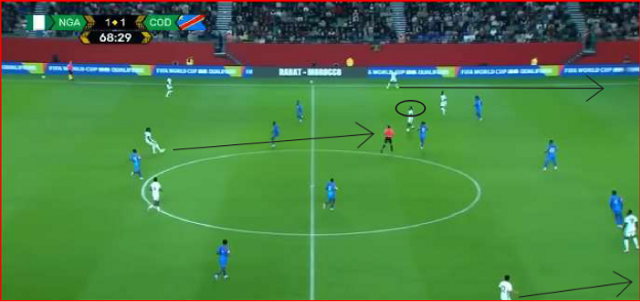
Alex Iwobi dropping deep as the advanced organiser, receiving with his back to goal to recycle possession with the centre-backs before releasing runners into the wide channels in Nigeria’s recent World Cup qualifier knockout match against DRC
Yet despite their strength, a clear weakness persists: the absence of a true midfield conductor who can carry the ball or dictate tempo under pressure. This forces players like Semi Ajayi, Calvin Bassey and the soon-returning Ola Aina to shoulder more responsibility during build-up.
Furthermore, Nigeria often sacrifices a pivot or a full-back to add an extra body wide or in the attacking line, increasing their offensive threat but occasionally leaving structural gaps.

Historically, Nigeria far outshines the rest of the group, entering their 21st AFCON, having triumphed in 1980, 1994 and 2013, while also maintaining a consistent record of semifinal appearances over the past two decades.
The Super Eagles arrive not just expecting qualification but aspiring for continental dominance.
Tunisia
Tunisia, on the other hand, come into AFCON 2025 seeking redemption after a disastrous previous campaign in which they scored only once and suffered their worst performance since 2002.
Four managerial changes later, they appear rejuvenated under Sami Trabelsi, who has not hidden his preference for defensive solidity and tactical discipline.
Tunisia largely operates in a 5-3-2 or 5-2-3 out-of-possession block with aggressive pressing triggers, favouring a direct style based on vertical long balls and rapid transitions rather than elaborate build-up.
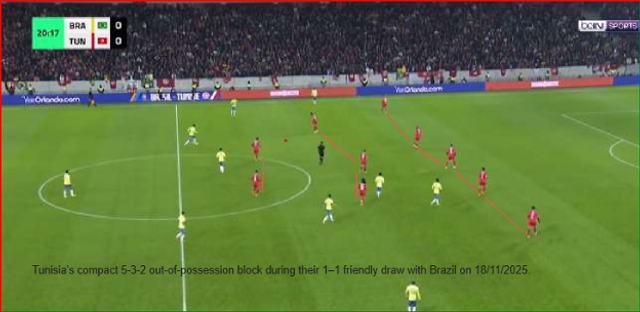
Upon regaining possession, they immediately look to find wide runners or mobile forwards and attempt to launch fast, high-tempo attacks before opponents can reorganise.
The integration of technically sound and physically strong midfielders such as Ellyes Skhiri, Hannibal Mejbri, Elias Achouri and the experienced Ben Romdhane has significantly enhanced both their defensive balance and counter-attacking threat.
In tournament history, Tunisia remains one of Africa’s most consistent knockout performers, reaching the semifinals in 2019 and quarterfinals in 2021, even though the previous edition was a major setback.

Their strong clean-sheet record in the recent World Cup qualifiers further signals a defensively revitalised squad ready to challenge aggressively in Morocco.
In terms of qualification outlook, Group C has clear but competitive tiers. Nigeria enter as the undisputed favourites to top the group thanks to their firepower, tactical versatility and AFCON pedigree.
Tunisia are strong contenders for second place due to their defensive discipline and knockout football efficiency.
Uganda stands out as the unpredictable wildcards, possessing the directness, dynamism and attacking quality to disrupt either of the top two sides.
Tanzania, while tactically improved and structurally organised, faces a tougher battle due to their lack of AFCON-winning experience, though they are expected to be more competitive than in any previous tournament.