


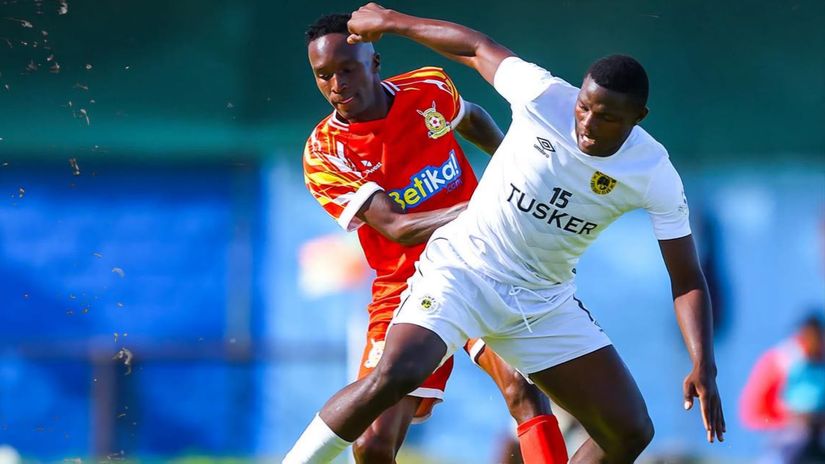
TACTICAL ANALYSIS: Breaking down Kenya Police's game plan that angered Tusker head coach


.jpg)


Reading Time: 7min | Sat. 04.04.26. | 22:00
Police’s adaptability from high press to compact block, combined with precise rotations and set-piece execution, neutralized Tusker’s possession advantages and late momentum
In a high-stakes FKF Premier League clash between Kenya Police and Tusker FC, the narrative centred on a tactical battle of contrasting philosophies where organisation, pressing intensity, and set-piece precision ultimately dictated a narrow victory for the Law Enforcers.
Download Our MozzartSport App For More News
The encounter unfolded as a closely contested affair defined by fine margins rather than dominance, with both sides trading periods of control amid momentum swings that kept the outcome in doubt until the final whistle.
Kenya Police emerged as the narrow victors through disciplined defensive structure and opportunistic rotations, while Tusker’s patient possession-based approach was repeatedly disrupted, leaving them reactive despite late surges.
Key performers shone in pivotal moments: Yves Koutiama’s clinical presence as striker proved decisive with his header, Hernest Malonga’s marauding left-back surges created constant width, and Samuel Quansah’s advanced midfield linking facilitated third-man combinations, whereas Tusker relied on Fabian Adikiny and Dennis Iguma’s midfield security to stabilise build-up, though their twin-striker partnership of Eric Kapaito and Bless Selasie struggled to convert territorial gains into clear threats.
Kenya Police deployed a base 4-2-3-1 structure, anchored by Daniel Ogembo in goal and a back four of Daniel Sakari at right-back, the more conservative of the full-backs initially, Hernest Malonga at left-back, who operated with greater freedom to push high along the flank, and central defenders Kevin Ouma alongside Abud Omar.
Marvin Nabwire and Charles Ouma formed the double pivot in central midfield, offering a platform for Quansah Samuel as the advanced midfielder, with Daniel Okoth on the right wing, Zakayo Eric as left winger, and Yves Koutiama leading the line.
Tusker, meanwhile, lined up in a 4-4-2 with Pavel Ndzhila between the posts, Eugene Ikutwa at right-back, Dennis Wanjala at left-back, Charles Momanyi and Francis Oduor as the central defensive duo, Fabian Adikiny and Dennis Iguma as the two central midfielders tasked with possession control and progression security.
Thomas Omole starting right wing, Ian Simiyu left wing, and the twin strikers Eric Kapaito and Bless Selasie operating in tandem up front.
Both teams adopted a mirror-like 4-4-2 out-of-possession mid-block compactness, with defensive lines sitting compactly to deny central penetration while allowing controlled build-up phases.
Tusker’s defensive scheme in their 4-4-2 out-of-possession shape emphasised a mid-block that prioritised compactness and channel denial, with the twin strikers dropping to support the midfield when required, creating a solid horizontal block that aimed to force opponents wide.
Their strengths lay in the central midfield duo’s ability to screen and recover, providing security that allowed the back four to maintain a relatively high line without immediate exposure.
However, weaknesses emerged in vulnerability to high-pressure triggers and overloads on the flanks, particularly when full-backs were drawn out, exposing interior channels and half-spaces that Police exploited through coordinated movements.
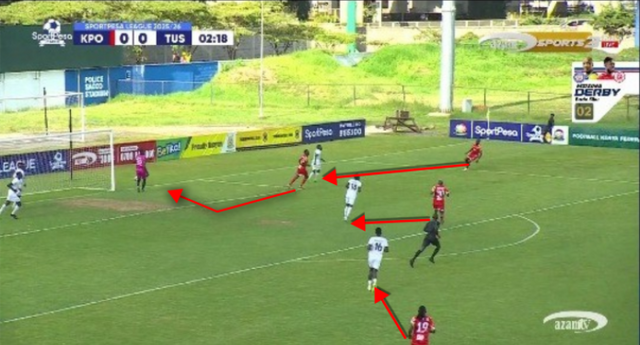
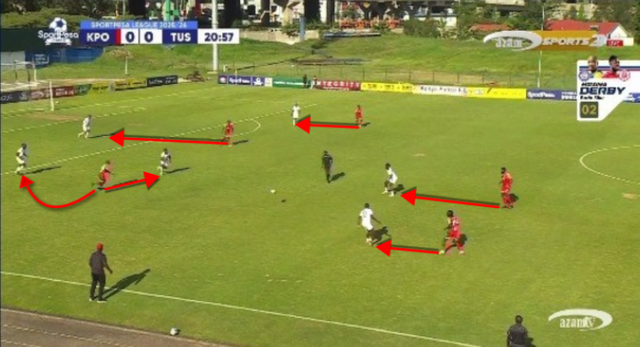
Kenya Police’s own out-of-possession approach initially featured a more aggressive high press structured around their forward lines in a 4-2 configuration, which effectively disrupted Tusker’s patient build-up from deep and forced turnovers in advanced areas.
Delving into build-up structures, Kenya Police initiated play early through goalkeeper Daniel Ogembo’s distribution, often targeting long balls or switches toward the left flank, where Zakayo Eric drifted inside from the left wing to link in third-man combinations with Quansah Samuel in the attacking third.
Hernest Malonga’s high positioning as left-back added rotational depth, delivering crosses, while the right-back Daniel Sakari remained more reserved initially, creating an asymmetrical build-up that prioritised overloads on the left channel.

Tusker’s build-up, conversely, relied on a deep 5-2 shape involving the goalkeeper and back four plus the two central midfielders, spreading the ball wide when faced with pressure.
Their rotational mechanisms included one winger dropping deep or Bless Selasie drifting into wide areas to combine with flank players, allowing Kapaito to remain as the central target man while the pair interchanged roles fluidly; this created numerical superiorities to bypass Police’s initial press lines, though it often resulted in lateral passes rather than central progression.
Interior overloads were attempted by Tusker through intricate midfield rotations, yet Police’s shadow marking on the central midfielders denied easy access to Zone 14 and half-spaces, forcing reliance on wide channels where Police’s compactness held firm.
Key zones of domination highlighted the tactical intrigue, particularly the half-spaces and interior channels. Kenya Police excelled in exploiting the left half-space through Zakayo’s inside drifts and Malonga’s overlapping runs, generating overloads that stretched Tusker’s defensive block and targeted the space between their full-backs and central defenders.
Zone 14 remained contested, with Quansah Samuel’s advanced positioning allowing quick links to Koutiama, though Tusker’s compact mid-block initially restricted central dominance.
Tusker struggled in these areas due to Police’s high defensive line and aggressive stepping, which prevented progression through the interior.
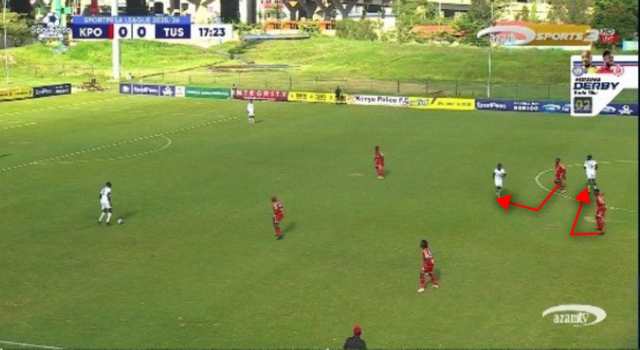
And they pushed play toward the flanks, where long throws from Eugene Ikutwa or Daniel Sakari became routine weapons near opposition penalty areas.
Police further dominated the left channel via coordinated long balls from central defenders and the goalkeeper, leveraging the Zakayo-Malonga axis to attack Tusker’s third with purposeful width.
Pressing and build-up disruption strategies defined the first-half dynamics, as Kenya Police triggered their high press aggressively whenever the ball was played toward Tusker’s central midfielders, with Quansah Samuel stepping up first as the primary disruptor in a highly coordinated 4-2-3-1 press shape.
_(1).jpg)
This forced Tusker into deeper wing drops, where Omole or Simiyu tucked in to add numbers and outnumber the press, enabling progression but at the cost of losing central compactness.
Outcomes favored Police in the opening phases, as seen around the 14th minute when turnovers led to immediate counters involving Quansah and Koutiama combining forward.
By the 34th minute, Police’s full-backs tracked Tusker’s wingers with intense aggression, escalating the press and compelling Tusker to spread play even wider.
Tusker’s response involved allowing wingers deeper into build-up, yet Police’s organisation ensured second balls were won confidently, particularly after temporary direct attempts from Dennis Wanjala targeting Kapaito.
Rest-defence and counterpressure remained robust for both, with Police’s structure allowing quick transitions from regained possession, as their midfield pivot recovered to shield the back four while forwards initiated immediate verticality.
Tusker’s rest-defence featured the central midfielders dropping to form a protective screen, enabling counterpressure through quick regains that briefly shifted momentum, though Police’s high line and compact shape neutralised most threats during these phases.
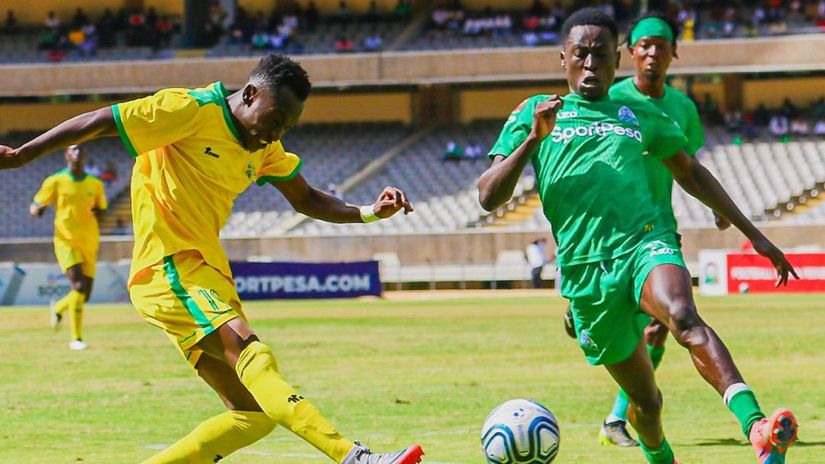
Momentum swings became evident by the 37th minute as both teams interchanged wingers - Omole and Simiyu switching sides for Tusker, mirrored by Okoth and Zakayo for Police - adding tactical fluidity that temporarily favoured Police’s wing play, with Sakari even pushing higher on the right to create dual-flank threats.
Tactical adjustments shaped the second half profoundly. Kenya Police immediately substituted Alvin Mangeni on for Daniel Okoth on the right wing and abandoned their high press for a more compact mid-block out-of-possession shape, prioritising control and bypassing Tusker’s renewed high press through in-behind runs from Marvin Nabwire and full-back surges.

Positional rotations intensified around the 50th minute, with Quansah Samuel drifting wide to create space, Mangeni tucking centrally into the advanced midfielder role, and Koutiama operating dynamically in the half-spaces to facilitate combinations and link play around Tusker’s defense.
This front-foot approach made Tusker reactive as the hour mark approached.
Tusker countered with a double substitution on the 60th minute, introducing Stephen Etyang as a winger and Ibrahim Joshua as a striker for Omole and Selasie, injecting fresh attacking impetus and shifting to a more front-footed stance by the 65th minute.
Police responded by re-energising their high press around the 69th minute, complementing direct long balls from Ogembo that targeted aerial duels upfront.
The decisive moment arrived in the 62nd minute when Abud Omar’s free-kick delivery from the right found Koutiama for a powerful header, giving Kenya Police a 1-0 lead that exemplified their set-piece threat and exploitation of Tusker’s momentary disorganisation.

Further adjustments followed, with Police’s double substitution in the 78th minute bringing on Tobias Otieno and Nana Kusi for Nabwire and Quansah, introducing midfielders focused on control and calmness to manage the game’s heart and transition into a clear game-management mode by the 82nd minute.
Tusker pushed numbers forward in search of an equaliser, utilizing their right winger as a build-up outlet with dropping movements to link from the goalkeeper and escape pressure, yet Police defended corners and set-pieces with disciplined compactness, winning aerial duels and preventing clear opportunities.
In the defensive phase without the ball, both teams maintained their 4-4-2 mid-block compactness, but Police’s superior organisation shone through consistent stepping triggers on the ball and recovery runs that denied Tusker central access.
Their high line in the first half transitioned smoothly into a balanced mid-block post-interval, ensuring compactness across the pitch while full-backs tracked threats effectively.
Tusker’s defensive efforts, though structured, faltered against Police’s rotational overloads in half-spaces and channels, particularly after the goal when reactive positioning exposed gaps during transitions.
Overall, the match illustrated tactical intrigue through these shifts: Police’s adaptability from high press to compact block, combined with precise rotations and set-piece execution, neutralised Tusker’s possession advantages and late momentum, securing a 1-0 triumph in a contest ultimately decided by fine margins and superior game management.
Kenya Police’s strategy of disciplined disruption and opportunistic exploitation proved superior, validating their structural integrity across phases, while Tusker’s patient build-up and attacking subs, though promising in moments of growing confidence around the first half of the game, could not overcome the initial press, interior denials, and late defensive resilience that defined Police’s clinical performance.