


.jpg)
TACTICAL ANALYSIS: How Kenya Police's inefficiencies were punished by Singida in CECAFA Kagame Cup

.jpg)



Reading Time: 6min | Sat. 06.09.25. | 14:50
Miguel Gamondi's side used pragmatic progression to draw Police’s press before going long, consistently disrupting their opponents
The CECAFA Kagame Cup clash between Kenya Police FC and Singida Black Stars was a match defined by tactical discipline, pressing battles, and wing-focused strategies.
While Police looked to assert their structured build-up game, Singida leaned on directness, right-sided overloads, and clinical execution.
In the end, Singida emerged 2–1 winners, punishing Police’s inefficiency in attack and capitalizing on defensive lapses at key moments.
Follow our WhatsApp channel for more news
First Half: Contrasting Approaches and Key Tactical Battles
The opening minutes immediately set the tone for a tense contest.
Police nearly took the lead when Clinton Kinanga squandered a golden chance inside two minutes after a cross from the right, failing to connect cleanly. His early misses, including another in the eighth minute, underlined Kenya Police’s wastefulness in front of goal - a theme that would haunt them later.
Out of possession, Police defended in a 4-4-2 OOP shape, with Kinanga leading the line and Eric Zakayo operating as the secondary striker/outlet.
The pair pressed Singida’s backline aggressively, while the midfield line stayed compact. Police’s intention was to force mistakes and transition quickly, a tactic that had worked in previous games like against Garde Côtes.
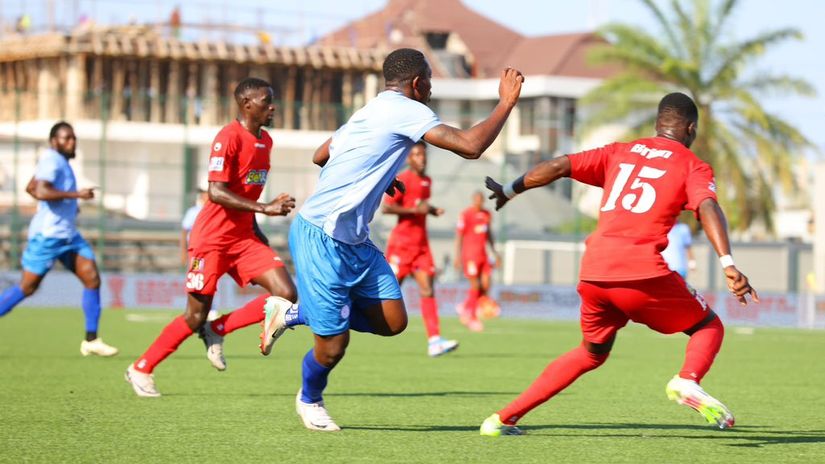
In possession, Police aimed for patient build-up through the center-backs Joash Onyango and Charles Ouma, aided by Mosengo Tansele dropping deep as a pivot.
From here, they sought to establish passing triangles on the right wing, trying to combine Zakayo, overlapping fullbacks, and wingers. However, Singida often anticipated these moves, blocking passing lanes and forcing Police to recycle.
Singida played with contrasting pragmatism.
Their first phase involved baiting the Police's press by circulating deep before launching long passes into advanced zones.
This pattern was evident as early as the 12th minute, when a direct ball led to Ande Koffi’s cross from the right, clinically converted by Elvis Rupia. Singida’s ability to draw Police in and then bypass pressure proved decisive.
Offensively, Singida overloaded their right flank, often creating 3v2 situations to destabilize Police’s defensive block.
The high involvement of Ande, their adventurous right-back, stretched Police and created space for penetrative runs. Police’s left winger Gideon Muyadi struggled to track back, leaving Ouma and the back line exposed. This imbalance was particularly costly in the lead-up to Rupia’s opener, where defensive rotations were poorly executed.
Key duels defined the half: Ande repeatedly advanced untracked against Muyadi, Zakayo struggled to impose himself as Police’s outlet, and Kinanga’s early misses shifted momentum.
Mabingwa wa Ligi Kuu Kenya, POLICE FC🇰🇪 jana wamefungwa 2-1 ba Singida Black Stars🇹🇿 ya Tanzania kwenye mchezo wa CECAFA Kagame Cup.
— 𝐒𝐀𝐋𝐀𝐌𝐈 (@salamisev) September 6, 2025
Kwani Singinda walimaliza nafasi ya ngapi kwenye NBC msimu uliopita?
Awali, Police walikuwa wameratibiwa kucheza na Simba SC pic.twitter.com/Bwhud1nKvA
By halftime, Singida’s efficiency told. They went into the break 1–0 up, having maximized their direct play and right-sided dominance, while Police, despite structured buildup, struggled to convert possession into clear-cut chances.
Second Half: Adjustments and Momentum Swings
At halftime, Kenya Police made a triple substitution, bringing on Alvin Mangeni, David Simiyu, and David Okoth for Zakayo, Kinanga, and Emannuel Erupe.
The changes reshaped their structure: Police retained a 4-4-2 out of possession, but in possession transitioned into a 3-1-4-2, with Mangeni tucking inside as an inverted fullback to provide central overloads in buildup.
Simiyu operated as the main striker, while Okoth played just behind, dropping into half-spaces to link midfield and attack. These adjustments gave Police more dynamism, particularly on the right flank, where Baraka Badi pushed high and combined effectively with Charles Ouma, Mosengo, and Okoth, creating overloads to stretch Singida’s defensive line.
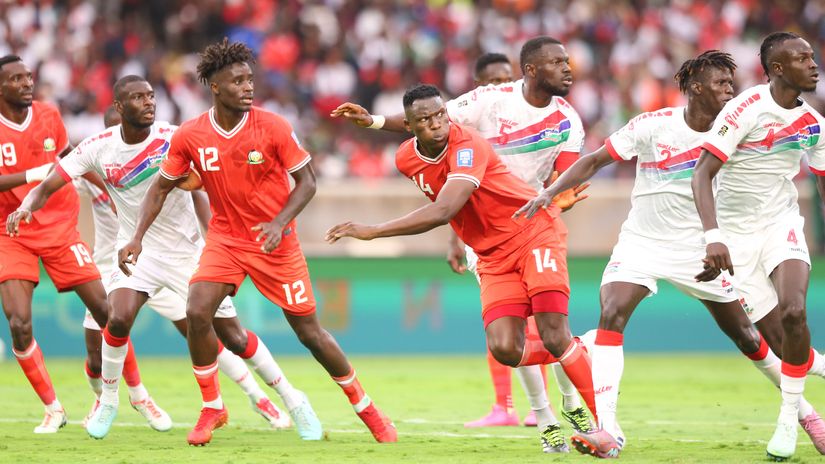
Singida also subbed Damaro Mohammed in for Andrew Phiri, but remained true to their game plan.
They continued using deep circulation to bait pressure before going long, but also introduced more central progression through line-breaking passes before switching play to the right. With Muaku Malanga, their striker, acting as a target point, they maintained their vertical threat while controlling tempo in key spells.
The second half featured several turning points.
Between minutes 52–54, Police’s urgency was evident when a short corner nearly produced an equalizer, only for Ouma to miss at the back post.
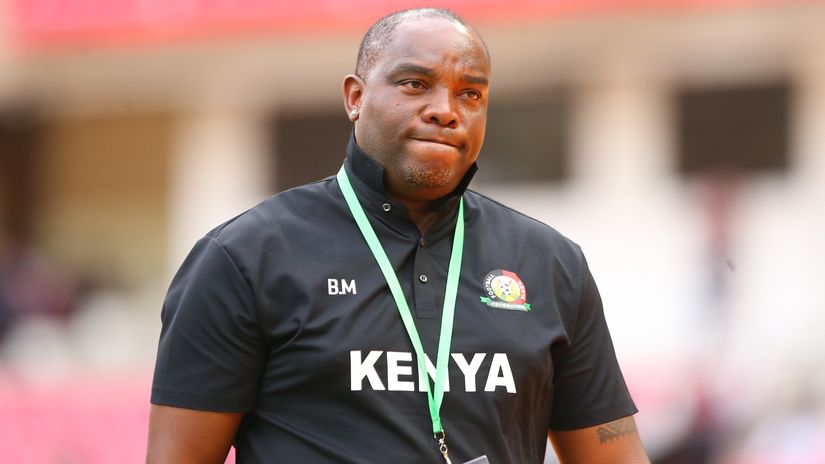
Soon after, intricate right-sided combinations between Badi, Okoth, and Ouma created danger, though without the end product.
By 59–63, the introduction of Mbombo Moise added freshness on the right, with Police focusing heavily on creating 3v2 and 4v3 overloads. Their momentum was clear, yet they still lacked the killer touch. Then, in the frantic spell around 67–69 minutes, both sides squandered clear-cut chances - Onyango’s long diagonals bypassed Singida’s press, but Police failed to capitalize, keeping the visitors in control.
Singida reasserted dominance after making double substitutions in the 74th minute, introducing Kelvin Kijiri and Clatous Chama to stabilize midfield and dictate rhythm.
Their patience paid off in the 77th minute, when Police’s center-back Brian Okoth hesitated in possession.
The ever-dangerous Ande pressed aggressively, won the ball, and slotted home to make it 2–0. It was a textbook execution of Singida’s pragmatic plan: lure mistakes, then punish decisively.
Police refused to fold and found a lifeline in the 81st minute. From a Mosengo corner, Ouma escaped his marker and headed home to reduce the deficit to 2–1.
That goal ignited Police’s late surge, as they committed men forward, pressed high, and launched a flurry of direct balls into advanced zones. However, Singida’s compact high defensive line and well-structured rest defense absorbed the pressure effectively, preventing penetration in behind.
Despite Police’s urgency and aerial bombardment in the closing stages, Singida remained composed and resolute, holding on for a 2–1 victory.
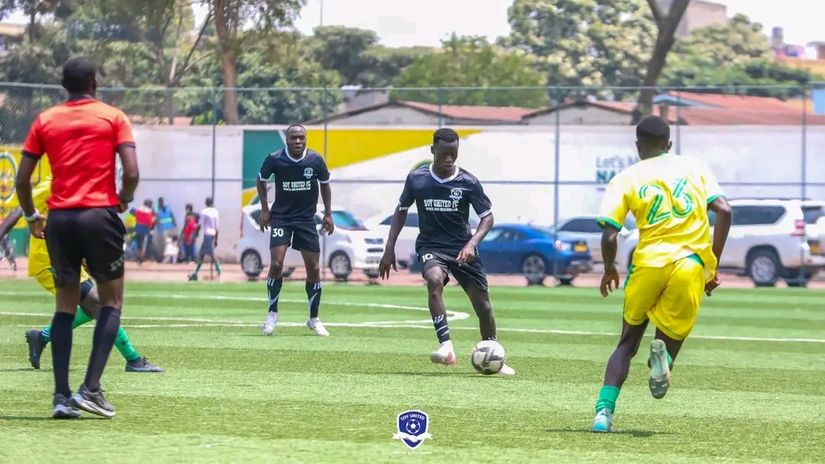
Takeaways
The match offered clear insights into both teams’ strengths and weaknesses.
For Kenya Police, the biggest undoing was wastefulness in attack.
Kinanga’s early misses shifted momentum and left them chasing the game. Their play also suffered from right-sided dependency, with almost all attacking patterns funneled to one flank, making them predictable. The second-half switch to a 3-1-4-2 injected dynamism and helped create overloads, but the lack of cutting edge persisted. Defensively, lapses proved costly—from Muyadi’s poor tracking of Ande in the first half to Okoth’s error in the second, concentration gaps undermined their otherwise solid structure.
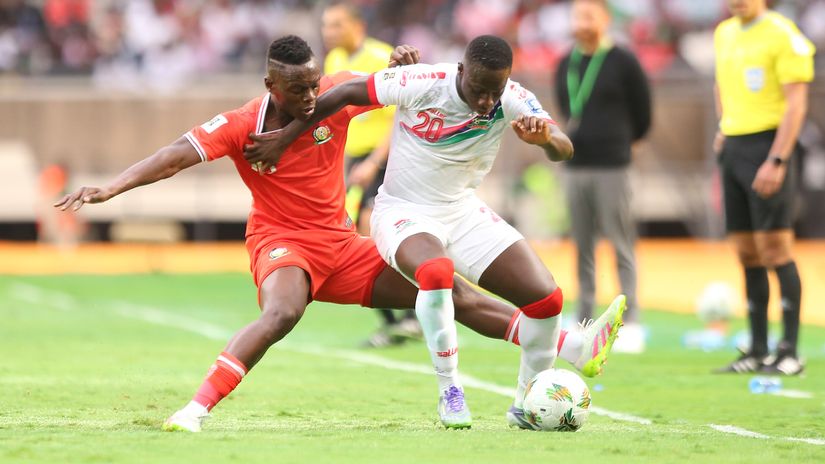
For Singida Black Stars, the game highlighted their tactical clarity. Their pragmatic progression, drawing Police’s press before going long, consistently disrupted their opponents. The emphasis on right-flank overloads, spearheaded by the adventurous Ande, stretched Police throughout and directly led to both goals. In the second half, their game management stood out - using tempo control and well-timed substitutions to stall Police’s momentum. Most importantly, their clinical finishing contrasted sharply with Police’s wastefulness, ensuring they made the most of their chances.
In conclusion, the match was a showcase of contrasting philosophies.
Kenya Police displayed structured build-up and high pressing but paid for inefficiency in attack and costly defensive mistakes. Singida, by contrast, leaned on pragmatism, flank overloads, and composure in decisive moments to secure a vital 2–1 win. For Police, sharper finishing and improved defensive focus are essential to turn possession dominance into results. For Singida, this performance reinforced their identity as a side that thrives on directness, overloads, and ruthless efficiency—a formula that proved decisive in the Kagame Cup stage.