


The cam of God: Did the Spidercam cable help England score?






Reading Time: 3min | Sun. 12.07.26. | 09:51
Another controversial moment at this World Cup – And this one might be the strangest yet
Forty years ago, England fell victim to the most iconic moment in World Cup history – Diego Maradona's "Hand of God." In the quarter-finals, the Argentine legend took advantage of the lack of technology and, with one of the two most unforgettable plays ever seen on a football pitch, set Argentina on the path to lifting the World Cup. Now, in an era where technology plays a major role in shaping football history, we may have witnessed the birth of the "Cam of God."
t>June 22, 1986, When Argentina won and England lost. Maradona scored a goal by head and hand. Later he even accepted and said it was the hand of God. pic.twitter.com/xqANGdiIIi
— Moments & memories (@momentmemori) July 7, 2026
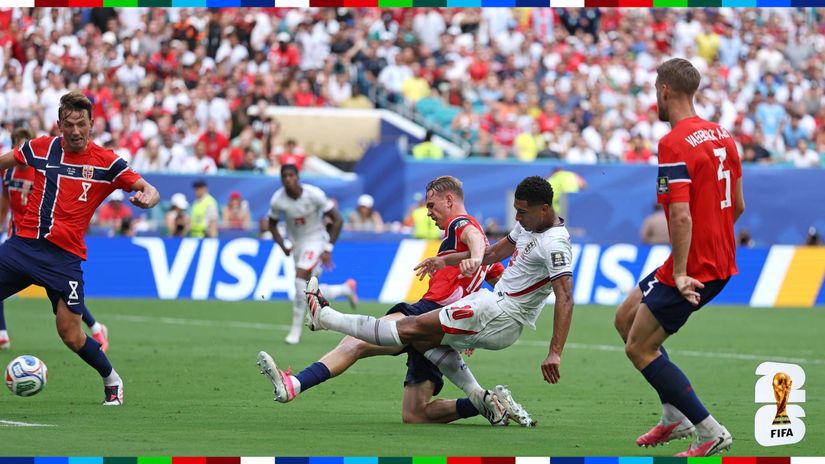
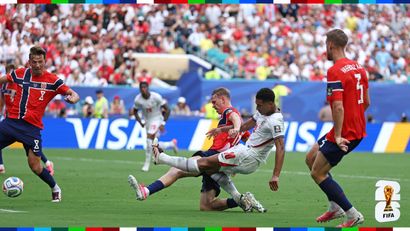
The controversy surrounds Jude Bellingham's equalising goal against Norway. Just minutes after the England star found the back of the net, social media erupted with an unusual claim. England's goal, many argued, should not have stood because Erjan Nyland's clearance allegedly struck the cable supporting the famous Spidercam before dropping to Elliot Anderson.
Despite the flood of replays, it remains difficult to determine with certainty whether the ball actually made contact with the wire. Referee Clement Turpin saw nothing wrong, allowed the goal to stand, and shortly afterwards the teams headed into the dressing rooms for half-time.
Before England’s goal in minute 45+2 against Norway, the sensor in the Connected Ball showed no peak in the 'heartbeat of the ball' when in the air, and therefore no evidence that the ball touched the overhead wire and changed the movement of the ball. pic.twitter.com/gYf9ukfveT
— FIFA Media (@fifamedia) July 11, 2026
The match ended with England advancing to the semi-finals, but the debate has refused to die down. According to the Laws of the Game, play must be stopped and restarted with a dropped ball if the ball comes into contact with an outside agent, such as a camera or any other object above the field. Since the incident occurred during the attacking phase that directly led to the goal, VAR had the authority to review the sequence and potentially disallow the equaliser. It chose not to do so.
FIFA reacted quickly, attempting to silence the growing criticism through its FIFA Media account on X. The organisation published footage of the incident from the second minute of first-half stoppage time alongside the following explanation:
"Before England's goal against Norway in the 45+2nd minute, the sensor inside the ball did not register a 'ball heartbeat' while it was in the air. Therefore, there was no evidence that the ball touched the overhead Spidercam wire or that its trajectory was altered."
However, FIFA's credibility—particularly after Folarin Balogun's suspension was controversially overturned following pressure from Donald Trump—is arguably at its lowest point in years, leaving many unwilling to accept the governing body's explanation without question.
Norway head coach Stale Solbakken and several of his players, including Erling Haaland, were furious with Turpin at half-time, convinced that the goal should have been ruled out. And if the ball did indeed strike the Spidercam cable, they have every reason to feel aggrieved.
Norway’s coach Solbakken in response to FIFA’s communication about the camera cable “The ball fell straight from Heaven?” pic.twitter.com/vFkInZ8zou
— The ANF Club ⚽️ (@adjorNfriends) July 12, 2026
This story is unlikely to disappear anytime soon. Especially if England go on to reach the final and lift the trophy. And should that happen, football history may gain another unforgettable phrase alongside Maradona's "Hand of God"—the "Cam of God," a term that is already spreading rapidly across social media.